Clones Castle Burns1212 CE
In 1212, royal efforts to extend King John’s Irish lordship through castles, taxation and military campaigns met persistent resistance. John de Gray’s northern offensive built Clones and Cáel Uisce castles, but forces associated with Áed Méith Ua Néill and other Gaelic leaders defeated raiders and destroyed both strongholds. Seaborne warriors from Galloway and the Isles ravaged Derry and Inishowen, aided by Cenél Conaill. In Meath, Cormac Ua Máel Sechlainn defeated English forces, while Munster and Desmond saw fort-building and dynastic conflict. Administrative records reveal expanding royal finance, yet authority remained uneven, shaped by alliances, tribute, churches, raids and regional rivalries.
Dateline
In 1212, Ireland was neither a single kingdom nor a country divided simply between ‘Irish’ and ‘English’. It was a landscape of overlapping lordships, client relationships and contested routes, in which kings, churchmen, settlers and seaborne warbands sought control over people, cattle, crossings and fortified places. The year’s surviving records are especially vivid for the north and south-west. They show royal government under pressure, Irish rulers capable of decisive resistance, and religious centres caught in conflicts which were as often local and dynastic as they were ethnic.
A Year of Uneven Evidence
The evidence requires care. Medieval Irish annals did not all reckon years in precisely the same way, and later compilations sometimes place an event a year apart from other annals. The Annals of Ulster enter the building of Clones castle, the raid into Tír Eógain and the destruction at Derry under 1212. The Annals of the Four Masters, compiled centuries later, place several of those same episodes under 1211, while recording a further sequence of fighting and castle-burnings under 1212. Rather than treating this as a reason to discard the evidence, it is best to see 1212 as a campaigning season extending across annalistic boundaries. The firmly attested picture is of an intensifying frontier war in Ulster, accompanied by serious disturbances in the midlands and Munster.
John de Gray’s Northern Offensive
Since King John’s expedition to Ireland in 1210, the crown had attempted to turn its lordship into a more governable and profitable possession. John de Gray, bishop of Norwich and the king’s justiciar in Ireland, was central to that effort. He was not merely an ecclesiastic: as justiciar he led government, directed royal revenues and commanded military operations. The forfeiture of the de Lacy lands after 1210 had brought Meath and Ulster more directly within royal reach, but control on parchment was not control on the ground.
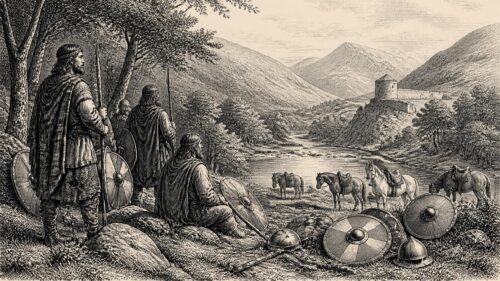
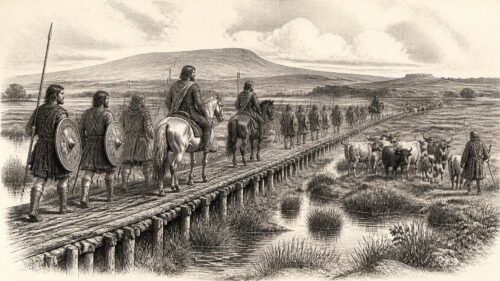
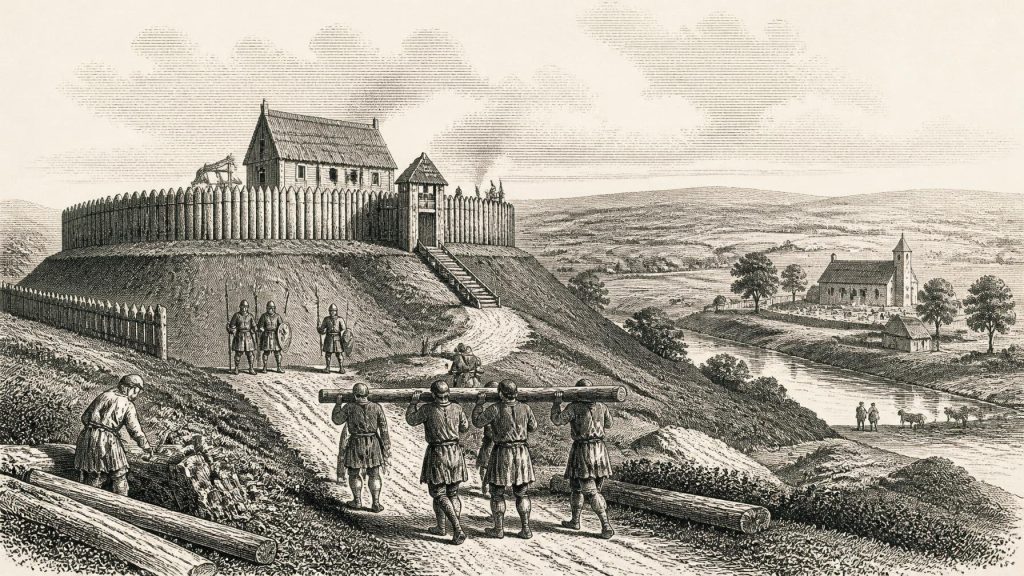
The northern campaign of 1212 exposed that limitation. The Annals of Ulster state that ‘the Foreigners’, together with their bishop, built a castle at Cluain Eois, modern Clones, and mounted a hosting into Tír Eógain. A castle was a military base, storehouse, lookout and political declaration. Clones stood close to the approaches between the royal lordship and the northern Gaelic territories. It could support mounted raids, protect supply routes and signal an intention to project authority beyond the settled areas of Meath and Louth. Mac Carthaigh’s Book similarly records that a force of the king of England’s men built the castle and raided towards the River Blackwater.
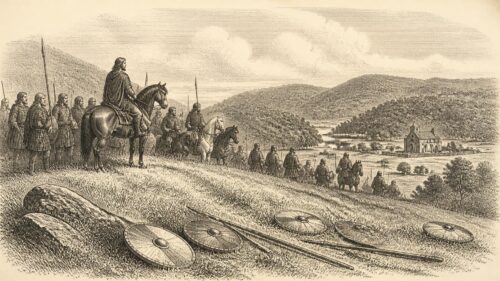
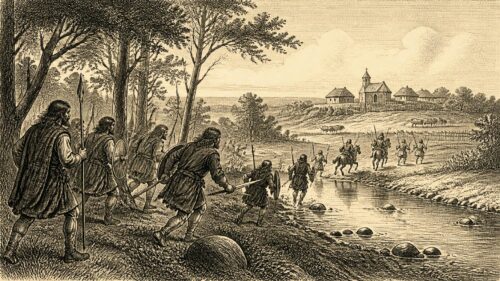
The expedition did not establish a durable advance. The men of Fermanagh inflicted heavy losses on the raiders, according to the Annals of Ulster, and Áed Méith Ua Néill then overtook them. The annalist styles Áed king of Cenél Conaill, Cenél nEógain and Airgialla: a grand formulation which should not be read as proof of uncontested rule over all those peoples, but which conveys his exceptional standing. He had refused to give hostages to John in 1210 and remained the principal northern obstacle to the crown’s ambitions. The annals’ claim that ‘countless’ foreigners were killed is conventional language rather than a usable casualty total; nonetheless, the defeat was real enough to show that castle-building could provoke, rather than prevent, concerted opposition.
Other fortifications belonged to the same strategy. At Cáel Uisce, near the lower Erne and the approaches to Assaroe, Connachtmen had been summoned by the foreign bishop and Gilbert Mac Costello to make a castle. This was an important reminder that Irish kings and peoples did not form a single opposing camp. The royal government could draw on Connacht manpower and on Gaelic as well as settler allies, even as it sought to constrain them. Yet this outpost too proved vulnerable. The Annals of the Four Masters, supported by the Roscommon Dominican annals, record that Gilbert Mac Costello was killed there and that the castle was burned by Ua hÉigín. The Four Masters also record Áed Ua Néill and the men of the north burning Clones castle. The crown’s northern works had become targets, not permanent settlements.
War by Land and Sea
The contest was not confined to roads and river crossings. Under its 1212 entry, the Annals of Ulster reports that Thomas, son of Uchtred, accompanied by the sons of Ragnall son of Somerled, came with seventy-six ships to Derry. These were figures from the wider Irish Sea world of Galloway and the Hebrides, where kinship, lordship and naval force crossed modern national boundaries. Their fleet badly damaged Derry and ravaged Inishowen, with the participation of Cenél Conaill. The exact operational arrangements are obscure, but the episode demonstrates that northern power depended on coastal mobility as much as on castles.
Derry was far more than a convenient landing place. It was the church of Colum Cille, a community with land, dependants, precious objects and wide prestige. An attack on its settlement therefore had material, strategic and religious consequences. It also complicates any simple story of foreigners attacking Gaelic Ireland: the annal says that Cenél Conaill joined the devastation. Rivalries among northern kindreds, and the opportunities offered by alliances with seaborne lords, could make a major ecclesiastical centre vulnerable. The account anticipates further violence around Derry in the following year, but in 1212 it already reveals a north in which local competition could be as destructive as royal invasion.
Resistance in Meath and Offaly
The pressure on the crown was equally clear in the central Midlands. The Four Masters place in 1212 the victory of Cormac, son of Art Ua Máel Sechlainn, and Aed, son of Conchobar Moinmoy, at Caill na gCearrann over the English. Cormac belonged to the old ruling dynasty of Meath, whose former kingdom had been heavily partitioned after the Anglo-Norman conquest. The annal’s named deaths, including Pierce Mason and members of the Sleviny family, preserve the fact that this was a sharp encounter rather than a mere cattle raid.
It should not be imagined as a national rising. Cormac’s ambitions were bound up with the fractured politics of Meath and Delvin, where rival branches of the Ua Máel Sechlainn family, settlers and royal officials all competed for land and lordship. But the victory mattered. It showed that the crown’s new administrative apparatus and its castles did not eliminate local military power. The year also saw an English force from Munster build a castle at Roscrea before moving towards Killeigh, where it was met by Muirchertach, son of Brian Ua Conchobair. Even if the details of the annal’s dating cannot be fixed more closely, these entries capture a governmental habit of the period: construction, garrisoning and movement through key territories went hand in hand.
Government, Money and Daily Burdens
Behind the campaigns stood a developing royal administration. The Irish Pipe Roll for King John’s fourteenth regnal year, 1211–12, is the earliest surviving record of this kind for Ireland. It concerns revenues and obligations across Dublin, Meath, Leinster, Munster and Ulster: debts, farms, fines, custody of lands and the costs of royal business. It does not describe the daily lives of most inhabitants directly, but it makes clear that government was experienced in payments, labour, hostages, military provisioning and claims upon land.
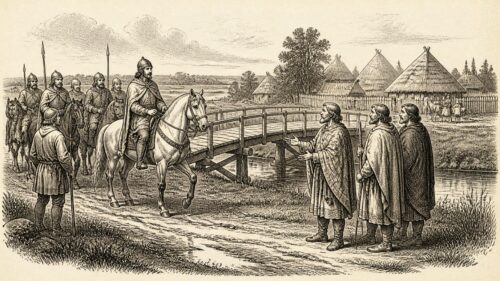
Its geographical reach should not be mistaken for uniform authority. Formal sheriffdoms were still limited, and much of the island remained under rulers operating through Gaelic law, tribute and personal lordship. Nor was commerce absent from this militarised landscape. Dublin, Waterford and Limerick were mints for King John’s Irish coinage, while ports and river routes linked Irish producers and consumers to Britain and the Irish Sea. Yet for farming households near the frontier, a castle meant demands for food, timber, carriage and service as well as the danger of a raid. Annalists often express the human cost through the language of prey-taking: cattle were wealth, food, breeding stock and a measure of political submission.
Churches, Kingship and Southern Conflict
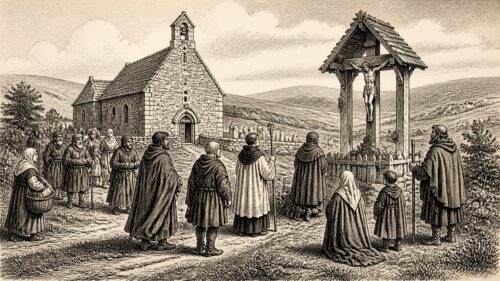
Church institutions remained woven into every level of political life. In Bangor, Sitriuc Ua Laigénáin, successor of St Comgall, died and was succeeded by Aengus mac Cormaic. Such notices record continuity in an older ecclesiastical office, even as diocesan bishops and reformed religious orders gained influence. Elsewhere, the vulnerability of sacred places was stark. The Four Masters say that Drumquin, with its churches, was burned by Cenél nEógain without Áed Ua Néill’s consent; they also record the killing of Domnall Ua Duibhín in the doorway of Derry’s abbey church. The emphasis on consent, sanctuary and church space reflects moral expectations, even when warfare violated them.
In Desmond, the Annals of Inisfallen and Mac Carthaigh’s Book place the accession of Cormac Liathánach Mac Carthaigh in 1212. His taking of kingship was accompanied by the killing of Mac na Seathar Ua Flainn. Inisfallen also describes the release of Diarmait Mac Carthaigh and a twenty-night campaign in Durrus by Diarmait and the sheriff, while Cormac sought tribute in Desmond. Two sons of Domnall Ua Donnchada were killed by foreigners amid allegations of betrayal by kin. These southern entries reveal the same pattern seen in the north: royal officials and settler forces acted within local dynastic struggles, not outside them. Authority was negotiated through hostages, tribute, imprisonment, alliance and force.
A Contested Lordship
For Ireland, 1212 was not a quiet interval between famous events. It was a year in which the crown’s programme of castles, finance and military intervention met determined resistance and was repeatedly reshaped by Irish politics. Clones and Cáel Uisce embodied a forward policy, but both were destroyed. Áed Ua Néill’s victory demonstrated the resilience of northern power; Cormac Ua Máel Sechlainn’s success in the Midlands showed that Meath remained unsettled; and the Mac Carthaigh struggle exposed the interdependence of local kingship and colonial government in the south.
The year’s records do not offer a complete census of society, culture or trade. They preserve what their writers judged memorable: deaths of church leaders, castles raised and ruined, raids, victories and acts of violence. Read critically, however, they give a coherent impression. Ireland in 1212 was connected to England, Galloway, the Isles and the papal world, yet its outcomes were determined in particular places—at a ford on the Erne, a castle at Clones, a church at Derry, an encampment in Durrus and the contested lordships of Meath and Desmond.
Primary Sources
- The Annals of Ulster: Year U1212
- Annals of the Four Masters: Annal M1212
- Mac Carthaigh's Book: Annal MCB1212
- Mac Carthaigh's Book: Original Irish Text, Annal MCB1212
- Annals of Inisfallen: Annals AI1207–AI1217
- Annales Dominicani de Roscoman
- Norman Ireland in 1212
- Pope Innocent III and the Irish Kings
- Pope Innocent III and the Waterford-Lismore Controversy 1198–1216
- King John’s Irish Rex Coinage Revisited
- The Irish Pipe Roll of 14 John, 1211–1212
- Irish Fines and Obligations to King John
- King John’s Dealings in Ireland
- The Irish Pipe Roll for 14 John: Early Evidence for Bureaucratic Royal Government in Ireland
- Clones Conservation Plan
- Leixlip: Chronology 1200–1499 AD
- Irish Historic Towns Atlas: Limerick Essay
- Exploring the Irish Annals
- Athlone Castle: Its Early History
- The Archaeology of Medieval Ireland: Bibliographical Preview