Ahascragh’s Restitution1307 CE
In 1307, Edward II succeeded Edward I as Lord of Ireland, while existing Dublin administration continued under officials including newly appointed Exchequer treasurer Alexander de Bicknor. Richard de Havering received Dublin archbishopric temporalities but was never consecrated, and bishops died at Kilmacduagh and Elphin. At Ahascragh, Donnchad Muimhneach Ó Cellaigh of Uí Maine defeated forces associated with Roscommon, capturing the sheriff and other opponents. Prisoners were released under restitution for an earlier burning attributed to Edmund Butler, before Ó Cellaigh died. Killings among Ó Conchobair claimants underscored Connacht instability. Sources require caution because annalistic chronologies conflict over some recorded events.
Dateline
In 1307, Ireland was not a single political arena governed from one centre. Royal administration based in Dublin and the lordship’s towns coexisted, competed and negotiated with powerful Gaelic lordships, Anglo-Irish magnates and ecclesiastical jurisdictions. The year is best understood through several firmly dated changes in authority and a sharp local conflict at Ahascragh in Uí Maine. Together they show a country in which royal government mattered, but where control on the ground depended upon local alliances, armed followings and the capacity to make – or enforce – restitution.
A New Lord of Ireland
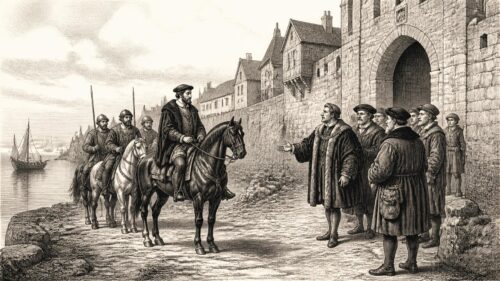
The clearest nationwide event was the death of Edward I on 7 July 1307 and the accession of his son Edward II. Edward II thereby became king of England and Lord of Ireland. This was a constitutional change rather than a change of ruler physically present in Ireland: the new king did not arrive to take possession of the island, and the day-to-day machinery of government continued through officials, courts, sheriffs, magnates and churchmen already operating there. Yet the transition mattered. Offices, revenues, grants and military obligations all rested ultimately upon royal authority, and a new reign invited the renewal of claims and connections.
It also occurred at a difficult moment for the wider Plantagenet polity. England had been at war with Scotland since 1296, and Edward II inherited both that conflict and the financial pressures it created. Ireland was linked to this wider Irish Sea world through ships, men, supplies and royal finance, but 1307 should not be treated as a prelude in which the later Bruce invasion was already inevitable. Edward Bruce would not land in Ireland until 1315. In this year, the more immediate consequence was administrative: the new king’s government needed its Irish revenues and servants to remain dependable.
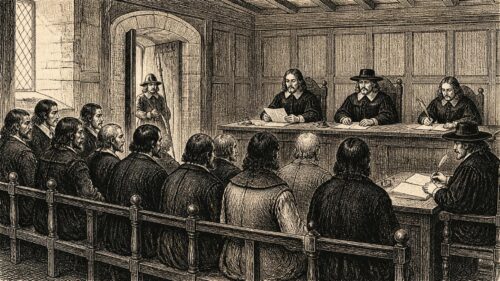
On 28 October, Alexander de Bykenore, generally known as Alexander de Bicknor, was appointed treasurer of the Dublin Exchequer. Royal records soon gave him protection for a journey to Ireland on the king’s service, while further business connected him with collection of a royal levy. His appointment is a small but revealing sign of the lordship’s institutional life. The Exchequer was not an abstraction: it received and audited money due to the Crown, dealt with debts and payments, and helped convert the agricultural and commercial wealth of the English-controlled areas into usable royal resources. Its officials worked in a landscape where royal writs had uneven practical reach.
Dublin’s Unfinished Archbishop
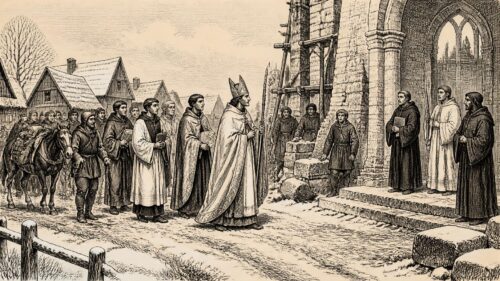
Church government also changed. Richard de Havering, precentor of St Patrick’s Cathedral, had been elected archbishop of Dublin in March. He was appointed on 10 July and received the temporalities – the estates and revenues of the archbishopric – on 13 September. These dates are firm, but they require a qualification: Havering was never consecrated bishop and later resigned. In 1307, therefore, he held the dignity and income of the see without completing the sacramental and institutional process that would have made him archbishop in the fullest sense.
The episode illuminates the material character of an episcopal vacancy. An archbishopric was a spiritual office, but also a major landholder and employer, with manors, rents, courts and tenants. Possession of its temporalities affected clergy and lay people across the diocese. The two great cathedral communities, Christ Church and St Patrick’s, were central to Dublin’s religious and civic world; their senior clergy were also participants in the lordship’s administration. Havering’s incomplete elevation demonstrates that the governance of the medieval Irish Church involved cathedral elections, royal interests and papal authority as well as pastoral care.
Elsewhere, the annals record the deaths of Laurence Ó Lachtna, bishop of Kilmacduagh and a Franciscan friar, and Donnchad Ó Flannagáin, bishop of Elphin. These notices do not describe the elections that followed, but they remind us that episcopal succession was occurring simultaneously in dioceses whose political surroundings differed greatly. Kilmacduagh lay in the west, near the borderlands of Connacht and Thomond; Elphin was embedded in the contested politics of Connacht. Religious institutions provided continuity in such regions, but they were also affected by the rivalries of the dynasties and lordships around them.
Ahascragh and Uí Maine
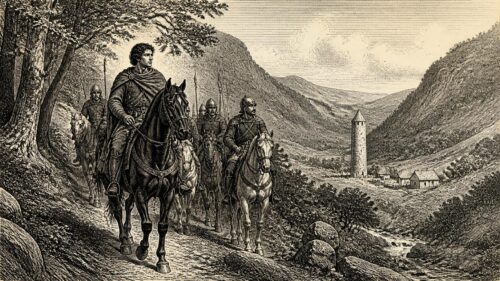
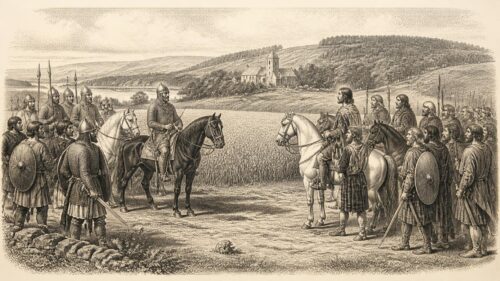
The most substantial Irish conflict securely entered under 1307 in the Annals of the Four Masters took place at Ath-easgrach-Cuan, identified with Ahascragh in modern County Galway. Donnchad Muimhneach Ó Cellaigh, lord of Uí Maine, defeated what the annal calls the greater number of the “English of Roscommon”. Philip Muinder, John Muinder and Main Drew were among those named as killed. Dermot Gall Mac Diarmata, Cormac Mac Cehernach and the sheriff of Roscommon were taken prisoner.
This was not simply a clash between two neatly bounded peoples. Roscommon was a centre of royal and Anglo-Irish power within a region crossed by Gaelic lordships, ecclesiastical lands, castles, roads and markets. The presence of a sheriff indicates the involvement of the lordship’s county administration; the participation of Mac Diarmata and Mac Cehernach shows that local political society could not be reduced to an English-versus-Irish division. Ó Cellaigh’s force was acting for Uí Maine, a substantial Gaelic polity east of the River Suck, whose rulers had to defend their position amid the expanding and contracting influence of neighbouring powers.
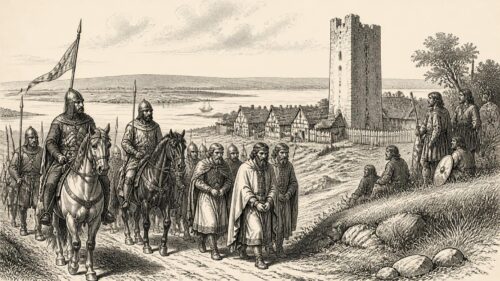
The annal provides an unusually important aftermath. The prisoners were released, and peace – or, more exactly, restitution – was made for the burning of the town by Edmund Butler. It does not date that burning within 1307, so it should not be presented as a separately dated event of the year. What can responsibly be said is that the agreement recorded in 1307 connected the violence at Ahascragh to compensation for an earlier or otherwise undated burning attributed to Butler. Such settlements mattered. They could restore captives, address loss of property and reduce the risk of revenge raids, even when they did not erase the political grievance that had caused fighting.
Donnchad Ó Cellaigh died after these achievements, according to the same annal. The wording is laudatory, praising his courage and generosity, as annalists often did for a notable lord. His death therefore compounded the disruption caused by the conflict: Uí Maine had won a striking encounter and then lost its leader. For dependants, tenants, fighting men and neighbouring communities, a lord’s death could reopen questions of succession, protection, hospitality and the distribution of resources.
Connacht’s Rival Claimants
Conflict within Connacht’s ruling kindreds formed a second, closely connected thread. Donnchad, a tanist or recognised heir within the Ó Conchobair royal family, was killed by Aodh Breifneach Ó Conchobair. Another Ó Conchobair, Tadc, was killed by Cathal, son of Donnchad. The annals preserve the dense genealogies because descent established political standing, but genealogy alone did not settle authority. A claimant required allies, household troops, clients and the ability to reward supporters. The killings recorded in 1307 were thus not marginal private feuds: they shaped who could command in Connacht and how securely.
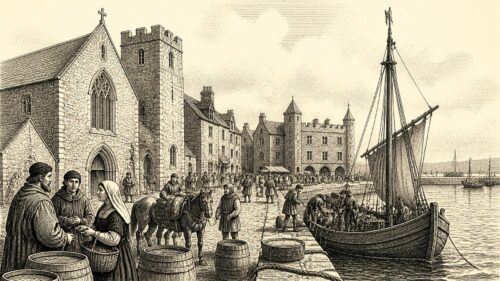
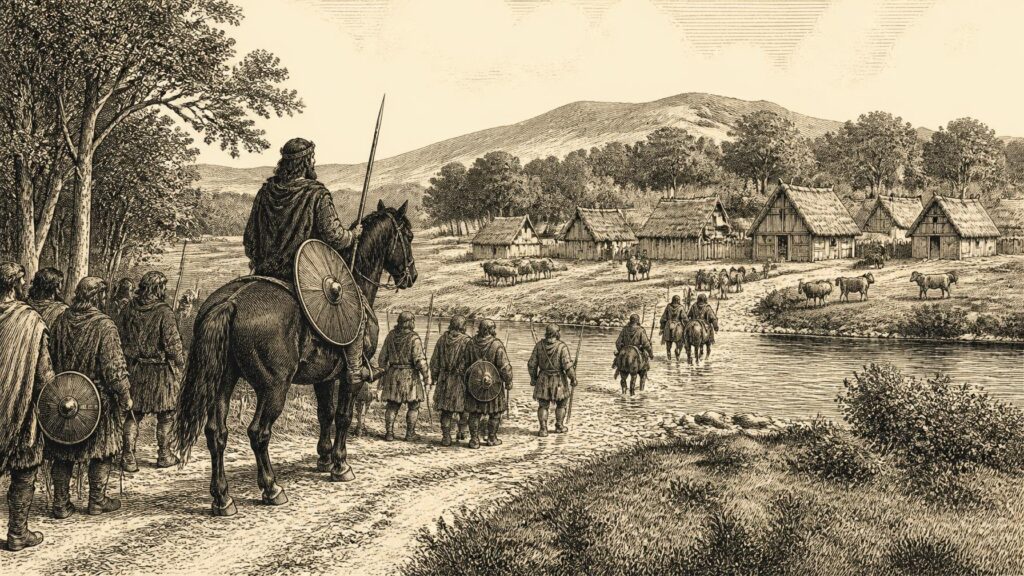
The year’s evidence is strongest for warfare, succession and officeholding; it does not justify a fabricated picture of a universally ruined countryside or a comprehensive national crisis. Towns and ports continued to trade, churches continued their routines, and farming communities still produced the food, rents and livestock on which every lord depended. Waterford’s earlier prominence in the wine trade, and the continuing business of Dublin’s Exchequer, show the commercial and administrative networks within which 1307 unfolded. But the evidence from Ahascragh makes equally clear that prosperity and security remained vulnerable to burning, seizure and armed reprisal.
Dating the Annals Carefully
A final caution is essential. The Annals of Ulster place a different sequence of Connacht and Thomond events under their entry labelled 1307, while the Annals of the Four Masters place corresponding material in 1311. This reflects differing annalistic chronologies, not proof that all such events belong to the calendar year 1307. For that reason, they should not be imported into this year’s narrative merely because one manuscript heading bears that number. The securely usable picture of 1307 is consequently narrower but more reliable: a new Lord of Ireland, adjustments in royal and ecclesiastical administration, a violent confrontation at Ahascragh, and continuing instability among Connacht’s leading families.
Primary Sources
- Annals of the Four Masters, Part 14: Annals M1302–M1311
- The Annals of Ulster, Part 110: Year U1307
- Annals of the Four Masters: Textual Profile and Bibliography
- Annals of the Four Masters, Volume 3 English Translation
- CELT: List of Published Texts
- Edward II and Ireland (in Fact and in Fiction)
- Alexander de Bicknor, named 1291 to 1391
- Swords Castle Conservation Plan
- Transactions of the Bristol and Gloucestershire Archaeological Society, Volume 8
- Lives of the Lord Chancellors: Chancellors of Ireland
- Lea Castle
- History: Lea Castle
- Saintonge Green Glazed Wine Jug
- The Great Charter Roll
- Norman Times and After
- Norman Ireland: Medieval Ireland
- The Norman Conquest
- Normans Becoming More Irish
- The Middle Ages
- Downey: The Story of Waterford