
Archived: 26 September 2026
Abstract
Ireland’s 2025 combined economic strength with social and infrastructural pressures. Micheál Martin returned as Taoiseach, leading a Fianna Fáil–Fine Gael coalition supported by independents, which prioritised housing, services, security and competitiveness. Ireland pursued prominent legal and diplomatic action concerning Gaza, while Shared Island and research funding encouraged practical north–south cooperation. Population growth, employment and tax revenues intensified demand for homes, schools and healthcare. Housing completions rose, alongside a new long-term building plan and planning reforms. Cultural and language initiatives continued. Storm Éowyn caused severe disruption, and an exceptionally warm year highlighted climate risks. Dependence on multinational corporation tax remained vulnerability.
Read Article
Archived: 26 September 2026
Abstract
In 2018, Ireland experienced major constitutional, social and political change amid economic growth and persistent inequality. In May, voters repealed the Eighth Amendment by 66.4 per cent, enabling legislation for abortion services from 2019; October also removed blasphemy from the Constitution and returned Michael D. Higgins as President. Brexit negotiations centred on an Irish border backstop, while Northern Ireland remained without devolved government. Housing shortages and homelessness intensified despite Project Ireland 2040 and new development initiatives. Pope Francis’s visit highlighted abuse-related criticism of the Church. Alcohol legislation, broadband planning and severe autumn storms further shaped a consequential, unresolved national year.
Read Article

Archived: 26 September 2026
Abstract
Ireland in 2017 faced political, social and constitutional uncertainty amid economic recovery. Leo Varadkar became Taoiseach, leading a fragile Fine Gael minority after Frances Fitzgerald’s resignation. Northern Ireland’s Executive collapsed, while Brexit negotiations elevated the border, producing commitments to avoid a hard border and protect the Belfast Agreement. Citizens’ Assembly and Oireachtas processes advanced debate on repealing the Eighth Amendment. Tuam excavations revealed infant and child remains, intensifying scrutiny of mother-and-baby homes. Growth coexisted with severe housing need and homelessness. Census profiles highlighted education and diversity; Storm Ophelia caused disruption and deaths; Creative Ireland promoted cultural participation across communities nationwide.
Read Article
Archived: 26 September 2026
Abstract
Ireland in 2014 emerged economically from crisis, but austerity and distrust fuelled protests against Irish Water’s meters and household charges. The Government delayed charges, capped bills and legislated safeguards, while electoral losses reflected wider discontent. Severe Atlantic storms caused flooding, coastal damage and power failures. Garda controversies prompted ministerial resignations and reforms including protected-disclosure, human-rights and freedom-of-information measures. Catherine Corless’s Tuam research provoked national reckoning with mother-and-baby institutions. President Higgins’s state visit to Britain affirmed improving relations. In Northern Ireland, the Stormont House Agreement addressed finances, institutions and conflict legacies. The Wild Atlantic Way promoted coastal tourism amid uneven recovery.
Read Article

Archived: 26 September 2026
Abstract
In 2003, Ireland debated neutrality as United States forces continued using Shannon Airport during the Iraq invasion, prompting protests, parliamentary conflict and an unsuccessful legal challenge. Northern Ireland’s devolved institutions remained suspended despite British-Irish initiatives and IRA decommissioning; November’s election advanced the DUP and Sinn Féin. The Special Olympics World Summer Games, hosted across Ireland, celebrated athletes with intellectual disabilities and volunteering, while Tyrone won an Ulster all-Ireland final. Slowing Celtic Tiger growth nevertheless brought housing construction, immigration and pressure on services. Government plans for smoking restrictions provoked debate, and the Derrybrien peat slide exposed risks associated with wind-energy development.
Read Article

Archived: 9 October 2026
Abstract
In 1902, Ireland remained under United Kingdom rule, but the land question prompted an important shift towards conciliation. Following failed proposals and public initiatives by Lindsay Talbot Crosbie and Captain John Shawe-Taylor, landlord and tenant representatives met at Dublin’s Mansion House on 20 December. Chaired by Lord Dunraven, the conference explored voluntary land transfer, without resolving matters before year’s end. Agriculture, co-operation and official improvement shaped rural change, while regional economic differences persisted. Cultural nationalism also flourished through Cathleen ni Houlihan, Gaelic League events and Arthur Griffith’s abstentionist ideas. James Joyce’s departure for Paris suggested emerging cosmopolitan new literary ambitions.
Read Article
Archived: 9 October 2026
Abstract
In 1897, Ireland remained under the Union, with Home Rule stalled and nationalist parliamentary strength weakened after Parnell. Debate increasingly focused on prospective local-government reform, while Victoria’s Diamond Jubilee exposed competing loyalist, nationalist, republican and socialist allegiances. Cultural nationalism gained durable institutions: Gaelic League held first Oireachtas at Dublin’s Rotunda, and first Feis Ceoil promoted musical cultivation. Yeats, Lady Gregory and Edward Martyn planned an Irish Literary Theatre, while Bram Stoker published Dracula. Rural life depended on land and British markets; Horace Plunkett advanced agricultural co-operation. Anti-jubilee protests, cultural initiatives and practical reform reflected an increasingly organised, diverse national life.
Read Article
Archived: 10 October 2026
Abstract
In 1890, Charles Stewart Parnell emerged largely vindicated from the Special Commission, but his leadership of the Irish Parliamentary Party collapsed after Captain O'Shea's divorce case exposed his relationship with Katharine O'Shea. Gladstone warned that retaining Parnell endangered Liberal support for Home Rule, while Catholic bishops opposed him. In Committee Room 15, forty-five MPs abandoned Parnell, leaving twenty-eight supporters and dividing nationalism for the decade. Meanwhile, land, labour and food insecurity persisted, despite Davitt's activism. Belfast's market, Derry's Guildhall and Dublin's museum signalled civic development, whereas removal of Inishbofin remains exposed exploitative Victorian anthropology and unequal institutional power over bodies.
Read Article
Archived: 10 October 2026
Abstract
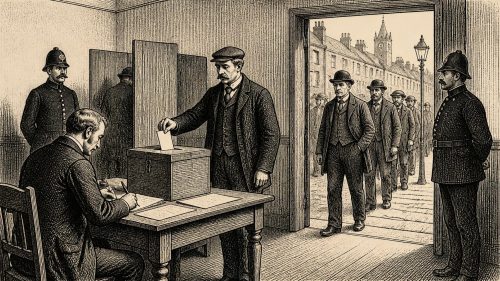
In 1872, the Ballot Act introduced secret voting for Irish parliamentary and municipal elections, first tested at Londonderry City, where Conservative Charles Lewis won a four-cornered by-election. Franchise restrictions and local religious, social and political influence nevertheless persisted. Isaac Butt’s Home Rule movement expanded through contested elections, linking constitutional reform with tenant grievances. Repeal of the Party Processions Act enabled nationalist demonstrations: Derry’s passed peacefully, but Belfast’s Hannahstown procession preceded severe sectarian rioting, deaths and displacement. Religious education, Church affairs, agricultural change, urban institutions and literary publication reflected pressures. Lord Mayo’s assassination in India highlighted Ireland’s connections to imperial government.
Read Article

Archived: 10 October 2026
Abstract
In 1849, the Great Famine continued as blight, hunger, eviction, overcrowded workhouses and disease devastated Ireland. Cholera killed 772 of 1,077 recorded cases at Ballinasloe Union Workhouse, illustrating inmates’ vulnerability. Relief depended heavily on inadequate local rates; the May rate-in-aid redistributed Irish, rather than British, resources. The Incumbered Estates Act signalled restructuring of landownership, while emigration, consolidation and evictions altered rural life. Young Ireland leaders were transported, and unrest persisted; Dolly’s Brae exposed sectarian tensions. Victoria’s tour, new Queen’s Colleges and the Dublin–Cork railway projected progress, yet famine, political conflict and social upheaval still continued across the island’s fractured communities.
Read Article
Archived: 11 October 2026
Abstract
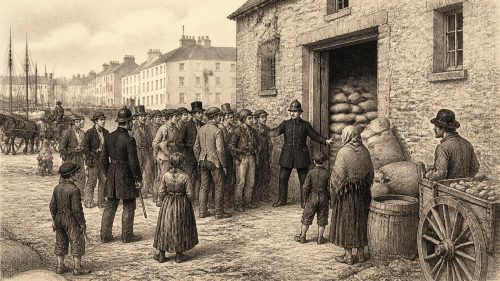
In 1842, before potato blight, Ireland experienced acute distress from scarcity, high prices, seasonal unemployment and entrenched poverty. Galway symbolised the crisis when hungry people attacked a potato store in June, reflecting fears of hoarding and food beyond local reach. The expanding Poor Law rapidly opened workhouses, offering deterrent, stigmatising relief while leaving many needy people outside. Temporary government aid acknowledged emergency conditions. Daniel O’Connell’s Repeal Association strengthened its organisation, linking constitutional demands with economic grievances and opposing slavery. Peel’s tariff reforms fuelled criticism of Westminster. In October, The Nation began promoting nationalism, connecting material hardship, identity and political self-government.
Read Article
Archived: 11 October 2026
Abstract
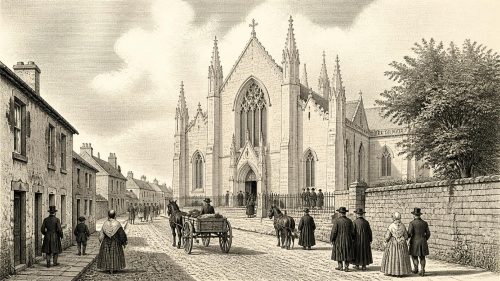
In 1837, Victoria’s accession prompted an Irish general election in which Daniel O’Connell and his allies demonstrated Catholic political organisation despite a restricted, public franchise. Parliament debated Irish poor relief amid widespread insecurity, but legislation followed only in 1838. Tithe grievances, local crop failures, potato dependence and uneven employment exposed rural vulnerability. Tuam’s completed Catholic cathedral symbolised post-emancipation confidence, although religious divisions endured. Samuel Lewis’s dictionary, Ordnance Survey work and Dublin policing measures reflected administrative control. Ireland remained commercially and imperially connected, illustrated by HMS Terror’s repair at Lough Swilly, yet the Union, unequal landholding, poverty and representation remained unresolved.
Read Article
Archived: 11 October 2026
Abstract
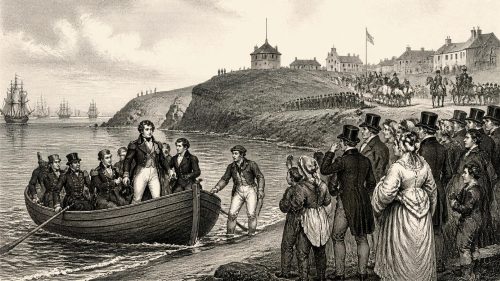
In 1821, Ireland experienced population growth, economic hardship, political exclusion and royal pageantry. The first comprehensive census recorded about 6.8 million people, exposing dependence on insecure rural livelihoods; most detailed returns were later destroyed in 1922. Post-war depression, rents, tithes and scarce employment contributed to Munster’s emerging Rockite disturbances. Westminster’s Catholic Disability Removal Bill passed the Commons but failed in the Lords, preserving Catholic exclusion from Parliament. George IV’s August landing at Howth inspired displays of loyalty, including Daniel O’Connell’s conciliatory participation, but brought no reform. Administrative changes and cultural activity highlighted tensions between Union, equality, rural insecurity and identity.
Read Article
Archived: 13 October 2026
Abstract
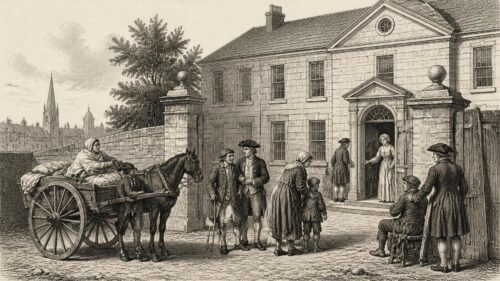
In 1733, Ireland experienced influenza, financial insecurity and institutional change centred on Dublin. Dr Steevens’ Hospital opened, providing treatment for workers while imposing rules of admission and patronage. Ben and Samuel Burton’s bank collapsed, exposing dependence on credit. Parliament returned, raised revenue duties and elected Henry Boyle Speaker, while proclamations targeted smuggling and disorder. George II chartered the Protestant charter-school society to educate and convert poor Catholic children. The Dublin Society promoted agriculture, minerals and manufactures. Cultural life included Samuel Madden’s fiction, the death of Irish-language poet Séamas Dall Mac Cuarta, Richard Kirwan’s birth, and architect Edward Lovett Pearce’s death.
Read Article
Archived: 14 October 2026
Abstract
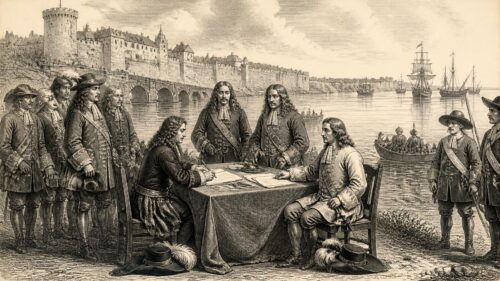
In 1691, Williamite forces broke Jacobite power in Ireland, ending the war begun after James II’s overthrow. Ginkel captured Athlone, then defeated Saint-Ruth’s army at Aughrim, where the French commander’s death precipitated rout and Galway’s surrender. Limerick, divided after Tyrconnell’s death and deprived of resources, endured siege, bombardment and a Williamite crossing of the Shannon. Articles signed on 3 October ended organised resistance, offering protections for Catholic property, trade and worship, though their wording and enforcement remained disputed. Military terms enabled departure, Williamite service or homecoming. Thousands entered French service, while William and Mary secured sovereignty amid unsettled political consequences.
Read Article
Archived: 14 October 2026
Abstract
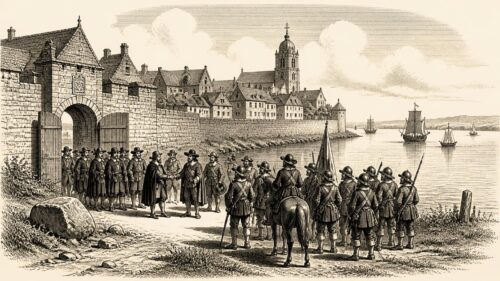
In 1652, Galway, the last major Confederate Atlantic port, surrendered to parliamentary forces after siege and blockade, ending its military significance but leaving Catholic inhabitants uncertain. Resistance persisted through irregular fighters, while agreements offered some soldiers foreign service. Charles Fleetwood’s appointment signalled army-backed civil rule. On 12 August, the Rump Parliament’s Act for the Settling of Ireland established punitive categories of guilt, enabling forfeiture, banishment and redistribution of land to soldiers and Adventurers, although later measures shaped transplantation. War, famine, disease and displacement devastated communities. Thus conquest evolved into a programme restructuring property, authority, religion and belonging under Commonwealth rule.
Read Article
Archived: 16 October 2026
Abstract
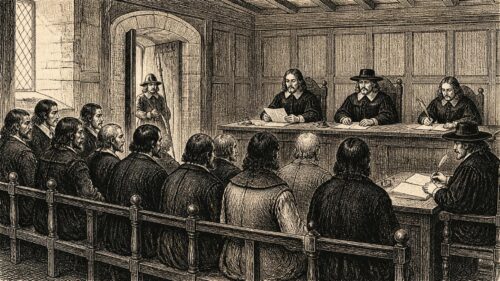
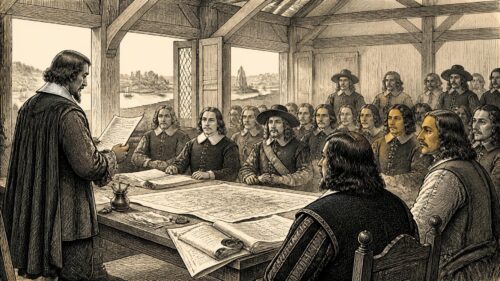
In 1636, Thomas Wentworth’s administration intensified royal control in Ireland through land, religion, economic regulation and culture. Galway jurors who rejected the Crown’s Connacht title were fined and imprisoned, demonstrating the coercive defence of plantation policy. Although Wentworth departed for England in July, trusted officials maintained his programme with royal support. Linen regulations sought to standardise rural spinning and promote exports. In Ulster, Bishop Henry Leslie silenced five ministers refusing Anglican canons, narrowing religious latitude. Meanwhile, the Four Masters completed their Irish annals, and Dublin’s Werburgh Street theatre flourished. These developments revealed an apparently peaceful kingdom under mounting centralised pressure.
Read Article
Archived: 16 October 2026
Abstract
In 1635, Thomas Wentworth’s Dublin administration intensified efforts to reshape Ireland through parliamentary legislation, religious conformity, economic regulation and investigations of land title. Parliament passed measures on correction houses, alehouses, husbandry, clergy and Protestant schools, but failed to secure promised protections for established estates. Crown pressure reached Ulster when London plantation companies lost their charter, and peaked in Connacht, where Galway jurors at Portumna rejected the king’s claimed title and were fined and imprisoned. Wentworth also crushed Lord Mountnorris politically. Meanwhile, Hugh Ward’s death at Louvain marked a loss to Irish scholarship. The year revealed widening distrust of coercive government.
Read Article
Archived: 16 October 2026
Abstract
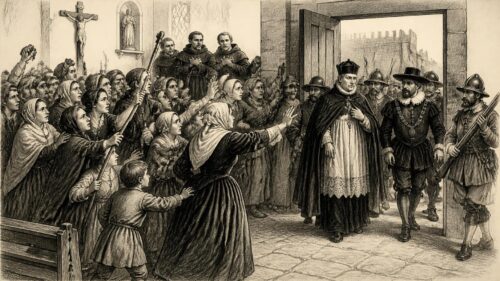
In 1629, Ireland experienced administrative change, religious tension and renewed Catholic confidence. Henry Cary’s recall left Richard Boyle and Adam Loftus as lords justices, committed to royal order and Protestant ascendancy. Despite pressure on recusancy, Dublin’s Catholic networks expanded, exemplified by Poor Clares returning from Flanders to found a convent. On St Stephen’s Day, officials led by Archbishop Lancelot Bulkeley raided the Franciscan chapel in Cook Street. Congregants, notably merchant widow Elinor Nugent and other women, rescued friars and drove raiders into hostile streets. The incident exposed Catholic urban solidarity, women’s agency, transnational links, and the limits of state coercion.
Read Article
Archived: 17 October 2026
Abstract
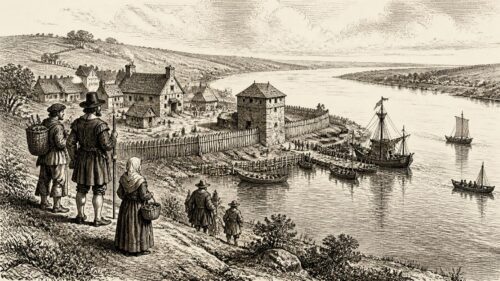
In 1604, after the Nine Years’ War, the crown sought to convert military victory in Ireland into durable administration. James I’s 11 July charter for Derry envisaged a fortified commercial town on the Foyle, combining garrison, trade, law and settlement, though it preceded the later Ulster Plantation. Recovery remained painful amid famine, displacement and contested land rights; Brian Óg O’Rourke’s death symbolised defeated resistance. Knighthoods, patents and territorial grants rewarded cooperative elites while reshaping Gaelic lordship and provoking rivalries. Anglo-Spanish peace reduced prospects of intervention. Arthur Chichester’s appointment and John Davies’s policies foreshadowed stronger crown government, surveys and planned settlement.
Read Article
Archived: 17 October 2026
Abstract
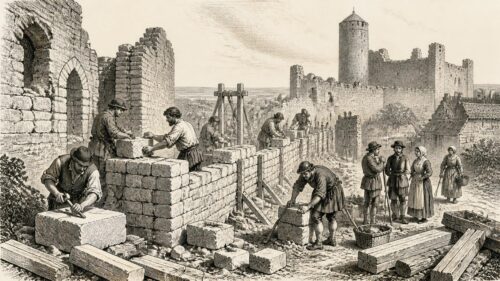
In 1576 Sir Henry Sidney extended Tudor authority through provincial journeys, submissions, hostages, county organisation and garrisons, but encountered persistent resistance. At Athenry, devastated during Burke conflict, he ordered a smaller defensible enclosure, yet reconciliation collapsed when Clanricarde’s sons defied restrictions, leaving rebuilding incomplete. Connacht’s new counties and Nicholas Malby’s command joined administration to coercive warfare. William Drury’s Munster presidency introduced courts, martial law and proposed composition, threatening lordly power. Rory Óg O’More’s resistance exposed instability in the midlands. Succession disputes, learned men’s deaths, fires and Essex’s death further marked a year in which expanding government failed to secure consent.
Read Article
Archived: 17 October 2026
Abstract
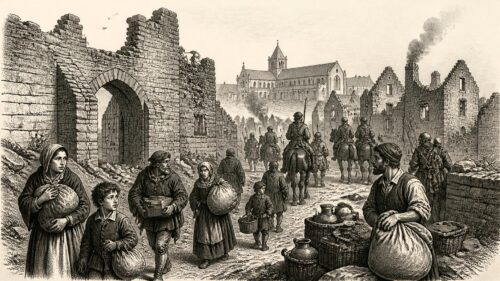
In 1572 Sir Edward Fitton’s Galway court and arrest of the earl of Clanricarde provoked Ulick and John Burke’s rebellion across Connacht. Supported by gallowglasses and Scottish mercenaries, they attacked castles, towns, trade routes and government allies, devastating Athenry and threatening Galway. The crown released Clanricarde to restore peace, but negotiation merely suspended disputes over succession and authority. Meanwhile, rebels unsuccessfully aided James fitz Maurice during the siege and eventual fall of Castlemaine Castle, a key stage in the first Desmond rebellion. Deaths of churchmen, learned men and civilians, alongside reported human and cattle mortality, reflected insecurity amid Tudor rule.
Read Article

Archived: 18 October 2026
Abstract
In 1554 Queen Mary restored Gerald FitzGerald, surviving Kildare heir, as earl of Kildare and baron of Offaly, symbolising Geraldine rehabilitation while retaining tighter Tudor supervision. His return accompanied military cooperation with Lord Delvin against Clandeboye amid O’Neill dynastic conflict. Elsewhere, O’Brien campaigns, Burke alliances and a MacSweeney battle demonstrated persistent local warfare, raiding and divided kindreds. Marian religious restoration deprived Edward Staples of Meath, advanced William Walsh, and promoted Catholic discipline under George Dowdall. Dublin’s legal administration continued through new judicial appointments. Deaths of Gaelic lords and poet Tadhg Ó Cobhthaigh underscored Gaelic power, cultural memory and learned traditions.
Read Article
Archived: 18 October 2026
Abstract
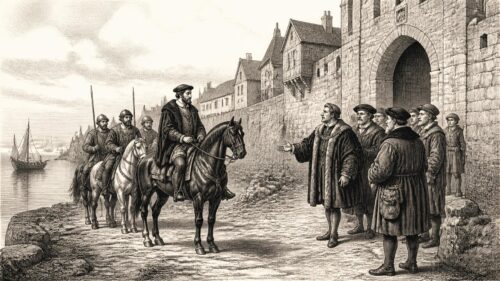
In 1538, Lord Leonard Grey extended Tudor influence through an armed western progress, securing submissions, attacking Claregalway Castle and visiting Galway, where civic hospitality reflected loyalty. Yet authority remained contingent: regional rulers used crown alliances for dynastic rivalries, while warfare continued in Connacht, Tyrone, Fermanagh and Wicklow. Grey’s support helped Ulick Burke dominate Clanricarde, and Thomond politics shifted around O’Brien competition. Religious reform advanced unevenly through Browne’s contested visitation and monastic suppressions, while Newry was remodelled rather than dissolved. Piers Butler regained Ormond’s earldom, and urban education and patronage persisted. Ireland remained politically fragmented, governed through force, negotiation and bargains.
Read Article
Archived: 19 October 2026
Abstract
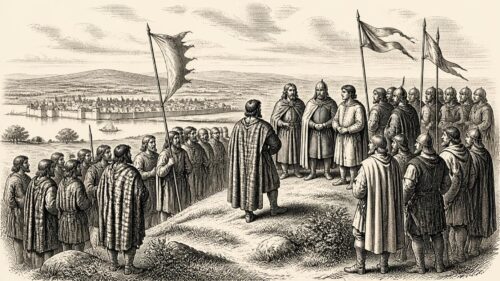
In 1504, Gerald FitzGerald, eighth earl of Kildare and king’s deputy, led a broad Gaelic and settler-descended coalition against Uilleag Fionn Burke of Clanricard and Turlough Donn O’Brien. The conflict arose from Burke’s attacks on O’Kelly territory and seizure of Galway, but reflected wider struggles for Connacht. At Knockdoe near Galway on 19 August, Kildare’s army won a devastating battle, with annals reporting nine gallowglass battalions almost destroyed. Burke surrendered hostages, restoring Kildare’s influence without securing lasting royal control. The year’s annals also commemorate clerics, scholars, physicians and patrons, revealing religious, learned and hospitable networks alongside warfare across medieval Ireland.
Read Article

Archived: 19 October 2026
Abstract
In 1500, Ireland experienced local conflicts, disasters and environmental hardship rather than a single national crisis. Aodh Ruadh Ó Domhnaill raided Tír Eógain, burning Dungannon and its strongholds, while Kildare’s intervention in Ó Néill territory proved temporary. Succession changed Breifne’s rulership, and killings, livestock raids and castle-building marked Fermanagh. Galway was largely destroyed by fire, threatening an important trading port. In Munster, the Barry family feud brought murder and posthumous punishment, while John Maguire executed a notorious horse thief. Prolonged wet weather damaged wheat. The death of Derry’s Franciscan bishop also reflected active religious networks across fragmented but connected lordships.
Read Article
Archived: 19 October 2026
Abstract
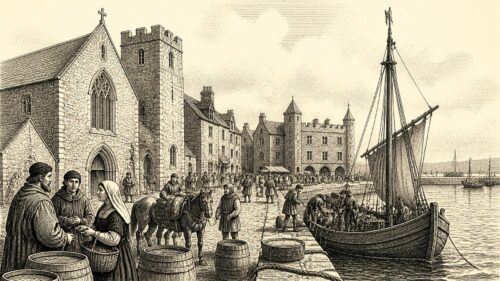
In 1484, Ireland comprised the English lordship, autonomous towns, Anglo-Irish magnates and Gaelic dynasties, each governed through distinct but connected powers. Under Richard III, Gerald FitzGerald, earl of Kildare, dominated Dublin administration, while parliament regulated coinage, revenues, religious property, fortification and urban affairs. Galway strengthened its position when St Nicholas’s became collegiate and Richard granted the town a mayoralty. Elsewhere, insecurity persisted: northern war between O’Neill and O’Donnell coincided with a violent Maguire succession dispute in Fermanagh, involving murder, raids, captives and church attacks. Annals also record deaths, imprisonment and pastoral wealth, revealing fragmented political and social life across Ireland.
Read Article
Archived: 19 October 2026
Abstract
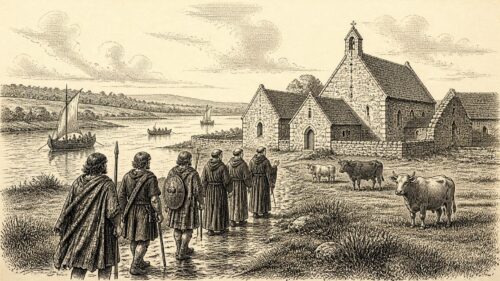
In 1479, Ireland’s diverse political and religious worlds were marked by reform, conflict and administrative adjustment. At Meelick, O’Madden patronage supported a Franciscan Observant renewal, strengthening dynastic commemoration and regional religious links. In Ulster, warfare between Tír Chonaill and Tír Eóghain involved raids, cattle seizures, ransom and hostages, burdening local communities. Obituaries around Lough Erne reveal clergy, artisans and hospitality networks underpinning lordship. In Dublin, Edward IV appointed Gerald FitzGerald, eighth earl of Kildare, deputy lieutenant, acknowledging dependence on local power. Statutes concerning merchants, civic privileges and Gaelic subjects exposed the English lordship’s porous, contested frontiers and commercial regulation alike.
Read Article
Archived: 19 October 2026
Abstract
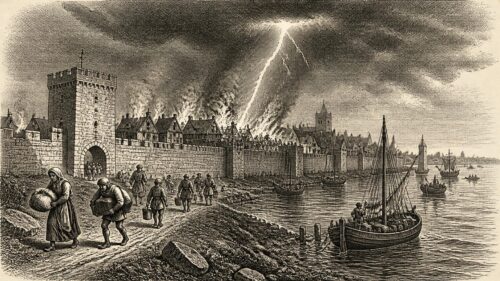
In 1473, Irish annals recorded Galway's destruction by lightning on 2 June, with major losses, alongside severe cattle mortality in Connacht. Raids, executions, family violence and warfare exposed contested lordships and fragile successions across Connacht, the midlands and Muintir Eolais. Conflicting accounts of fighting there reveal regional perspectives and heavy losses among nobles and commoners. Dublin's court executed Edward Nugent after his seizure by kin. Deaths of rulers, heirs, clergy and legal scholar Brian Mac Aodhagáin marked political and cultural change. An indulgence year, eclipse and marvels demonstrate religious and observational concerns, while commerce, livestock, learning and lordship remained intertwined.
Read Article
Archived: 19 October 2026
Abstract
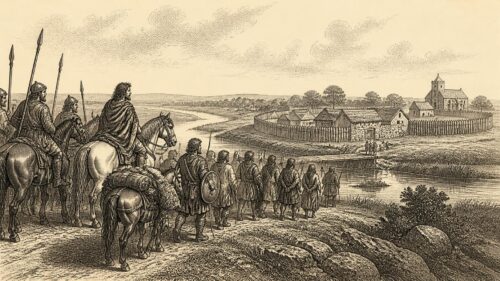
In 1469, Irish annals record struggles for lordship, wealth and security rather than a unified political order. Aodh Ruadh Ó Domhnaill secured hostages in Lower Connacht, allied with the newly installed Mac William Burke, and burned Claregalway and neighbouring territory during a campaign against Clanricarde, partly revenging 1467. Uí Maine faced disputed succession after Aodh Ó Cellaigh’s murder; Maguire kindreds fought destructive raids in Fermanagh; and the Whites expelled the Savages from Lecale. Death notices for a harpist, historian-hosteller and ecclesiastical coarb illuminate cultural institutions. Violence, alliance, kinship, hostages and resources shaped lordship, while ordinary people remained invisible in sources.
Read Article

