
Maguirebridge’s Buried Waters
Around 31,535 BCE, Ireland cannot be described through a precise event or recognised calendar date, but environmental evidence illuminates Late Pleistocene conditions. At Derryvree near Maguiresbridge, freshwater organic sediments between glacial tills show an ice-free interval, dated broadly to 36,900–31,700 calibrated years BP. They indicate cold, treeless, wet tundra with grasses, sedges, mosses, mountain avens and bogbean. Ice-sheet advance and retreat created varied regional environments. Castlepook Cave preserves remains of mammoth, reindeer and other cold-adapted fauna. A possibly cut-marked reindeer femur suggests, but cannot prove, an early human visit. No secure evidence supports settlement, culture, politics or routes into Ireland.
View Record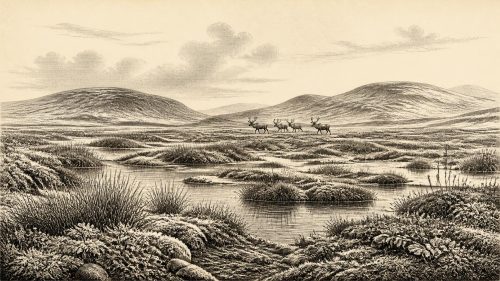
Fermanagh’s Interstadial Pool
31,536 BCE is a modern label within the climatically unstable Late Pleistocene, rather than a recoverable Irish historical year. At Derryvree, County Fermanagh, organic freshwater sediments between glacial tills indicate an ice-free tundra interval, with pools, sedges, mosses, bogbean, water-milfoil and mountain avens. Supporting but regionally variable evidence records changing ice margins, marine conditions and episodic warming. Southern cave fauna, including mammoth and reindeer, demonstrates cold-adapted animal colonisation, though deposits are mixed. A cut-marked Castlepook reindeer bone may indicate brief Upper Palaeolithic human activity, not settlement. Subsequent ice expansion obscured this intermittently habitable glacial-edge landscape in exposed northern Irish regions.
View Record
Castlepook’s Stone Scar
At 31,537 BCE, Ireland had no recorded history; evidence instead concerns fluctuating Upper Palaeolithic climates, landscapes and fauna. Derryvree sediments indicate an ice-free northern wetland with tundra vegetation and cold freshwater pools, although regional ice likely expanded unevenly. Lower sea levels did not guarantee a land bridge from Britain. Castlepook Cave preserves time-averaged remains of mammoth, reindeer, hyaena and other cold-adapted animals, whose dates require cautious interpretation. A deeply incised reindeer femur may record stone-tool butchery and Ireland’s earliest human activity, but lacks secure context. It suggests transient foragers, not settlement, amid an ecologically active landscape increasingly threatened by glaciation.
View Record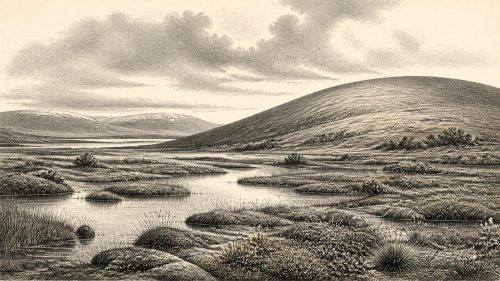
Derryvree’s Sedge Archive
The retrospective date 31,538 BCE denotes a broad Marine Isotope Stage 3 interval, not a documented Irish year. At Derryvree, County Fermanagh, freshwater organic silts between glacial tills, dated roughly 36,900–31,700 cal BP, preserve a treeless periglacial mosaic of sedges, mosses, herbs and shallow water during an ice-free episode. Castlepook Cave, County Cork, contains Pleistocene fauna, including mammoth, reindeer, giant deer and predators, accumulated over long periods. A marked reindeer femur may indicate stone-tool butchery by people, but cannot prove settlement. Ireland was volatile and intermittently habitable before later extensive British–Irish Ice Sheet expansion, while evidence remains fragmentary and uncertain.
View Record
Derryvree’s Waterlogged Tundra
Although 31,539 BCE is a modern conversion rather than a precise Irish date, Derryvree, County Fermanagh, illuminates later Marine Isotope Stage 3. Organic freshwater sediments, dated broadly to 36,900–31,700 calibrated BP, formed between glacial advances, demonstrating local ice-free conditions. Their plants, pollen and insects depict a cold, treeless, waterlogged tundra of sedges, grasses, mosses, juniper and herbs. Ireland's environments and ice margins varied regionally before the Last Glacial Maximum. Castlepook Cave preserves diverse cold-stage fauna, including mammoth, reindeer and hyena, plus a possible butchery-marked reindeer bone. This suggests brief human visits, not established settlement, amid later glacial destruction of evidence.
View Record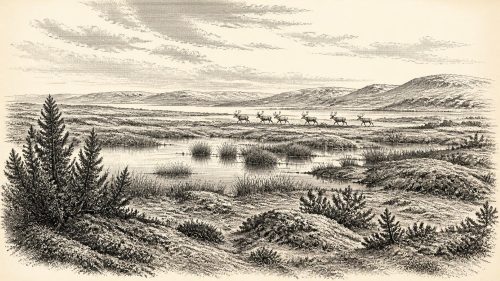
Derryvree’s Periglacial Ledger
31,540 BCE denotes a broad late Pleistocene interval, rather than a date recoverable in Irish archaeology. During Marine Isotope Stage 3, Ireland experienced unstable climatic oscillations, with changing ice margins, sea levels and habitats. Derryvree, County Fermanagh, preserves freshwater deposits dated broadly to 36,900–31,700 cal BP, showing locally ice-free, wet, treeless periglacial tundra. Castlepook Cave, County Cork, contains diverse fauna, including mammoth, reindeer, horse, giant deer and spotted hyena, demonstrating episodic animal dispersal. Human presence remains unproven: a possibly cut-marked reindeer bone suggests butchery, not settlement. Evidence reveals environmental history, while political, cultural and religious claims remain unsupported by evidence.
View Record
Crag Cave’s Liquid Water
Around 31,541 BCE, Ireland cannot be described through a precise historical year, but archaeological evidence indicates fluctuating Late Pleistocene conditions. Derryvree, County Fermanagh, preserves an ice-free freshwater wetland beneath tills, with treeless tundra vegetation. Castlepook Cave, County Cork, yielded cold-adapted fauna including mammoth, reindeer and hyaena, demonstrating intermittent ecological links with Europe, though its dating and deposition are complex. A possibly cut-marked reindeer bone suggests transient human contact but not settlement. Crag Cave calcite shows episodes of liquid water and unfrozen ground. Expanding ice later transformed and obscured these varied, vulnerable landscapes during the approach to the Last Glacial Maximum.
View Record
Birm-166’s Wide Horizon
About 31,542 BCE, Ireland lay within the fluctuating later Marine Isotope Stage 3, not a recordable historical year. Derryvree, County Fermanagh, provides key evidence: organic freshwater sediments dated broadly to 36,900–31,700 calibrated years BP lie between glacial tills, showing a locally ice-free, cold, treeless wetland with sedges, mosses and hardy plants. Southern cave remains demonstrate intermittent access by fauna including reindeer, mammoth, giant deer and predators, although assemblages are not single communities. A possibly cut-marked reindeer bone suggests transient human activity, but settlement remains unproven. Lower sea levels aided movement before later glaciation buried or destroyed much earlier physical evidence.
View Record
The Doneraile Reindeer Femur
31,543 BCE is a modern chronological marker, not a recorded Irish year; evidence consists of uncertain radiocarbon ranges, deposits and animal bones. Before the Last Glacial Maximum, parts of Ireland supported wetlands, sparse treeless vegetation and cold-adapted fauna, although landscapes changed rapidly and later ice erased much evidence. Derryvree deposits demonstrate freshwater conditions, while Castlepook Cave near Doneraile preserves remains of reindeer, mammoth, giant deer and carnivores from different periods. A reindeer femur bearing a possible butchery cut mark suggests brief Upper Palaeolithic human presence around 33,000 years ago. It proves neither settlement nor society; dating and excavation are required.
View Record
Castlepook’s MIS 3 Menagerie
Around 31,544 BCE, Ireland was in Marine Isotope Stage 3, entering a colder, increasingly glaciated Pleistocene environment rather than experiencing a datable historical event. Derryvree, County Fermanagh, preserves evidence of tundra wetland vegetation, pools, mosses and cold-adapted plants beneath later glacial deposits. Castlepook Cave, County Cork, yielded mammoth, reindeer, giant deer, hyena and other cold-climate fauna, although mixed deposits prevent assumptions that species coexisted. A cut-marked reindeer bone may indicate early human carcass processing, but no secure settlement evidence exists. Ice, changing seas and erosion have obscured much evidence, requiring cautious distinction between demonstrated facts and inference about its past.
View Record