Archived: 16 October 2026
Abstract
In 1618, Stuart government in Ireland used municipal law, land policy and inspection to reinforce royal authority, Protestant conformity and plantation. Waterford lost its charter after electing recusant civic officers, demonstrating that corporate liberties depended upon religious obedience. Commissioners examined plantation schemes in Longford and O’Carroll country, while an October order required native Irish occupiers to leave assigned Ulster plantation lands by May 1619. In November Captain Nicholas Pynnar was commissioned to inspect settlement, fortifications, tenants and arms in Ulster’s escheated counties. Aodh Mac Cathmhaoil’s Irish-language Catholic book, published at Louvain, and Richard Stanihurst’s death in Brussels highlighted Catholic connections.
Read Article
Archived: 16 October 2026
Abstract
In 1617 Ireland was being reshaped by Atlantic commerce, plantation, religious pressure and cultural debate. Sir Walter Ralegh’s Guiana fleet provisioned at Cork before departing, demonstrating the port’s capacity. The Crown, under Lord Deputy Oliver St John, extended administration through land disputes, grants and titles, including Hamilton’s Strabane barony within the incomplete Ulster Plantation. In Munster, the Barrymore family shifted its seat to Castlelyons. An October proclamation renewed action against Catholic clergy, though Catholic practice endured. Gaelic poets contested regional honour and historical authority, while Barnabe Rich’s satire criticised colonial society. These developments reveal negotiated change rather than settled peace.
Read Article
Archived: 16 October 2026
Abstract
In 1616 Ireland was not at war, yet it was still being remade by the settlement that followed the Nine Years’ War. The disappearance of one old leader, the arrival of a new royal governor, and a civic confrontation in Waterford make the year unusually revealing. They show an Ireland governed from Dublin in the name of James I, but connected also to Rome, London, Spain, the Scottish west coast and the English border counties. They show, too, that conquest had not made questions of land, religion or political allegiance disappear. It had changed the institutions through which those questions
Read Article
Archived: 16 October 2026
Abstract
In 1615, Chichester’s government confronted the abortive Macosquin conspiracy amid Ulster Plantation’s insecure transformation. Alleged Gaelic plotters lacked arms, coordination and foreign support, yet officials feared renewed war and used torture, trials and executions; eleven of seventeen defendants were acquitted. Plantation surveys revealed incomplete settler obligations and continuing dependence on Irish tenants, while landholding and local life were nonetheless changing profoundly. The final 1613 parliament passed a highways measure before dissolution, as proclamations regulated markets and currency. Church convocation adopted 104 strongly Calvinist Irish Articles, probably shaped by James Ussher, while visitation exposed the established church’s weak reach. Coercion persisted.
Read Article
Archived: 16 October 2026
Abstract
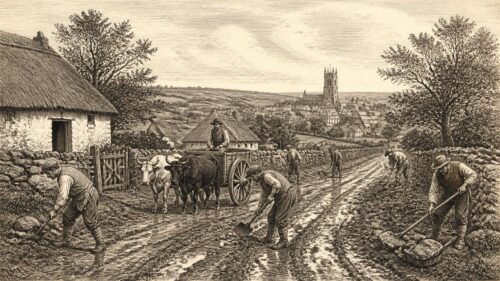
In 1614, James I’s government consolidated authority in Ireland through parliamentary management, anti-Catholic proclamations, trade regulation and parish responsibility for roads. Catholic representatives were rebuffed over the 1613 parliament’s new boroughs and religious exclusions, while priests and Jesuits faced expulsion orders. Yet Catholic organisation persisted: the Kilkenny synod reinforced Tridentine discipline and pastoral provision. Ulster Plantation reached a financial milestone when undertakers’ rents became due, accelerating changes in landholding, settlement and power. Deaths of William Bathe, Bonaventure O’Hussey and Thomas Butler, tenth earl of Ormond, highlighted transnational Catholic culture, Gaelic learning and the importance of aristocratic inheritance amid deepening divisions.
Read Article
Archived: 16 October 2026
Abstract
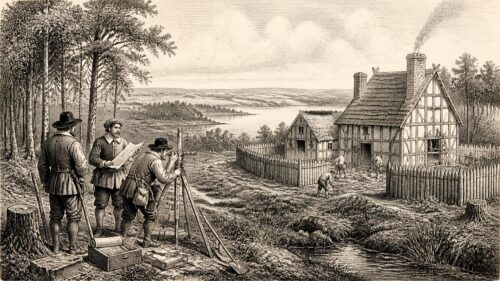
In 1613, the administration intensified its remaking of Ireland through Ulster plantation surveys, municipal charters and a contested parliament. Josias Bodley’s inspection exposed settlement, while London’s Irish Society incorporated Londonderry and developed its county; Belfast and Coleraine gained corporations and parliamentary representation. These boroughs promoted trade and security but supplied Protestant votes. When parliament met in Dublin, conflict over Sir John Davies’s election as Speaker revealed Catholic fears of engineered representation, religious coercion and dispossession. Petitions and a inquiry failed to secure accommodation. Henry Ussher’s death marked change amid conformity. New institutions reshaped land, faith and politics without achieving consent.
Read Article
Archived: 16 October 2026
Abstract
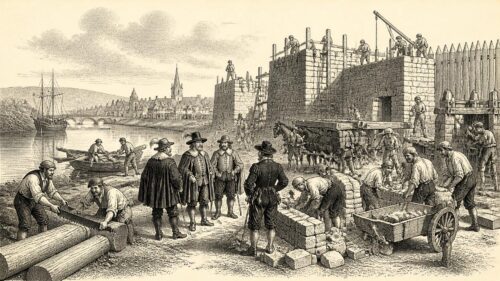
In 1611, Lord Carew’s tour of Ulster assessed the early Plantation, exposing uneven construction and the gulf between Crown plans and local realities. Commissioners inspected routes, settlements and estates, while Coleraine and Derry mobilised labour, timber and fortifications; Dunluce also attracted Scottish settlers. Plantation redistributed land, subordinating Irish proprietors through patents and conditional grants, yet native communities remained central to tenancy and labour. Religious tensions appeared in Bishop John Lynch’s conversion, Patrick O’Loughran’s arrest, and an Irish Catholic devotional book printed at Antwerp. Elsewhere, surrender-and-regrant extended Crown law, while preparations for Parliament revealed disputes over consultation, legislation and royal authority.
Read Article
Archived: 17 October 2026
Abstract
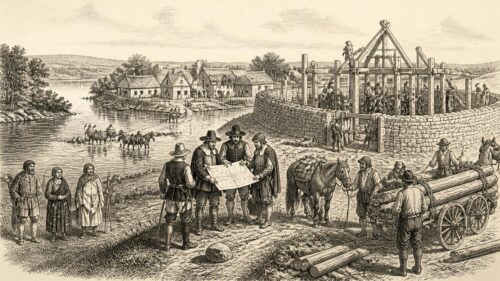
In 1610, James I’s government advanced the Plantation of Ulster, converting confiscated land into surveyed, conditional estates across Armagh, Cavan, Coleraine, Donegal, Fermanagh and Tyrone. English and Scottish undertakers, Crown servitors and selected Irish grantees received terms, while Gaelic communities endured dispossession, tenancy and presence. Building obligations required fortified houses and bawns, and new settlements depended upon labour, materials and commerce. In Cavan, William Bailie’s Tonergie grant and Belturbet’s plantation foundation illustrated emerging centres of authority and trade. Similar title-based policies reached Wexford. Protestant settlement expanded without rapid Catholic conversion, while writers Barnabe Rich and Geoffrey Keating represented contrasting voices.
Read Article
Archived: 17 October 2026
Abstract
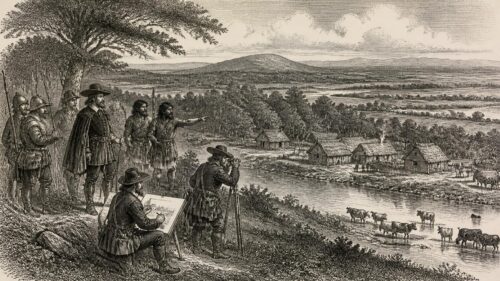
In 1609, following the Flight of the Earls and O’Doherty’s rising, James I’s government surveyed six Ulster counties to prepare their plantation. Sir Josias Bodley’s commissioners recorded townlands, resources, church lands and strategic sites, converting Gaelic territories into proposed estates. The scheme favoured English and Scottish undertakers, servitors and selected Irish proprietors, linking Protestant settlement, fortified building, common law and economic development to security. Most settlers and plantation towns arrived later, while native inhabitants remained but faced mounting insecurity. London was courted for north-western colonisation, Scottish migration encouraged, and soldiers removed. Kilkenny received a city charter, diocesan cathedrals gained status.
Read Article
Archived: 17 October 2026
Abstract
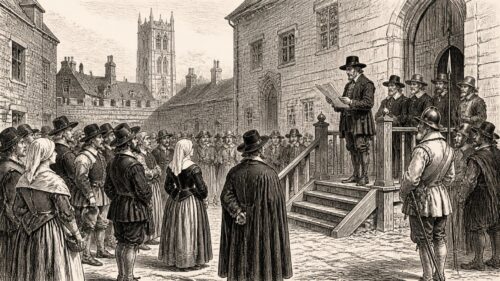
In 1605, Sir Arthur Chichester became lord deputy, seeking to convert victory in the Nine Years’ War into durable royal control through law, land reform, revenue and Protestant conformity. March’s proclamation declared Irish people direct subjects of James I, challenging Gaelic lordship and encouraging fixed rents and tenures. Hamilton’s November grant in County Down foreshadowed Scottish settlement, without constituting the later Ulster Plantation. July’s proclamation expelled Catholic clergy and demanded Church of Ireland attendance, while mandates targeted Dublin Catholics. Administrative changes strengthened Protestant authority. Continental Catholic education and military service across Europe also underscored an uneasy post-war settlement in Ireland.
Read Article
Archived: 17 October 2026
Abstract
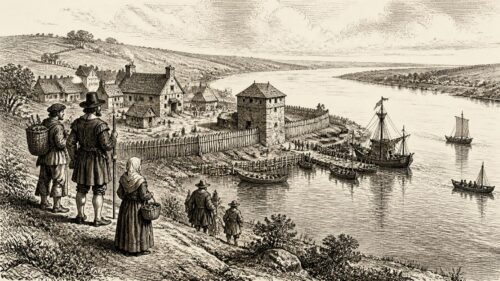
In 1604, after the Nine Years’ War, the crown sought to convert military victory in Ireland into durable administration. James I’s 11 July charter for Derry envisaged a fortified commercial town on the Foyle, combining garrison, trade, law and settlement, though it preceded the later Ulster Plantation. Recovery remained painful amid famine, displacement and contested land rights; Brian Óg O’Rourke’s death symbolised defeated resistance. Knighthoods, patents and territorial grants rewarded cooperative elites while reshaping Gaelic lordship and provoking rivalries. Anglo-Spanish peace reduced prospects of intervention. Arthur Chichester’s appointment and John Davies’s policies foreshadowed stronger crown government, surveys and planned settlement.
Read Article
Archived: 17 October 2026
Abstract
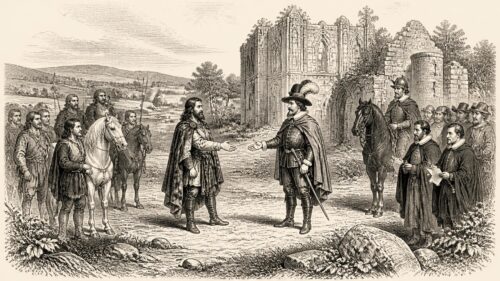
In 1603, Hugh O’Neill’s submission at Mellifont formally ended the Nine Years’ War, as James I succeeded Elizabeth I. O’Neill retained lands and title but surrendered key Gaelic powers, while Ulster faced recovery from severe military devastation and local rivalries. Southern and western Catholic towns, expecting religious toleration, resisted Protestant worship and delayed James’s proclamation; Crown forces compelled their submission without renewed general war. Royal patents in Ulster strengthened selected local lords directly under the Crown, weakening traditional overlordship. Trinity College’s expanding library reflected developing Protestant institutions. Peace ended major warfare but left land, religion, authority and political allegiance unresolved.
Read Article




