Image
15 July 2026
George Street
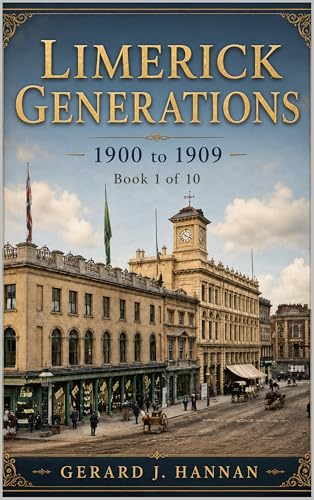
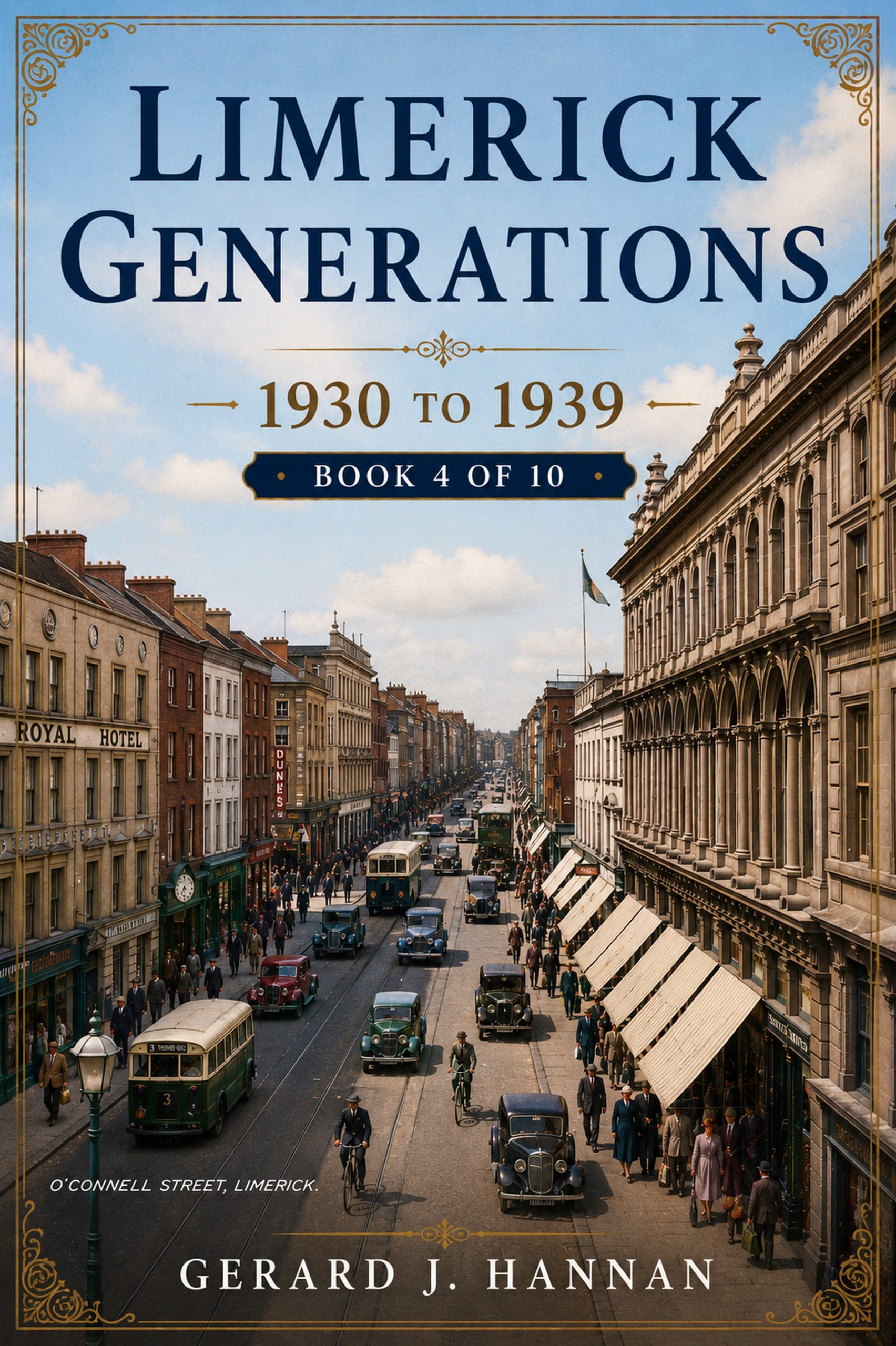
In 1900, George Street, now O’Connell Street, formed the commercial heart of Edwardian Limerick. Its broad thoroughfare was lined with elegant Georgian buildings, busy shops, hotels and offices, while horse-drawn carts, carriages and pedestrians filled the roadway. Street traders added colour and activity to the city’s principal avenue. Among its notable establishments were the Cruises Royal Hotel, MacMahon’s Temperance Hotel and respected merchants such as O’Mahony & Company. The street reflected Limerick’s growing prosperity at the opening of the twentieth century, combining refined architecture with energetic daily commerce and serving as a central meeting place for residents, visitors and travellers…
View ImageImage
16 July 2026
Nua Ruins
The old church near Holycross, County Limerick, was recorded as a ruin by 1642. In 1679, Rachael Bourchier, Countess of Bath, restored the building, just one year before her death. Thereafter it became known as the New Church, or Teampall Nua in Irish, and served local Church of Ireland parishioners. A belfry was added during the restoration, giving the structure a distinctive profile. Although the church later fell out of use and returned to ruin, its surviving walls, arched openings and graveyard remain important reminders of seventeenth-century religious life and the long history of worship at this historic site today.
View ImageImage
9 July 2026
Treaty Stone
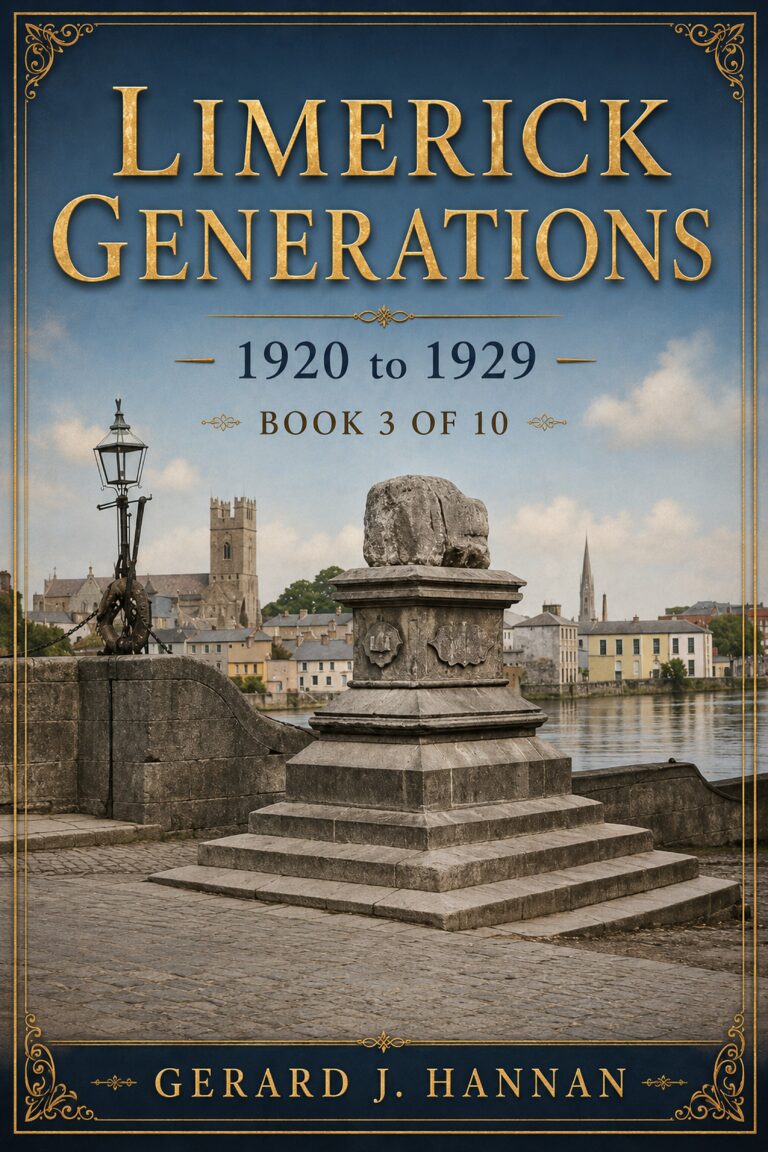
AI-assisted archival reconstruction showing the Treaty Stone on Thomond Bridge, Limerick, with the riverside castle buildings and historic bridge approach in the background. The scene presents the monument, cobbled roadway, bridge parapet, pedestrians, and horse-drawn traffic in a restored early twentieth-century setting, preserving the atmosphere of the original historical source image.
View ImageImage
14 July 2026
Glenduff Castle
This reconstructed view presents Glenduff Castle in County Limerick as it may have appeared before its destruction in 1922. The imposing residence combines the fortified character of an earlier seventeenth-century tower house with the Gothic Revival additions created for the Ievers family around 1840. Tall crenellated towers, pointed windows, battlements and a formal central entrance give the building a commanding presence. Set within carefully maintained lawns and mature woodland, the castle reflects the scale and confidence of a nineteenth-century Irish country estate. The image offers a plausible visual impression rather than a definitive record of its original appearance or grandeur.
View ImageImage
11 July 2026
Thomond Bridge
This 1881 reconstructed image is based on an engraving and depicts Thomond Bridge and King John’s Castle overlooking the River Shannon in Limerick, County Limerick. The original was published in Élisée Reclus’s geographical work The Earth and Its Inhabitants, the image presents one of the city’s most recognisable historic views. The medieval castle dominates the riverbank, while the bridge connects the city across the Shannon. Boats, buildings, and figures add detail to the busy riverside setting. The engraving reflects both the architectural importance of the castle and the strategic role of the crossing, preserving a valuable nineteenth-century representation of Limerick’s…
View ImageArticle
24 June 2026
Folklorist Dies
William Larminie, poet, scholar and collector of traditional Irish stories, died from pneumonia at his home in Bray, County Wicklow, on 19 January. He was fifty years old. Born in Castlebar, County Mayo, in 1849, Larminie had devoted much of his later life to literature, philosophy and the preservation of oral storytelling. His death removed an important figure from the developing Irish cultural revival at a time when scholars and writers were turning increasingly towards the Irish language, mythology and folklore. He was survived by his elderly mother and was buried in the churchyard at Enniskerry.
Read ArticleArticle
24 June 2026
Sessions Rejected
Judge Richard Adams firmly resisted a proposal to double the number of annual Quarter Sessions held in Limerick from four to eight. At the opening of the Hilary sittings, reported on 3 January 1900, the County Court judge asked whether any members of the legal profession present supported the suggested increase. Receiving no affirmative response, he declared that the demand did not come from local barristers, solicitors or the wider public. Adams presented the proposal as the work of a small deputation seeking attention rather than as a reform arising from demonstrated pressure upon the court.
Read ArticleArticle
25 June 2026
Inquiry Announced
The Inspectors of Irish Fisheries announced that they would hold an official inquiry in Limerick on 30 January 1900 into the works proposed by the Shannon Water and Electric Power Syndicate. Notice of the hearing was sent to Limerick County Council as opposition widened among fishery owners, navigational interests and public authorities. The inquiry offered affected parties an opportunity to place technical evidence and local objections before officials responsible for protecting Irish fisheries. It also moved the controversy beyond public resolutions, requiring the promoters to answer detailed questions about water diversion, river levels and the consequences of their proposed generating…
Read ArticleArticle
24 June 2026
Ambition Rewarded
Edmond Henry Pery returned from a prolonged Grand Tour determined to convert education, family connection and social confidence into political influence. Travelling across continental Europe between approximately 1775 and 1779, he encountered courts, scholars, artists and aristocratic society, corresponding with figures including Sir William Hamilton at Naples and Frederick Hervey, Bishop of Derry. His notebooks recorded European constitutions, treaties, antiquities and works of art, giving the young Limerick heir the polish expected of an ambitious gentleman. When he returned to Ireland, he entered public life as a cosmopolitan aristocrat prepared to use family influence and government loyalty to advance himself.
Read ArticleArticle
19 June 2026
Wyndham Appointed
George Wyndham has been appointed Chief Secretary for Ireland in succession to Gerald Balfour, placing a younger Conservative minister in charge of Irish administration at a moment of renewed nationalist organisation and growing agitation over the land. His appointment will be watched closely throughout Limerick city and county, where tenant ownership, congested holdings, rural poverty and the position of evicted families remain pressing political concerns. Wyndham enters office after the reunited Irish Parliamentary Party secured seventy-seven seats at the general election, although Lord Salisbury’s government remains firmly opposed to Home Rule and possesses a substantial Westminster majority. The Chief Secretary…
Read Article