
Year by Year
Explore Year by Year articles from the most modern historical year back to the oldest.
3,305 Articles Archived
Cenn Con
Archived: 3 November 2026
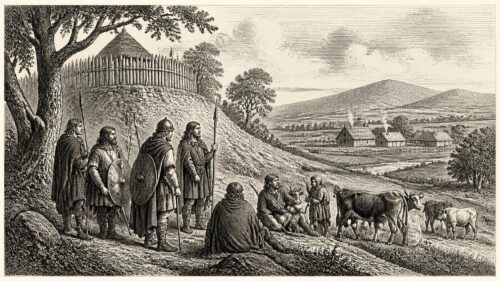
The Annals of Inisfallen associate 645 with a battle at Cenn Con between Mael Dúin of Éoganacht Locha Léin and Áengus Liath of Áine, the death of Máel Ochtraig, king of the Déisi, and the repose of the churchman Mac na Cerda. However, comparison with other annals suggests that some entries belong earlier in the 640s. The notices nonetheless illuminate a rural society shaped by competing regional kingships, armed retinues, cattle-based wealth and uncertain successions. Churches held land and political influence while sustaining learned links with Britain and the Continent. The year demonstrates both the value and chronological limitations of early Irish annalistic evidence.
Leinster Turmoil
Archived: 3 November 2026
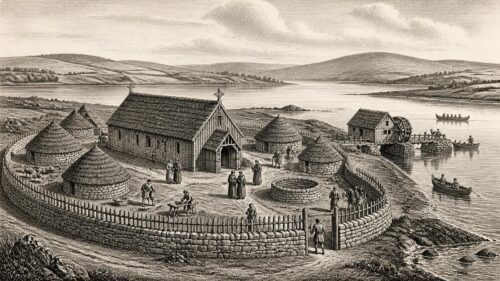
Around 644, Irish annals record contested authority after the death of Domnall mac Áedo, with several Uí Néill rulers claiming or sharing the overkingship. In Leinster, Uaisle, wife of King Fáelán, died, highlighting dynastic links with the midlands. A battle at Cenn Con, probably involving Munster rivals, caused heavy losses, while kings of Osraige and Farney also died. Crónán, bishop of Nendrum, was commemorated, reflecting the importance of churches in literate and political life. The notices reveal a fragmented Ireland of regional kingdoms, alliances and recurring violence, rather than a unified state.
Disputed Succession
Archived: 3 November 2026
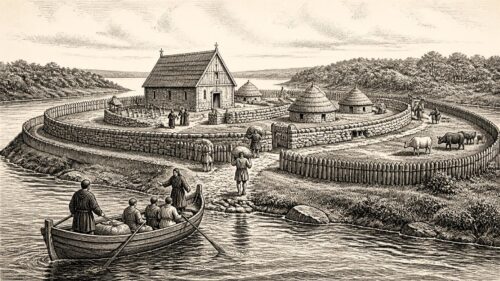
In 643, Irish annals recorded disputed succession after the death of Domnall mac Áedo, a prominent northern Uí Néill ruler. Sources variously named his nephews Cellach and Conall Cáel as successors or described shared authority with Diarmait and Blathmac of the southern Uí Néill. Chronological differences place these events around 642–643, but all reflect uncertainty over wider kingship. Regional conflict, including the battle of Cenn Con, demonstrated the independence of Munster dynasties. The death of Bishop Crónán of Naendruim also illustrates the political and economic importance of churches. Ireland remained a network of competing kingdoms, kin groups and ecclesiastical communities.
Domnall’s Passing
Archived: 3 November 2026
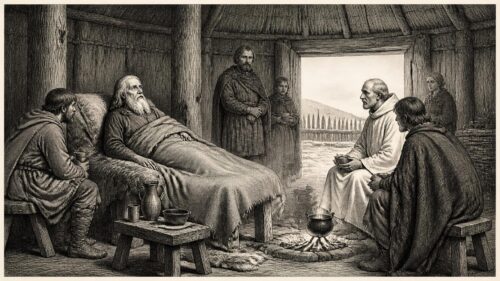
In 642, Domnall mac Áedo of Cenél Conaill died at the end of January, described by the Annals of Ulster as ‘king of Ireland’. His authority, strengthened by victory over Congal Cáech at Mag Roth in 637, rested on personal alliances rather than a unified state and became uncertain after his death. His nephews Conall Cóel and Cellach later emerged as successors. The same annal records the killing of Ailill of Cenél Loegaire, illustrating persistent dynastic violence. It also notes the death in Britain of Domnall Brecc of Dál Riata, reflecting Irish Sea connections. Later Christian tradition portrayed Domnall’s peaceful death as evidence of saintly favour.
Cúán's Death
Archived: 3 November 2026
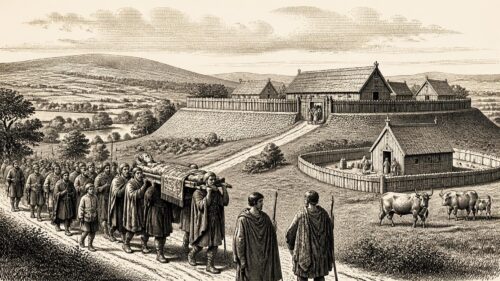
In 641, Cúán mac Amalgado of the Eóganacht Áine died as king of Munster. The annals record only his death, leaving its cause, location and circumstances unknown. His passing marked a dynastic transition within Munster’s fragmented system of kingships, alliances and tributary relationships. He was succeeded, according to later reconstructions, by Máenach mac Fíngin of another Eóganacht branch. Munster was not governed from a fixed capital, but through personal authority, kinship and regional negotiation. Churches and learned communities supported royal memory and legitimacy, while most people depended on mixed farming, livestock and local exchange.
Clonmacnoise Obituary
Archived: 4 November 2026
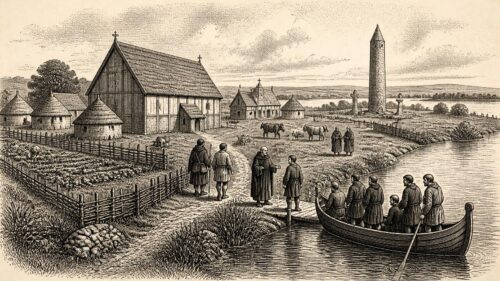
In 640, Irish annals chiefly recorded the deaths of Crónán, abbot of Clonmacnoise, and Mochua of Balla in Connacht. Differences between annalistic dates show the difficulty of reconstructing seventh-century chronology, but modern synchronisation places these obituaries in this year. Crónán’s office reflects Clonmacnoise’s importance as a religious and economic centre on major travel routes. Politically, Ireland remained divided despite Domnall mac Áedo’s victory at Mag Rath in 639. Annals also noted a battle and siege involving Domnall Brecc’s followers in the wider Gaelic world. Most rural life, farming and local hardship remained unrecorded.
Áed’s Obituary
Archived: 4 November 2026
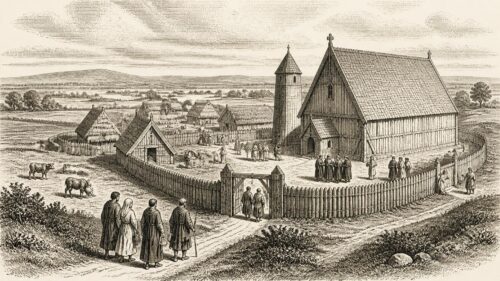
In 639, conventionally dated despite conflicting annalistic chronology, Áed Dub, bishop and abbot of Kildare, died. A member of the Uí Dúnlainge dynasty, he embodied the close connection between ecclesiastical office and political authority in Leinster. His death left a vacancy at a wealthy church whose resources, cult of Brigit and regional connections gave it major influence. Annals also record the deaths of church leaders at Nendrum and Leighlin, Ailill son of Áed Rón, and Dúinsech, wife of King Domnall of Tara, as well as Congal son of Dúnchad’s killing. These terse notices reveal an Ireland linked by kinship, churches and patronage rather than central rule.
Eten Besieged
Archived: 4 November 2026
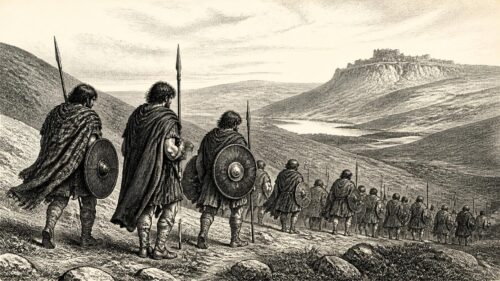
In 638, followers of Domnall Brec of Dál Riata were defeated at the uncertain site of Glenn Muiresan, followed by a siege of Eten, probably Edinburgh. The episode reflected political instability after the 637 battle of Mag Roth and Ireland’s connections with western Scotland. Domnall mac Áedo remained a powerful but not undisputed king of Tara. Annals also record deaths of abbots including Crónán of Clonmacnoise and Mochua of Balla, highlighting churches’ growing economic and political importance. Ireland remained a rural, cattle-centred society sustained by farming, labour, waterways and ecclesiastical networks.
Sailtír Battles
Archived: 4 November 2026
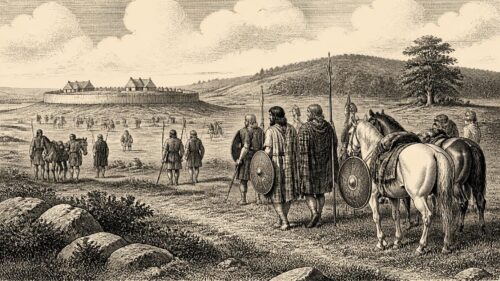
In 637, despite uncertainties in annalistic dating, Domnall mac Áedo’s victories at Mag Rath and Sailtír strengthened his position as ruler of Tara. At Mag Rath, Congal Cáech of Ulaid was killed, ending a major challenge to Domnall and weakening Dál nAraide; Sailtír defeated opposing elements within Cenél nEógain. The conflicts may have involved links with Dál Riata across the Irish Sea, though later military details are unreliable. The year also saw the death of Failbe Flann, king of Mumu, and the recorded death of Mo-Chutu of Raithen. Together, these notices show Ireland as a network of competing dynasties and politically influential churches.
Mochuda’s Expulsion
Archived: 4 November 2026
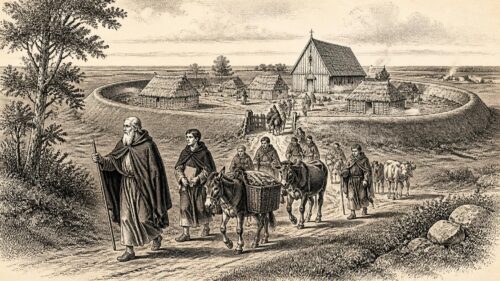
In 636, Carthach (Mochuda), abbot of Rahan in County Offaly, was expelled from his monastery at Eastertide. The annals record the event but give no motive or account of its procedure. Tradition associates the removal with Blathmac of the Uí Néill, though his precise role is uncertain. The expulsion may have involved ecclesiastical and political rivalries, rather than solely disagreement over Easter calculation. Mochuda subsequently moved to Déisi Muman, beginning his association with Lismore in County Waterford. The episode shows how monasteries were embedded in early Irish power, landholding, economy and kinship.
Some records do not yet have a verified historical year and are awaiting chronological placement.