Chapel, Campaigns and Cattle1134 CE
In 1134, Tairdelbach Ua Conchobair’s dominance faced a broad southern challenge led by Cormac Mac Carthaig of Desmond, though church mediation prevented renewed invasion of Connacht. Cormac’s alliance with Uí Briain collapsed into Munster conflict, while Diarmait Mac Murchada pursued campaigns in Osraige with Dublin’s support against rivals including Waterford. Cormac also consecrated the Romanesque chapel at Cashel, asserting royal and ecclesiastical prestige. At Armagh, Saint Malachy’s accession advanced reform against hereditary control. Deaths of clerics reflected monastic institutions and wider Christian connections. Cattle disease, destructive weather, killings and warfare impoverished rural communities, revealing Ireland’s political ambition and social fragility.
Dateline
In 1134 Ireland’s political order remained fluid, competitive and intensely regional. Tairdelbach Ua Conchobair was still the most powerful king on the island, but his supremacy was being tested by an unusually broad southern opposition. Cormac Mac Carthaig of Desmond combined warfare with royal patronage, while Diarmait Mac Murchada began extending Leinster power towards Osraige. At the same time, reformers struggled for control of Armagh, bishops intervened in diplomacy, and one of Ireland’s most remarkable Romanesque churches was formally consecrated. For many households, however, the year’s most serious event may have been the continuing cattle mortality recorded by the annalists.
The Challenge to Connacht
The precise sequence of the campaigns against Connacht is difficult to reconstruct because the surviving annals do not always assign related events to the same year. The Annals of the Four Masters place one great southern invasion under 1133, while Mac Carthaigh’s Book and modern biographical scholarship connect a major phase of the offensive with 1134. What is clear is that Cormac Mac Carthaig, king of Desmond and an aspirant to wider authority in Munster, had become the central figure in resistance to Tairdelbach Ua Conchobair.
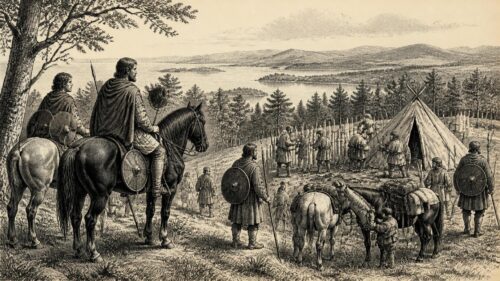
Mac Carthaigh’s Book describes Cormac advancing into Connacht with three Uí Briain princes: Tairdelbach, Tadc and Conchobar, sons of Diarmait Ua Briain. The attackers cut down and burned the Ruadbethech, a celebrated tree associated with the ruling Ua Conchobair dynasty. They also burned Dún Modhairn and Dún Mór, killed Cathal Ua Conchobair and Gilla na Naem Ua Floinn, and inflicted extensive damage. The destruction of a dynastic landmark carried a significance beyond its timber: it was a deliberate assault upon the landscape and symbols through which royal legitimacy was expressed.
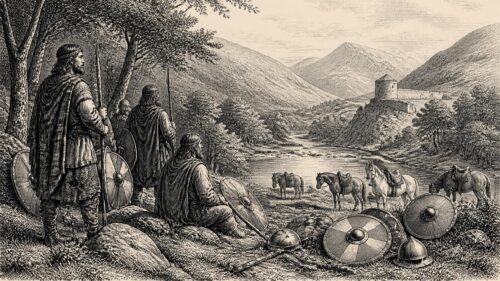
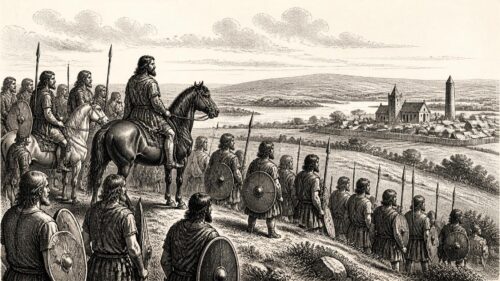
The conflict then widened. Cormac reportedly assembled Munstermen, Leinstermen, forces from Mide and Conmaicne, and the maritime communities of Dublin, Waterford, Wexford and Cork. Contingents from Uí Echach and Corcu Loígde were prepared to operate by sea. Such a coalition demonstrates both Cormac’s diplomatic reach and the ability of Irish kings to coordinate fleets, regional armies and urban forces. It also reveals the danger facing Tairdelbach: opposition to Connacht was no longer confined to one dynasty or province.
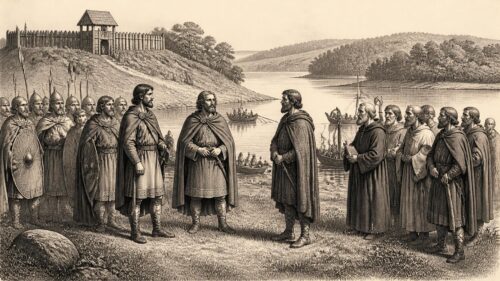
The renewed invasion did not proceed. Muiredach Ua Dubthaig, a senior Connacht churchman described in the annals as an archbishop, approached Cormac on Tairdelbach’s behalf. Peace was accepted in honour of the cleric, and Cormac went to a place called Aball Ceithearnaig to confirm the agreement with the Connacht king. The settlement should not be mistaken for permanent reconciliation, but it was a significant act of mediation. In a society without a central bureaucracy capable of enforcing island-wide peace, prominent ecclesiastics could provide moral authority, neutral meeting grounds and guarantees respected by competing rulers.
A Southern Alliance Breaks
The anti-Connacht coalition did not survive its apparent success. During 1134 relations ruptured between Cormac and Conchobar Ua Briain. The Uí Briain and Mac Carthaig dynasties represented rival traditions of Munster kingship, and cooperation against a common enemy could not erase their competing ambitions. Mac Carthaigh’s Book reports that the descendants of Eógan entered an Uí Briain camp, carried away substantial plunder and killed Donnchad, a grandson of Murchad Ua Briain, together with his son and others. The Annals of Tigernach similarly record a severe defeat inflicted by the men of Desmond upon the Dál Cais through an attack on their encampment.
This clash marked the breakdown of an alliance that had helped restore Cormac to power and challenge Connacht. It also shows the unstable character of high kingship and provincial lordship. Armies were assembled through layered personal relationships, hostage arrangements and temporary agreements among kings. Once the strategic advantage changed, former allies could quickly become enemies. For communities in Munster, this meant that campaigning did not end with peace in Connacht; it shifted closer to home.
War in Leinster and Osraige
A separate struggle unfolded in the south-east. Diarmait Mac Murchada and the Leinstermen invaded Osraige, whose forces resisted and inflicted a serious defeat. Ugaire Ua Tuathail, described variously as a royal heir of Leinster or a king among the Uí Chennselaig, was killed with many of his followers. Diarmait answered the reverse with another campaign. Supported by the Hiberno-Norse or Ostmen of Dublin, his forces defeated an alliance involving Conchobar Ua Briain, the Osraige and the Ostmen of Waterford.
The participation of Dublin and Waterford is particularly revealing. These were not detached commercial enclaves but armed political communities whose ships, warriors and resources could affect inland rivalries. Their appearance on opposing sides reflects competition between the ports as well as their connections with neighbouring Irish rulers. Dublin’s support strengthened Diarmait’s growing position, while Waterford’s men suffered alongside the Osraige. The battles of 1134 were an early demonstration of Diarmait’s aggressive ambitions, decades before the later events for which he became notorious.
Cashel and Church Reform
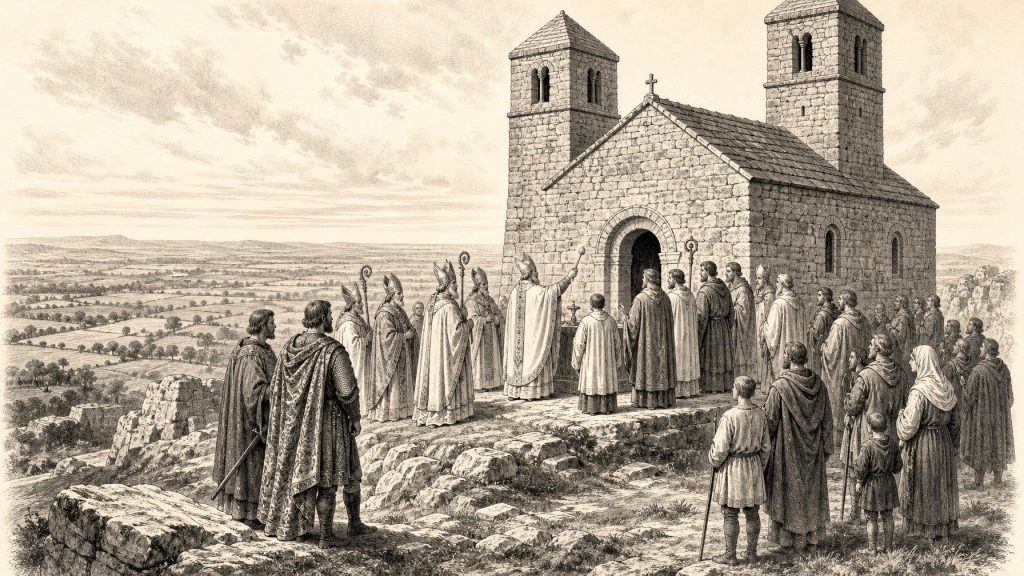
The year’s most enduring achievement was the consecration of the church now known as Cormac’s Chapel on the Rock of Cashel. Mac Carthaigh’s Book states that the ceremony was performed with great honour by the archbishop of Cashel and the bishops of Munster. Other annals describe an assembly of important clergy, nobles and lay rulers. The breadth of attendance suggests that the building’s dedication was an event of more than local importance, combining worship, royal display and the public affirmation of Cormac’s standing.
The chapel is one of the most securely dated monuments of Irish Romanesque architecture. Constructed in finely cut stone, it combines a nave and chancel, a stone roof, elaborate sculptural decoration and two square towers—features unusual in the Irish architectural tradition. Its design reflects both native building practices and connections with contemporary churches in Britain and continental Europe. Cormac’s patronage presented him not merely as a successful warrior but as a Christian ruler conversant with the artistic and ecclesiastical reform currents of his age.
Armagh experienced an equally important but more contentious transition. Muirchertach mac Domnaill, the hereditary successor of Patrick, died on 17 September according to the Four Masters. Niall son of Áed was initially installed, but the annals then record Máel Máedóc Ua Morgair—Saint Malachy—taking his place. The compressed entries conceal a prolonged contest between church reformers and the Clann Sínaig, whose members had treated the Patrician succession as a hereditary possession. Malachy’s accession represented a major advance for reform, although control of Armagh’s lands and relics was not immediately settled.
Malachy also made a visitation of Munster and received the traditional tribute associated with Armagh’s primacy. His journey linked ecclesiastical authority with travel, hospitality and negotiated payments, while reinforcing the claim that Patrick’s church possessed an island-wide status. Malachy may have attended the consecration at Cashel, but the evidence does not prove his presence and it should not be stated as certain.
Learning, Office and Pilgrimage
Several deaths illuminate the institutional life of the Irish Church. At Clonmacnoise, Célechair Ua Cuinn na mBocht, praised as a counsellor, historian and guardian of hospitality and religious discipline, died on the Nones of September. Later that month Máel Ciaráin, another son of Cormac Ua Cuinn and a respected priest, died on Michaelmas night. Their obituaries show that major monasteries remained centres of learning, historical memory, charity and education as well as worship.
Fogartach Ua Riagáin, airchinnech of Roscrea, and Gilla Brénainn Ua hAnradáin, successor of Brendan at Clonfert, also died. Ímar Ua hÁedacáin, remembered for erecting the church of Saints Peter and Paul at Armagh, died while on pilgrimage in Rome. His journey is evidence of direct Irish participation in the wider Latin Christian world. At Derry, Bé Binn daughter of Mac Conchaille, a female airchinnech or head of ecclesiastical property, died on 23 December. Her recorded office is an important reminder that women could retain recognised authority within certain Irish religious and hereditary ecclesiastical communities.
Mortality and Daily Life
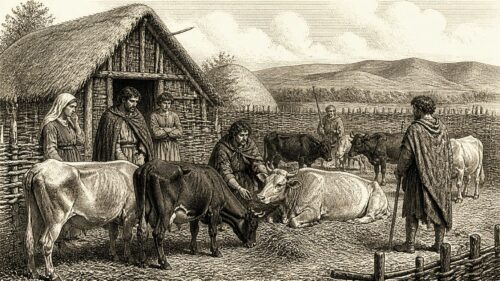
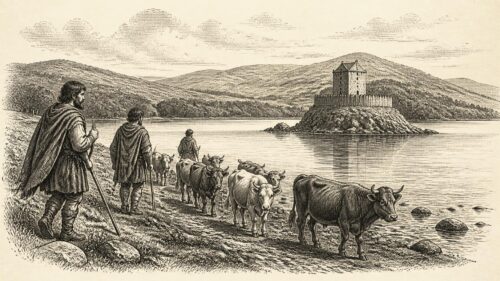
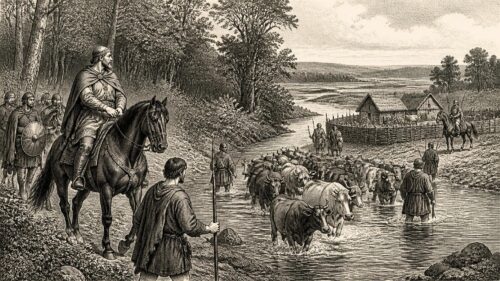
The Annals of Loch Cé report that the cattle mortality known as Máel Garb continued to devastate Ireland in 1134, leaving many people impoverished. Chronicon Scotorum specifies that the same disease still afflicted the cattle of Leth Cuinn, the northern half of Ireland. These notices connect the year with the severe outbreak first described in the preceding annalistic entries. Cattle supplied milk, meat, hides and traction, but they were also stores of wealth and instruments of tribute, compensation and political obligation. Their loss threatened diet, status and the capacity of households to meet dues.
Most people lived in a rural landscape of ringforts, scattered farms, fields and ecclesiastical settlements. Their daily labour included herding, dairying, cultivating grain, repairing boundaries, spinning and food preservation. Against this background, cattle disease and military campaigning were closely related forms of insecurity: one destroyed herds through illness, while the other exposed animals, crops and buildings to seizure or burning. The annals also describe an extraordinary hailstorm around Cashel and Mag Femin, with stones said to have broken fences and produced deep flooding. The account may employ dramatic language, but it preserves a contemporary memory of destructive weather.
A Contested Island
Other regional killings completed the picture of instability. Donnchad Ua Conchobair Fhailge and his brother Máel Sechnaill fell in combat against one another, while Árchú Ua Flaithbertaig, an heir to Ailech, was killed in conflict with Cenél Conaill. Murchad Ua hEgra and his wife, a daughter of Tairdelbach Ua Conchobair, were murdered by Taichlech Ua hEgra. Such events demonstrate that violence operated within dynasties as well as between provinces.
Thus 1134 was not defined by a single battle or ruler. It was a year in which Cormac Mac Carthaig challenged Connacht and consecrated a monument of lasting cultural importance; Diarmait Mac Murchada tested the borders of Osraige; Malachy advanced the reform of Armagh; and churchmen acted as diplomats. Beneath these political and religious developments lay the vulnerability of ordinary communities to warfare, livestock disease and weather. The combination makes 1134 unusually revealing of both the ambitions and the fragility of twelfth-century Ireland.
Primary Sources
- Annals of the Four Masters, Part 24
- Mac Carthaigh’s Book, Part 2
- The Annals of Tigernach, Part 22
- Chronicon Scotorum: English Translation
- Chronicon Scotorum, Part 140: Irish Text
- Annals of Loch Cé, Part 7: English Translation
- Annals of Loch Cé, Part 7: Irish Text
- Mac Carthaig, Cormac
- Ua Conchobair, Tairdelbach (O’Conor, Turlough)
- Mac Murchada, Diarmait (MacMurrough, Dermot)
- Ua Briain, Conchobar
- Malachy (Máel-M’áedóc) Ua Morgair
- Ua Dubthaig, Cadla (Catholicus)
- Cormac’s Chapel, Cashel, Tipperary
- Conservation Works at Cormac’s Chapel, Rock of Cashel, Co. Tipperary
- Impact of the Romanesque
- St Malachy
- St Bernard of Clairvaux’s Life of St Malachy of Armagh
- Religious Orders
- Early Medieval Ireland: Archaeological Excavations, 1930–2009
- The Zooarchaeology of Medieval Ireland
- Craft Activity and Settlement in Early Medieval Ireland in the Fifth to Twelfth Centuries AD
- From Kingdom to Colony: Framing the English Conquest of Ireland
- Landscapes of Kingship in Early Medieval Ireland, AD 400–1150
- Kingship and Warfare: Ireland, c.1000–1318
- Pre-Norman Irish High-Kingship and the Kingdom of Ireland