Lucas Remonstrance1743 CE
In 1743, Charles Lucas challenged Dublin aldermen’s control over elections, accounts and patronage, arguing that the Corporation’s wider body should choose aldermen. His April Remonstrance and demands to print accounts widened the dispute through print and legal argument, although recorder Eaton Stannard ruled for the aldermen in October. The conflict promoted civic accountability but remained confined to Protestant corporate citizens, excluding Catholics and Dissenters. Arthur Jones Nevill became Surveyor General, linking public works to Castle patronage. Proclamations addressed crime, ports and quarantine, while a linen bounty integrated Irish production into British Atlantic trade. Recovery from the Great Frost remained precarious.
Dateline
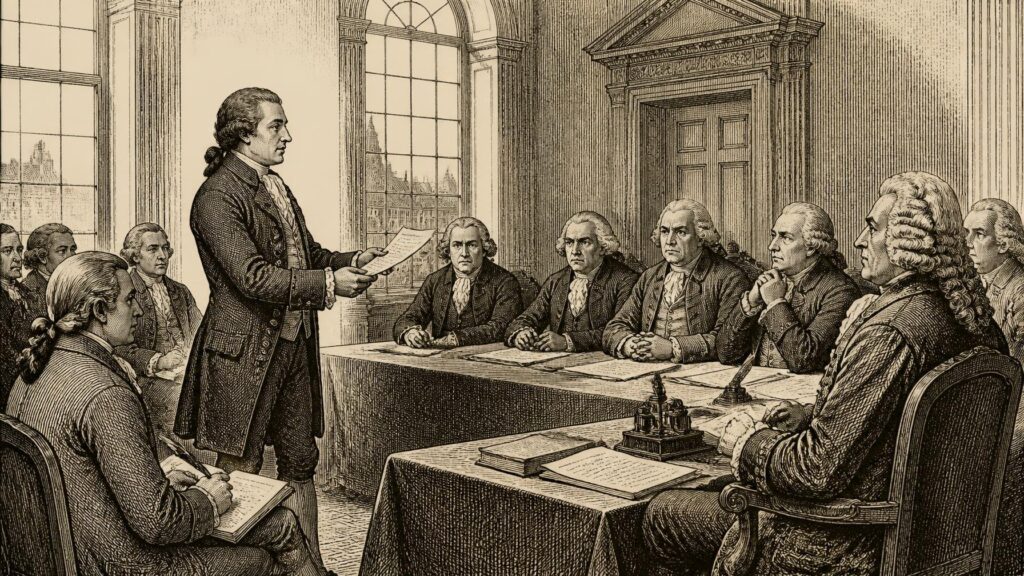
For Ireland, 1743 is best approached through a small number of securely dated actions rather than through an imagined national drama. The most revealing was a dispute within Dublin Corporation: a quarrel over who had the right to choose the city’s aldermen, and therefore who controlled its government, offices, spending and patronage. It brought the apothecary and city representative Charles Lucas into print, made constitutional language a practical urban weapon, and exposed the narrow limits of civic participation in an Ireland governed under the Protestant ascendancy.
A Remonstrance in April
On 22 April, Charles Lucas dated A Remonstrance against certain Infringements on the Rights and Liberties of the Commons and Citizens of Dublin. Lucas was an apothecary, writer and one of the Commons in Dublin’s municipal system. His immediate argument was not for a modern popular franchise. It concerned the internal constitution of the Corporation: he maintained that the election of aldermen belonged to the whole Corporation, rather than being effectively controlled by the existing Board of Aldermen. The pamphlet’s language of “rights” and “liberties” nevertheless gave a municipal procedural dispute a larger political charge.
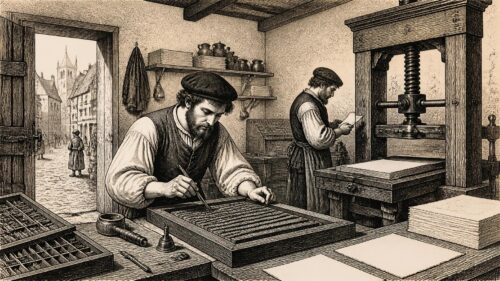
The controversy had roots before 1743. Lucas and the merchant James Digges La Touche had supported an examination of the city’s charters and records, while the aldermen defended their position. What makes 1743 important is that Lucas moved the dispute into a printed public sphere. A pamphlet could be sold, copied, discussed in coffee houses and read beyond the meeting rooms of the Corporation. In a city whose government also regulated markets, streets, policing and civic finance, an argument about aldermanic election was an argument about who could speak for Dublin.
Rights With Narrow Boundaries
Lucas’s language should not be mistaken for a call to include all inhabitants. The “citizens” at issue were those recognised within the corporate structure, and political authority in eighteenth-century Ireland rested overwhelmingly with those conforming to the established Church of Ireland. Roman Catholics were excluded from parliament and municipal power by the legal and confessional order, while Protestant Dissenters also faced disabilities. Catholic religious life nonetheless persisted, often through modest chapels and clergy working within an unequal and shifting legal environment. Thus a genuine argument about civic accountability took place inside a state and city still marked by deep exclusions.
That limitation is central to the year’s meaning. Lucas challenged an oligarchic concentration of authority, but he did so as a Protestant freeman arguing from chartered privilege, historical precedent and corporate law. His case was radical in its challenge to self-electing civic governors, not democratic in the later sense. The dispute nonetheless created a durable political vocabulary: the claim that public office-holders were answerable to a wider body of citizens, and that old records could be used to test present power.
Accounts, Arbitration and Defeat
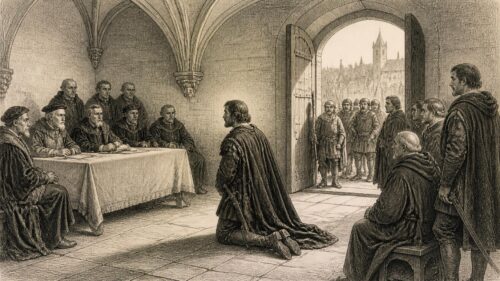
The dispute did not end with the April pamphlet. During July, the sheriffs and Commons refused to pass the city accounts until they had been printed and distributed among members. This was a pointed demand for visibility in the use of civic money, and it could obstruct ordinary corporate business. In September, both sides agreed to seek the opinion of the city recorder, Eaton Stannard, as moderator. His opinion, delivered to the Assembly on 13 October, favoured the aldermen’s position. The later printed proceedings preserve the extent and intensity of the quarrel, while Lucas’s 1744 Divelina libera looked back directly to the recorder’s October judgement.
The outcome was a setback for Lucas and his allies, but not an unimportant one. The episode showed that municipal government could be contested through documentary research, print, accounting demands and legal argument rather than through violence. It also foreshadowed Lucas’s later prominence in Irish political life. For 1743 itself, however, the story must remain local and unfinished: the Commons had not remade Dublin Corporation, and the aldermen had retained the stronger legal position.
Buildings and the Castle Administration
Another firmly dated administrative change came on 15 June, when Arthur Jones Nevill received a patent as Surveyor General of Ireland, succeeding Arthur Dobbs. The office mattered because it linked architecture, engineering, military provision and the Dublin Castle administration. Dobbs had already overseen the completion of Parliament House on College Green and works connected with Dublin Castle; architectural records indicate that he handed duties to Nevill during the spring, before the June patent formalised the succession.
The appointment illustrates the character of high office in Georgian Ireland. Nevill paid £3,300 to secure the post, an arrangement that now appears startling but was compatible with a wider world of purchased offices and patronage. The surveyor general’s responsibilities encompassed public buildings and, importantly, barrack works. One should not credit Nevill with later alterations to Dublin Castle as achievements of 1743; those belong to subsequent years. What can be said for this year is that the transfer placed a new office-holder at the junction of public construction, defence and government expenditure.
Proclamations Beyond Dublin
The surviving record of proclamations offers brief but useful glimpses of official anxieties outside the Corporation dispute. On 14 February the authorities ordered “tories, robbers and rapparees” to surrender. On 18 February a reward was offered for information about sheep killed at Mount Merrion, the Lord Chancellor’s property. Further rewards followed in June in connection with burglary and fire, while a proclamation of 8 July again ordered named tories, robbers and rapparees, presented by grand juries in Cavan, Carlow, Antrim, Kilkenny and Wexford, to give themselves up. These notices do not measure the overall level of crime, but they show what officials chose to name publicly as threats to property and order.
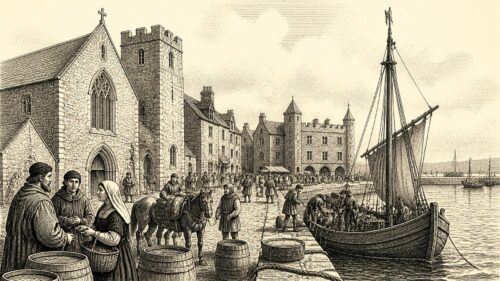
Other orders point to a connected island. On 29 April, Custom House Quay in Wexford was appointed as the place for landing goods in that port. On 18 July, quarantine requirements were imposed on shipping arriving from the Mediterranean. Such measures joined local ports to an imperial and European maritime world in which customs control, disease prevention, war and commerce travelled together. Parliament also opened its ninth session of George II’s reign on 4 October, but it sat into February 1744; legislation completed in that later calendar year should not be counted as an event of 1743.
Linen, Recovery and Atlantic Markets
Economically, 1743 brought an imperial measure of lasting relevance to Ireland’s linen producers. A British bounty act encouraged the export from Great Britain of certain British and Irish linens, funded by additional duties on foreign cambrics. The benefit was selective rather than a blanket liberation of Irish trade: Irish cloth had to move through the prescribed British commercial framework, and the scheme favoured particular plain and relatively coarse grades. Yet it confirmed linen as the manufacture to which Irish producers were expected to turn after earlier restrictions on woollens.
The Atlantic implications deserve emphasis. The bounty supported shipments to markets including North America and the West Indies, and Irish linen later became especially important in the trade for cheaper, durable cloth. This did not mean that every spinner, weaver or bleacher experienced immediate prosperity in 1743. Production remained dispersed across households, small workshops, bleaching grounds, market towns and merchant networks, and gains were uneven. But the statute connected Irish flax and linen more closely to a commercial system extending through Britain and across the Atlantic, including colonial economies sustained by enslaved labour.
Living After the Great Frost
Broader social conditions form the necessary background, but must not be converted into invented events for this calendar year. Ireland was only two years beyond the Great Frost and famine of 1740–41. Historians agree that the demographic loss was severe, while cautioning that the evidence is too incomplete to produce a certain death toll. By 1743, households, tenants and labourers in many districts were living with the consequences of harvest failure, hunger, fever, disrupted work and bereavement. The official proclamations concerning theft, livestock and disorder cannot simply be explained as famine aftershocks, but they belong to a society in which security and subsistence remained fragile.
In that setting, the year’s significance lies less in a single national turning point than in the workings of authority. Dublin’s Commons tried to make an entrenched civic elite answerable; the Castle administration renewed control over public works; proclamations reached from Mount Merrion to several counties and ports; and linen policy tied rural and urban labour more tightly to imperial trade. Ireland in 1743 was neither politically still nor broadly free. It was a kingdom in which argument, patronage, policing and commerce each revealed who possessed power—and who did not.

Primary Sources
- Lucas, Charles
- Proceedings of the sheriffs and commons of the city of Dublin, in the years 1742 and 1743
- Divelina libera: an apology for the civil rights and liberties of the Commons and citizens of Dublin
- A catalogue of the Bradshaw collection of Irish books in the University library, Cambridge
- Charles Lucas: a forgotten patriot?
- A Forgotten Patriot Doctor: Charles Lucas 1713–1771
- Nevill, Arthur Jones
- Dictionary of Irish Architects: Nevill, Arthur Jones
- Dictionary of Irish Architects: Dobbs, Arthur
- The Office of the Surveyor General in Ireland in the Eighteenth Century
- Statute Law Revision Act 2015
- Pre-Union Irish Statutes
- Journals of the House of Commons of the Kingdom of Ireland archives
- Part 8 of History of the Commercial and Financial Relations between England and Ireland from the Period of the Restoration
- The Royal Dublin Society and the Legacies of Empire Project, 1731–1877
- British Governments and Colonial Consumers
- Famine in Ireland, 1300–1900
- The Demographic Toll of the 1740–1 Famine
- Securing the Protestant Interest: The Origins and Purpose of the Penal Laws of 1695
- The Catholics of the Towns and the Quarterage Dispute in Eighteenth-Century Ireland
- The First Irish Cities: An Eighteenth-Century Transformation
- Factional Gangs, Authorities and Corruption of the Law in Dublin