Offaly Succession1511 CE
In 1511, Cathair Ó Conchobair Fáilghe, lord of Offaly, was killed near Mainistir-Feorais by rival kinsmen, exposing the instability of Gaelic frontier lordship; his son Brian succeeded. Elsewhere, Manus Ó Domhnaill governed Tír Chonaill during his father’s pilgrimage, negotiated hostages, and resisted Ó Néill incursions marked by burning and plunder. Deaths of learned patrons and regional lords illustrated ties between authority, households and scholarship. Church affairs included Bishop Tomás Mac Brádaigh’s death, competing Bréifne episcopal claims, fire damage at Armagh, and Archbishop Walter FitzSimons’s death in Dublin. The year revealed Ireland as interconnected, contested lordships rather than a unified polity.
Dateline
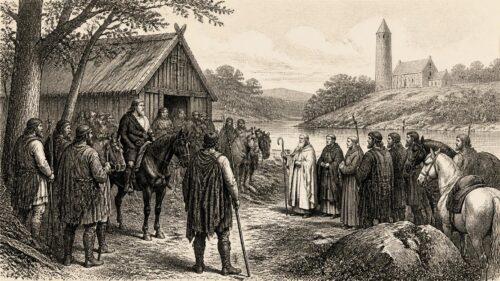
In 1511, the killing of Cathair Ó Conchobair Fáilghe—usually rendered Cahir or Charles O’Conor Faly—gave the Irish midlands one of its most consequential changes of lordship. The annals do not supply a day or month, but they are unusually clear about the essentials: Cathair, lord of the O’Conor Faly territory, was slain near Mainistir-Feorais by kinsmen from rival branches of his own dynasty. His death was more than a private murder. In the borderland between Gaelic Offaly and the English lordship, control of a leading kindred affected raiding, tribute, alliances, the security of roads and settlements, and the precarious balance around the Pale.
A Lord Slain by Kinsmen
Cathair was killed by the descendants of Tadhg Ó Conchobair and the sons of Seán Ballach Ó Conchobair, according to both Annála Connacht and the Annals of the Four Masters. The latter calls him a distinguished captain among both English and Irish, as well as a general patron of the learned. Such language is formal and laudatory, but it identifies the bases of a successful lord’s standing. Cathair was expected to command fighting men, preserve the interests of his kin-group, maintain relations beyond it, and reward poets, historians, lawyers and other learned people whose work gave public shape to dynastic memory and prestige.
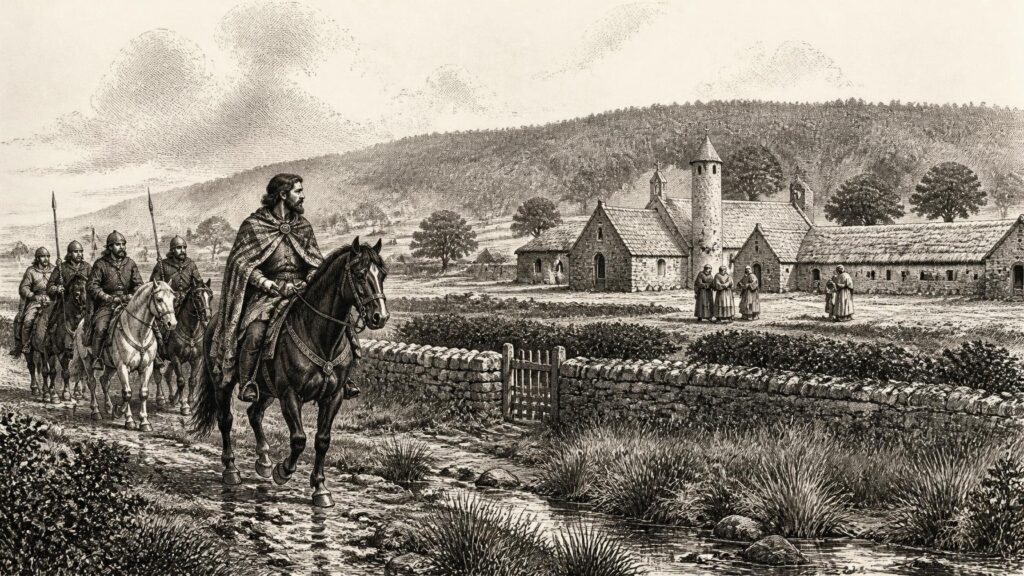
Mainistir-Feorais, the place named by the annals, lay in the wider midlands world in which Gaelic and settler lordships met, traded, competed and intermarried. The exact circumstances of the ambush or encounter are not recorded. It would be irresponsible to turn the terse notice into a dramatic story of betrayal, a dispute over a particular estate, or a battle at the friary itself. What can be said firmly is that the killers were relatives, and that the death came amid the recurrent competition of an extended ruling lineage. Kinship was a resource in such politics, but it also multiplied plausible claimants and armed rivals.
Cathair’s eldest son Brian succeeded to the lordship of Offaly. That succession did not remove the problem exposed by the killing. A lordship was not simply an inherited private estate passed automatically and peacefully from father to son. Authority depended on the acceptance, or at least the acquiescence, of powerful relatives, military followers, ecclesiastical allies and neighbouring rulers. Brian inherited a territory whose strategic importance was sharpened by its position west of the Pale and by the long reach of O’Conor Faly power across the midlands.
Offaly and the Pale Frontier
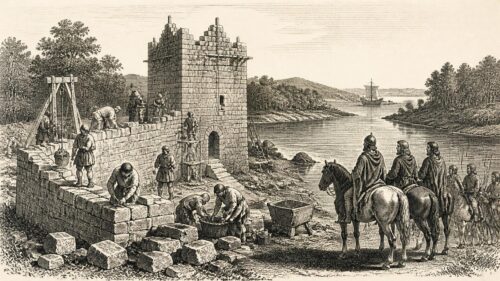
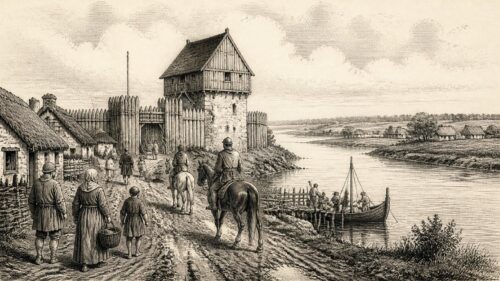
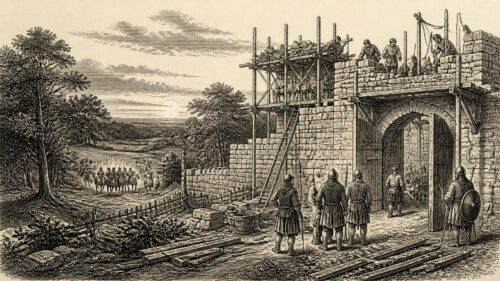
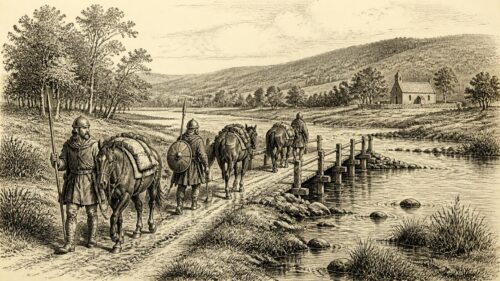
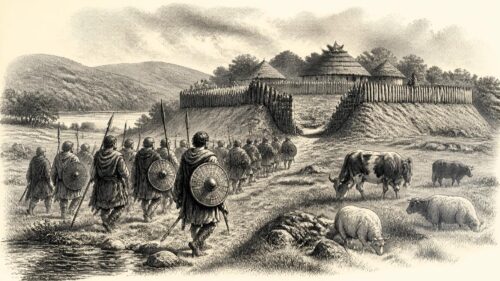
The O’Conor Faly lordship occupied a landscape of plains, bogs, river crossings, woods and dispersed settlements. Its people did not live outside the English lordship’s orbit, nor were they simply subject to it. The frontier was a zone of negotiation as much as a line on a map. It was crossed by merchants, clerics, messengers, soldiers and fugitives; it was also crossed by raiding parties seeking cattle, foodstuffs, horses, prisoners and political advantage. For communities close to the border, a change at the top of a neighbouring lordship could matter immediately.
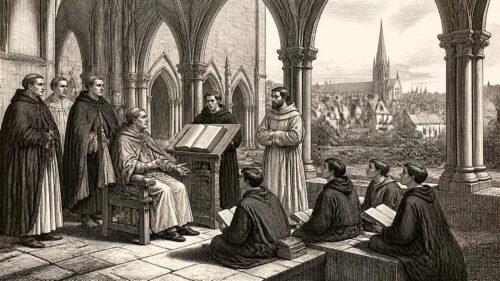
The sources for 1511 do not permit a precise reconstruction of Offaly’s harvest, prices, population or trade. They do, however, show why lordship mattered in everyday terms. A chief supplied protection, led hostings, received dues, distributed gifts and maintained a household. Learned men praised Cathair’s patronage because it was a visible political virtue, not merely a private taste. Patronage offered poets and historians material support; in return, their compositions preserved genealogies, claims and reputations. The same annalistic vocabulary applied to other figures who died during the year, revealing that scholarship, hospitality and lordship were interwoven institutions.
Dubthach Ó Duibhgeannáin, described in Annála Connacht as wealthy, wise and generous, died in 1511. He belonged to a celebrated learned family associated with historical and legal learning. In Tíreragh, Seán Mac Donnchadha of Tír Fhiachrach was remembered as a patron of scholars and men of art; he died in his stronghold at Ballindoon after less than a year in possession of his lordship. His kinsman Fergal was killed in the same year by the sons of Ruaidhrí Mac Diarmata. These notices should not be mistaken for a complete social survey, but together they show a political culture in which control of a lordship, the maintenance of a residence and support for learning remained closely connected.
War in Tír Chonaill
Far to the north-west, 1511 was shaped by the absence of Aodh Dubh Ó Domhnaill, lord of Tír Chonaill, who had departed on pilgrimage to Rome in the previous year. His son Manus governed in his father’s stead. The arrangement made Manus highly visible before he became lord in his own right, and the annals record an early sign of his independence: he released Art, son of Conn Ó Néill, from Ó Domhnaill custody without his father’s permission. Art’s son Niall Óg entered custody as a pledge for the keeping of the peace agreed between the parties.
That exchange is a valuable reminder that hostages were a recognised political instrument. They were not simply prisoners seized in war. A hostage could be delivered as security for an agreement, binding a family’s honour and future conduct to a negotiated peace. Yet the very need for such a pledge demonstrates the fragility of the settlement. Manus’s decision also showed that the temporary governor of Tír Chonaill was willing to make consequential decisions himself.
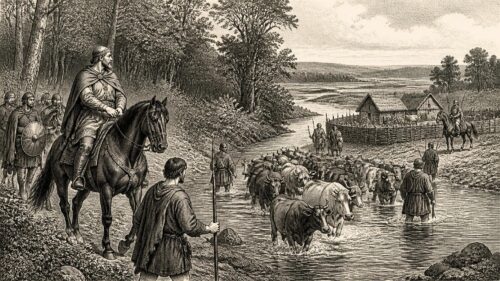
Conflict soon made the weakness of peace plain. Art Ó Néill, son of Aodh, led an army into Tír Chonaill. The annals state that Glenfin was burned, that the country on the near side of the Swilly was ravaged, and that Ó Dochartaigh was compelled to provide hostages. Manus Ó Domhnaill retaliated by plundering Cenél Fheradhaigh, a district in Tyrone. Later in the year Art returned with an army after Aodh Dubh had left for Rome. Manus, the three Mac Suibhne chiefs and the principal leaders of Tír Chonaill assembled to defend their country. Art withdrew eastward over the mountains without obtaining prey or fighting a battle.
These were not marginal disturbances. Burning, plunder and the taking of hostages were methods by which rulers demonstrated authority and extracted submission. For farmers and tenants in Glenfin, around the Swilly, or in Cenél Fheradhaigh, military strategy meant damaged homes and stores, displaced livestock and an uncertain season. The annals concentrate on leaders and outcomes, not on the names of ordinary victims; nevertheless, their terse verbs preserve the material consequences of warfare.
Deaths, Churches and Authority
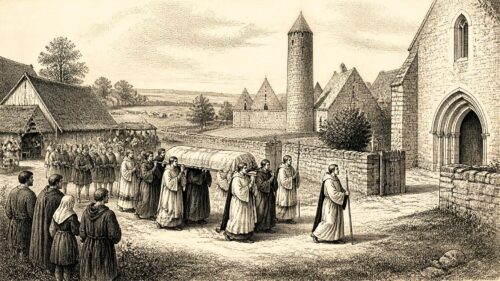
Church affairs also made 1511 a year of transition. Tomás Mac Brádaigh, bishop and erenagh of the two Bréifnes, died while travelling to consecrate a church. The Annals of the Four Masters gives an extended eulogy: during roughly thirty years in office he ordained clergy, consecrated churches and burial grounds, preached, instructed both clergy and laity, and gave food and gifts to poor and powerful alike. The entry’s calendrical wording is problematic in the nineteenth-century edition, so the exact date should be handled carefully. Later reconstruction places his death on Tuesday, 29 July, and his burial at the Franciscan friary in Cavan on Friday, 1 August; the firmly dated fact is his death in 1511 and burial at Cavan.
Mac Brádaigh’s combined description as bishop and erenagh points to the local character of ecclesiastical authority. An erenagh held hereditary responsibilities and lands connected with a church. In Bréifne, political families, religious houses and diocesan structures overlapped rather than operating as neatly separate spheres. The death before Christmas of Cormac Mag Shamhradháin, who was also styled bishop in Bréifne, further underlines the unsettled episcopal situation. Contemporary and later records preserve evidence of competing claims to the see of Kilmore; the annalists’ careful phrase, “who was called Bishop”, should not be flattened into an unqualified title.
At Armagh, “the greater part of the old works of the church” was burned. No surviving contemporary notice establishes the cause, the precise buildings affected or the scale of losses in books and furnishings. The report nonetheless registers a grave blow to Ireland’s foremost ecclesiastical centre. Armagh was both a religious site and a focus of regional prestige; damage to its ancient fabric carried practical as well as symbolic weight.
Dublin, meanwhile, lost Walter FitzSimons, archbishop of Dublin and a former deputy chief governor, on 14 May 1511. His death belonged to the political as well as the ecclesiastical history of the year. FitzSimons had served at the centre of Pale administration and had been associated with the recovery of Gerald FitzGerald, eighth earl of Kildare, in royal favour after the crises of the 1490s. His passing removed an experienced churchman whose career connected cathedral government, English royal politics and the shifting interests of the Dublin elite.
A Year of Exposed Fault Lines
1511 did not bring one island-wide settlement or one decisive campaign. Its evidence instead reveals several connected fault lines: a powerful Midlands lord killed by his own kin; a new successor facing the demands of a frontier lordship; contested authority and destruction in the north-west; and the loss or damage of important ecclesiastical institutions. The deaths of patrons, lords and bishops mattered because power was personal, local and sustained through households, kin networks, churches and learned communities.
Cathair Ó Conchobair Fáilghe’s killing is therefore the year’s clearest focal point. It showed that the greatest danger to a lord could arise not only from the Crown’s officers in Dublin or from an external enemy, but from within the family that supplied his claim to rule. In 1511, Ireland’s political map remained a web of lordships rather than a single governing system. The events recorded that year show how quickly that web could be tightened, torn or remade.
Source References
Hover over a number to see the source. Select it to open the source.

- [1] Annals of the Four Masters, Annal M1511
- [2] Annals of the Four Masters, Volume 5 (Irish text)
- [3] Annála Connacht, Annal 1511
- [4] Annála Connacht
- [5] O'Donnell, Manus (Ó Domhnaill, Maghnas)
- [6] FitzSimons, Walter
- [7] O'Neill (Ó Néill), Conn ‘Bacach’
- [8] English Lordship of Ireland and the Irish Sea World: Re-assessing the Origins of the Kildare Ascendancy, c.1390–c.1513
- [9] Thomas MacBrady, Bishop of Kilmore, 1480–1511
- [10] Thomas MacBrady, Bishop of Kilmore (1480–1511)
- [11] Cavan Franciscan Friary
- [12] Annals of the Kingdom of Ireland, Volume V
- [13] The Annals of Ulster
- [14] Annales Breves Hiberniae
- [15] Of the Lawes of Irelande
- [16] The Bardic Poems of Tadhg Dall Ó Huiginn (1550–1591)
- [17] The Commonwealth of Ireland
- [18] Calendar of State Papers, Ireland: Tudor Period, 1509–1547
- [19] A Short History of Ireland, 1500–2000
- [20] Meamram Páipéar Ríomhaire – LS D ii 1 (Leabhar Ua Maine)
Primary Sources
- Annals of the Four Masters, Annal M1511
- Annals of the Four Masters, Volume 5 (Irish text)
- Annála Connacht, Annal 1511
- Annála Connacht
- O'Donnell, Manus (Ó Domhnaill, Maghnas)
- FitzSimons, Walter
- O'Neill (Ó Néill), Conn ‘Bacach’
- English Lordship of Ireland and the Irish Sea World: Re-assessing the Origins of the Kildare Ascendancy, c.1390–c.1513
- Thomas MacBrady, Bishop of Kilmore, 1480–1511
- Thomas MacBrady, Bishop of Kilmore (1480–1511)
- Cavan Franciscan Friary
- Annals of the Kingdom of Ireland, Volume V
- The Annals of Ulster
- Annales Breves Hiberniae
- Of the Lawes of Irelande
- The Bardic Poems of Tadhg Dall Ó Huiginn (1550–1591)
- The Commonwealth of Ireland
- Calendar of State Papers, Ireland: Tudor Period, 1509–1547
- A Short History of Ireland, 1500–2000
- Meamram Páipéar Ríomhaire – LS D ii 1 (Leabhar Ua Maine)