Castlefinn Peace1480 CE
In 1480, Irish annals recorded interconnected conflicts, settlements and deaths across Ulster, Fermanagh and Connacht. Gerald FitzGerald, Earl of Kildare, joined Conn O’Neill’s unsuccessful siege of a rival O’Neill castle, demonstrating both Dublin’s reach and its limits. Raids between Tír Eógain and Tír Chonaill caused burnings, cattle losses and casualties, while O’Donnell dynastic rivalries continued. At Castlefinn, O’Donnell, Conn O’Neill and Neachtan O’Donnell’s sons negotiated peace and appointed Eigneachán O’Donnell tanist. Obituaries for Tomás Óg Maguire, Cathal Óg Mac Maghnusa, poets and teachers emphasised hospitality, religious patronage and learning. Local feuds also involved MacMahons, Maguires, O’Rourkes and de Burgh factions.
Dateline
The surviving Irish annals make 1480 look less like a single national story than a chain of hard local reckonings: raids and counter-raids in Ulster, a failed siege involving the Earl of Kildare, a settlement at Castlefinn, deaths that reshaped networks of lordship and hospitality, and conflict extending from Fermanagh to Connacht. The year is unusually well illuminated by the Annals of Ulster and the later Annals of the Four Masters. Their entries must nevertheless be read with care. They record events under the year 1480, but rarely give a day, and their praise of lords, clerics and poets follows the conventions of Gaelic learned writing as well as reporting deeds.
A Castle Holds Out in Tír Eógain
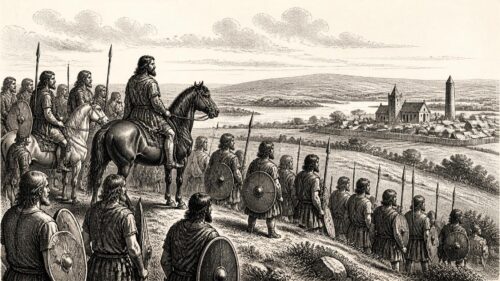
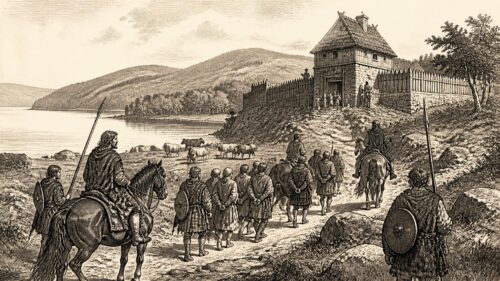
One of the clearest political events of the year was an expedition into Tír Eógain, the O’Neill lordship centred on much of present-day Tyrone and adjoining districts. The Annals of Ulster state that Conn O’Neill entered the region with a host of “Foreigners”: Gerald FitzGerald, eighth earl of Kildare, identified as the king’s deputy in Ireland, and the English of Meath. Their target was the castle held by John the Tawny O’Neill. The annalist does not name the stronghold, and it would be unsafe to identify it with a particular modern site. What can be said is that John was inside, refused to yield, and held the castle despite the attacking force. The host withdrew; John later made peace with O’Neill.
This small entry is a valuable corrective to a simple map of “English” versus “Irish” Ireland. Kildare’s participation shows the deputy government at Dublin working with one O’Neill interest against another; Conn O’Neill’s presence shows that Gaelic dynastic politics could draw in the lordship’s military resources. The campaign did not produce a recorded conquest or garrison. Its immediate outcome was a negotiated accommodation after the castle had resisted. In that sense, the episode demonstrates both the reach and the limits of Kildare’s authority in 1480.
The principal O’Neill of Tír Eógain was Enrí O’Neill, whose long rule had made his family pre-eminent in much of Ulster. Modern biographical scholarship notes the apparent paradox that parliament publicly thanked Enrí for his good services in 1480, even as the annals record armed contention within the wider O’Neill kindred. Such overlap was not contradiction in a modern governmental sense. Allegiance, kinship, clientship and force all operated together; a lord might negotiate with Dublin while rivals fought over local power, castles, cattle and hostages.
Raids Across the Northern Border
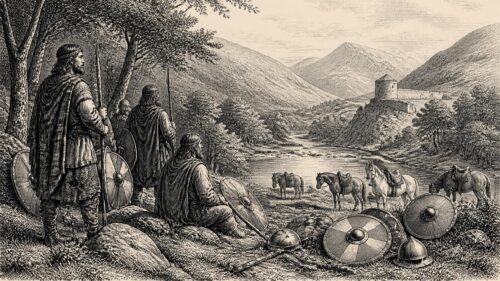
The struggle between Tír Eógain and Tír Chonaill remained the year’s dominant military pattern. Enrí O’Neill made an incursion into Tír Chonaill, causing extensive burnings and damage, according to the annalist. Aodh Ruadh O’Donnell, ruler of Tír Chonaill, answered with an expedition into Cenél Fearadhaigh, accompanied by the sons of Art O’Neill and the sons of Feidhlimidh O’Neill. Their force raided the territory of Mac Cathmhaoil. Brian, a member of the O’Neill lineage, and James Mac Cathmhaoil were killed. Pursuit then brought another loss: Eogan, son of Niall and grandson of Art O’Neill, described as an eminent leader, was slain. Yet O’Donnell’s party retained its prey.
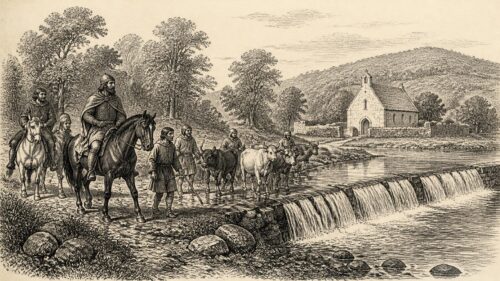
“Prey” was not a decorative annalistic word. It meant portable wealth, above all cattle, but potentially horses and other goods. The burnings and seizure of livestock recorded in 1480 therefore struck at food supply, status and the capacity to reward followers. For farming households near the route of an army, the effects could include lost animals, damaged crops, forced movement and the disruption of seasonal work. The sources do not permit a confident reconstruction of an ordinary family’s experience, but they do make clear that warfare was inseparable from the control and redistribution of resources.
The conflict also divided the O’Donnells themselves. Maghnus Ruadh O’Donnell was killed by the sons of Feidhlimidh Riabhach O’Donnell. Later in the year, on 29 September according to the Four Masters, Eogan O’Donnell, son of Niall Garbh, was killed at Cluain Laogh by the sons of Neachtan O’Donnell; other casualties and prisoners followed. These were not peripheral feuds. Aodh Ruadh’s kingship of Tír Chonaill had emerged from decades of competition between branches of his dynasty, and the year’s violence reveals how insecure succession and authority could remain even under an experienced ruler.
The Castlefinn Settlement
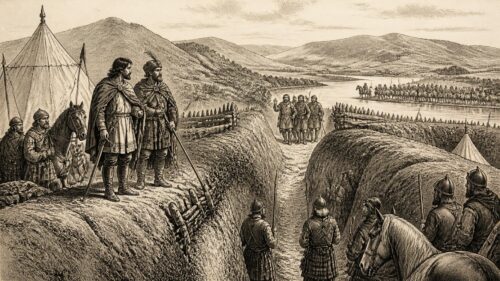
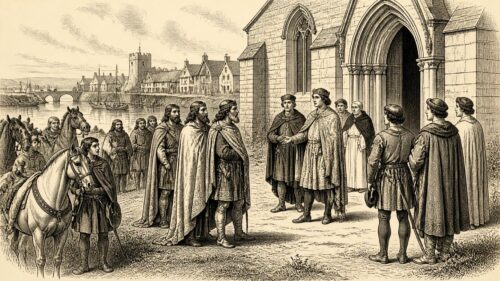
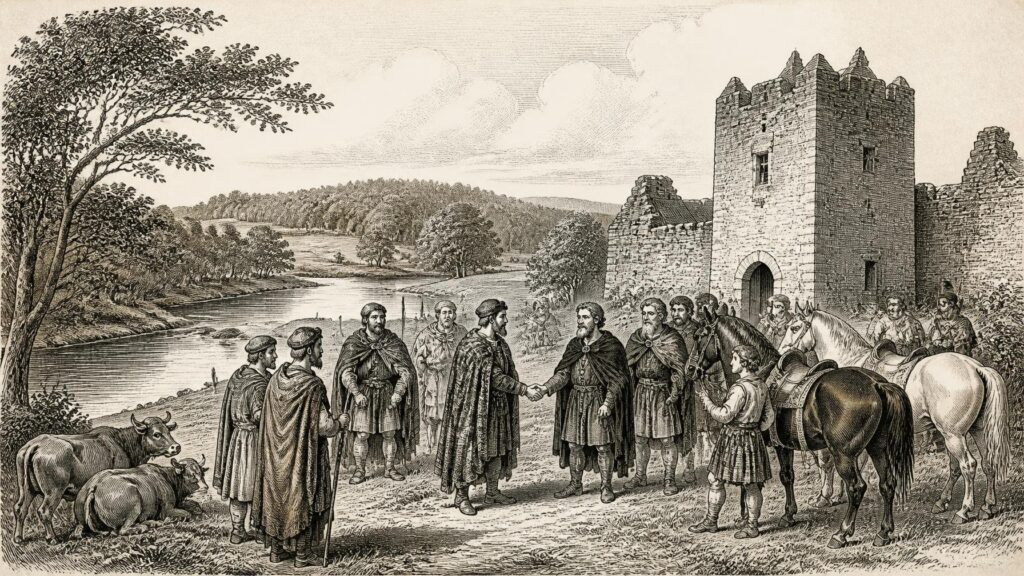
Out of this violence came the event that gives the year its most revealing political image. O’Donnell met the sons of Neachtan O’Donnell and Conn O’Neill at Caisleán na Finne, Castlefinn, on the River Finn. They made peace, and the tanistry of Tír Chonaill was given to Eigneachán O’Donnell. The annals do not preserve the detailed terms, nor do they say that every disagreement ended. But the choice of a tanist — an acknowledged successor or second-ranking dynastic figure — was a serious constitutional act within a Gaelic lordship. It sought to stabilise rule by settling, at least temporarily, which branch stood next in line.
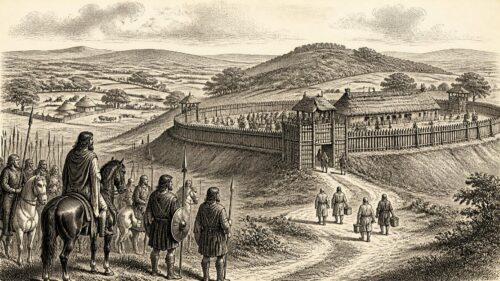
Castlefinn was an especially apt setting for such a conference. Earlier annals show its castle as a contested O’Donnell stronghold, capable of being besieged and of resisting. In 1480, therefore, the castle was more than a backdrop: it was a fortified place where military security, dynastic negotiation and territorial authority met. The peace was fragile precisely because it emerged amid killings within the O’Donnell family and a wider war with O’Neill. It was a practical settlement rather than evidence of a settled northern order.
Fermanagh Mourns Tomás Óg Maguire
The year also brought the death of Tomás Óg Maguire, former ruler of Fir Manach. The Annals of Ulster praise him as exceptionally charitable, devout and hospitable, as a defender of his territory, builder of churches and monasteries, and maker of Mass chalices. They add that he had travelled once to Rome and twice to the city of St James — Santiago de Compostela — and that his reputation filled Ireland and Scotland. He was buried, by his own choice, in the monastery at Cavan.
This should not be read as a neutral modern obituary. Annalists commonly celebrated elite generosity and piety. Yet the details matter. Tomás’s pilgrimages, church patronage and liturgical gifts show a Gaelic lord participating in religious networks extending far beyond his own lakes and islands in Fermanagh. His earlier journey to Rome during the Jubilee year of 1450 is independently recorded in the same annalistic tradition. In 1480, memory of such acts made religious patronage part of his political afterlife: a lord’s standing rested not only on victory in war, but on protecting churches, sustaining learned people and maintaining an honourable household.
Another Fermanagh death makes the social meaning of hospitality still clearer. Cathal Óg Mac Maghnusa Maguire was remembered as the best brughaidh — a keeper of a notable guest-house — in Ireland in his time. The annal is unlikely to be a literal national ranking, but it records a real ideal. A powerful household was expected to feed and receive travellers, retainers, clerics, poets and dependants. Hospitality was an economic burden, a public performance of rank and a means of building political loyalty. The deaths of Tomás and Cathal therefore marked losses not merely to two families but to institutions of protection and provision.
Learning, Lordship and Local War
The year’s obituaries preserve traces of the learned culture that served and interpreted this political world. Fergal Mac Eochadha, called an eminent poet, died, as did Aenghus O’Hosey, described as a poet, teacher and man of books. Their deaths cannot tell us what individual poems or manuscripts were produced in 1480. They do, however, confirm the standing of professional learning in late medieval Ireland. Poets and teachers transmitted genealogy, law, praise and historical memory; their association with leading households made learning an element of lordship, not an activity separate from power.
Elsewhere, war remained intensely local. Art MacMahon was killed while following the rear of a raid in the Fews, in the territory of Cu Uladh O’Neill. A larger conflict between the sons of Aodh Ruadh MacMahon and the sons of Redmond MacMahon drove the latter towards the protection of Turlough O’Reilly in Bréifne. At Bealach Uí Mhitidhéin, men of the Maguire kindred were killed by sons of O’Rourke. These entries show lordships as connected neighbourhoods: defeat could compel a family to seek refuge across a political boundary, while raids could rapidly involve several dynasties.
In Connacht, the sons of Edmond de Burgh fought the sons of Richard de Burgh. The annals report defeat for Edmond’s side and the death of Colla, son of a Scottish MacDubgaill, alongside other prominent men. The brief notice is a reminder that the western lordships were not isolated from the wider Gaelic world of the North Channel. Scottish fighting men and family connections appeared in Irish conflicts, while de Burgh factions competed within a political landscape that had long blended Gaelic, Anglo-Norman and Hebridean affiliations.
A Year of Negotiated Survival
Nothing in the evidence justifies calling 1480 a turning point for all Ireland. It was, rather, a year in which the workings of late medieval Irish society are unusually visible. A Kildare-led force failed before an O’Neill castle; raiding armies made livestock and settlement central stakes; Castlefinn hosted a peace and a decision on succession; Fermanagh commemorated a lord whose authority was expressed through pilgrimage, church patronage and generosity; poets and teachers remained figures of public consequence. The annals preserve elite perspectives, but through them we can see a country governed not by one uniform system, but by fortified places, negotiated relationships, mobile wealth and rival households seeking survival, honour and advantage.
Source References
Hover over a number to see the source. Select it to open the source.

- [1] The Annals of Ulster: Year U1480
- [2] Annala Uladh: Year U1480
- [3] Annals of the Four Masters: Annal M1480
- [4] CELT Project: The Annals of Ulster
- [5] CELT Project: Annals of the Four Masters
- [6] Maguire (Mág Uidhir), Tomás Óg
- [7] O’Donnell (Ó Domhnaill), Aodh Ruadh
- [8] O’Neill (Ó Néill), Enrí
- [9] FitzGerald, Gerald (Gearóid Mór)
- [10] MacMahon (Mac Mathghamhna), Aodh Ruadh
- [11] The Annals of Ulster: Year U1479
- [12] The Annals of Ulster: Year U1484
- [13] The Annals of Ulster: Year U1450
- [14] The Annals of Ulster: Year U1462
- [15] Annals of the Four Masters: Caisleán na Finne in 1434
- [16] Statute Rolls of the Irish Parliament: 12–13 to 21–22 Edward IV
- [17] Pre-Union Irish Statutes
- [18] The English Lordship of Ireland and the Irish Sea World: Re-assessing the Origins of the Kildare Ascendancy, c.1390–c.1513
- [19] Ireland in the Reign of Henry VIII
- [20] Statute Rolls of the Parliament of Ireland: National Library of Ireland Catalogue Record
- [21] Ballyhack Castle
- [22] National Monuments in State Care: County Wexford
- [23] Historic Environment Viewer for Archaeological and Architectural Heritage
- [24] Additional Attractions: Ireland’s Ancient East
Primary Sources
- The Annals of Ulster: Year U1480
- Annala Uladh: Year U1480
- Annals of the Four Masters: Annal M1480
- CELT Project: The Annals of Ulster
- CELT Project: Annals of the Four Masters
- Maguire (Mág Uidhir), Tomás Óg
- O’Donnell (Ó Domhnaill), Aodh Ruadh
- O’Neill (Ó Néill), Enrí
- FitzGerald, Gerald (Gearóid Mór)
- MacMahon (Mac Mathghamhna), Aodh Ruadh
- The Annals of Ulster: Year U1479
- The Annals of Ulster: Year U1484
- The Annals of Ulster: Year U1450
- The Annals of Ulster: Year U1462
- Annals of the Four Masters: Caisleán na Finne in 1434
- Statute Rolls of the Irish Parliament: 12–13 to 21–22 Edward IV
- Pre-Union Irish Statutes
- The English Lordship of Ireland and the Irish Sea World: Re-assessing the Origins of the Kildare Ascendancy, c.1390–c.1513
- Ireland in the Reign of Henry VIII
- Statute Rolls of the Parliament of Ireland: National Library of Ireland Catalogue Record
- Ballyhack Castle
- National Monuments in State Care: County Wexford
- Historic Environment Viewer for Archaeological and Architectural Heritage
- Additional Attractions: Ireland’s Ancient East