Áed’s Lough Ree Fleet1272 CE
In 1272, Áed Ó Conchobair, king of Connacht, intensified resistance to Anglo-Norman power by destroying Roscommon castle, burning Athlone and Meath towards Granard, breaking Athlone’s bridge, and deploying a flotilla on Lough Ree. Fighting also killed Henry Butler of Umhaill, while dynastic violence and deaths unsettled Connacht and Breifne. Justiciar James de Audley died amid disputed circumstances, weakening royal administration, though official links with England continued. Henry III’s death brought Edward I’s succession as lord of Ireland. Annals also record elite deaths and burials, while warfare devastated settlements, resources, travel and local security across western and central Ireland that year.
Dateline
A Connacht Offensive
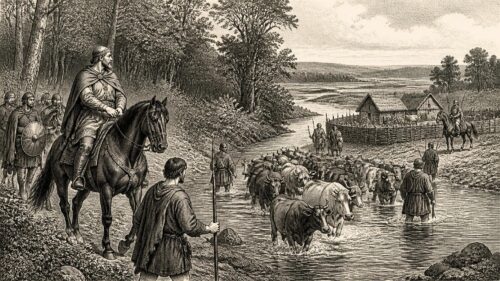
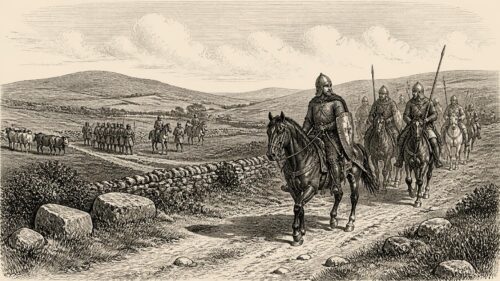
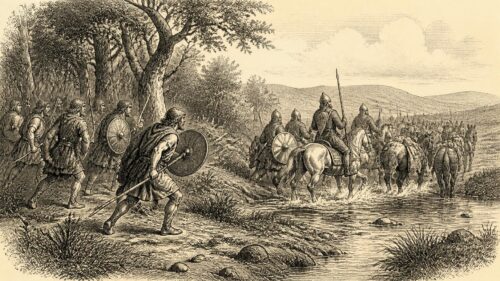
The year 1272 stands out in Irish annals as a season in which war radiated from Connacht across the midlands. Its principal figure was Áed Ó Conchobair, king of Connacht, whose forces struck at the network of castles, crossings and lordly settlements through which the Anglo-Norman lordship sought to hold the Shannon corridor. The evidence is strongest for a sequence of connected actions: the breaking of Roscommon castle, the burning of Athlone and Meath towards Granard, the destruction of Athlone’s bridge, and a substantial fleet put upon Lough Ree. These were not isolated acts of raiding. Taken together, they show an Irish kingship deliberately challenging military infrastructure and communications in the contested centre of the island.
Such a campaign had a recent history. In the preceding years, Áed had already attacked castles at Templehouse, Sligo and Athleague, while the death of Walter de Burgh, earl of Ulster and lord of the Anglo-Norman interest in Connacht, in 1271 weakened an important opponent. That background helps explain the force of the events recorded under 1272, but should not blur their dating: the specific attacks described here belong to this calendar year in the Annals of Connacht and related annalistic traditions. They reveal a political world in which control was measured not only by titles and treaties, but by the ability to deny an adversary a fortified base, a bridge or a safe route for mounted troops and supplies.
Roscommon and the Shannon Corridor
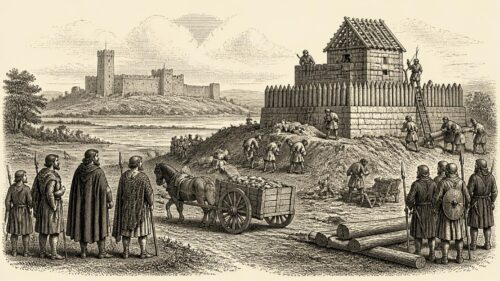
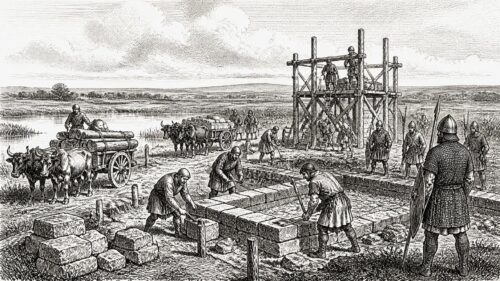
Áed’s destruction of Roscommon castle was the year’s most symbolically charged blow. Roscommon was more than a local stronghold. Situated in Sil Murray, the heartland of the Ó Conchobair kings, it embodied the attempt of Anglo-Norman lords to secure Connacht by castles, boroughs and dependent estates. The annals’ plain statement that Áed “broke down” the castle does not tell us the technique, duration or full extent of the damage. It does, however, make clear that the fortress was successfully disabled. Demolition mattered because stone and timber castles were centres for garrisons, storage, lordly courts and the collection of revenues. Their loss could alter the balance of power well beyond the immediate site.
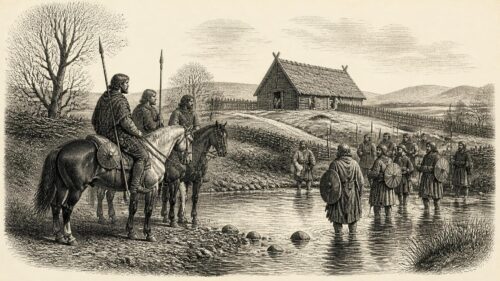
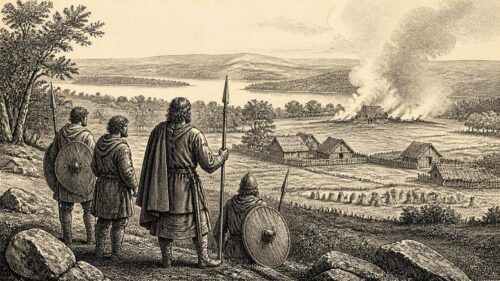
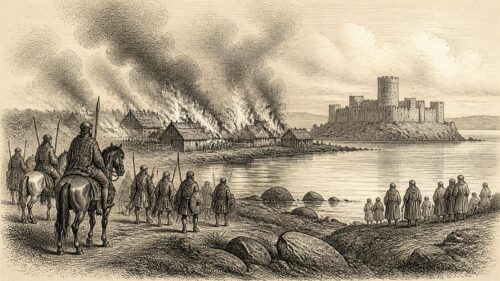
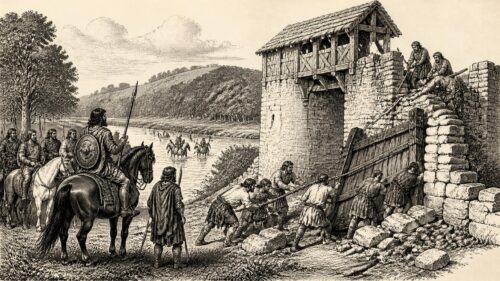
The assault had consequences along the Shannon. Annals of Connacht record that Áed burned Athlone, broke its bridge and burned Meath as far as Granard. Athlone’s crossing connected the eastern lordship with Connacht; its bridge was therefore a strategic object as well as an item of civic infrastructure. Breaking it impeded the movement of men, horses, carts and provisions across the river. The raid into Meath, reaching towards Granard, carried the conflict into a region more firmly integrated into the English lordship. “Burning” in medieval annals need not mean that every dwelling in a district vanished, but it indicates devastating attacks on settlements, crops, stores and the material resources on which lordship depended. For inhabitants, the danger was immediate: flight with livestock and movable goods, loss of harvest or housing, and the interruption of travel and exchange.
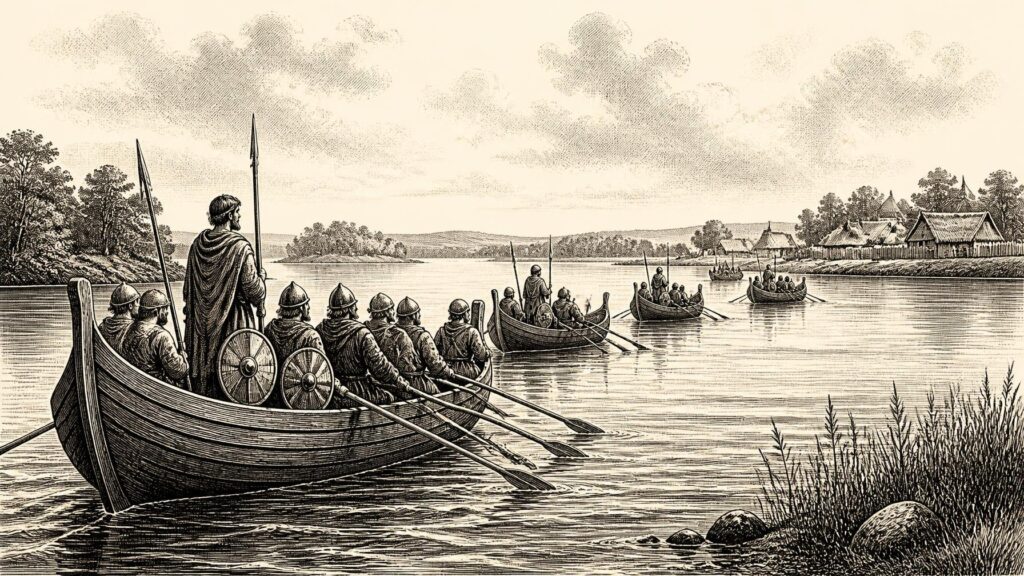
Áed also placed what the annalist calls a great fleet on Lough Ree, where it carried out further burnings and damage. The word should not summon an image of ocean-going warships. On an inland lake, this was more probably a flotilla of boats assembled to move fighting men and strike shores, islands and waterside routes. Yet its political meaning was considerable. Lough Ree joined the Shannon system to lands in Connacht, Meath and beyond; command of boats could make the water an avenue of attack rather than an obstacle. The fleet complements the attacks on Roscommon and Athlone: castles and bridges were assaulted on land while waterways were used to extend the reach of Connacht’s forces.
Conflict in the West
Violence was not directed solely at the lordship’s central corridor. Henry Butler, lord of the Owles—Umhaill, in present-day Mayo—and Hodge Medbric were killed by Cathal, son of Conchobar Ruad Ó Conchobair, together with Connacht princes. The notice is terse, as annalistic notices often are, and gives no battlefield or date within the year. Still, it points to armed competition in the Atlantic-western districts as well as the midlands. The lord of Umhaill held a coastal territory whose harbours, fisheries, pasture and sea connections made it valuable. The killing of a lord could unsettle followers, tenants and neighbouring alliances even where no formal conquest followed.
Another death exposes the fragility of dynastic politics among Irish ruling families. Tadc Dall, son of Áed and grandson of Cathal Crobderg Ó Conchobair, died in 1272. The Annals of Connacht call him the most eligible candidate for Connacht’s kingship until the Uí Raigillig had blinded him. The phrase expresses an annalist’s judgement, but it also records a grim political fact: bodily injury could remove a man from the competition for rule. In a society where a king was expected to lead, dispense justice, make alliances and display physical integrity, blinding was both personal violence and a calculated intervention in succession. His death narrowed an already contentious field within the extended Ó Conchobair kindred.
In Breifne, Donnchad Mag Samradáin was killed by his own brother, Tomás son of Áed. This killing should not be inflated into a province-wide war, but it is a useful reminder that Ireland’s political map was made up of many lordships, not a simple contest between Connacht and the English crown. Family rivalries, local followings and disputes over inheritance could be as consequential to people living in a district as the movements of a king’s army. The annals do not preserve the motives in this case, and it would be unsafe to supply them.
The Justiciar’s Death
The death of Jacques d’Audeley, or James de Audley, Justiciar of Ireland, was the most important change within the royal administration recorded for 1272. The justiciar was the crown’s chief governor in the lordship, responsible for royal justice, finance, military business and the difficult task of sustaining authority beyond Dublin. Annals of Connacht state that Audley was killed by Ó Broin and a body of Connachtmen. The Annals of the Four Masters preserve the same broad attribution. A later Anglo-Irish annal, however, says that he died after falling from his horse in Thomond. The sources therefore agree on Audley’s death in 1272 but not on its cause or setting. The prudent conclusion is that the lordship lost its chief officer amid active conflict, while the precise circumstances remain disputed.
That loss mattered at a moment when the western frontier was visibly under pressure. It did not mean that royal government stopped. On 4 July, a royal letter granted William Fitz Alan two years’ protection from the coming Michaelmas while he travelled to Ireland on the king’s affairs. The document offers only a narrow glimpse, but it demonstrates continuing official traffic between the king’s dominions and Ireland. Administration was maintained through letters, protections, officials, ships and personal travel; it was not confined to castles. Nevertheless, replacing an experienced justiciar and coordinating magnates after his death were urgent problems for a government confronting raids, damaged crossings and shifting local loyalties.
Lordship, Kingship and Succession
On 16 November 1272 Henry III of England died, and his son Edward succeeded by hereditary right as Edward I. The change was immediately relevant to Ireland because the English king was also lord of Ireland, even though Edward himself was abroad and would not be crowned until 1274. The Annals of the Four Masters note Edward’s elevation under the year, showing that the succession was known and considered significant in Ireland. It did not instantly transform local power. Áed Ó Conchobair’s campaign had been conducted through Connacht military resources and regional alliances, while the lordship’s practical strength still depended on its resident officers and Anglo-Norman magnates. But the accession opened a new reign in which Irish affairs would be considered within Edward’s wider ambitions for royal authority.
The contrast between the two political systems should not be overstated. Both depended upon personal lordship, armed service, hospitality, negotiated submission and access to resources. Yet the lordship also relied heavily on written administration and fixed points—castles, towns, courts and bridges—while Connacht’s kingship in 1272 demonstrated a capacity to mobilise through kinship networks and exploit rivers, lakes and difficult terrain. The year’s warfare was therefore also a contest over how authority could be made real on the ground.
Households, Churches and Memory
Not every entry for 1272 concerns battle. Muirgius Ó Maelruanaid, praised by the annalists for generosity and valour, died at Murvagh in an Ó Domnaill encampment. The Four Masters add that he was carried to Boyle Abbey for burial. This was a journey of commemoration as well as disposal of the dead: monasteries offered elite families burial places, liturgical remembrance and a setting in which status could be publicly expressed. Such notices also preserve the values that annalists wished to honour. Hospitality, gifts and prowess were not decorative virtues; they were central to the ability of a lord to maintain dependants, attract allies and acquire renown.
Richard Tuit, described in the Annals of Connacht as the noblest baron in Ireland, also died during the year. The superlative is an annalist’s assessment rather than an objective ranking, but Tuit’s notice indicates the passing of another figure from the Anglo-Norman political class. Deaths at this level affected lordly households, tenants, wardships and land claims, even when the surviving sources do not spell out their consequences. They also underline how personal the structures of government remained: offices and estates were attached to individuals and families, and mortality could abruptly reshape power.
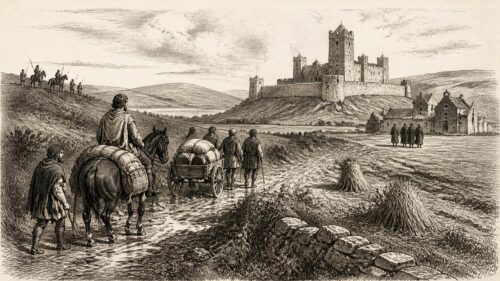
For ordinary people, 1272 was likely remembered less as an accession in distant England than as a year when armies moved, fires spread and familiar routes became unsafe. The evidence does not permit a confident national picture of harvests, prices or disease for this single year. It does permit a more limited conclusion. In Connacht, Meath and the Shannon basin, warfare disrupted the material foundations of daily life: stored food, livestock, bridges, homes, fields and the security of travel. On Lough Ree and Lough Erne alike, boats could carry armed men to places normally shielded by water. Ireland in 1272 was not politically uniform, but the year’s records vividly show how regional conflict could connect remote shores, castles and households across the island.
Primary Sources
- Annála Connacht, Annal 1272
- Annála Connacht, Annal 1271
- Annála Connacht, Annal 1273
- Annála Connacht, Irish-language edition
- Annals of the Four Masters, Annal M1272
- Annals of the Four Masters, Irish-language edition
- Annals of Loch Cé, Part 12
- Annals of Ulster, Year U1271
- Annala Uladh: Annals of Ulster otherwise Annala Senait, Annals of Senat
- Annales Hiberniae
- Annales Breves Hiberniae
- Calendar of Documents Relating to Ireland, Volume 2, Item 922 (Date: 4 July 1272)
- Parchment Conquest, 1171–1307
- Calendar of Ormond Deeds, Volume I, 1172–1350
- Edward I ‘Longshanks’ (r. 1272–1307)
- Henry III (r. 1216–1272)
- Changes under Edward I
- Regency and Counsellors of State
- From Boom to Bust: The Lordship of Ireland and the European ‘Commercial Revolution’
- English Rule in Ireland, c.1272–c.1315
- The Crusades to 1291 in the Annals of Medieval Ireland
- Annals of Connacht: Complete Text