Tuam’s Great Synod1251 CE
In 1251, Ireland’s fragmented political order combined royal administration, Gaelic rivalry, ecclesiastical organisation and environmental disruption. John Fitz Geoffrey’s wardship purchase illustrated links between office, inheritance and lordship, while Henry III approved Hugh’s election to Ossory and authorised an Irish coinage exchange. Connacht clergy held a synod at Tuam under Archbishop Flann Mac Flainn, although its decisions are unknown. Annals record killings among Connacht and northern kindreds, clerical deaths and Archbishop Raighned’s journey to Rome. Grants of privileges expressed royal authority locally. Summer lightning and flooding, followed by severe winter frost, damaged people, cattle, travel and livelihoods without proving famine.
Dateline
The surviving record for 1251 does not offer a single island-wide narrative. Instead, royal acts, Irish annals and later compilations illuminate different communities: officials working through Dublin, churchmen meeting at Tuam, rival kindreds fighting in Connacht and the north, and households confronted by violent weather. What is firmly dated is striking. On 8 May, the English crown acted in an episcopal appointment; by autumn, it had launched a new monetary exchange for Ireland. The Irish annals, meanwhile, locate a major Connacht clerical synod in this year and record deaths, killings and environmental disruption across several regions.
Authority in Several Landscapes
Ireland in 1251 was not governed by one uniform political system. Henry III ruled as lord of Ireland, but royal government was strongest in the towns, castles and lordships shaped by Anglo-Norman settlement. John Fitz Geoffrey, the justiciar, was the crown’s principal official in Ireland, though he spent extended periods in England during his tenure. His authority depended on sheriffs, magnates, churchmen and local allies rather than on direct control of the whole island. Gaelic kings and chiefs retained power over extensive territories, while their rivalries could be as consequential as disputes with the settlers.
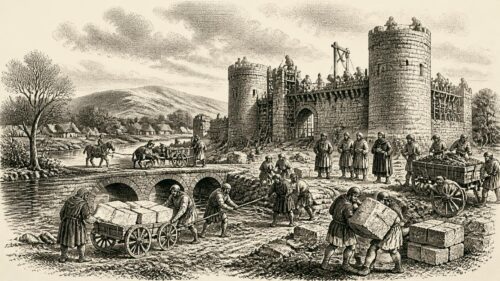
That mixed political world appears in a transaction attributed specifically to 1251: Fitz Geoffrey purchased from the king the wardship of the under-age Butler heir for 3,000 marks. Wardship gave a lord control over the income and marriage prospects of a minor heir, making it both a source of profit and a means of building influence. The purchase demonstrates that royal office, private lordship and family strategy were closely interwoven. It also shows that English royal government in Ireland was not merely military: it was concerned with inheritances, revenues and the management of estates.
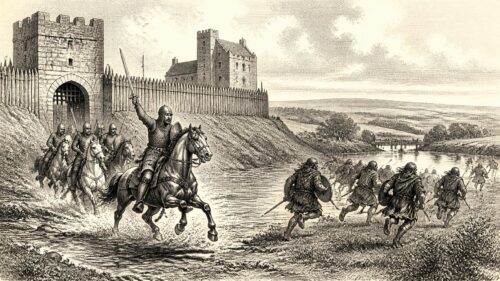
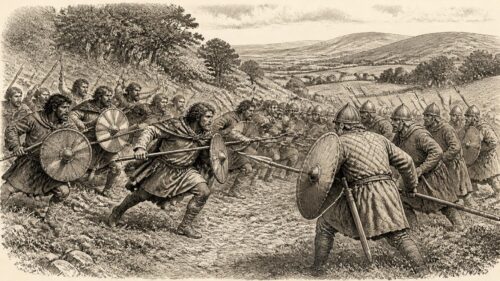
Conflict nevertheless remained immediate. Annála Connacht records that Tadc, son of Tuathal Ó Conchobair and grandson of Muirchertach Muimnech, was killed by the Galls, the term its translator renders as foreigners. This was a loss within the extended Connacht royal dynasty, whose branches competed fiercely for standing and territory. Gilla Mochonne Ó Cathail was killed by Conchobar, son of Áed and grandson of Cathal Crobderg; Flaithbertach Ó Cerbaill, chief of Calry, was killed by Art Ó Ruairc. Such entries do not describe one campaign. They reveal a political order in which succession, alliance, cattle, land and personal honour could all turn local violence into a wider regional concern.
The northern annals add further evidence of instability. Two sons of Ruaidrí Ó Néill were killed at Cell Mór in Uí Niallain. Gilla Críst Ó Breslen, chief of Fanad, and a kinsman were killed by Cellach Ó Baoighill, while Donnchad Mac Cathmhaoil, chief of Cenél Feradaig, was killed by the Airgialla. The death of Ardgal Ua Flaithbertaigh, described as royal heir of Ailech and praised for championship and hospitality, removed another figure of standing from northern politics. The vocabulary of hospitality in these obituaries is important: a ruler’s reputation rested not only on fighting but on sustaining followers, guests and dependants.
Church Travel and Local Patronage
Religion connected these fractured political landscapes. The Annals of Ulster state that Raighned, archbishop of Armagh, went to Rome in 1251. The annal does not preserve the purpose or outcome of the journey, and it should not be expanded into a diplomatic mission without evidence. Yet the bare notice is revealing. The Irish church’s highest-ranking prelate was linked directly to papal Christendom by travel, correspondence and ecclesiastical procedure; Rome was not an abstract authority but a destination reached by Irish clergy.
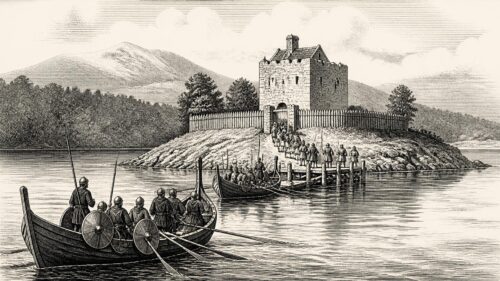
Clarus, archdeacon of Elphin, died on the Saturday before Pentecost, according to Annála Connacht. Its unusually full obituary credits him with religious foundations or churches at Loch Key, Randoon, Loch Oughter and Cell Ras, and says that he chose burial at Loch Key. The account is devotional in tone, praising fasting, prayer and patience, but it also preserves the footprint of an energetic ecclesiastical patron. His career linked lakeside communities around Connacht and Breifne through buildings, religious households and the resources needed to sustain them. Gilla Críst Ó Lachtnáin, abbot of the Trinity at Tuam, was also recorded as dying in 1251, drowned in the Irish Sea, a sombre reminder that clerical travel by water carried real danger.
The Synod at Tuam
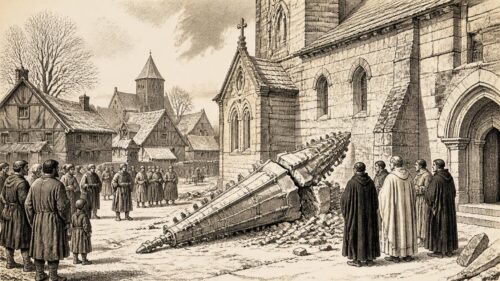
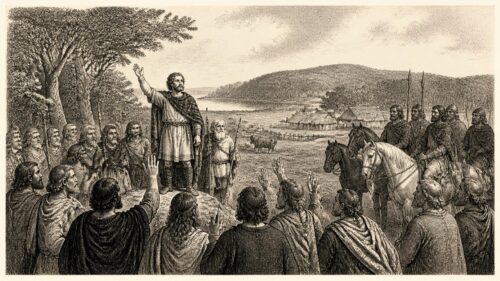
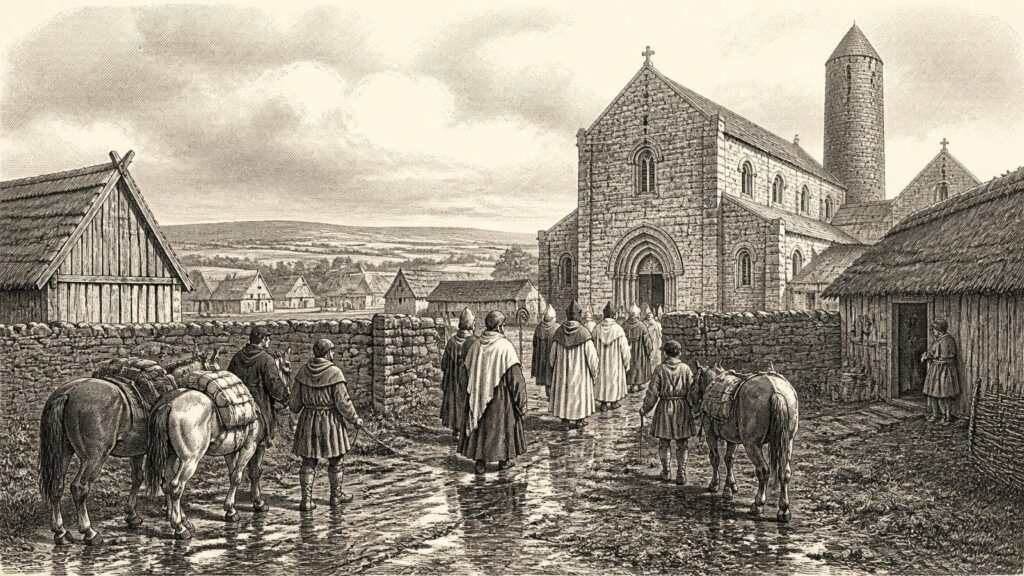
The year’s most significant ecclesiastical notice is concise: the clergy of Connacht held a great synod at Tuam. No surviving annal lists its attendees, decisions or canons, so it would be misleading to assign it a reform programme. Its scale, however, matters. A provincial gathering required bishops, senior clergy and their entourages to travel, lodge and deliberate in the archiepiscopal centre. It brought together an ecclesiastical province whose churches operated amid competing Gaelic dynasties and expanding Anglo-Norman lordships.
The synod belongs securely to the first year of Flann Mac Flainn’s archiepiscopate. He had been elected in 1250 and was consecrated at Tuam on Christmas Day 1250 after securing papal provision. A much later annalistic compilation places his consecration under 1251, but the better-supported chronology places it in the previous calendar year. Flann was praised for learning and legal knowledge, attributes that make the convening of a synod unsurprising, though not proof of its agenda. The meeting nevertheless marked Tuam as a place where Connacht’s church could organise collectively rather than simply respond to events elsewhere.
Royal government was also involved in the staffing of the church. On 8 May 1251, Henry III gave royal assent to the election of Hugh, archdeacon of Dublin, as bishop of Ossory. The king ordered John Fitz Geoffrey to take Hugh’s oath of fealty after confirmation and to ensure that he received the temporalities of the see: the lands, revenues and rights needed to exercise his office. The document captures a central feature of thirteenth-century Irish ecclesiastical politics. Spiritual office followed church procedure, but a bishop’s practical capacity as a lord depended upon the crown’s recognition of his temporal possessions.
Silver, Scales and Royal Revenue
1251 also saw a carefully dated intervention in everyday exchange. On 8 May, the king and Earl Richard agreed to extend recoinage to Ireland. From 8 September, Richard was entitled to make new money in Ireland for twelve years, while the king and earl were to share the profits. Richard advanced 2,000 marks to support the enterprise. On 17 September Roger of Haverhill was appointed keeper of the exchange for all Ireland, with authority over moneyers, clerks and other officials. The surviving administrative evidence records the opening of the exchange’s accounts from Saturday 14 October.
This was not simply an innovation for royal display. A functioning exchange demanded cash, trusted weights, accounting materials, guards and transport. Later records of the operation list scales, parchment for rolls, a knife for preparing tally sticks, an iron-bound chest, locks, canvas sacks and saddlebags for carrying coin. These details make the scheme tangible: coinage depended upon craftspeople, scribes, security and movement between towns. The project strengthened royal oversight of currency and created revenue, while also affecting merchants, tenants and anyone obliged to make payments in acceptable silver.
Royal patronage reached beyond coinage. On 24 June, a grant gave Roger Waspayl free warren in his demesne land of Radguel in County Limerick, unless it lay within the king’s forest. Free warren was a valuable privilege to control hunting of specified small game. The grant is a small document, but it shows how authority was expressed through rights over landscape as well as through courts and castles. In the lordship, woodland, animals and access to them could be items of law, status and income.
A Year of Water, Storm and Frost
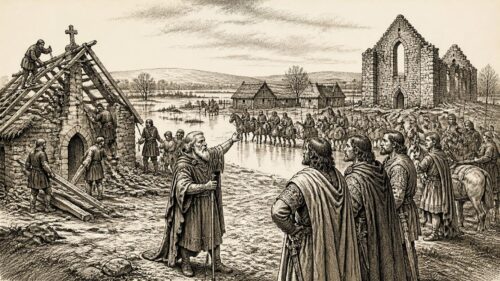
The annals make 1251 memorable for weather. Annála Connacht reports thunder and lightning during the summer, killing many people and cattle in Ireland. On the feast of Saints Peter and Paul, 29 June, it describes exceptionally heavy rain in Uí Briúin na Sionna: water was said to have been sufficient for a boat to pass around Kilmore, while a stream at Fenagh could have turned a mill during Vespers. This is an annalist’s vivid measure of floodwater, not a modern hydrological survey, but it conveys how strongly the event impressed local observers.
For a society dependent on livestock, grain, mills and passable routes, storms and flooding were more than background conditions. Cattle losses struck wealth, food supply and the capacity to meet obligations; swollen watercourses could disrupt travel, markets and communication. Yet the record does not justify claiming a general famine for 1251. The same source closes the year with a report of severe frost at the beginning of winter, when lakes, bogs and waters froze. Taken together, these notices suggest a season remembered for abrupt and damaging extremes rather than for one simple, island-wide crisis.
Thus 1251 can be seen most clearly through connected local realities. Tuam’s synod displayed the capacity of Connacht’s clergy to meet on a provincial scale. The Ossory appointment and the new exchange reveal the machinery of royal lordship, extending from episcopal revenues to the weighing of silver. Killings from Connacht to Ulster demonstrate that political power remained intensely contested. And the reports of lightning, flood and frost bring ordinary vulnerability into view. The year was not a turning point imposed from one centre; it was a year in which church, lordship, kinship and weather each shaped life in Ireland.
Primary Sources
- Annála Connacht, Annal 1251
- Annála Connacht
- The Annals of Ulster, entries for 1251
- Annála Uladh: Annals of Ulster, Irish text
- Annals of the Four Masters, Part 8
- Annals of Inisfallen, Part 77
- Annales Dominicani de Roscoman
- Calendar of Documents Relating to Ireland, Volume 1, Item 3130 (8 May 1251)
- Calendar of Documents Relating to Ireland, Volume 1, Item 3164 (24 June 1251)
- Parchment Conquest, 1171–1307
- Documents of the Irish Exchange and Mint, 1251–54
- Mac Flainn, Flann (Florence, Florentius)
- FitzGeoffrey, John
- Exploring the Irish Annals
- Fasti Ecclesiae Hibernicae: The Succession of the Prelates and Members of the Cathedral Bodies in Ireland
- History of the Irish Hierarchy, with the Monasteries of Each County
- Journal of the Royal Society of Antiquaries of Ireland
- Calendar of the Patent Rolls, Preserved in the Public Record Office: Henry III
- Irish Parliaments in the Reign of Edward II
- A Community in Competition: The Barons of Leinster in Thirteenth-Century Ireland