
Maguirebridge’s Bogbean Seed
31,719 BCE is a modern label within a broad, uncertain Late Pleistocene dating range, rather than a recoverable Irish year. Derryvree, County Fermanagh, preserves freshwater sediments between glacial tills, indicating cold, wet tundra-like habitats with sedges, mosses, bogbean and mountain avens during an ice-free local interval. Castlepook Cave, County Cork, contains time-mixed remains of reindeer, mammoth, giant deer, predators and other cold-adapted animals, but cannot reconstruct one contemporary fauna. A possibly tool-marked reindeer bone suggests early human visitation, yet no secure evidence proves settlement or recurrent occupation. Ireland’s landscape, access routes and ice margins remained unstable; later history is unknowable.
View Record
Derryvree’s Periglacial Wetland
Circa 31,720 BCE, Ireland lay within the climatically unstable Middle Midlandian, when evidence records environments rather than societies. At Derryvree, County Fermanagh, organic freshwater sediments between two till sheets reveal a periglacial wetland with tundra vegetation, seasonal open water and changing ice conditions, dated broadly to c.36,900–31,700 cal BP. Castlepook Cave, County Cork, preserves diverse Ice Age fauna, including mammoth, reindeer, giant deer, predators and lemmings, accumulated over millennia. A cut-marked reindeer femur may indicate brief human butchery, but remains unconfirmed. No settlement, polity, trade or culture is evidenced. Subsequent ice-sheet expansion eroded and buried much of this deep record.
View Record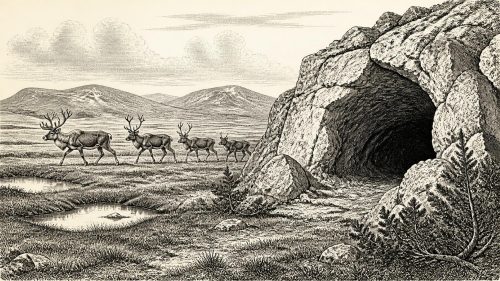
Castlepook’s Marked Reindeer
Rather than marking an exact event, 31,721 BCE falls within the uncertain, climatically unstable MIS 3 period. Derryvree sediments in Fermanagh show an ice-free, treeless tundra wetland with freshwater habitats, while Crag Cave calcite records intermittent milder conditions. Castlepook Cave, County Cork, preserves diverse fauna, including mammoth, giant deer, reindeer, hyaena and lemmings, demonstrating Ireland’s connection to wider European cold-stage ecosystems. A cut-marked reindeer femur may indicate Upper Palaeolithic butchery, but remains contested and cannot prove settlement. Later glaciation likely destroyed or buried earlier evidence. Ireland was a variable, biologically active landscape, perhaps only potentially briefly visited by mobile hunter-gatherers.
View Record
Elephant Hall’s Reindeer Femur
Around 31,722 BCE, Ireland lay within the cold, unstable Marine Isotope Stage 3, before maximum glaciation. Lower sea levels altered surrounding landscapes, though animal and possible human routes remained uncertain. Castlepook Cave, County Cork, preserves evidence of reindeer, mammoth, giant deer, hyaena and other cold-stage fauna, demonstrating intermittent habitability. A reindeer femur bearing a possible stone-tool cut mark may indicate fleeting human activity, but cannot prove settlement or permanent occupation. Complex cave deposits and revised radiocarbon dating require caution. Wetland and pollen records suggest varied open tundra, sedges and river corridors. Ireland’s deepest past is reconstructed from fragmentary environmental evidence.
View Record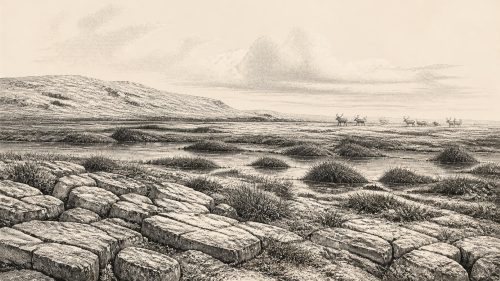
Doneraile’s Scored Reindeer Femur
31,723 BCE is an approximation within unstable Marine Isotope Stage 3, not a datable Irish event. Before the Last Glacial Maximum, parts of Ireland remained ice-free, supporting treeless periglacial wetlands, tundra vegetation and cold-adapted animals. Deposits at Derryvree and Greenagho demonstrate changing environments, while Castlepook Cave preserves faunal remains accumulated over millennia, including mammoth, reindeer and hyaena. A scored reindeer femur, dated broadly to about 33,000 years ago, may indicate Upper Palaeolithic butchery. However, disturbed cave contexts and absent associated tools or settlements prevent proof of permanent occupation. Glaciation and sea-level rise destroyed evidence; Ireland’s human presence therefore remains uncertain.
View Record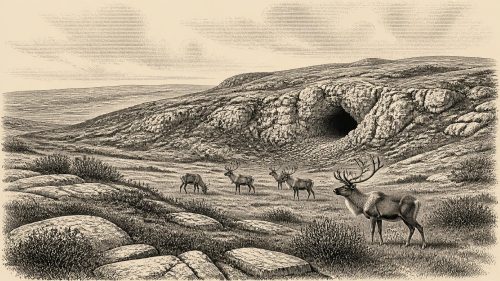
Doneraile’s Cave Interval
Around 31,724 BCE, a modern projection rather than a contemporary date, Ireland lay in unstable late Marine Isotope Stage 3, before the Last Glacial Maximum. Expanding ice sheets, lower seas and shifting landscapes shaped a cold, variably open environment. Castlepook, or Doneraile, Cave in County Cork preserves Ireland’s richest pre-maximum vertebrate record, including mammoth, reindeer, giant deer, bear, hyaena, lemming, Arctic fox and wolf. Revised radiocarbon dates place fauna in MIS 3. A cut-marked reindeer bone may indicate Upper Palaeolithic human activity, but no secure settlement evidence exists. The cave documents changing ecosystems, while glacial erosion and preservation constrain interpretation.
View Record
Derryvree’s Bogbean Marsh
31,725 BCE is a modern label, not a datable Irish year. Evidence from Derryvree, County Fermanagh, indicates a freshwater marsh between glacial advances during MIS 3, containing bogbean, mosses, sedges, herbs and cold-adapted insects. It suggests local treeless tundra-steppe conditions, not continuous ice cover, although dates span centuries or millennia. Ireland’s ice sheet fluctuated regionally; Kerry speleothems record intermittent milder phases. Cave remains show that cold-environment mammals reached Ireland at various times, but deposits are chronologically complex. No securely dated human occupation exists. Together, these records portray Pleistocene landscapes of wetlands, exposed ground, fauna and advancing ice, beyond annual precision.
View Record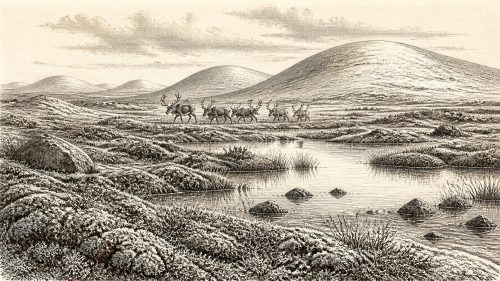
Birm-166’s Pollen Archive
31,726 BCE is a modern label within an imprecisely dated Late Pleistocene interval, rather than a recoverable Irish year. Derryvree, County Fermanagh, preserves freshwater organic sediments between glacial tills, indicating locally ice-free, cold, wet, treeless tundra and muskeg during MIS 3. Castlepook Cave, County Cork, contains a long-accumulated fauna including mammoth, reindeer, giant deer, bear and hyena, but not a single-date census. A marked reindeer femur may indicate Upper Palaeolithic butchery, although it proves neither settlement nor continuity. Ice advances later buried or destroyed evidence. Together these fragmentary archives reveal regionally varied, unstable landscapes, animal life, and possible human visitors.
View Record
Derryvree’s Muskeg Interlude
Labelled 31,727 BCE, this interval cannot be reconstructed as a single Irish year, but falls within late Marine Isotope Stage 3. At Derryvree, County Fermanagh, freshwater silts between glacial tills record an ice-free, periglacial tundra landscape of wetlands, sedges, mosses and sparse vegetation, later overridden by ice. Castlepook Cave, County Cork, preserves cold-adapted fauna including reindeer, mammoth, giant deer, bears and hyaenas, though its deposits span long periods. A cut-marked reindeer femur may indicate early human activity, but remains unconfirmed. Lower sea levels altered coasts, while renewed glaciation increasingly reshaped Ireland’s unstable, ecologically active landscape during this climatically variable period.
View Record
Derryvree’s Water-Milfoil Record
Approximately 31,728 BCE, Ireland lay in the climatically unstable Late Pleistocene, within MIS 3, rather than a recoverable historical year. Derryvree, County Fermanagh, preserves freshwater sediments between glacial tills, indicating cold, open, largely treeless wetlands with hardy plants during an ice-free interval. Other Ulster sites support environmental fluctuation. Castlepook Cave’s long-lived faunal assemblage records mammals including mammoth, reindeer, lemmings, hyaena and foxes, but not a single contemporaneous community. A modified reindeer bone may indicate an early human visit, yet permanent occupation remains unproven. Falling temperatures preceded later glaciation, while sparse, uncertain evidence rules out claims about societies, beliefs or events.
View Record