
Rangifer at Doneraile
Around 31,631 BCE, Ireland lay in the unstable later Marine Isotope Stage 3, before the Last Glacial Maximum. Cold, open, largely treeless habitats supported reindeer, mammoth, giant deer, bears and hyaenas, although advancing ice and changing seas made access uncertain. Castlepook Cave near Doneraile preserves a long, disturbed faunal record. A reindeer femur, dated about 33,000 years ago, bears a possible stone-tool butchery mark, suggesting fleeting human activity but not settlement or continuous occupation. Derryvree sediments in Fermanagh record cold tundra wetland conditions between ice advances. Together, these fragmentary archives indicate active landscapes and possible human visitation before widespread glaciation.
View Record
Castlepook’s Stadial Fauna
Around 31,632 BCE, Ireland lay within a severe, unstable Middle Midlandian climate, but the nominal year cannot identify a specific event. Ice margins, periglacial ground and lowered seas changed over millennia, while faunal links with Britain and Europe remained uncertain. Derryvree in Fermanagh preserves evidence of treeless, waterlogged tundra vegetation and freshwater habitats. Castlepook Cave in Cork contains a time-mixed Late Pleistocene bone archive, including mammoth, giant deer, reindeer, bear, hyaena, wolves and lemmings. These remains indicate open cold-country ecosystems, not a simultaneous community. Direct evidence for human occupation is absent or disputed. Glacial processes shaped landscapes inherited by Ireland.
View Record
Beneath Maguiresbridge Drumlin
Around 31,633 BCE, Ireland lay in an unstable Late Pleistocene interval before the Last Glacial Maximum. Evidence cannot reconstruct a single year or island-wide landscape, but sediments at Derryvree in Fermanagh record freshwater wetlands between ice advances, supporting tundra-like vegetation and insects. Other sites confirm episodic ice-free conditions. Castlepook Cave in Cork preserves a long-accumulated fauna including mammoth, giant deer, reindeer, predators and smaller cold-adapted animals. A cut-marked reindeer bone may indicate Upper Palaeolithic butchery, but human presence remains unproven without associated tools or settlement evidence. The record depicts environmental change, wildlife and possible transient human access, not named societies.
View Record
Fermanagh’s Inter-Till World
At 31,634 BCE, Ireland cannot be described through annual history, but evidence from Marine Isotope Stage 3 reconstructs a fluctuating Ice Age environment. Derryvree, County Fermanagh, preserves freshwater silts between glacial tills, showing that ice-free, treeless tundra and wet muskeg existed during a broadly dated interval encompassing this notional year. Cave records from Kerry indicate episodic milder conditions, while Castlepook, County Cork, documents cold-adapted fauna, including mammoth, reindeer and hyaena. A possibly cut-marked reindeer bone may indicate human carcass processing, but proves neither settlement nor continuity. Lower sea levels enabled changing ecological connections with Europe before later maximum glaciation occurred.
View Record
The Doneraile Cutmark
31,635 BCE is a modern chronological label for Late Pleistocene Ireland, not a recorded historical year. During climatically unstable Marine Isotope Stage 3, changing ice, sea levels and habitats supported cold-adapted fauna. Castlepook Cave, County Cork, preserved mixed remains including reindeer, mammoth and predators. A reindeer femur, dated broadly around this period, bears a possible stone-tool cutmark, potentially Ireland’s earliest evidence of human activity, though it proves neither hunting nor settlement. Derryvree, County Fermanagh, documents treeless, wet tundra-like conditions. Lower seas altered routes, but land connections remain uncertain. Evidence suggests possible brief human visits, not permanent colonisation nor political institutions.
View Record
Castlepook’s Earliest Question
Thirty-one thousand six hundred and thirty-six BCE is best treated as an imprecise late MIS 3 interval, not a recoverable Irish calendar year. Derryvree sediments in Fermanagh record cold, treeless freshwater landscapes between glacial advances, while Kerry speleothems show intermittent milder conditions. Altered coastlines, ice margins and sea levels shaped uncertain access to Ireland. Castlepook and other southern caves preserve faunas including reindeer, mammoth and carnivores, although assemblages span long periods and are disturbed. A marked Castlepook reindeer femur may indicate Upper Palaeolithic butchery, but lacks secure context. No settlements, tools, hearths or institutions are evidenced; hunter-gatherer visits remain possible.
View Record
Awbeg’s Reindeer Crossing
Around 33,600 calendar years before present, Ireland experienced unstable Ice Age conditions rather than a single identifiable year. Derryvree sediments in County Fermanagh, sealed between glacial tills, reveal treeless tundra, wetlands, muskeg and cold-adapted vegetation. Castlepook caves in County Cork contain mammoth, reindeer, giant deer, predators and lemmings, demonstrating episodic access by diverse fauna. A marked reindeer femur, dated roughly 33,000 years old, may indicate human butchery, but lacks secure archaeological context. No settlement or social evidence exists. Ireland was an ecologically connected, changing cold landscape; brief human visits remain possible but unproven. Dating ranges prevent precise local reconstruction altogether.
View Record
Castlepook’s Open Corridor
31,638 BCE is only a modern nominal date, within climatically volatile Marine Isotope Stage 3, not a recoverable year of Irish history. Ireland experienced shifting coastlines, ice fronts and potential migration routes before maximum glaciation. Derryvree sediments in Fermanagh indicate cold, open, wet tundra conditions between glacial advances. Castlepook Cave's fauna, including mammoth, reindeer, giant deer, predators and Arctic species, demonstrates a varied cold-stage ecosystem. A possibly tool-marked reindeer bone suggests, but cannot prove, brief human activity. No secure evidence supports settlement or continuity. Climatic deterioration later restricted habitats and corridors; securely evidenced human occupation belongs only to postglacial Ireland.
View Record
Derryvree’s Sedgebound Interval
Circa 31,639 BCE, Ireland was not a historical society but a cold Late Pleistocene landscape subject to rapid climatic change. Derryvree, County Fermanagh, preserves freshwater silts between glacial tills, indicating locally ice-free tundra wetlands with sedges, mosses and cold-adapted insects roughly 36,900–31,700 years BP. Castlepook Cave, County Cork, accumulated bones over millennia, documenting mammoth, giant deer, reindeer, bears, hyenas and later cold fauna. These finds demonstrate changing habitats and connections with north-west Europe, but not settled human communities. A possibly cut-marked reindeer bone may indicate brief human activity, whereas secure evidence dates only to about 12,800 BP. Later ice advanced.
View Record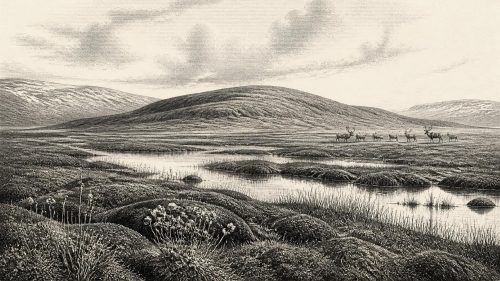
Sedges Beneath a Fermanagh Drumlin
About 31,640 BCE, Ireland lay in a climatically unstable Late Pleistocene interval before maximum glaciation. Organic sediments beneath a Derryvree drumlin in County Fermanagh, dated broadly to 36,900–31,700 calendar years BP, show an ice-free but severe landscape of open tundra, wetlands, sedges, mosses and cold-adapted plants. Southern caves preserve evidence of mammoth, reindeer, giant deer, predators and scavengers, though dates and contexts vary. Advancing ice later erased much evidence. Possible stone-tool butchery marks on a Castlepook reindeer bone suggest human visits, but no secure settlement, tools, hearths, society or culture is demonstrated. Environmental evidence remains firmer than the human record.
View Record