
Maguirebridge’s Fossil Clock
31,609 BCE is a modern label, not a precisely recoverable Irish event. During Marine Isotope Stage 3, Ireland was approaching greater glaciation but was not uniformly ice-covered. At Derryvree, County Fermanagh, organic sediments between tills, radiocarbon dated broadly around this period, preserve evidence of treeless, waterlogged tundra with grasses, sedges, mosses and shallow pools. Castlepook Cave, County Cork, yielded cold-climate fauna including mammoth, reindeer and spotted hyaena, although disturbed cave deposits require caution. A cut-marked reindeer bone may indicate Upper Palaeolithic butchery, not settlement. Sparse, eroded evidence portrays an ecologically connected yet difficult-to-reach Ice Age island with uncertain access routes.
View Record
Maguirebridge’s Frostbound Waters
31,610 BCE denotes a Late Pleistocene interval, rather than a datable event. At Derryvree, County Fermanagh, organic freshwater sediments between glacial tills record an ice-free, periglacial wetland during MIS 3, with tundra vegetation, insects and seasonal cold. Other evidence confirms uneven ice-sheet growth before its later maximum. Castlepook Cave, County Cork, preserves remains of mammoth, giant deer, reindeer and predators, although its deposits span multiple periods. A possibly cut-marked reindeer bone suggests a brief Upper Palaeolithic human visit, not settlement. No evidence supports claims about politics, culture, trade or permanent population. Ireland was environmentally dynamic, biologically inhabited and increasingly glaciated.
View Record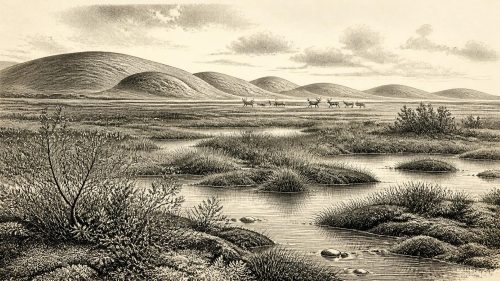
The Derryvree Freshwater Series
31,611 BCE is a modern approximate label for Ireland during Marine Isotope Stage 3, rather than a recoverable historical year. At Derryvree, County Fermanagh, freshwater silts between glacial tills record an interval of cold, non-glacial conditions before later ice expansion. Mosses, sedges, herbs, insects and aquatic plants indicate open, wet tundra with severe winters, not forest or permanent ice. Faunal remains, including reindeer and mammoth, demonstrate intermittent links with wider European ecosystems. Castlepook Cave preserves contested possible cut marks suggesting human activity, but not settlement. Subsequent Last Glacial Maximum ice reshaped Ireland, preserving evidence of a severe, intermittently habitable landscape.
View Record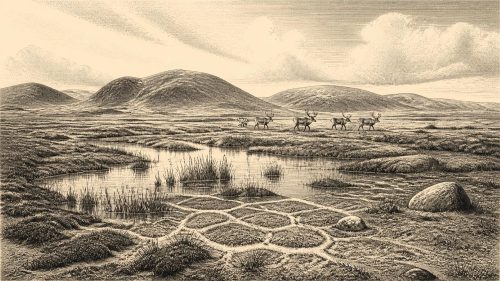
Derryvree’s Inter-Till Fen
Labelled 31,612 BCE, this period cannot be dated to a single Irish year and is understood through environmental evidence. At Derryvree, County Fermanagh, freshwater sediments between glacial tills record an ice-free interval within MIS 3, broadly dated to 36,900–31,700 calibrated BP. Pollen, plants and insects indicate treeless, wet tundra or muskeg under periglacial conditions. Ireland experienced asynchronous ice advances before the glacial maximum. Cave faunas demonstrate that mammoths, reindeer, giant deer, bears and hyaenas reached Ireland during MIS 3, probably via intermittent land connections. No securely evidenced human occupation or society is known; the record documents landscape, fauna and ice.
View Record
Maguirebridge’s Moss Basin
Around 31,613 BCE, Ireland experienced a fluctuating Ice Age environment during Marine Isotope Stage 3. Derryvree, near Maguiresbridge, preserves freshwater sediments between glacial tills, showing temporary ice-free Fermanagh with treeless tundra, mossy wetlands, grasses, sedges and juniper. Crag Cave records intermittent milder episodes within the wider cold phase. Southern caves, especially Castlepook, demonstrate recurring presence of mammoth, reindeer, giant deer, predators and other cold-adapted animals, although their deposits are not contemporaneous. A possibly cut-marked reindeer bone suggests, but cannot confirm, human activity. Later ice-sheet expansion reshaped Ireland, leaving environmental evidence fragmentary and no secure evidence for settlement, society or trade.
View Record
Derryvree’s Treeless Fen
Around 31,614 BCE, Ireland lay within the unstable Late Pleistocene climate of Marine Isotope Stage 3, not a precisely recoverable year. At Derryvree, County Fermanagh, freshwater silts dated broadly to 36,900–31,700 calibrated years BP formed between glacial advances. Their pollen, plants and insects reveal a cold, treeless wetland of sedges, mosses, juniper, pools and tundra-like vegetation. Ireland’s ice cover varied regionally before the later Last Glacial Maximum, while lower sea levels reshaped coasts and routes. Southern caves preserve diverse cold-stage fauna, though dating is complex. Possible human butchery evidence remains uncertain; no contemporary settlements, society or culture are securely documented.
View Record
Derryvree’s Organic Silts
About 31,615 BCE is best treated as a broad interval within Marine Isotope Stage 3, not a precise historical year. At Derryvree, County Fermanagh, organic silts between glacial tills indicate a locally ice-free freshwater wetland sometime around 34,950–29,750 BCE, amid fluctuating cold conditions and advancing ice. Fossils suggest open, tundra-like habitats, while cave deposits document varied fauna including reindeer, mammoth and predators. Ireland’s changing ice, sea levels and routes constrained movement. A marked Castlepook reindeer bone may indicate early human activity, but lacks secure context. No evidence establishes permanent settlement, society or cultural continuity; palaeoenvironmental records remain the principal evidence.
View Record
Stone Mark in the Awbeg
Around 31,616 BCE, Ireland lay within the climatically unstable Marine Isotope Stage 3, before the Last Glacial Maximum. Evidence indicates varied cold environments, including tundra wetlands at Derryvree, County Fermanagh, and open-country ecosystems supporting large mammals. Castlepook Cave in County Cork preserves a time-layered fauna of mammoth, reindeer, giant deer, predators and smaller cold-adapted animals. A deeply incised reindeer femur may bear a stone-tool butchery mark, potentially indicating a brief Upper Palaeolithic human visit. However, its context is disturbed and inconclusive. No evidence supports permanent settlement, society or continuity. The period is chiefly understood through fragmentary environmental and archaeological records.
View Record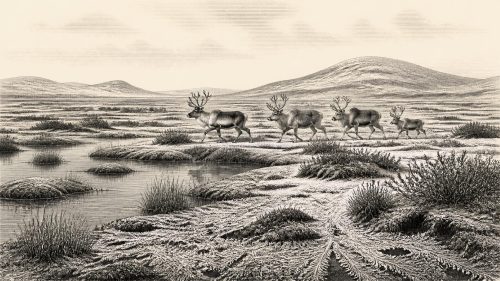
Birm-166 at Derryvree
About 31,617 BCE, Ireland lay within the unstable later Marine Isotope Stage 3, rather than a precisely datable year. At Derryvree, County Fermanagh, organic freshwater sediments between glacial tills demonstrate an ice-free interval with cold, treeless tundra wetland, although they cannot define island-wide conditions. Comparable deposits and Crag Cave calcite confirm intermittent milder phases before major ice-sheet growth. Cave remains, notably at Castlepook, show reindeer, mammoth, hyaena and other mammals connected Ireland to European faunas. A possibly cut-marked reindeer femur suggests, but does not prove, a potential human presence. Evidence supports mobile visitors, not permanent settlement, agriculture, or recorded society.
View Record
Derryvree’s Alpine Clubmoss
Around 31,618 BCE, Ireland had no recorded history; the date denotes a broad Late Pleistocene interval rather than a specific year. At Derryvree, County Fermanagh, freshwater sediments between glacial tills preserve tundra flora, including dwarf willow, alpine clubmoss and water-milfoil, indicating cold, wet, locally ice-free conditions. Castlepook Cave, County Cork, holds remains of mammoth, giant deer, reindeer and predators, demonstrating periodically suitable habitats, though its bones span many millennia. A marked reindeer femur may indicate human butchery around 33,000 years ago, yet remains disputed. Subsequent ice-sheet expansion destroyed, displaced or buried much evidence, leaving only fragmentary environmental and archaeological traces.
View Record