Archived: 29 October 2026
Abstract
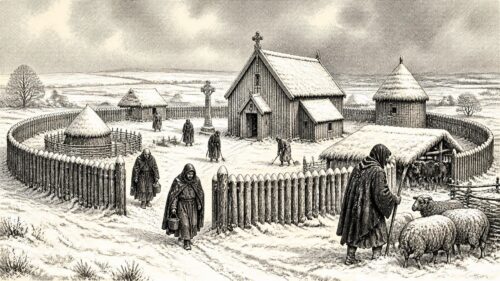
In 854, Irish annals recorded the death of Cathan, abbess of Kildare, highlighting the influence of major ecclesiastical communities and female leadership. Exceptional snow fell on 23 April, probably disrupting travel, livestock care and spring farming, though no famine was reported. Áed son of Niall raided Ulaid, killing prominent opponents and many others, while Fínnechta was treacherously killed and Muiredach of Ard Cianachta died. Abbots at Monasterboice, Achad Bó and Inis Cáín Dega were also commemorated, including one who drowned. These local events reveal an Ireland shaped by regional conflict, church continuity, hazardous travel and unusual weather, amid Scandinavian influence.
Read Article
Archived: 29 October 2026
Abstract
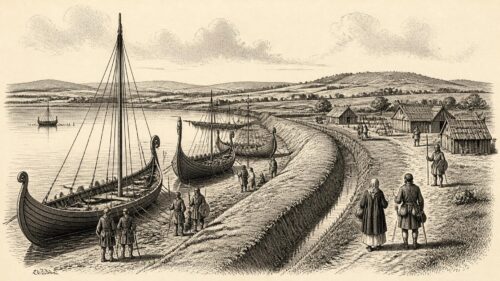
In 841, Irish annals recorded Scandinavian forces remaining on Lough Neagh and establishing fortified naval camps at Linn Dúachaill and Duiblinn. These longphuirt enabled repeated raids into the midlands, Leinster and Uí Néill territories, threatening churches, communities and regional economies while supporting provisioning and ship maintenance. Irish politics remained equally violent: Feidlimid of Munster marched to Carman in Leinster, but Niall Caille defeated him at Mag Óchtair, where Feidlimid's crozier was abandoned. Dynastic conflict included Diarmait's killing by Máel Sechnaill and Áed's treacherous murder. The year revealed an unconquered yet reoriented Ireland, facing persistent maritime power alongside rivalry among kings.
Read Article
Archived: 30 October 2026
Abstract
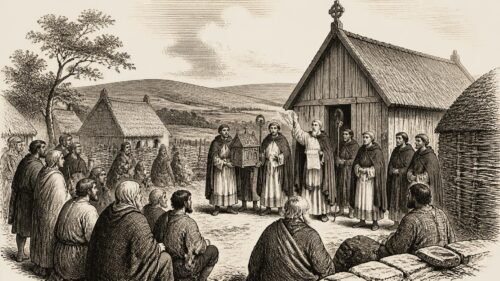
In 767, reconstructed from chronologically problematic annalistic entries, Ireland’s surviving record highlights political violence, ecclesiastical succession and sacred law. Murchad son of Flaithbertach, king of Cenél Conaill, was killed, weakening a northern Uí Néill lineage already eclipsed by Cenél nÉogain under Tara’s king, Niall Frossach. Cellach son of Cairpre died at a robber’s hands, while Flathgus son of Fiachra was treacherously slain. The annals also record abbots’ deaths, demonstrating churches’ religious, economic and political importance. Patrick’s law, probably a proclamation of Cáin Phátraic linked to Armagh and royal authority, asserted a moral order, though its provisions and enforcement remain unknown.
Read Article
Archived: 1 November 2026
Abstract
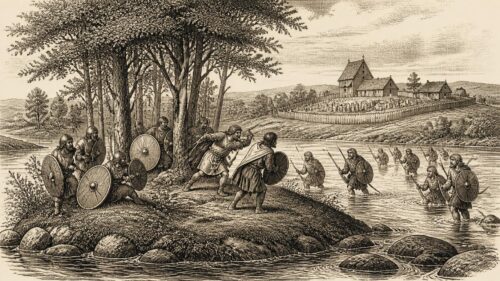
In 745, Irish annals recorded a battle at Inis eter dá Dabul between the Uí Thuirtri and Airthir. Congal son of Éicnech led the Airthir to victory; notable opponents were killed or fled. The conflict reflected shifting local power within Airgíalla, despite Domnall Midi’s wider kingship of Tara. The same annalistic year saw the deaths of abbots at Clonard, Lann Léire and Tech Taille, an anchorite, a church superior and the scribe Conall Foltchain. A remarkable night-time celestial sign was also reported. Together, these concise notices illuminate interconnected warfare, ecclesiastical leadership, learning, rural resources and belief in early medieval Ireland.
Read Article
Archived: 1 November 2026
Abstract
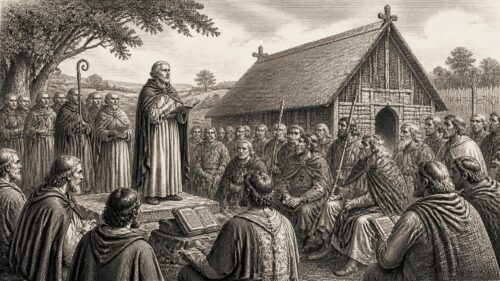
In 697 CE, the most consequential Irish development securely associated with the year was Adomnán of Iona’s promulgation of the Cáin Adomnáin, the ‘Law of Adomnán’, at Birr in what is now County Offaly. The Irish annals record tersely that Adomnán came to Ireland and gave the Lex Innocentium, or Law of Innocents, to the people. Behind that spare notice lies an unusually ambitious attempt to regulate the conduct of war across a politically divided island and, in principle, across the Irish Sea. A Year with a Chronological Caveat Early Irish annals do not always align neatly with modern calendar
Read Article
Archived: 2 November 2026
Abstract
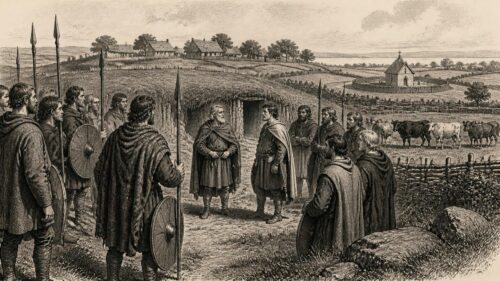
In 660 CE, Ireland’s annals associate the year above all with a battle at Ogaman, at a place called Cenn Corbadáin, and with a striking rupture within the ruling dynasty of the southern Uí Néill. The event is conventionally assigned to 660 by the Annals of the Four Masters and the Annals of Tigernach, but early Irish annalistic chronologies do not align perfectly: the Annals of Ulster place the same fighting under their entry for 661, while the Fragmentary Annals give 662. This is not evidence for several separate battles. Rather, it is a reminder that the modern calendar labels
Read Article

Archived: 15 September 2026
Abstract
Around 31,644 BCE, Ireland’s history is reconstructed from environmental evidence rather than a datable event. Derryvree sediments near Maguiresbridge, calibrated to 36,900–31,700 cal BP, show Fermanagh was temporarily ice-free, with freshwater, tundra-like vegetation and severe seasonal conditions. Castlepook Cave preserves remains of reindeer, mammoth, giant deer and other cold-climate animals, although its deposits represent multiple periods and were disturbed. A possibly cut-marked reindeer bone suggests transient Upper Palaeolithic hunters, but permanent settlement remains unproven. Ireland was approaching wider glaciation, which later erased much evidence. Climatic oscillations and advancing ice, not political or cultural events, define this uncertain deep-prehistoric central horizon.
Read Article

Archived: 14 September 2026
Abstract
31,788 BCE is an orientating date within Marine Isotope Stage 3, not a documented year. At Derryvree, County Fermanagh, organic freshwater deposits between glacial tills indicate an interval of cold, treeless, wet tundra-like conditions before renewed ice advance; radiocarbon calibration gives a broad range rather than certainty. Pollen, mosses, insects and plants reveal diverse microhabitats. Castlepook Cave, County Cork, preserves evidence of mammals including mammoth, reindeer, giant deer, predators and lemmings, although their coexistence cannot be assumed. Ireland's shifting ice, seas, vegetation and animal routes created environments. No reliable evidence establishes human settlement, society, trade or activity at this time.
Read Article

Archived: 9 September 2026
Abstract
31,943 BCE is a modern label within a broad late-Pleistocene range, not a datable Irish year. Radiocarbon calibration, geological evidence and disturbed deposits require caution. During Marine Isotope Stage 3, Ireland had cold, open habitats, changing coastlines and advancing ice, but was not uniformly ice-covered. Castlepook Cave in County Cork preserves rich fauna, including mammoth, reindeer, giant deer, bear and hyaena, though remains accumulated over long periods and do not prove human hunting. A cut-marked reindeer bone suggests possible early visitation, yet secure Palaeolithic settlement evidence remains absent. Ice erosion explains sparse records; future discoveries may clarify Ireland’s changing landscape.
Read Article

Archived: 8 September 2026
Abstract
Approximately 34,000 calendar years ago, Ireland lay in the unstable later Marine Isotope Stage 3, before the Last Glacial Maximum. Derryvree and Greenagho deposits show intervals without overriding ice in north-central Ireland, although conditions varied regionally. Periglacial terrain, local or expanding glaciers, lower sea levels and episodic milder phases shaped the landscape. Cave faunas document mammoth, giant deer, reindeer, horse, predators and other animals, indicating open, shifting habitats and links with north-west Europe. No secure evidence demonstrates people in Ireland then; the earliest accepted sign of human activity is much later, from butchered bear bone dated about 12,700 cal BP.
Read Article

Archived: 8 September 2026
Abstract
Around 31,976 BCE, Ireland had no securely attested human population, settlement or political history. Evidence from Derryvree, County Fermanagh, places the island within a later Marine Isotope Stage 3 ice-free interval, before major expansion of the last Irish Ice Sheet. Freshwater sediments, dated broadly to 36,900–31,700 years before present, indicate cold periglacial conditions and open tundra vegetation of herbs, grasses, sedges and mosses. Fossil records suggest shifting cold-adapted mammal communities, but cannot establish species present locally in that year. Approaching glaciation subsequently reshaped Ireland’s landforms and obscured much earlier evidence. The earliest persuasive human visit occurred over twenty millennia later.
Read Article

Archived: 8 September 2026
Abstract
Circa 34,000 years before present, Ireland experienced unstable late Ice-Age conditions before the Last Glacial Maximum. Lower seas and shifting ice created a landscape unlike modern Ireland, while later glaciation destroyed evidence. Castlepook Cave, County Cork, preserves Ireland’s richest pre-maximum vertebrate record, including mammoth, giant deer, reindeer, bears, hyena, wolves and cold-adapted smaller mammals. Its deposits represent changing ecosystems, not a single contemporaneous fauna; hyenas accumulated many bones. Human occupation remains unproven. A possibly butchered reindeer bone may indicate a brief visit, but no settlements, tools, burials or cultures are securely known. Environmental change, rather than history, defines this period.
Read Article





