Archived: 18 September 2026
Abstract
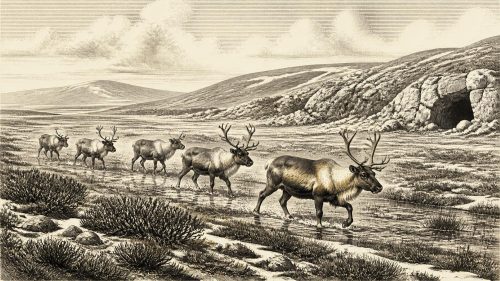
Labelled 31,311 BCE, this period in Ireland belongs to Marine Isotope Stage 3 and cannot be dated as a precise historical year. Castlepook, or Mammoth, Cave in County Cork produced a reindeer femur, broadly dated to about 31,000 BCE, whose possible stone-tool cut mark may indicate early human carcass processing. The disturbed cave deposits instead chiefly document diverse cold-stage fauna, including mammoth, deer, carnivores and small mammals. Derryvree, County Fermanagh, preserves buried freshwater sediments showing intermittent ice-free tundra wetlands. Ireland remained climatically variable, with shifting ice, coastlines and animal ranges. No settlements, tools, polity or sustained human occupation are established.
Read Article

Archived: 18 September 2026
Abstract
At the notional date of 31,316 BCE, Ireland lay within the climatically unstable MIS 3 Late Pleistocene, with open, treeless vegetation, changing ice margins and lower seas. Castlepook Cave in north County Cork preserves a complex faunal archive, including reindeer, mammoth, giant deer, predators and small cold-adapted mammals, demonstrating episodic animal access to southern Ireland. Revised dating has qualified earlier conclusions about their survival. A reindeer femur bearing a possible stone-tool cut may indicate human carcass processing about 33,000 years ago but lacks associated artefacts or occupation evidence. It therefore suggests, rather than proves, Palaeolithic visitors, settlement or human presence.
Read Article
Archived: 18 September 2026
Abstract
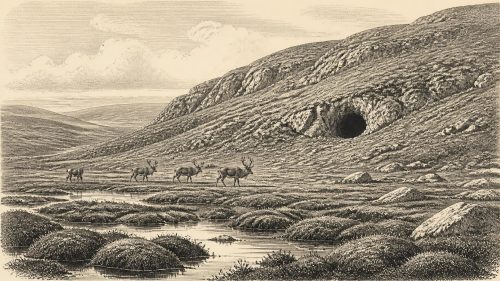
31,322 BCE is a modern label for a Late Pleistocene interval, best understood through uncertain dated ranges rather than year-specific history. Derryvree silts in Fermanagh indicate cold, treeless tundra-like wetlands, while Castlepook Cave, County Cork, preserves fauna including reindeer, mammoth, giant deer and predators. A reindeer femur bears a possible fresh-bone stone-tool incision, potentially indicating Upper Palaeolithic human activity. However, disturbed cave contexts and absent associated hearths, tools or settlements prevent stronger conclusions. Ireland was varied as ice expanded, with traces often erased by glaciation. No community, polity, culture or occupation is proven; humans remain a plausible but unconfirmed presence.
Read Article
Archived: 18 September 2026
Abstract
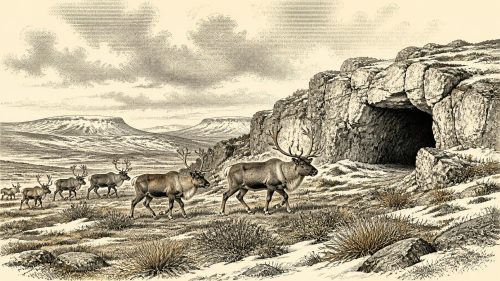
31,351 BCE is a modern label for a broad MIS 3 interval, not a recoverable Irish year. Castlepook Cave, County Cork, preserves Pleistocene fauna including reindeer, mammoth, giant deer, carnivores and cold-adapted species, indicating fluctuating open environments and repeated animal access. A roughly 33,000-year-old reindeer femur bears a possible fresh-bone stone-tool mark, potentially Ireland’s earliest human evidence. However, its historic collection context, uncertain modification and lack of associated tools or occupation deposits prevent claims of settlement or continuous habitation. Lower sea levels do not establish a land bridge. Recent investigations and redating emphasise mixed deposits, earlier dating errors, requiring analysis.
Read Article

Archived: 17 September 2026
Abstract
Around 31,415 BCE, Ireland lay within the climatically unstable Marine Isotope Stage 3, approaching but preceding maximum last-glacial ice expansion. Evidence cannot date events to a single year. Derryvree sediments in Fermanagh indicate locally ice-free, treeless, cold wetlands with open vegetation. Castlepook Cave, Cork, yielded reindeer, mammoth, giant deer, predators and other cold-climate fauna; revised dating places key remains in this period. A reindeer femur bearing possible stone-tool cut marks suggests, but does not prove, human activity. Mixed cave deposits and absent associated artefacts preclude claims of settlement. Ireland’s record documents environments and animal movements; secure human evidence came later.
Read Article

Archived: 17 September 2026
Abstract
31,428 BCE is a notional date within Marine Isotope Stage 3, not a recoverable Irish year. Derryvree, County Fermanagh, preserves freshwater sediments between glacial tills, indicating a locally ice-free, periglacial wetland with tundra plants and animal life during a cold, unstable interval. Castlepook Cave, County Cork, contains remains of reindeer, mammoth, giant deer and predators, demonstrating a varied cold-stage fauna. A marked reindeer femur, dated broadly near this period, may record stone-tool carcass processing and Ireland’s earliest human trace. However, it proves neither settlement nor continuity. Later glaciation destroyed or buried evidence, leaving a fragmentary landscape archive for modern researchers.
Read Article

Archived: 17 September 2026
Abstract
Around 31,429 BCE, a retrospective rather than precise date, Ireland lay within the unstable MIS 3 Ice Age environment. Castlepook Cave, County Cork, produced a reindeer femur bearing a deep stone-cut incision, possibly evidence that Upper Palaeolithic visitors processed a carcass. However, antiquarian recovery, carnivore activity and absence of associated tools or occupation deposits prevent claims of settlement. Cave faunas demonstrate reindeer, mammoths, giant deer, bears and hyaenas in productive open habitats. Derryvree sediments reveal treeless, wet tundra. Lower sea levels may have allowed crossings, but no migration evidence exists. Ireland was an ecologically variable frontier, later overwhelmed by glaciation.
Read Article

Archived: 17 September 2026
Abstract
Around 31,461 BCE, Ireland lay within the climatically unstable Middle Midlandian of Marine Isotope Stage 3, not a uniformly frozen landscape. Derryvree, County Fermanagh, preserves evidence of ice-free, treeless wetland, while Crag Cave indicates episodic milder conditions. Castlepook Cave, County Cork, contains MIS 3 remains of reindeer, mammoth and other cold-adapted fauna, although accumulated over long periods. A grooved reindeer femur may bear a stone-tool butchery mark, potentially indicating fleeting Upper Palaeolithic human activity. However, no associated settlement, tools or social evidence survives. Subsequent ice-sheet growth transformed Ireland, destroying or burying much early evidence from this exceptionally ancient Irish period.
Read Article

Archived: 17 September 2026
Abstract
Around 31,479 BCE, Ireland lay in the unstable, cold Late Pleistocene, before maximum glaciation. Much terrain was probably ice-free, supporting tundra, steppe-tundra, wetlands and sparse shrubs, while later ice destroyed much evidence. Deposits at Derryvree and Maguiresbridge show wetland habitats with cold-adapted plants. Castlepook Cave in County Cork yielded fauna including reindeer, mammoth, giant deer, hyaena and Arctic fox. An incised reindeer femur, dated broadly to about 31,000 BC, may indicate human butchery, but lacks a secure archaeological context. It cannot prove settlement. Ireland’s evidence instead suggests a changeable landscape, rich Ice Age fauna, and only possible brief human visits.
Read Article

Archived: 17 September 2026
Abstract
Approximately 31,502 BCE, Ireland lay within the unstable Late Pleistocene MIS 3, not a precisely recoverable historical year. Derryvree sediments in County Fermanagh, dated by BIRM-166, show an ice-free, open tundra wetland with sedges, grasses, mosses and cold-adapted plants. Castlepook Cave in County Cork preserves a mixed, long-lived fauna including mammoth, reindeer, giant deer, hyena and Arctic fox, rather than one contemporary community. A cut-marked reindeer femur may indicate brief Upper Palaeolithic butchery, but cannot prove settlement or permanent occupation. Climatic oscillations preceded major ice-sheet expansion, whose erosion and deposits later obscured much earlier landscape and human evidence in Ireland.
Read Article

Archived: 17 September 2026
Abstract
31,515 BCE is a modern, misleadingly precise label for a fluctuating Marine Isotope Stage 3 environment rather than a recordable Irish year. Castlepook Cave, north County Cork, preserves disturbed deposits containing mammoth, reindeer, giant deer, hyaena, bear, wolf and cold-adapted species, demonstrating a diverse Pleistocene fauna amid shifting open habitats and variable ice. Radiocarbon results require cautious calibration, and revised dating places elements of the fauna before the Last Glacial Maximum. A notched reindeer femur may indicate stone-tool butchery and a human visit, but cannot prove settlement. The evidence supports ecological history, not claims of communities, routes, culture or events.
Read Article

Archived: 17 September 2026
Abstract
Around 31,516 BCE, Ireland was an unstable Late Pleistocene landscape, shaped by fluctuating ice, low sea levels and changing ecological connections. Derryvree sediments in Fermanagh record an ice-free interval with freshwater wetlands, tundra vegetation and insects, later buried beneath glacier deposits. Castlepook Cave in County Cork produced remains of reindeer, mammoth, giant deer, predators and other cold-adapted animals, though bones represent episodes spanning millennia. A cutmarked reindeer femur may indicate Upper Palaeolithic butchery, but disturbed context and absent associated artefacts make human presence provisional. Evidence supports temporary habitable environments, not settled communities, political history or continuous occupation on the island.
Read Article

Archived: 16 September 2026
Abstract
Around 31,528 BCE, Ireland lay within the unstable cold conditions of Marine Isotope Stage 3, not a datable historical year. Castlepook Cave, County Cork, yielded diverse Pleistocene fauna, including reindeer, mammoth, giant deer, hyena and lemmings. A reindeer femur, radiocarbon dated to about 33,000 years ago, bears a mark interpreted as stone-tool butchery, potentially Ireland’s earliest human evidence. This does not establish settlement, as cave deposits are disturbed and the cut’s origin remains debated. Open tundra-steppe, wetlands and changing ice margins supported intermittent animal and possible human movement. Advancing glaciation later obscured evidence, leaving fragile traces of Upper Palaeolithic visits.
Read Article

Archived: 16 September 2026
Abstract
Around 31,529 BCE, Ireland was a cold Late Pleistocene landscape rather than a recognisable historical society. Calibrated dating places Derryvree’s freshwater deposits, preserved beneath glacial tills in County Fermanagh, within the broader period; their remains indicate open, mostly treeless wetlands with pools, sedges and cold-adapted plants. Castlepook Cave in County Cork yielded mammoth, reindeer, giant deer, predators and lemmings, showing episodic habitable open country before maximum glaciation. An incised reindeer femur may record butchery by Upper Palaeolithic people, but cannot prove settlement. No evidence supports claims of communities, institutions, farming, ritual, or human occupation. Later ice expansion transformed the island.
Read Article
Archived: 16 September 2026
Abstract
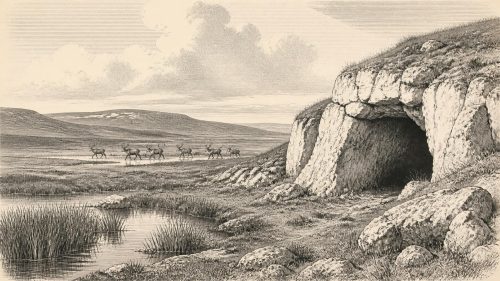
31,534 BCE is not a recoverable Irish calendar year, but lies within Marine Isotope Stage 3, an unstable Pleistocene period. Lower sea levels altered connections with Britain and Europe, while ice-free areas supported open steppe-tundra, wetlands and cold-adapted plants. Derryvree deposits demonstrate such environments. Castlepook Cave preserves mixed animal remains, including mammoth, reindeer, giant deer and hyena, accumulated over millennia rather than as one community. A cutmarked reindeer femur c. 31,000 BCE may provide Ireland’s earliest evidence of human carcass processing. It cannot prove hunting, settlement or colonisation. Glaciation, flooding and early excavation left fragmentary evidence of potential visits there.
Read Article

Archived: 16 September 2026
Abstract
31,543 BCE is a modern chronological marker, not a recorded Irish year; evidence consists of uncertain radiocarbon ranges, deposits and animal bones. Before the Last Glacial Maximum, parts of Ireland supported wetlands, sparse treeless vegetation and cold-adapted fauna, although landscapes changed rapidly and later ice erased much evidence. Derryvree deposits demonstrate freshwater conditions, while Castlepook Cave near Doneraile preserves remains of reindeer, mammoth, giant deer and carnivores from different periods. A reindeer femur bearing a possible butchery cut mark suggests brief Upper Palaeolithic human presence around 33,000 years ago. It proves neither settlement nor society; dating and excavation are required.
Read Article
Archived: 16 September 2026
Abstract
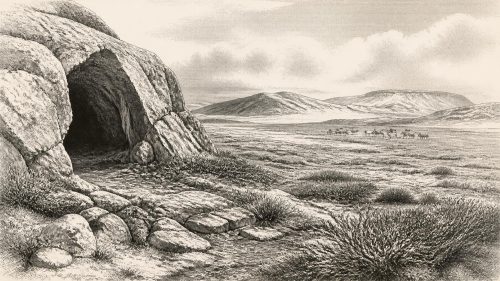
Around 31,554 BCE, Ireland lay within the unstable cold conditions of Marine Isotope Stage 3, before the Last Glacial Maximum. Dates from this period are calibrated scientific ranges, not recoverable calendar years. Derryvree’s organic silts, between glacial tills, preserve evidence of treeless, freshwater wetlands supporting cold-adapted plants, insects and mosses. Castlepook Cave contains fauna including reindeer, mammoth, giant deer, hyaena, Arctic fox and lemmings, although its mixed deposits cannot represent one moment. A marked reindeer femur may indicate human butchery and a brief Upper Palaeolithic visit, but cannot prove settlement. Later ice damaged evidence, leaving an environmental history of Ireland.
Read Article

Archived: 16 September 2026
Abstract
Although 31,559 BCE cannot identify an Irish event, it falls within volatile Marine Isotope Stage 3, before the Last Glacial Maximum. Derryvree, County Fermanagh, preserves an ice-free interval dated broadly 36,900–31,700 calibrated years BP, revealing cold, treeless wetlands with mosses, sedges, herbs and pools. Castlepook Cave, County Cork, contains a mixed fauna including mammoth, reindeer, giant deer, predators and Arctic-adapted species, demonstrating intermittent ecological links with north-west Europe. A marked, dated reindeer femur may indicate stone-tool butchery and a brief human visit. However, no undisturbed settlement, hearth, tools or cultural evidence proves permanent occupation, migration routes, or an Irish society.
Read Article
Archived: 16 September 2026
Abstract
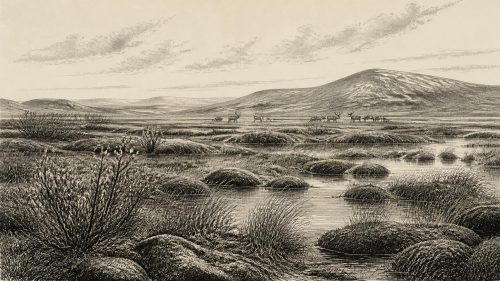
Around 31,565 BCE, Ireland’s record is environmental rather than historical, and cannot support calendar precision or claims of settlement. Derryvree, County Fermanagh, preserves a broadly dated MIS 3 interstadial deposit, indicating locally ice-free, periglacial tundra with freshwater wetlands, open vegetation and severe seasonal conditions. Castlepook Cave near Doneraile contains cold-stage fauna including reindeer, mammoth, giant deer, predators and lemmings, although deposits may combine separate episodes. A scored reindeer femur, perhaps 33,000 years old, may show stone-tool butchery and Ireland’s earliest human trace. It cannot establish a kill site, continuous occupation, settlement, society, travel routes or a single specific dated event.
Read Article

Archived: 16 September 2026
Abstract
31,575 BCE is a label for a late-Pleistocene interval, not a datable Irish event. Derryvree, County Fermanagh, preserves wetland deposits dated broadly to 36,900–31,700 cal BP, indicating treeless, cold, plant-rich terrain between glacial advances. Castlepook Cave, County Cork, contains MIS 3 remains of mammoth, reindeer, giant deer, predators and Arctic fauna, accumulated over time rather than contemporaneously. A cut-marked reindeer femur may indicate human butchery, but cannot establish settlement, chronology or continuous occupation. Lower seas may have aided movement, yet routes remain unknown. Ice expansion reshaped Ireland and destroyed sites, leaving evidence of habitats, animal movement and possible human presence.
Read Article
Archived: 16 September 2026
Abstract
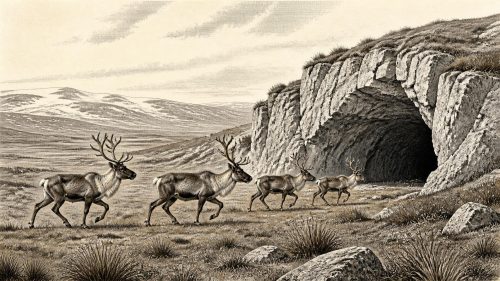
About 31,595 BCE is an imprecise modern label for late Marine Isotope Stage 3, roughly 33,500 calibrated years before present. Ireland experienced unstable cold conditions before the British–Irish Ice Sheet’s maximum expansion. Freshwater deposits at Derryvree indicate locally ice-free wetlands, while Crag Cave speleothems record milder phases. Castlepook Cave in County Cork preserved reindeer, mammoth, giant deer, predators and tundra fauna, though cave contexts and earlier dates require caution. A marked reindeer femur may indicate human butchery, but cannot establish settlement or occupation. Lower sea levels may have aided dispersal, yet routes remain uncertain. Evidence depicts environmental change, not history.
Read Article
Archived: 15 September 2026
Abstract
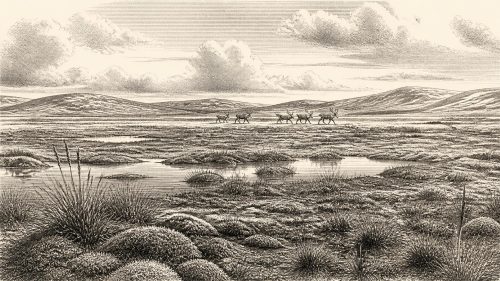
31,625 BCE is a modern label for an uncertain interval within Marine Isotope Stage 3, not a recoverable Irish year. Derryvree, County Fermanagh, preserves freshwater sediments between glacial tills, dated broadly to 36,900–31,700 cal BP, indicating cold, open periglacial wetlands with sedges and mosses. Castlepook Cave, County Cork, contains fauna including reindeer, mammoth, hyaena and Arctic fox, demonstrating intermittent links with wider European ecosystems. A marked reindeer femur may indicate human butchery around 33,000 years ago, but cannot prove settlement. Evidence supports changing climates, temporary animal access and possible brief human visits, while society, culture and permanent occupation remain unknown.
Read Article

Archived: 15 September 2026
Abstract
31,635 BCE is a modern chronological label for Late Pleistocene Ireland, not a recorded historical year. During climatically unstable Marine Isotope Stage 3, changing ice, sea levels and habitats supported cold-adapted fauna. Castlepook Cave, County Cork, preserved mixed remains including reindeer, mammoth and predators. A reindeer femur, dated broadly around this period, bears a possible stone-tool cutmark, potentially Ireland’s earliest evidence of human activity, though it proves neither hunting nor settlement. Derryvree, County Fermanagh, documents treeless, wet tundra-like conditions. Lower seas altered routes, but land connections remain uncertain. Evidence suggests possible brief human visits, not permanent colonisation nor political institutions.
Read Article

Archived: 15 September 2026
Abstract
Around 33,600 calendar years before present, Ireland experienced unstable Ice Age conditions rather than a single identifiable year. Derryvree sediments in County Fermanagh, sealed between glacial tills, reveal treeless tundra, wetlands, muskeg and cold-adapted vegetation. Castlepook caves in County Cork contain mammoth, reindeer, giant deer, predators and lemmings, demonstrating episodic access by diverse fauna. A marked reindeer femur, dated roughly 33,000 years old, may indicate human butchery, but lacks secure archaeological context. No settlement or social evidence exists. Ireland was an ecologically connected, changing cold landscape; brief human visits remain possible but unproven. Dating ranges prevent precise local reconstruction altogether.
Read Article

Archived: 15 September 2026
Abstract
Around 31,642 BCE, Ireland lay within the unstable Late Pleistocene, with lowered seas, shifting ice margins and open habitats rather than a fixed island landscape. Castlepook Cave, County Cork, preserves Ireland’s pre-Last Glacial Maximum vertebrate archive, containing mammoth, reindeer, giant deer, bear and spotted hyena remains. Redating demonstrates that its mixed deposits span long periods and cannot document a single year. A reindeer femur bearing a possible stone-tool cut may indicate brief human carcass processing, but lacks archaeological context. No settlement, tools, hearths or social institutions are established. Castlepook reveals ecological links with north-western Europe and uncertainty over earliest visitors.
Read Article
Archived: 15 September 2026
Abstract
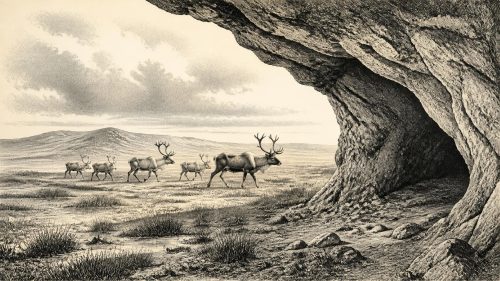
31,658 BCE is a modern chronological label, not a recorded Irish event. Castlepook Cave, County Cork, preserves Ireland’s principal pre-Last Glacial Maximum mammal archive, accumulated through carnivore activity, natural deaths, water movement and early excavation. Its bones, dated broadly from over 45,000 to about 20,000 BP, document intermittent cold-stage fauna including reindeer, mammoth, hyaena and wolves. A reindeer femur, assigned approximately 31,000 BC, bears a possible stone-tool butchery mark, potentially Ireland’s earliest evidence of human handling. It does not prove settlement or continuous occupation. Ireland then supported open, variable habitats before later ice-sheet expansion obscured much earlier evidence from view.
Read Article

Archived: 15 September 2026
Abstract
31,665 BCE is a modern label for an uncertain MIS 3 Ice-Age period, not a recorded Irish year. Before the Last Glacial Maximum, Ireland contained open, periglacial habitats and altered coastlines, connected environmentally with wider north-west Europe. Castlepook Cave, County Cork, preserves fauna including reindeer, mammoth, giant deer, hyaena, bear, wolf, Arctic fox and lemmings, accumulated through complex processes. A reindeer femur, dated about 31,000 BCE, bears a possible stone-tool incision, suggesting Upper Palaeolithic carcass processing. However, its old, unstratified context and absence of associated artefacts, hearths or settlements mean human occupation remains unproven. The evidence indicates possibility, not population.
Read Article
Archived: 15 September 2026
Abstract
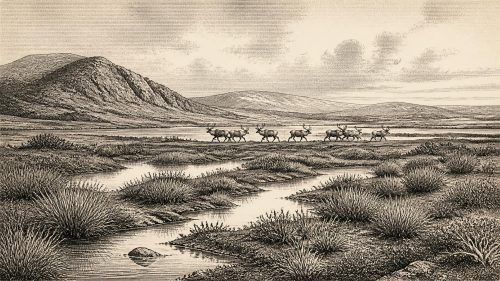
At the notional date of 31,668 BCE, Ireland experienced unstable cold conditions of Marine Isotope Stage 3, not a single recoverable historical year. Inter-till wetland deposits at Derryvree, County Fermanagh, show treeless, wet tundra habitats during an ice-free interval, though dating remains broad. Castlepook Cave, County Cork, preserves Late Pleistocene bones of mammoth, reindeer, giant deer, predators and other cold-adapted animals, accumulated over potentially separate episodes. A cut-marked reindeer femur may indicate human carcass processing around 33,000 years ago, but lacks associated tools or settlement evidence. Climate, ice advances and seas limited access, leaving no proof of occupation or continuity.
Read Article

Archived: 14 September 2026
Abstract
Around 31,710 BCE, a notional date within Marine Isotope Stage 3, Ireland experienced unstable cold conditions before the Last Glacial Maximum. Fossils and sediments show that intermittently accessible, open landscapes supported reindeer, mammoth, giant deer, predators and northern species. Castlepook Cave in County Cork preserves Ireland’s pre-glacial fauna collection, although its mixed, recorded deposits cannot establish contemporaneous communities. A reindeer femur, dated broadly to about 33,000 years ago, bears a possible stone-tool cut mark, suggesting but not proving brief human butchery. Without associated artefacts or habitation evidence, it cannot demonstrate settlement. The find nevertheless suggests a deeper Irish Palaeolithic past.
Read Article
Archived: 14 September 2026
Abstract
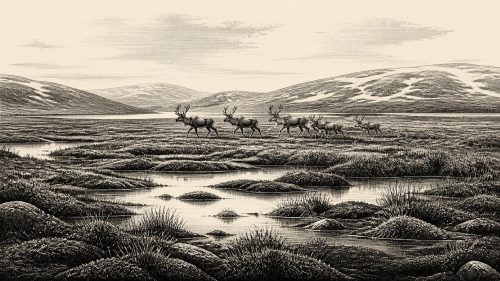
Around 31,711 BCE, Ireland’s history can only be reconstructed through broad archaeological and environmental evidence. During unstable MIS 3 conditions, Derryvree in County Fermanagh preserved an ice-free, periglacial wetland with tundra vegetation. Castlepook Cave near Doneraile yielded remains of reindeer, mammoth, giant deer, hyaena and other Ice-Age animals, accumulated over extended periods. Revised dating places much fauna in MIS 3. A marked reindeer femur may record human carcass processing about 33,000 years ago, suggesting possible brief Upper Palaeolithic visits. However, no secure settlement, tools, hearths or social evidence survives. Ireland remained a changing cold landscape, not a recoverable historical society.
Read Article





