
Archived: 23 September 2026
Abstract
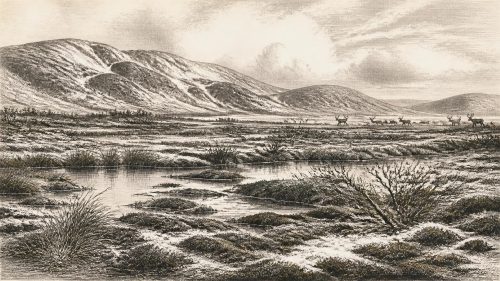
At the notional date of 30,833 BCE, Ireland lay within the climatically unstable Late Pleistocene, not a recordable historical year. Derryvree, County Fermanagh, preserves freshwater sediments between glacial tills, indicating local ice-free tundra wetlands with cold-adapted plants, insects and seasonal thaw. Castlepook Cave, County Cork, contains a mixed fauna including mammoth, reindeer, giant deer, predators and Arctic species, reflecting open cold landscapes. A marked reindeer femur, reportedly about 33,000 years old, may indicate human butchery, but disturbed contexts preclude claims for settlement. No secure evidence exists for communities, institutions, culture or continuous occupation; substantial settlement evidence begins in the Mesolithic.
Read Article
Archived: 22 September 2026
Abstract
30,851 BCE is an imprecise modern label within MIS 3, not a recoverable Irish year. Derryvree, County Fermanagh, preserves freshwater sediments between glacial tills, indicating a locally ice-free, cold tundra wetland interval amid fluctuating ice conditions. Castlepook Cave, County Cork, contains chronologically mixed animal remains, including mammoth, reindeer and spotted hyaena, showing intermittent cold-stage fauna rather than a single community. A cut-marked reindeer femur may indicate Upper Palaeolithic butchery, but lacks secure archaeological context and cannot prove settlement. No evidence establishes polities, permanent population or routes. Fragmentary records instead portray dynamic Late Pleistocene Ireland, with uncertain, possibly transient human presence.
Read Article

Archived: 22 September 2026
Abstract
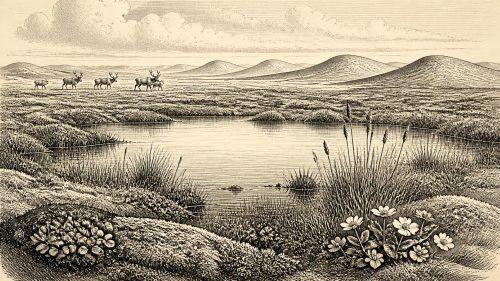
At 30,852 BCE, a modern label rather than a recoverable event, Ireland lay in the climatically unstable later Marine Isotope Stage 3 as the British-Irish Ice Sheet expanded. Open, treeless, locally wet habitats supported cold-adapted fauna, including reindeer, mammoth, giant deer, predators and smaller mammals. Derryvree sediments illuminate periglacial environments, while Castlepook Cave near Doneraile preserves important but disturbed animal remains. A roughly 33,000-year-old reindeer femur bearing a possible stone-tool cut mark may indicate brief Upper Palaeolithic butchery. It cannot establish settlement, occupation or culture. Evidence instead depicts a changing island, with uncertain access routes, preservation and no year-specific history.
Read Article
Archived: 22 September 2026
Abstract
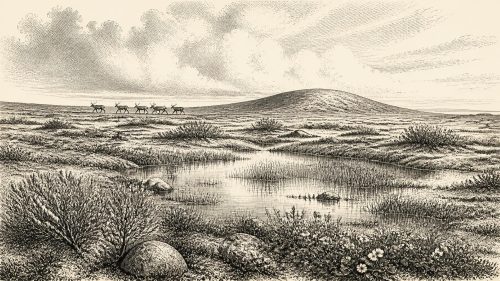
The notional date 30,858 BCE represents a broad late-Pleistocene interval around 33,000 calendar years ago, not a recoverable annual event. Ireland’s unstable MIS 3 climate produced regionally varied ice, open tundra, wetlands and freshwater basins. At Derryvree, County Fermanagh, organic deposits between glacial tills preserve plants and insects indicating cold, treeless wetland conditions. Castlepook Cave, County Cork, yielded diverse Ice Age fauna accumulated over millennia, including mammoth, reindeer and hyaena. A marked reindeer femur may indicate human butchery around 33,000 years ago, but isolated evidence cannot establish settlement, routes, or continuous occupation. Subsequent glaciation destroyed much evidence, leaving environmental glimpses.
Read Article
Archived: 22 September 2026
Abstract
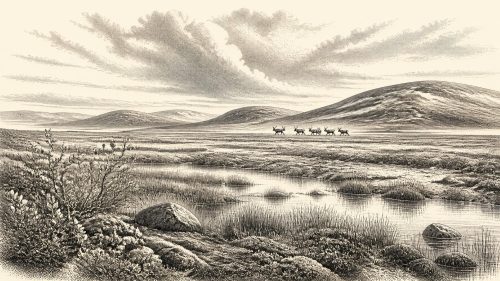
Around 30,865 BCE, Ireland can be understood only within a broad, uncertain Late Pleistocene chronology, not through dated events or communities. Derryvree, County Fermanagh, preserves freshwater sediments beneath glacial tills, indicating an ice-free periglacial tundra wetland with sedges, mosses and cold-adapted plants. Castlepook Cave, County Cork, yielded mammals including reindeer, mammoth, giant deer, hyaena and Arctic fox, demonstrating intermittent ecological links with Britain and continental Europe during lower sea levels. A cut-mark-like reindeer femur may indicate early human butchery, but cannot prove settlement. Later glaciation disturbed evidence; no social, political or cultural history is recoverable for this notional year alone.
Read Article
Archived: 21 September 2026
Abstract
About 30,928 BCE is best understood as an uncertain horizon within Marine Isotope Stage 3, rather than a precise date. Derryvree, County Fermanagh, preserves freshwater sediments between glacial tills, showing locally ice-free, treeless tundra wetlands with cold-adapted plants and animals before later ice expansion. Castlepook Cave, County Cork, yielded fauna including reindeer, mammoth, hyena and Arctic fox. An incised reindeer femur, broadly dated to around 31,000 BCE, may indicate stone-tool butchery, but cannot prove settlement. Lower sea levels may have enabled movement, although routes remain unknown. No political, cultural or religious history is demonstrable; environmental evidence dominates this prehistoric record.
Read Article
Archived: 21 September 2026
Abstract
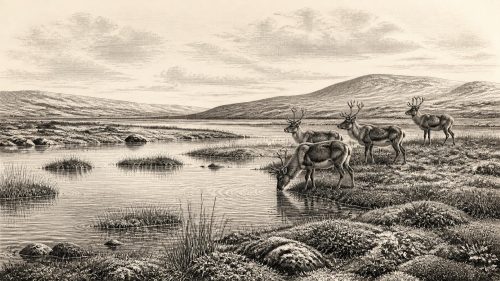
About 30,935 BCE, Ireland lay within the climatically unstable MIS 3 of the Late Pleistocene, not a precisely datable historical year. Derryvree, County Fermanagh, preserves freshwater sediments between glacial tills, indicating treeless tundra wetlands with sedges, mosses, aquatic plants and cold-adapted fauna. Castlepook Cave, County Cork, yielded reindeer, mammoth, giant deer, predators and other cold-stage animals, showing links with north-west Europe. An incised reindeer femur may indicate human butchery, but lacks associated tools, hearths or settlement evidence. No Irish communities, political structures or material culture are securely known. Advancing ice increasingly shaped this fragmentary landscape during the ensuing glacial expansion.
Read Article

Archived: 21 September 2026
Abstract
30,949 BCE is a modern label within a broad Late Pleistocene range, not a precisely recoverable Irish date. At Derryvree, County Fermanagh, freshwater silts between glacial tills reveal an interval without local ice cover, supporting cold, open, wet tundra with mosses, sedges, herbs and insects rather than woodland. Castlepook Cave, County Cork, preserves complex evidence of reindeer, giant deer, mammoth and hyaena, although its deposits span long periods. A marked reindeer femur may indicate human butchery, but no secure Palaeolithic settlement is known. Changing sea levels and advancing ice shaped uncertain routes and later obscured evidence across Ireland from view.
Read Article
Archived: 21 September 2026
Abstract
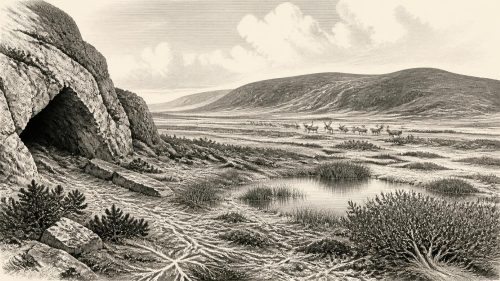
Around 32,900 cal BP, Ireland lay within the unstable Late Pleistocene climate of Marine Isotope Stage 3, before maximum glaciation. Derryvree deposits in County Fermanagh indicate cold, treeless wetlands supporting Arctic-alpine plants, insects and grazing animals. Castlepook Cave in County Cork preserves remains of mammoth, reindeer, giant deer, predators and smaller mammals, although its accumulated fossils do not form a single contemporary fauna. A modified reindeer femur may indicate Upper Palaeolithic butchery, but remains disputed because of its old, poorly contextualised collection. No secure evidence demonstrates settlement, society or continuous human occupation. Later ice-sheet expansion destroyed or obscured much evidence.
Read Article
Archived: 21 September 2026
Abstract
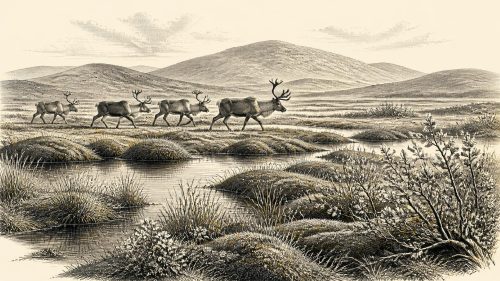
30,973 BCE is a modern label for a late MIS 3 interval, not a recorded Irish year. Derryvree, County Fermanagh, preserves freshwater sediments beneath till, indicating an ice-free, cold wetland with open, treeless vegetation during a broadly dated interval. Castlepook Cave, County Cork, contains diverse pre-Last Glacial Maximum fauna, including mammoth, reindeer, giant deer and spotted hyaena, reflecting connection with north-west European cold-stage ecosystems. A cut-marked reindeer femur may indicate Upper Palaeolithic human processing, but cannot prove settlement, hunting, or permanent population. Glaciation, erosion and rising seas destroyed evidence; Ireland remained a landscape of wetlands, open ground and mobile animals.
Read Article

Archived: 21 September 2026
Abstract
Ireland around 30,983 BCE cannot be reconstructed as a specific historical year, but belongs to late Marine Isotope Stage 3, a climatically unstable period preceding maximum glaciation. Derryvree sediments in Fermanagh document an ice-free tundra wetland with freshwater plants, insects and open vegetation. Castlepook Cave in Cork preserves a mixed Pleistocene fauna including reindeer, mammoth, giant deer, wolves and hyaenas, indicating severe yet productive environments. A marked reindeer femur may record stone-tool butchery and potentially Ireland’s earliest human activity. However, its complex context and lack of associated artefacts preclude claims for permanent settlement, society, culture or recorded events with certainty.
Read Article
Archived: 21 September 2026
Abstract
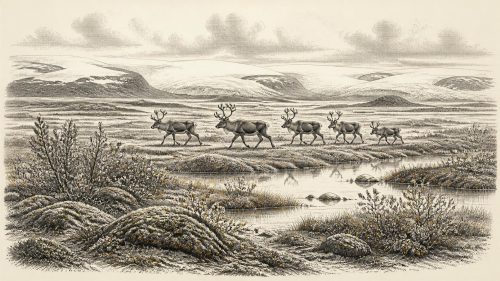
Around 30,985 BCE, Ireland was a climatically unstable Late Pleistocene landscape, not a setting for dated historical events. Inter-till deposits at Derryvree, County Fermanagh, record a cold, treeless wetland of freshwater pools, tundra vegetation and shifting conditions between glacier advances. Southern cave deposits, especially Castlepook in County Cork, indicate fauna including reindeer, mammoth, giant deer, bears, wolves and hyaenas, although their dates and associations remain uncertain. A cut-marked reindeer femur from Castlepook may suggest human butchery, but cannot prove settlement or identify its makers. No evidence exists for Irish polities, farming, ritual or permanent communities; environmental change dominates the record.
Read Article

Archived: 20 September 2026
Abstract
31,021 BCE is not a recoverable Irish year but falls within the fluctuating Marine Isotope Stage 3 of the last ice age. Ireland contained ice-free, periglacial and freshwater environments before the later Last Glacial Maximum. Derryvree, County Fermanagh, preserves organic sediments dated broadly across this period, indicating cold open wetland vegetation, insects and water between glacial advances. Castlepook Cave, County Cork, records diverse fauna, including reindeer, mammoth and predators. A marked reindeer femur may indicate human butchery, but remains unconfirmed. No dated settlement, tools or social evidence exists. Glacial erosion has left a selective record, requiring cautious interpretation and research.
Read Article
Archived: 20 September 2026
Abstract
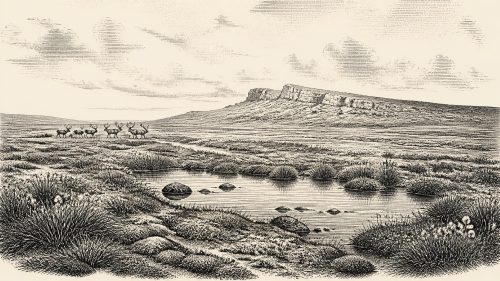
Around 31,025 BCE, Ireland cannot be described through annual events, but evidence from Marine Isotope Stage 3 reveals a cold, changing environment before maximum glaciation. Freshwater sediments at Derryvree, County Fermanagh, preserve pollen and plants from open, treeless wetlands supporting mosses, sedges and aquatic species. Castlepook Cave, County Cork, contains remains of reindeer, mammoth, giant deer, hyaena and other animals accumulated over extended periods. A reindeer femur, broadly dated to this time, bears a possible stone-tool incision, suggesting a brief Upper Palaeolithic human visit. However, no settlement, route, culture or continuous population can be established; later ice destroyed much evidence.
Read Article
Archived: 20 September 2026
Abstract
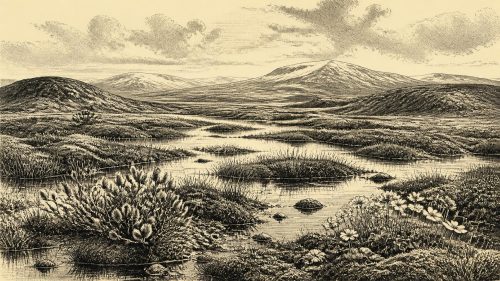
31,035 BCE is a modern label for a broad Late Pleistocene interval, not a recorded Irish year. During MIS 3, before the Last Glacial Maximum, Ireland contained varied conditions as ice expanded. At Derryvree, Fermanagh, freshwater sediments between glacial tills preserve evidence of treeless periglacial wetland, with sedges, mosses, aquatic plants and Arctic-alpine vegetation. Castlepook Cave, Cork, preserves a complex, mixed-age fauna including reindeer, mammoth and predators, indicating cold open habitats. A marked reindeer femur may indicate human carcass processing, but lacks associated tools or settlement evidence. Ireland's record chiefly documents changing environments, animal movements, advancing ice, and unresolved visitation.
Read Article

Archived: 20 September 2026
Abstract
Around 31,084 BCE, Ireland experienced unstable Marine Isotope Stage 3 conditions, with advancing ice, lower sea levels and varied periglacial habitats rather than uniform frozen terrain. Derryvree, County Fermanagh, preserves wetland sediments between glacial tills, indicating cold, treeless freshwater environments during an ice-free interval. Castlepook Cave, County Cork, yielded diverse cold-stage fauna, including reindeer, mammoth, giant deer, predators and lemmings, although its deposits span multiple periods. A cut-marked reindeer femur may indicate Upper Palaeolithic butchery and a brief human visit, not proven settlement. Evidence reveals ecological complexity but cannot securely establish precise dates, communities, politics, culture or permanent occupation there.
Read Article
Archived: 19 September 2026
Abstract
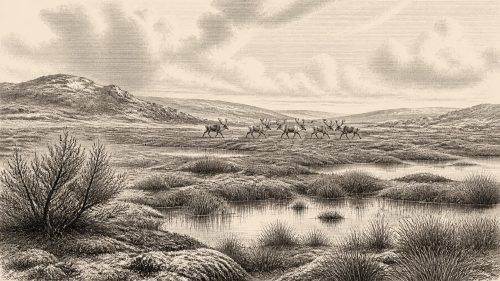
Around 31,143 BCE, Ireland experienced the unstable Late Pleistocene climate of Marine Isotope Stage 3, before maximum glaciation. Evidence is fragmentary and local. Derryvree, County Fermanagh, preserves an ice-free periglacial wetland, dated broadly to 36,900–31,700 years ago, supporting tundra vegetation, insects and shallow pools before later burial by ice. Castlepook Cave, County Cork, contains mixed remains of reindeer, mammoth, giant deer and predators, demonstrating cold-adapted fauna but not a single contemporary ecosystem. A reindeer femur may bear a stone-tool cutmark, suggesting brief Upper Palaeolithic carcass processing. However, it does not establish settlement, routes, culture or permanent human occupation in Ireland.
Read Article
Archived: 19 September 2026
Abstract
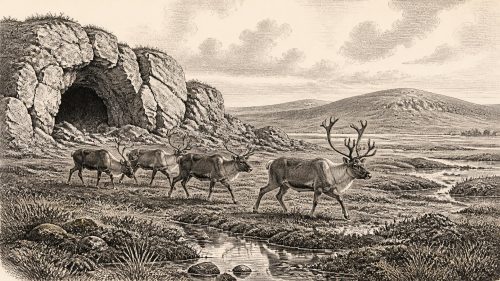
31,148 BCE is a retrospective date within Marine Isotope Stage 3, not a recoverable Irish year. Derryvree, County Fermanagh, preserves freshwater sediments dated broadly to 36,900–31,700 years before present, revealing cold, treeless tundra wetlands between glacial advances. Ireland’s climate, ice extent and coastlines changed regionally, while access routes remained uncertain. Castlepook Cave, County Cork, contains remains of reindeer, mammoth, giant deer and carnivores, demonstrating an Ice Age fauna but not a single contemporaneous community. A possibly tool-marked reindeer femur may indicate early human activity, yet lacks secure context. Later glaciation reshaped landscapes and obscured evidence, leaving a cautious landscape record.
Read Article
Archived: 19 September 2026
Abstract
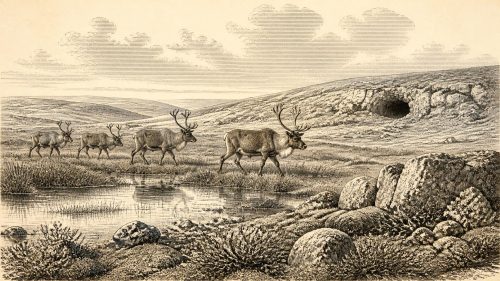
Circa 31,156 BCE, Ireland was a climatically unstable Late Pleistocene landscape, not a precisely datable historical year. Before the Last Glacial Maximum, parts of the island remained ice-free, with Fermanagh sediments indicating cold, open wetlands, freshwater and sparse tundra vegetation. Castlepook Cave, County Cork, preserves fauna including reindeer, mammoth, giant deer, bear, wolf and hyaena, demonstrating ecological links with north-west Europe. A marked reindeer femur may record stone-tool butchery and possible Upper Palaeolithic human presence. However, its context is uncertain, and no associated settlement evidence exists. Ireland's record supports cautious inferences about environments, roaming fauna and possible short-term human incursions.
Read Article
Archived: 19 September 2026
Abstract
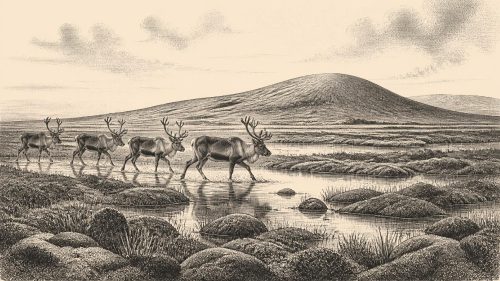
Around 31,173 BCE, Ireland lay in the unstable cold conditions of Marine Isotope Stage 3, with episodic glaciation and temporary habitable areas. Organic sediments at Derryvree record freshwater tundra-like wetlands, though only across broad dated ranges. Castlepook Cave preserves diverse pre-Last Glacial Maximum fauna, including reindeer, mammoth, predators and cold-adapted mammals, demonstrating intermittent connections to north-western Europe when lower sea levels exposed land. A cut-marked reindeer femur may indicate early human carcass processing, but cannot establish settlement or continuous occupation. Later ice destroyed much evidence, leaving a fragmentary picture of changing wetlands, mobile animals and uncertain human presence in Ireland.
Read Article

Archived: 19 September 2026
Abstract
About 31,194 BCE is a modern chronological label, not a recorded Irish year. Ireland then lay in the Middle Midlandian cold stage, before maximum glaciation, with variable tundra-steppe, wetlands and sparse vegetation. Derryvree deposits in Fermanagh provide environmental evidence for this harsh, ice-free or ice-marginal landscape. Castlepook Cave near Doneraile contains remains of mammoth, reindeer, giant deer and other cold-climate animals, accumulated across long periods. A marked reindeer femur, possibly cut by a stone tool, suggests a brief Upper Palaeolithic human visit, but cannot prove settlement. Glaciation, erosion and rising seas have left Ireland's human record fragmentary, provisional and unresolved.
Read Article
Archived: 19 September 2026
Abstract
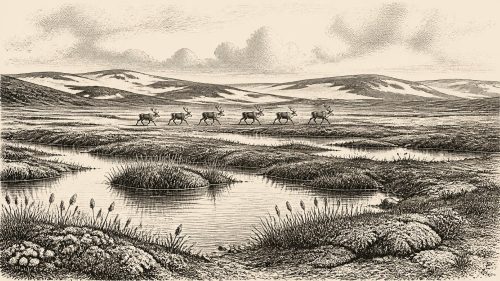
Around 31,195 BCE, Ireland was a cold, changing north-western margin of Europe, with uneven ice cover, lowered seas and tundra-like habitats rather than familiar coastlines. Derryvree, County Fermanagh, preserves freshwater sediments dated broadly to this period, indicating treeless, periglacial wetlands supporting plants, pools and seasonal productivity. Castlepook Cave, County Cork, yielded MIS 3 fauna including reindeer, mammoth, giant deer, predators and scavengers, although its deposits span long periods and have disturbed contexts. An incised reindeer femur may record stone-tool butchery, suggesting episodic human visits. However, no secure settlement, tools, structures or continuous population is known; the evidence remains provisional overall.
Read Article
Archived: 19 September 2026
Abstract
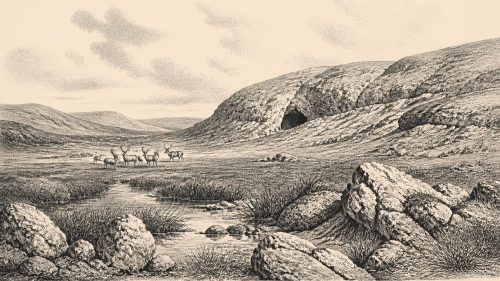
At around 31,226 BCE, Ireland lay within the fluctuating cold environments of Marine Isotope Stage 3. Castlepook Cave near Doneraile preserves a reindeer femur broadly dated to this period, bearing a linear mark interpreted as possible stone-tool butchery. If confirmed, it could be Ireland’s earliest evidence of human activity, but cannot prove permanent settlement. The cave’s mixed collection and later disturbance prevent secure conclusions about where or when processing occurred. Ireland then contained shifting combinations of ice, open steppe-tundra, wetlands and mobile mammals, during changing sea levels and climates. Later glaciation may have erased evidence, leaving only a tentative clue.
Read Article
Archived: 18 September 2026
Abstract
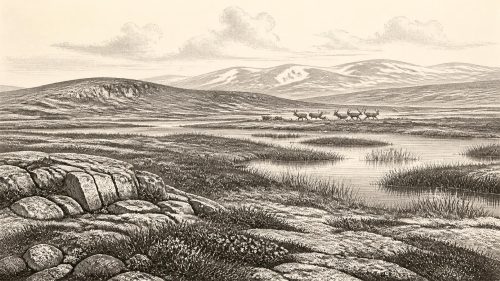
Around 31,245 BCE, Ireland was an unstable MIS 3 Ice Age landscape, not a datable historical year. Open tundra, wetlands and intermittent ice supported reindeer, mammoth, giant deer, predators and other fauna, while changing sea levels and ice margins affected access. Castlepook Cave in County Cork preserves varied Pleistocene remains, including a reindeer femur fragment dated to about 33,000 years ago with a possible stone-tool cut mark. If confirmed, it may indicate an early human visit, but not settlement or continuous population. Environmental deposits at Derryvree and Aghnadarragh show cold, treeless habitats. Evidence remains fragmentary, requiring cautious interpretation by researchers.
Read Article
Archived: 18 September 2026
Abstract
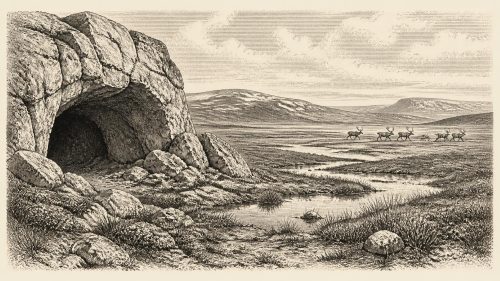
31,259 BCE is a modern chronological reference within Marine Isotope Stage 3, not a recorded Irish year. Ireland then experienced fluctuating cold conditions as ice sheets expanded, while some lowland refuges supported open tundra and steppe. Castlepook Cave, County Cork, preserves a fauna including reindeer, mammoth, giant deer, wolves, Arctic foxes, lemmings and spotted hyaenas, demonstrating cold-stage ecosystems. Derryvree, County Fermanagh, records sedges, herbs, mosses, insects and wetland tundra beneath glacial deposits. A cut-marked reindeer femur may indicate brief human activity, but lacks secure context. No evidence establishes settlement, social organisation, routes, or population; the period remains an ecological frontier.
Read Article
Archived: 18 September 2026
Abstract
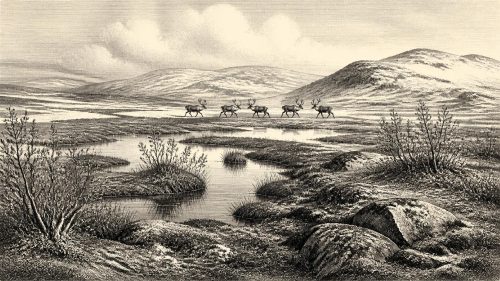
About 31,264 BCE, Ireland lay within the unstable cold conditions of Marine Isotope Stage 3, before the Last Glacial Maximum. Evidence cannot reconstruct a single year or prove permanent human settlement. At Derryvree, County Fermanagh, sediments between glacial tills preserve a treeless tundra wetland of mosses, sedges, insects and freshwater pools. Castlepook Cave, County Cork, contains a long, mixed assemblage of cold-stage animals, including reindeer, mammoth, giant deer, bear and hyaena. A cut-marked reindeer femur may indicate carcass processing by people, but lacks associated occupation evidence. Ireland was thus an ecologically varied, intermittently habitable, poorly documented Ice Age frontier overall.
Read Article
Archived: 18 September 2026
Abstract
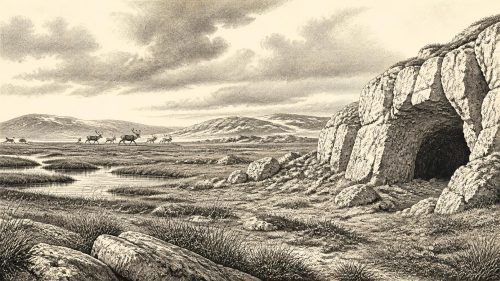
Around 33,224 calibrated years before present, Ireland occupied a volatile Late Pleistocene landscape of low seas, changing ice margins and largely treeless steppe-tundra. Its precise ice cover and connections to neighbouring lands remain uncertain. Castlepook Cave in north Cork preserves re-dated Marine Isotope Stage 3 remains of mammoth, reindeer, giant deer, carnivores and cold-adapted small mammals, though disturbed cave deposits cannot show they lived together. A marked reindeer femur may indicate human butchery around 33,000 years ago, but lacks secure archaeological context. No evidence supports settled population or social detail. Castlepook instead underscores cautious dating, taphonomic study and renewed excavation.
Read Article
Archived: 18 September 2026
Abstract
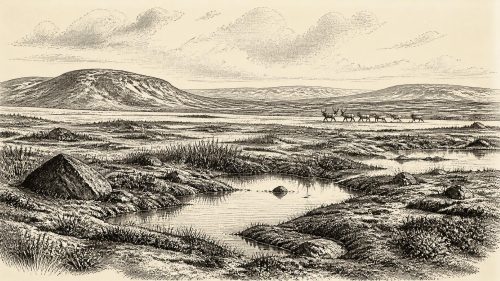
About 31,283 BCE, Ireland’s history is reconstructed from uncertain environmental and archaeological evidence, not annual events. During late Marine Isotope Stage 3, fluctuating Ice Age conditions produced shifting ice, exposed ground and wetlands. At Derryvree, Fermanagh, organic sediments sealed between glacial tills record an ice-free, treeless freshwater tundra with mosses, sedges and shallow water. Castlepook Cave, Cork, preserves pre-Last Glacial Maximum fauna, including reindeer, mammoth, giant deer, predators and cold-adapted small mammals. A marked reindeer femur may indicate human butchery, but cannot prove settlement or continuous occupation. No evidence supports communities, polities, farming or trade. Later glaciation erased much evidence.
Read Article
Archived: 18 September 2026
Abstract
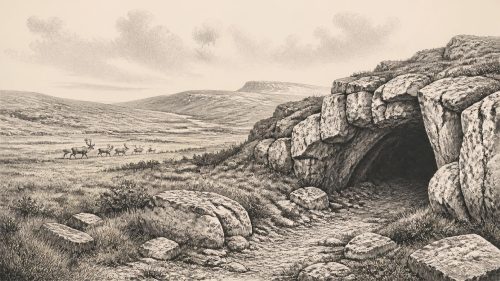
Around 31,285 BCE, Ireland lay within the fluctuating cold conditions of Marine Isotope Stage 3, before the Last Glacial Maximum. Southern landscapes probably comprised open tundra and steppe supporting reindeer, mammoth, giant deer, predators and smaller mammals. Castlepook Cave, County Cork, preserves a disturbed, repeatedly accumulated fauna rather than a single contemporary scene. A reindeer femur, dated approximately 31,000 BCE, bears a mark interpreted as possible stone-tool butchery, potentially Ireland’s earliest evidence of human activity. Yet no sealed occupation, tools, hearths or human remains confirm settlement. Later glaciation and sea-level change destroyed evidence; further dating and excavation remain especially essential.
Read Article
Archived: 18 September 2026
Abstract
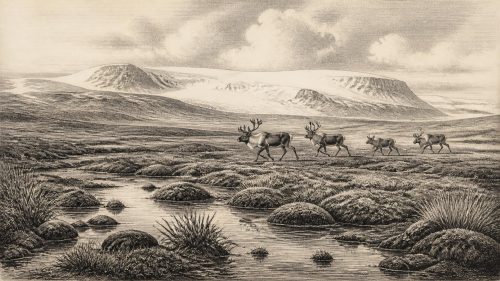
Circa 31,305 BCE, Ireland lay within the unstable, cold later MIS 3, not a recoverable historical year. Derryvree in Fermanagh preserves freshwater and organic sediments between glacial tills, indicating locally ice-free, tundra-like wetlands during a broadly dated interval. Castlepook Cave in Cork yielded diverse Ice Age fauna, including mammoth, reindeer and predators, accumulated over many episodes. A marked reindeer femur may record butchery by Upper Palaeolithic people, potentially Ireland's earliest human trace, but lacks secure context and precise dating. Evidence supports at most brief visits, not permanent settlement, trade, or later cultural identities, amid changing ice, water and sparse ecosystems.
Read Article





