Search Results for “Rule”

Showing results 11–20 of 61


New Nationalism

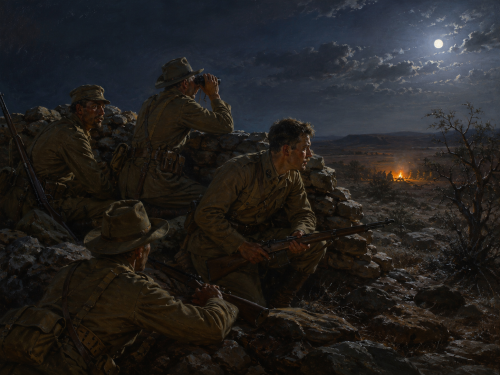
Pro-Boer feeling is giving renewed confidence to younger Irish nationalists who have grown dissatisfied with the pursuit of Home Rule solely through the British Parliament. In Limerick, admiration for the resistance of the Transvaal and Orange Free State has entered political meetings, newspaper discussions and conversations among cultural revivalists. Many continue to support the reunited Irish Parliamentary Party, yet others ask whether speeches and negotiated concessions can secure genuine national freedom. To these younger activists, the Boer struggle appears to show that a small nation must cultivate its own institutions, resources and determination rather than depend upon imperial goodwill.
Read Article
Culture Revived

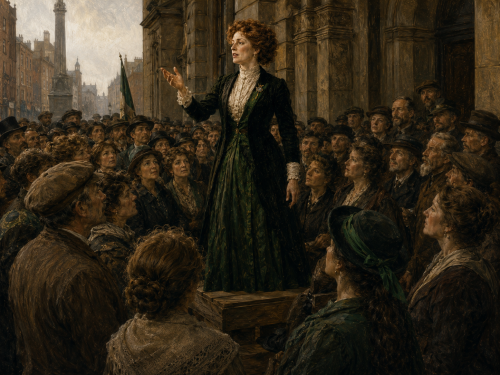
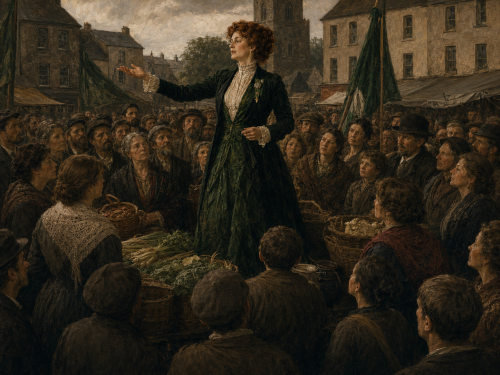
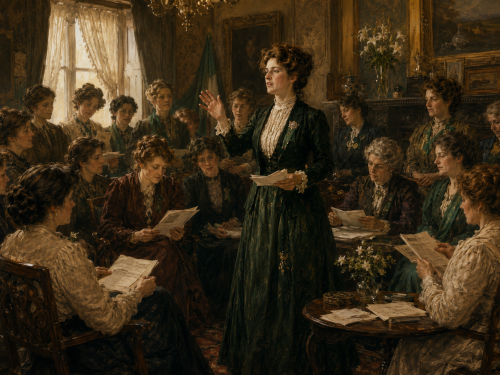
Inghinidhe na hÉireann has placed the Irish language, national culture and economic self-reliance at the centre of its programme for complete independence. Established under Maud Gonne’s leadership, the women’s organisation argues that political freedom cannot be secured by parliamentary action alone while Irish people continue to neglect their own language, history, literature and industries. Members intend to cultivate national confidence through education and practical organisation, especially among children. Their approach joins separatist politics with everyday choices concerning speech, reading, entertainment and household spending, giving women a direct role in shaping the cultural foundations upon which an independent Ireland might eventually stand.
Read Article

Cheering Crowds

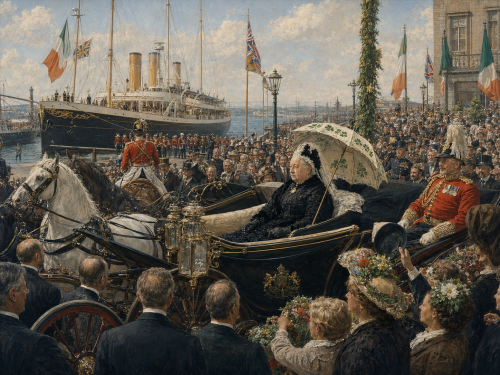
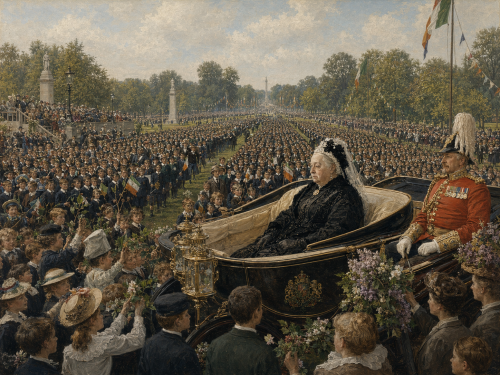
Large crowds have lined the route of Queen Victoria’s procession from Kingstown towards Dublin, creating one of the most striking public spectacles witnessed during her final visit to Ireland. The royal carriage passed through heavily decorated streets while spectators filled pavements, windows and temporary viewing places. Reports reaching Limerick describe sustained cheering as the procession moved towards the capital and the Viceregal Lodge in Phoenix Park. The gathering revealed more than official organisation alone. Public curiosity drew thousands outdoors, while loyalist residents and supporters of the Union treated the Queen’s arrival as an opportunity to demonstrate attachment to the Crown and British Empire.
Read Article

Patriotic Children

Nationalist women have organised a vast Patriotic Children’s Treat in Dublin as a direct challenge to the royal celebration arranged for school pupils during Queen Victoria’s April visit. Led by Maud Gonne, the women gathered children whose families had rejected or avoided the Phoenix Park festivities and offered them a separate day of food, music, recreation and national instruction. The event demonstrates that women excluded from formal political power can still influence public opinion through community organisation. Limerick nationalists will follow the gathering closely, recognising its attempt to place Irish identity rather than imperial loyalty before the country’s children.
Read Article

Royal Dublin

Queen Victoria arrived in Ireland today for what will become the final Irish visit of her long reign. The royal programme is centred principally upon Dublin, where streets, public buildings, railway approaches and the route towards the Viceregal Lodge have been extensively decorated. Crowds gathered at Kingstown and throughout the capital to witness the arrival and procession. Although Limerick is not included prominently in the itinerary, reports of the ceremonies are being followed closely throughout the city and county by loyalists, nationalists, soldiers’ families, clergy, merchants and political organisations.
Read Article

Women Protest

Women have assumed visible roles in the nationalist opposition surrounding Queen Victoria’s arrival in Dublin, moving beyond the customary tasks of collecting money or assisting male political organisers. Maud Gonne and other advanced nationalists have used meetings, public agitation and organised community work to challenge the royal ceremonies and the claim that they represent a united and loyal Ireland. Their involvement will be noted in Limerick, where women already sustain charitable societies, cultural associations, schools and nationalist activity but rarely receive formal recognition as political participants.
Read Article

National Network

Parliamentary nationalism has acquired a powerful new local organisation following the acceptance of the United Irish League as the principal popular body supporting the reunited Irish Parliamentary Party. For nationalists throughout Limerick city and county, the arrangement promises to connect political representation at Westminster with campaigns concerning tenant rights, land purchase and the division of grazing estates. League branches may now provide farmers, labourers, shopkeepers and local political organisers with a direct influence upon nationalist policy and parliamentary candidate selection. The development places organised public opinion behind John Redmond’s leadership while preserving the land question as a central concern of Irish political life.
Read Article

Loyal Ireland

Unionist opinion has interpreted the enthusiastic public welcome given to Queen Victoria as convincing evidence that Ireland remains loyal to the Crown and firmly attached to the United Kingdom. Reports from Dublin describe immense crowds lining the route from Kingstown, cheering as the royal carriage passed through extensively decorated streets towards Phoenix Park. Loyalist newspapers and organisations argue that such scenes contradict nationalist claims to speak for the whole Irish population. In Limerick, supporters of the Union will regard the reception as proof that allegiance to the monarchy continues among military families, merchants, officials, Protestants and many citizens attracted by imperial identity.
Read Article

Reunion Talks

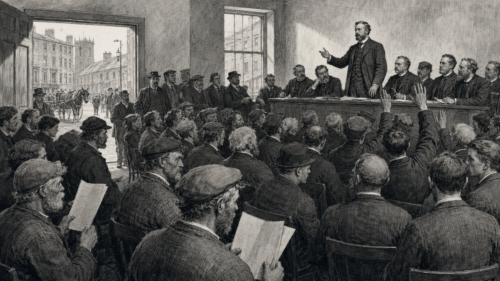
John Redmond’s Parnellite followers entered formal discussions with their former anti-Parnellite opponents as pressure mounted to end nearly a decade of nationalist division. Redmond had led the minority that remained loyal to Charles Stewart Parnell after the Irish Parliamentary Party split in December 1890. The larger anti-Parnellite body was principally associated with John Dillon, while Timothy Healy commanded another influential grouping. Their separate organisations had competed for authority, funds and electoral support throughout the 1890s, weakening the parliamentary movement and leaving constitutional nationalism without the concentrated leadership it had possessed under Parnell.
Read Article

Ireland Votes

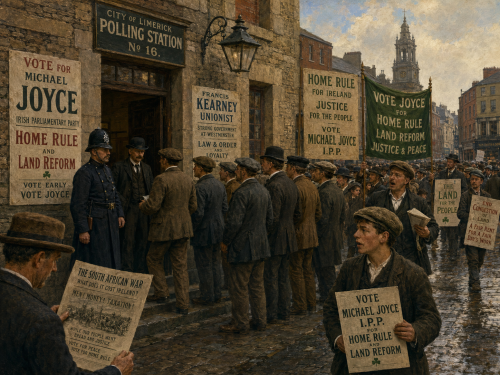
Electors in Limerick City are voting today as the United Kingdom general election continues across Ireland and Britain. The local contest places Michael Joyce of the reunited Irish Parliamentary Party against Francis Kearney, the Unionist candidate, and offers voters a direct choice between Home Rule nationalism and continued government from Westminster. Campaigning throughout the city has centred upon Irish self-government, land reform, the South African War and the ability of the newly reunited nationalist party to act with discipline. Across Ireland, polling is occurring on different days between late September and October rather than through one national election day.
Read Article