Ruaidrí’s Blinding1092 CE
In 1092, Ruaidrí na Saide Buide Ua Conchobair, overking of Connacht, was treacherously blinded by rivals, enabling Muirchertach Ua Briain of Munster to claim supremacy, take hostages and manipulate local contenders. Muirchertach also campaigned in Leinster, while his brother Diarmait was exiled to Ulaid. Regional instability included Énna of Uí Chennselaig’s killing and Éoganacht deaths. Armagh’s church and settlement burned, while a Munster fleet plundered Clonmacnoise. Dublin remained under Gofraid Méránach. Raids devastated Mag Aí’s cattle, and severe winter frost followed. Divergent annals nevertheless portray authority as dependent on alliances, violence, hostages, wealth and unreliable regional obedience throughout medieval Ireland.
Dateline
The surviving annals present 1092 as a year in which a single act of dynastic violence transformed the balance of power in western Ireland. Ruaidrí na Saide Buide Ua Conchobair, overking of Connacht, was treacherously blinded by Flaithbertach Ua Flaithbertaig and his associates. Muirchertach Ua Briain, king of Munster and the most ambitious southern ruler of his generation, quickly exploited Ruaidrí’s removal. Elsewhere, rulers died or were killed in Leinster and Munster, Armagh suffered a destructive fire, and a Munster fleet plundered Clonmacnoise. The year ended, according to several chronicles, amid severe frost, ice and snow.
The record is unusually substantial but not perfectly consistent. The Annals of Ulster, Annals of Tigernach, Annals of Inisfallen and the later Annals of the Four Masters overlap on the principal events, yet sometimes differ over details or place an event in an adjacent annal-year. Their calendar notices agree that the kalends of January fell on Thursday and that 1092 was a leap year. Exact dates should nevertheless be claimed only where a chronicle explicitly supplies one.
A Divided Political Landscape
Ireland had no permanent central government. It was divided among provincial and regional kingdoms whose rulers competed through campaigning, alliances, marriage, tribute and the taking of hostages. Muirchertach Ua Briain controlled Munster but aspired to wider authority modelled on that of his great-grandfather Brian Bórama. His principal long-term rival was Domnall Ua Lochlainn, king of Ailech and leader of the northern Cenél nÉogain. Neither could simply command the island, and both depended upon shifting relationships with the rulers of Connacht, Mide, Leinster, Ulaid and Dublin.
Muirchertach entered 1092 after several difficult years. Connacht and Mide had attacked Munster, while Domnall Ua Lochlainn’s standing in the north limited southern expansion. Dublin, a wealthy Hiberno-Norse port of immense strategic value, was ruled by Gofraid Méránach, generally identified with Godred Crovan of Man. Gofraid had taken Dublin in 1091 and would retain it until Muirchertach expelled him in 1094. Thus, although Muirchertach remained formidable, his authority was neither universal nor secure.
The Blinding in Connacht
The decisive event was the blinding of Ruaidrí na Saide Buide. Ruaidrí belonged to the Uí Briúin Aí and had ruled Connacht through a mixture of kinship alliances and force. The Annals of Tigernach name Flaithbertach Ua Flaithbertaig and Fogartach Ua Fogartaig among those responsible. Their account condemns the deed as especially lamentable because Flaithbertach was Ruaidrí’s fosterling, ritual kinsman and subject. Such language reveals the perceived enormity of an attack that violated several personal and political bonds at once.
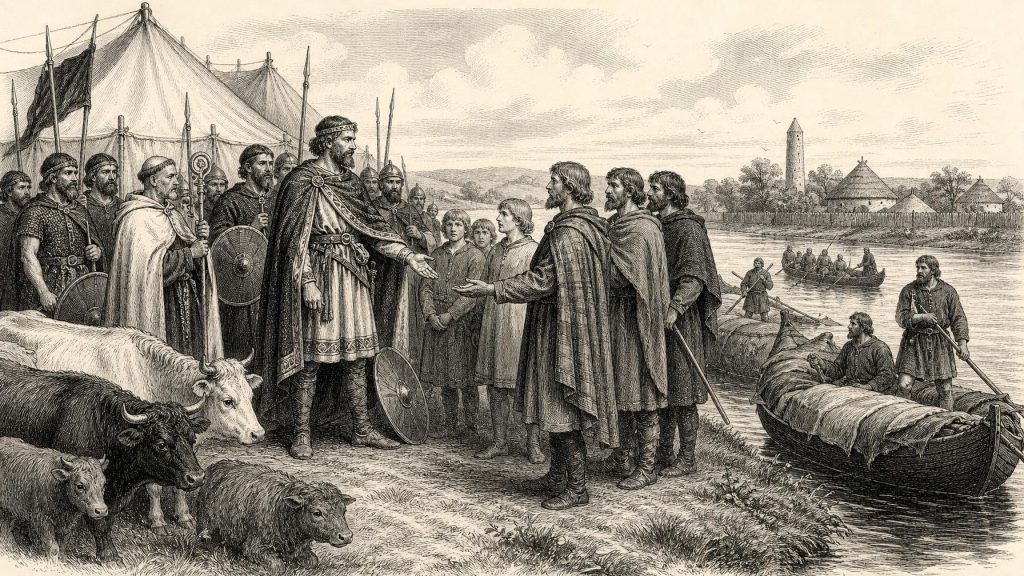
Blinding was intended to render a rival unsuitable for kingship without killing him and risking the consequences of outright regicide. In practice, political disability was not always permanent: Ruaidrí survived and later recovered influence before his death in 1118. In 1092, however, his removal opened Connacht to intervention. The Annals of Inisfallen say that Muirchertach Ua Briain took the overkingship of Connacht, while the Four Masters record that he led an army into the province and carried away hostages. These statements describe a claim to supremacy rather than direct administration from Munster.
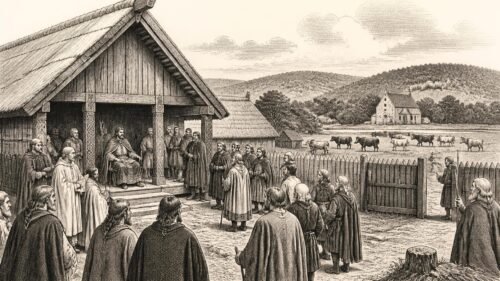
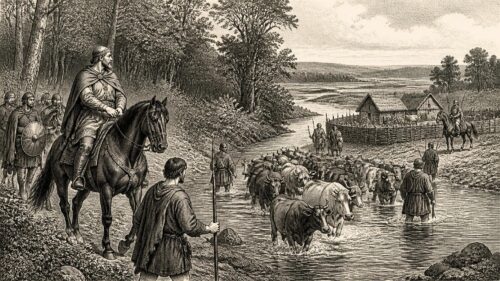
Connacht itself remained divided. The Conmaicne raided Síl Muiredaig so thoroughly, according to the Four Masters, that Mag Aí was left without cattle. Áed, son of Cathal Ua Conchobair, was captured, and authority over Síl Muiredaig was granted to Gilla na Naem Ua hEidin or Ua Conchobair—the annals vary in naming him. Muirchertach’s policy was to use local competitors rather than attempt to replace Connacht’s political structure. By recognising one claimant, detaining another and collecting hostages, he could turn provincial division into Munster advantage.
Family Conflict and Regional Change
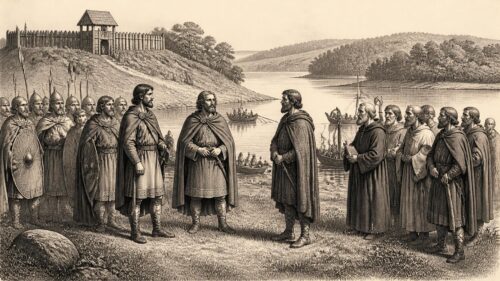
Muirchertach’s own dynasty was also divided. His brother Diarmait Ua Briain was expelled to Ulaid during the year. Their rivalry dated from the disputed Munster succession following the death of their father, Tairdelbach Ua Briain, in 1086. Diarmait’s northern exile illustrates how political refugees could seek protection far from home and become useful pieces in wider diplomacy. The brothers would formally make peace in 1093, but their competition was only contained, not resolved.
In Leinster, Énna son of Diarmait, king of Uí Chennselaig, was killed. Some records say that the Uí Chennselaig themselves killed him; the Annals of Tigernach more narrowly blame his brothers. Muirchertach then campaigned in Leinster and received the submission of the ruler of Uí Fhailge. Énna’s death weakened one centre of resistance to Munster influence and contributed to Muirchertach’s gradual recovery of authority in the south-east. It did not make Leinster passive: local dynasties continued to pursue their own interests and could change allegiance when circumstances demanded.
Munster’s older Éoganacht aristocracy also experienced upheaval. Muiredach son of Carthach, ruler of the Éoganacht of Cashel and father of the later king Cormac Mac Carthaig, died in 1092. The Munster-oriented Annals of Inisfallen and the Four Masters also place the killing of his relative Donnchad Mac Carthaig in this year, although the Annals of Ulster enter Donnchad’s death under 1093. The disagreement advises caution about exact sequence. Collectively, these notices show the emerging Mac Carthaig lineage contending for leadership among the Éoganachta beneath an Uí Briain overking.
Armagh and Ecclesiastical Power
Religious institutions were landholders, centres of learning, places of pilgrimage and political actors. Domnall son of Amalgaid had become successor of Patrick—the head of Armagh’s community—immediately after the death of Máel Ísu in December 1091. During 1092 Domnall visited Cenél nÉogain and obtained what the Annals of Ulster call his full demands. Such visitations asserted Armagh’s spiritual primacy while collecting dues and confirming relationships with kings, churches and dependent communities.
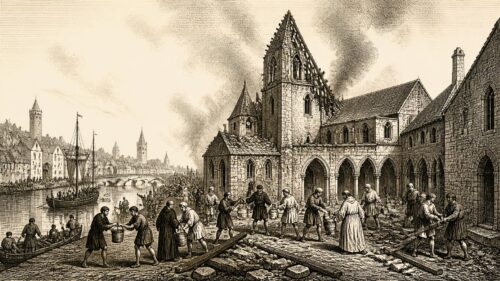
Disaster struck Armagh on 29 August. Its principal enclosure and church were burned, together with sections of Trian Mór and Trian Saxan, two districts associated with the settlement. The annals do not identify an attacker, so the fire should not automatically be treated as warfare. Whatever its cause, the damage extended beyond one sacred building. Armagh was a populous ecclesiastical settlement containing clergy, students, craftspeople, dependants and visitors; destruction there disrupted households and economic activity as well as worship.
The year’s obituaries underline the breadth of Ireland’s church network. They include Connmach Ua Cairill, described as a distinguished bishop of Connacht; Máel Ísu Ua hArrachtáin, successor of Ailbe at Emly; Cormac of Monasterboice, praised as a learned and holy senior; and Muirchertach son of Loingsech, successor of Finnian at Clonard. Their titles combined pastoral, monastic, educational and political responsibilities. The later diocesan reforms associated with the twelfth century had not yet fully reorganised these long-established communities.
The Plundering of Clonmacnoise
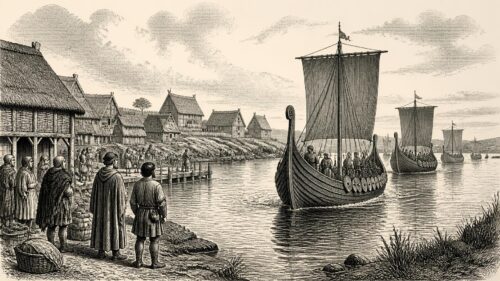
A fleet from Munster plundered Clonmacnoise. The chronicles do not name its commander, and it would be unsafe to state that Muirchertach personally ordered the attack. Clonmacnoise stood beside the Shannon at a major junction of river and overland routes. Its churches, shrines, workshops, livestock and accumulated offerings made it both a revered sanctuary and an attractive target. A large lay population lived around the ecclesiastical core, giving the settlement many of the characteristics of a town.
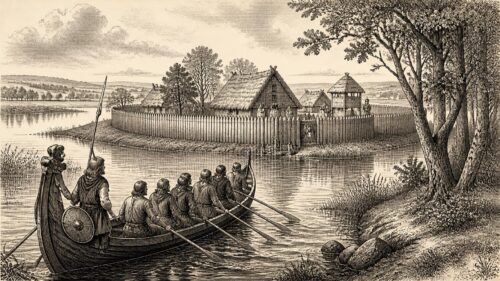
The use of a fleet demonstrates the Shannon’s military importance. Boats could carry warriors and supplies more efficiently than an army moving through difficult country, while allowing attackers to strike settlements along the river. The raid also exposes the limits of sanctuary. Kings honoured saints, relics and clerical mediators, but churches could still be robbed during political conflict or predatory expeditions. The contradiction was characteristic of an age in which sacred institutions were deeply embedded in secular networks of property and power.
Wealth, Work and Winter
For most people, the year was measured less by royal succession than by farming, rents and seasonal labour. Rural households commonly occupied ringforts, unenclosed farms, lake settlements or dwellings clustered around churches and lordly centres. Cattle supplied milk, meat, hides, traction and social prestige. The report that Mag Aí was stripped of cattle therefore implies a profound local crisis: lost food, breeding stock and rent-paying capacity, followed by the risk of dependence or migration.
Dublin offered a different environment. Its timber houses, workshops, lanes and waterfront supported carpenters, smiths, textile workers, leatherworkers, merchants, fishers and sailors. Silver, weighed bullion and coinage linked the city with Britain, Scandinavia and continental Europe. Irish rulers coveted Dublin not merely as a fortress but as a source of ships, skilled labour, imported goods and commercial income. In 1092, however, Gofraid Méránach’s possession of the city kept those resources outside Muirchertach’s immediate control.
The chronicles close the year with heavy frost and snow. The Four Masters say that lakes and rivers froze strongly enough for people and horses to cross them. The Annals of Inisfallen place severe frost and snow at the end of 1092 and beginning of the following year. Such conditions threatened livestock and impeded ordinary work, even if frozen waterways briefly created unusual routes. The sources do not explicitly record famine, so the hardship should not be exaggerated beyond what they report.
A Year Preserved
The year is notable not only for what happened but for how closely some of it was recorded. The surviving manuscript of the Annals of Inisfallen, Rawlinson B 503, was written in stages beginning in the late eleventh century, and its earliest hand ends within the entries associated with 1092. The identity of that scribe remains uncertain, but the manuscript brings the modern reader unusually near to the intellectual world being described: a world in which clerics calculated calendars, recorded deaths and judged the conduct of kings.
By the end of 1092, Ruaidrí’s blinding had broken the existing Connacht settlement and allowed Muirchertach Ua Briain to extend his supremacy westwards. Yet the same year displayed the fragility of power. Muirchertach faced rebellion within his family, Dublin remained independent under Gofraid, local dynasties continued to kill and replace their own rulers, and even Armagh and Clonmacnoise were vulnerable to fire or plunder. Authority in Ireland was expanding in ambition, but it still depended upon personal alliances, hostages, cattle, fleets and the uncertain obedience of regional kings.
Primary Sources
- The Annals of Ulster
- The Annals of Ulster: Entries for 1092
- Annals of Inisfallen: Annal 1092
- Annals of Inisfallen: Electronic Edition and Manuscript Description
- The Annals of Tigernach: Annal 1092
- The Annals of Tigernach: Document Details
- Annals of the Four Masters: Annal 1092
- Annals of the Four Masters: Electronic Edition
- Ua Briain, Muirchertach
- Ua Conchobair, Ruaidrí na Saide Buide
- Ua Lochlainn (Mac Lochlainn), Domnall
- Gofraid Méránach
- Ua Briain, Tairdelbach
- Ua Briain, Domnall
- Mac Carthaig, Cormac
- Cellach (Celsus)
- Viking
- 950–1450: Vikings, Normans and Medieval Mints
- Early Medieval
- Early Medieval Farmsteads
- Clonmacnoise Visitor Guide
- Clonmacnoise Monastic Site
- High Crosses
- Irish School of Illumination, c. 650–1100
- Nationality and Kingship in Pre-Norman Ireland
- Vikings in Ireland
- The Dublin Region in the Middle Ages: Settlement, Land-use and Economy
- Martin of Tours in the Early Irish Church
- Pre-Norman Dublin: Capital of Ireland
- The Practice of Irish Kingship in the Central Middle Ages