Search Results for “Rule”

Showing results 41–50 of 62


British Absence

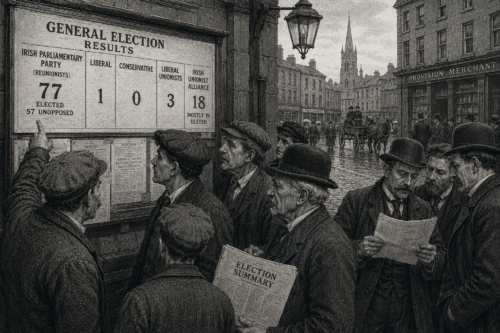
The completed general election has again demonstrated the weakness of the principal British political parties throughout nationalist Ireland. John Redmond’s reunited Irish Parliamentary Party has taken seventy-seven of Ireland’s 103 seats, while candidates standing directly for the British Liberal and Conservative parties made little impression across the south, west and much of the midlands. In Limerick, voters returned nationalist representatives without any prospect of an ordinary contest between the parties governing and opposing at Westminster. Irish political organisation remains shaped principally by the constitutional struggle between nationalism and unionism rather than by the divisions governing electoral life in Great Britain.
Read Article
Unity Resolutions

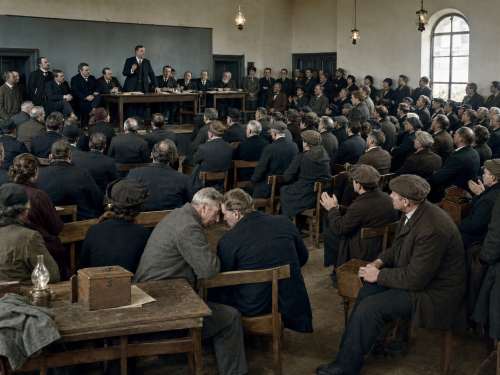
Local political organisations passed resolutions supporting a united Irish parliamentary representation as impatience grew with the divisions inherited from the fall of Charles Stewart Parnell. United Irish League branches, nationalist associations and constituency bodies increasingly argued that rival parliamentary groups should place national interests above personal quarrels. Their declarations carried no direct authority over individual MPs, but they reflected the opinion of activists who organised meetings, raised subscriptions and supplied much of the labour required during elections. Continued factionalism therefore threatened not only parliamentary effectiveness but the willingness of local supporters to sustain representatives who refused to cooperate.
Read Article

League Endorsed

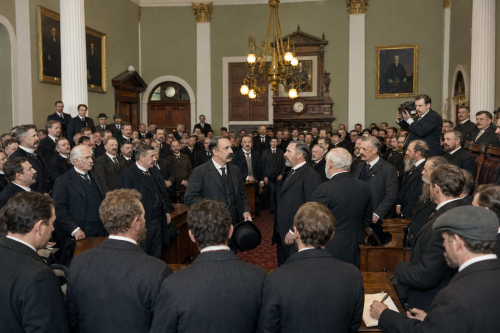
The United Irish League’s campaign for nationalist unity received an important endorsement from parliamentary representatives gathered at Dublin’s Mansion House on 17 January. By appearing together and advancing negotiations for reunion, members of the rival nationalist factions acknowledged the popular demand that had grown around the League since its establishment by William O’Brien in 1898. The organisation had begun chiefly as a campaign for land reform and the enlargement of uneconomic holdings, but its branches increasingly called upon politicians to end the quarrels created by the fall of Charles Stewart Parnell and restore a united parliamentary movement.
Read Article

Nationalist Reunion

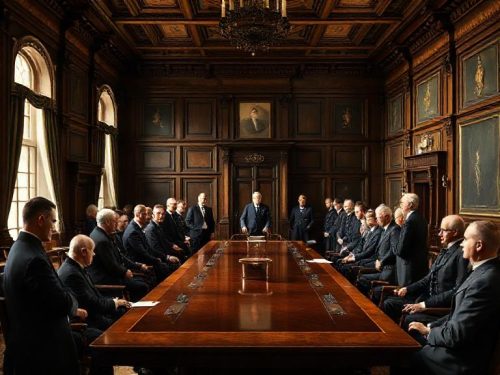
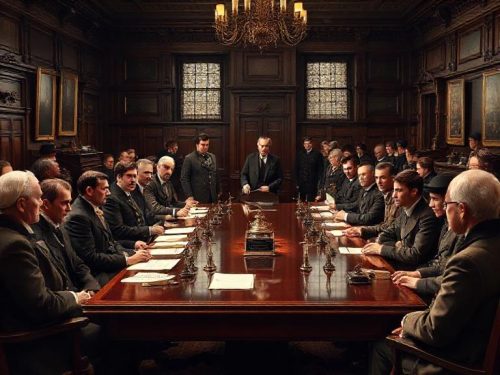
Representatives of Ireland’s divided nationalist factions assembled in the Oak Room of Dublin’s Mansion House on 17 January in an attempt to restore political unity after nearly a decade of bitterness. The split created by the fall of Charles Stewart Parnell had weakened nationalist organisation, divided parliamentary representatives and produced competing loyalties throughout the country. Those entering the oak-panelled civic chamber carried memories of denunciation, broken alliances and election contests fought between men who claimed to serve the same national cause. Their immediate purpose was to determine whether cooperation could replace factional rivalry before the divisions inflicted further damage upon the Home Rule movement.
Read Article

New Nationalism

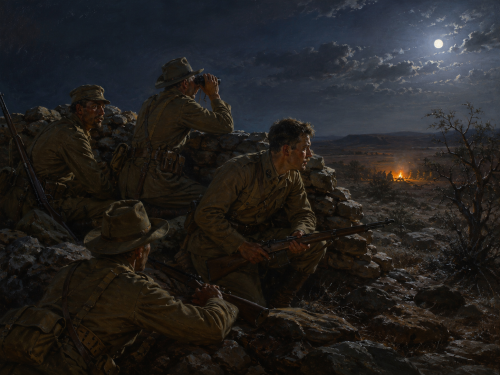
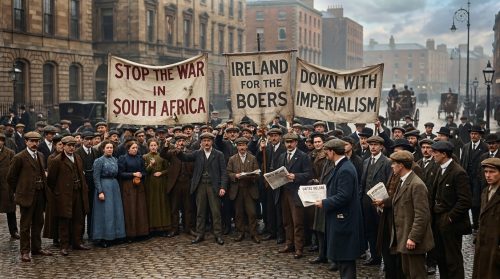
Pro-Boer feeling is giving renewed confidence to younger Irish nationalists who have grown dissatisfied with the pursuit of Home Rule solely through the British Parliament. In Limerick, admiration for the resistance of the Transvaal and Orange Free State has entered political meetings, newspaper discussions and conversations among cultural revivalists. Many continue to support the reunited Irish Parliamentary Party, yet others ask whether speeches and negotiated concessions can secure genuine national freedom. To these younger activists, the Boer struggle appears to show that a small nation must cultivate its own institutions, resources and determination rather than depend upon imperial goodwill.
Read Article

Dillon Concedes

John Dillon confirmed during the closing days of January that he was prepared to relinquish any personal claim to the leadership of a reunited nationalist parliamentary movement. As chairman of the Irish National Federation and the most influential figure among the majority anti-Parnellites, Dillon might reasonably have expected to compete for control of the restored party. His decision indicated that the negotiations had moved beyond symbolic reconciliation towards a practical settlement. After nearly a decade of factional conflict, unity required senior politicians to sacrifice position, prestige and the expectations of supporters who regarded leadership as confirmation that their side had prevailed.
Read Article

Creamery Rivalry

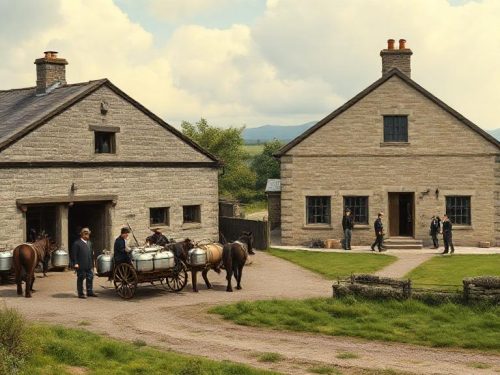
Local disputes are arising between co-operative creameries owned by milk suppliers and privately operated concerns seeking to retain control of established dairying districts. The rivalry is especially significant in County Limerick, where cattle, milk and butter provide income for farmers, labourers, carriers and merchants. Co-operative organisers argue that producers should collectively own the machinery through which their milk is processed and marketed. Private proprietors answer that independently managed businesses can offer efficient service without requiring farmers to invest capital, accept committee authority or assume responsibility for commercial losses.
Read Article

Election Violence

The South Mayo by-election of February 1900 drew Limerick directly into a bitter struggle over the direction of Irish nationalism. John Daly, the veteran Fenian then serving as Mayor of Limerick, travelled to County Mayo to support Major John MacBride, whose candidature was promoted while he fought beside the Boers in South Africa. Daly’s intervention carried symbolic importance: a former political prisoner and leading republican, he represented a separatist tradition sharply critical of parliamentary dependence upon Westminster. Reports that he was attacked during the campaign showed how readily political argument could pass into physical intimidation.
Read Article

Divided Loyalties

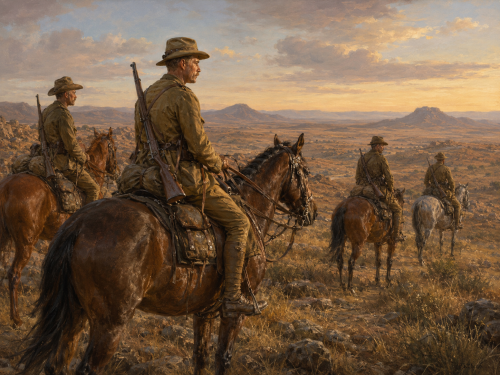
Irish public opinion during the South African War was divided in a manner that exposed the complicated relationship between nationalism, empire and military service. Nationalist newspapers and political organisations frequently expressed sympathy for the Boer republics, presenting their resistance to British expansion as a struggle resembling Ireland’s own opposition to imperial rule. Boer victories were sometimes welcomed as humiliations for a government that continued to deny Irish self-government. Public meetings, songs, newspaper commentary and street demonstrations gave the pro-Boer cause considerable visibility, making Ireland one of the strongest centres of anti-war and pro-Boer feeling in Europe.
Read Article

Rivals Reconcile

Parnellite and anti-Parnellite representatives appeared together at Dublin’s Mansion House on 17 January in the most important public demonstration of nationalist reconciliation since the political rupture of 1890. Men who had spent nearly a decade attacking one another from platforms, newspapers and election committees now entered the same civic chamber under intense public scrutiny. Their presence did not erase the bitterness created by the fall of Charles Stewart Parnell, but it offered supporters visible evidence that reunion had become possible. The gathering converted private discussions and cautious approaches into a public acknowledgement that continued division was damaging the wider nationalist cause.
Read Article