Law, Fire and Rivalry1040 CE
In 1040, Ireland remained politically divided after the decline of overarching high kingship. Donnchad mac Briain of Munster issued a Sunday law restricting theft, armed activity, labour and cattle movements, linking royal order with Christian observance. Rivalries continued through battle, assassination, imprisonment and raiding. Hiberno-Norse forces allied with a Mac Briain against Cerball mac Fáeláin, reflecting integrated Irish Sea politics. In Leinster, Diarmait mac Máel na mBó plundered churches and seized captives. Fires devastated Kildare, Kells, Downpatrick and other churches. Ecclesiastical leaders and scholars remained influential, while rural cattle wealth, ports, trade and warfare shaped society throughout this turbulent year.
Dateline
The record of Irish affairs in 1040 is unusually revealing, although still fragmentary. Several annalistic traditions preserve deaths, burnings, raids and a battle, while the Munster-centred Annals of Inisfallen record a remarkable act of royal legislation. Together these notices show an island without a universally obeyed high king, but not without government. Kings competed through alliances, cattle-raiding, imprisonment and attacks upon rival centres; churchmen remained powerful custodians of learning and property; and Hiberno-Norse warriors continued to participate in Irish conflicts. The evidence is strongest for Munster and Leinster, so silence concerning other regions must not be mistaken for peace or insignificance.
A Divided Political Order
More than a quarter-century had passed since Brian Bóruma’s death at Clontarf, and eighteen years since the death of Máel Sechnaill mac Domnaill, the last ruler whose authority had extended widely from the traditional kingship of Tara. Brian’s son Donnchad mac Briain remained king of Munster and the principal representative of Dál gCais power. He possessed considerable military and political weight, but Ireland in 1040 was not a centralised kingdom. Provincial and regional rulers governed through personal followings, tribute, hostages, ecclesiastical connections and negotiated submission. Their authority could expand rapidly after victory and contract just as quickly after defeat.
Leinster was especially unsettled. Donnchad mac Gilla Pátraic, ruler of Osraige and a dominant figure in much of Leinster, had died in 1039. His disappearance left several dynasties competing for advantage. Murchad mac Dúnlainge represented the northern Leinster royal tradition, while Diarmait mac Máel na mBó was consolidating the Uí Chennselaig heartland in the south-east. Diarmait was not yet the commanding king of Leinster and Dublin that he later became, but his actions in 1040 demonstrate growing resources, ambition and ruthlessness.
Donnchad’s Sunday Law
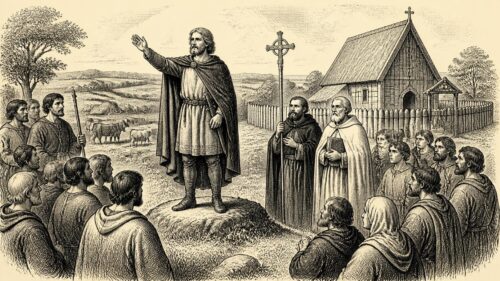
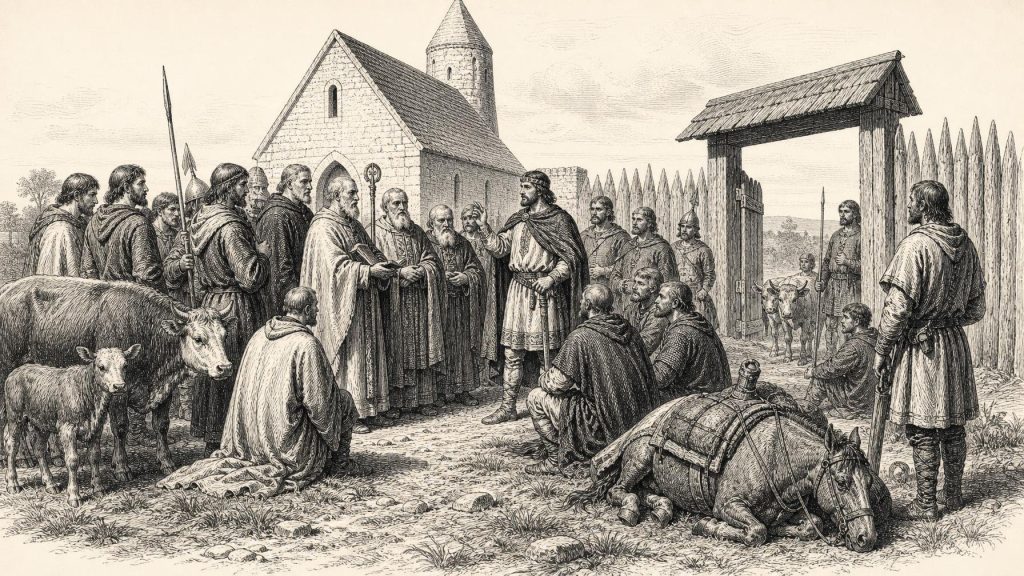
The year’s most distinctive development was an ordinance attributed by the Annals of Inisfallen to “Brian’s son”, meaning Donnchad. The annalist described it as a law and regulation unmatched since the time of Patrick. It forbade theft and “feats of arms” on Sunday, prohibited carrying loads on that day, and added a rule against bringing cattle indoors. The surviving notice does not name the place of proclamation, explain how the measures were enforced or define every phrase precisely. It should therefore be treated as a firmly recorded enactment whose practical reach remains uncertain, not as evidence that Sunday violence and labour instantly ceased across Ireland.
Even with those cautions, the ordinance is important. It presents a king acting as a lawgiver rather than merely as a war leader. Protection of Sunday rest had an unmistakably ecclesiastical character, while the bans on theft and armed activity addressed the insecurity created by raiding and private violence. Scholars have noted similarities to contemporary European movements that attempted to restrict warfare on sacred days, although the annal does not prove that Donnchad copied a foreign model. The measure could equally have grown from Irish clerical teaching, royal ambition and immediate Munster conditions. By associating public order with Christian observance, Donnchad strengthened both his partnership with church leaders and his claim to exercise authority above lesser kings.
Battle and Predatory Warfare
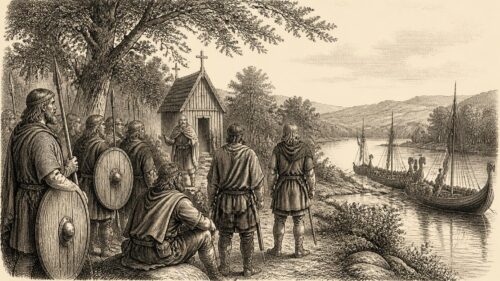
Another annalistic tradition records the battle of Cill Dronnan, whose precise location is uncertain. The “Foreigners” and a Mac Briain defeated Cerball mac Fáeláin, who was killed. “Foreigners” in eleventh-century Irish records normally denotes a Hiberno-Norse force, but the entry does not securely identify its town or commander. Likewise, Mac Briain means a son or descendant of Brian, but the compressed wording does not justify assigning every action to Donnchad personally. What can be said is that members of the Uí Briain political sphere cooperated with Hiberno-Norse troops against an Irish rival.
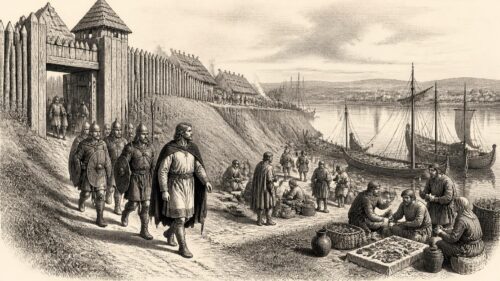
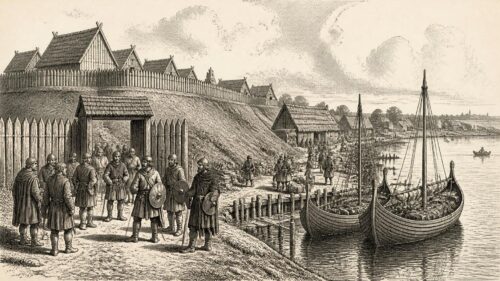
Such an alliance was entirely compatible with the politics of the period. The port towns were no longer isolated Viking encampments. Dublin, Waterford, Wexford, Cork and Limerick had become enduring settlements whose Christian, commercially connected populations were intertwined with neighbouring Irish kingdoms. Town forces might fight for their own rulers, serve an ally or intervene in a succession dispute. Cill Dronnan therefore illustrates not a simple struggle between “Irish” and “Vikings”, but a political world in which Gaelic and Scandinavian-descended leaders could be enemies in one campaign and partners in another.
Elsewhere, local instability appeared in terse notices of treachery and punishment. Ua Dublaich, king of Fir Tulach in the midlands, was killed by his own people. The Annals of Inisfallen report that Ua Máel Ruanaid was treacherously slain by Ua Conchobair, while Mac Raith Ua Donnchada was imprisoned. Gilla Meic Oíbleáin Ua Congaile, king of Corcu Duibne in the south-west, also died. These entries rarely explain motives, but they expose the hazards surrounding regional kingship: internal opposition, dynastic rivalry, captivity and sudden death were recurring instruments of political change.
Leinster’s Churches Attacked
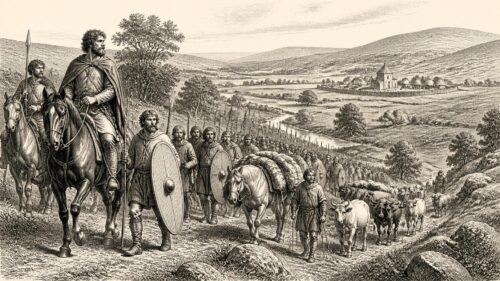
Diarmait mac Máel na mBó’s campaign in Leinster provides the year’s clearest evidence of organised predation. The annals say that his forces plundered several ecclesiastical sites, including Dísert Diarmata, and carried numerous captives from their oratories. The named churches lay within or near contested territories, making them valuable strategic targets. A church settlement could hold livestock, food stores, crafted objects and dependants, while its religious prestige supported the dynasty connected to it. Attacking such a centre weakened an opponent economically and symbolically, even when the aggressor was himself a Christian ruler and patron elsewhere.
The taking of people from oratories is particularly stark. Sanctuary commanded respect, but it was repeatedly violated when military advantage outweighed fear of spiritual or reputational consequences. Captives might be held for ransom, redistributed among followers or compelled into dependent service. A separate entry records that the oratory of Laithreach Briúin was burned and plundered by the men of Meath. These were not random assaults by outsiders upon a peaceful ecclesiastical world; churches were embedded in local politics, landholding and kinship, and consequently became prizes and pressure points during warfare.
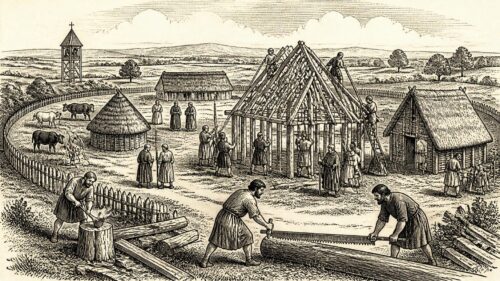
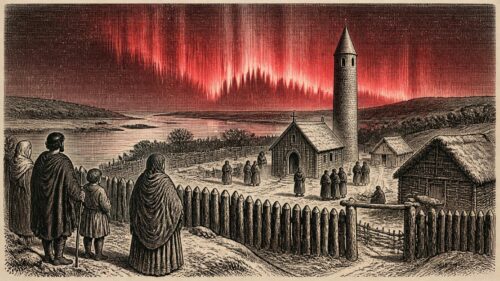
Fire struck major foundations beyond those explicitly connected to raids. The Annals of Ulster state that all Kildare burned around the feast of St Michael on 29 September. Kells and Downpatrick were also burned, together with many other churches. The sources do not establish a single coordinated attack or even specify that every fire was deliberate. Timber buildings, thatch, lamps and domestic hearths made densely occupied ecclesiastical settlements vulnerable to accidental as well as hostile burning. Whatever their causes, these losses threatened churches, dwellings, workshops, food reserves, manuscripts and relic collections, and rebuilding would have required labour and patronage from surrounding communities.
Learning and Religious Authority
The obituaries of 1040 reveal the geographical reach and institutional depth of the Irish church. Corcrán Cléirech died at Lismore and was praised in exceptionally elevated language as a foremost figure in piety and learning. Coscrach son of Aingid, a bishop and successor associated with the churches of Flannán and Brendan, also died. Other records commemorate Máel Muire Ua Uchtáin, successor of Colum Cille and Adomnán; Diarmait Ua Sechnasaig, successor of Sechnall and a distinguished sage of Ireland’s northern half; and Dúnchad Ua Canaigi, lector of Armagh, described as gentle and learned.
These titles mattered. A coarb, or successor of a founding saint, headed a spiritual and institutional inheritance that might encompass estates, dependent churches, relics and political relationships. A lector supervised advanced teaching and the interpretation of texts. Their deaths were recorded because scholars and ecclesiastical office-holders ranked among the notable people of the island. The same annals that list battles also preserve reputations for wisdom, asceticism and instruction, reminding us that eleventh-century Ireland sustained active schools and literary communities despite recurrent violence.
Work, Wealth and Settlement
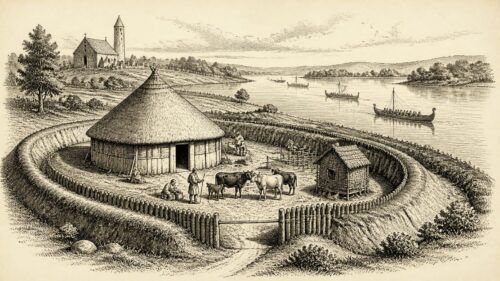
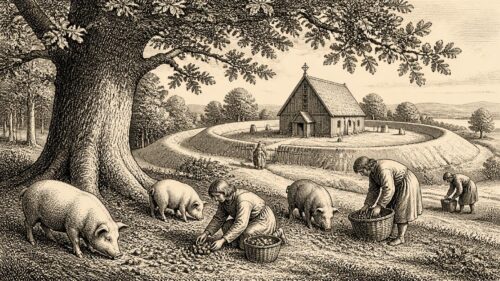
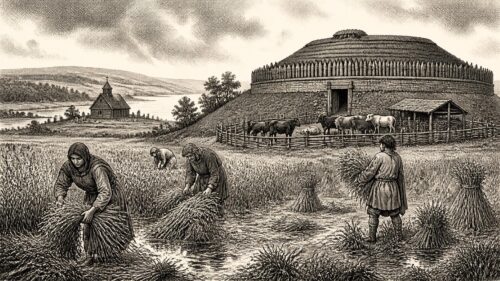
For most inhabitants, daily life remained rural and agricultural. This is broader historical context rather than a separately dated event of 1040, but Donnchad’s law makes that world briefly visible. Cattle were stores of wealth, sources of milk, meat and hides, units in tribute and compensation, and the principal objectives of many raids. Rules concerning theft, loads and the movement of livestock addressed ordinary economic activity directly. Farming also included cereals, pigs and sheep, while fishing, woodland resources and household textile production supplemented local subsistence.
Alongside this cattle-based economy, the Hiberno-Norse towns supported specialised craftwork, maritime trade and a greater use of weighed silver and coin. Imported goods and raw materials moved through the ports, while Irish livestock products, textiles and enslaved or captive people could enter wider Irish Sea markets. Ireland nevertheless remained overwhelmingly rural. Ringforts, crannógs, royal sites and unenclosed farmsteads coexisted with expanding settlements around important churches and ports. Stone churches and round towers were increasingly prominent symbols, but many homes, workshops and religious buildings were still constructed largely from wood.
A Year of Contrasts
The Ireland visible in 1040 was neither anarchic nor unified. Donnchad mac Briain attempted to regulate violence and labour through Christian kingship, even as predatory warfare continued. Diarmait mac Máel na mBó advanced through attacks on politically connected churches. Hiberno-Norse troops fought within Irish alliances, major ecclesiastical settlements burned, and eminent teachers and church leaders passed from the scene. The year captures a society in transition: regional kings were becoming more ambitious, towns and silver were altering older economic patterns, and churches remained centres of devotion, learning, wealth and political power. Order was proclaimed, but it had to compete continually with the demands of dynasty, vengeance and war.
Primary Sources
- Annals of Inisfallen: English Translation
- Annals of Inisfallen: Original Text
- The Annals of Ulster: Year U1040, English Translation
- The Annals of Ulster: Year U1040, Original Text
- The Annals of Tigernach: English Translation
- Annals of Tigernach: Original Text
- Chronicon Scotorum: Annal CS1040
- Chronicon Scotorum: Original Latin Text
- Annals of the Four Masters: English Translation, Part 14
- Annals of Loch Cé: English Translation, Part 2
- Annals of Loch Cé: Original Text, Part 2
- Donnchad
- Diarmait (Diarmait mac Maíl (Máel) na Mbó)
- Nationality and Kingship in Pre-Norman Ireland
- The Viking Age in Ireland
- Reflections on Kingship, the Church, and Viking Age Silver in Ireland
- Skeuomorphs and Spolia: The Presence of the Past in Irish Pre-Romanesque Architecture
- Local Churches and Social Power in Early Medieval Ireland: A Case Study of Fir Maige
- Landscapes of Kingship in Early Medieval Ireland, AD 400–1150
- Medieval Ireland: Territorial, Political and Economic Divisions
- The Chronology and Sources of the Early Irish Annals
- Kells Monastic Site
- Lusk Round Tower and Belfry
- Monuments in Glendalough
- Sceilg Mhichíl Visitor Guide