Caol Uisce Peace1401 CE
Ireland in 1401 was shaped by competing Gaelic, Anglo-Irish, ecclesiastical and Dublin-based authorities. In Connacht, Thomas Burke’s death produced rival Mac Williams, while Conchobar Anabaidh succeeded in Uí Maine and fighting engulfed Lough Key and Muintir Eolais. Leinster suffered reciprocal devastation between Art Mac Murchadha and Dublin’s forces, alongside a local western plague. Northern politics centred on a peace at Caol Uisce between Niall Óg Ó Néill and Toirdelbach Ó Domhnaill, though annals differ over its date and later violence exposed continuing dynastic tensions. Church and chancery institutions remained influential but geographically limited. The year revealed fragile, locally negotiated power.
Dateline
Ireland in 1401 was not a single political field, and its surviving records make that plain. Authority was exercised through rival Gaelic lordships, Anglo-Irish dynasties, ecclesiastical jurisdictions and the English lordship’s shrinking administrative reach around Dublin. The year’s annals chiefly preserve changes among rulers, raids, negotiated settlements, castle seizures, disease and deaths. Their chronology is not wholly uniform: the Annals of the Four Masters and Annals of Connacht place several major episodes in 1401, while the Annals of Ulster assigns the peace between Niall Ó Néill and Toirdelbach Ó Domhnaill to its entry for 1402. That difference should temper any claim to a precise modern date. Yet the settlement is securely connected with the political turning-point of 1401.
Two Mac Williams in Connacht
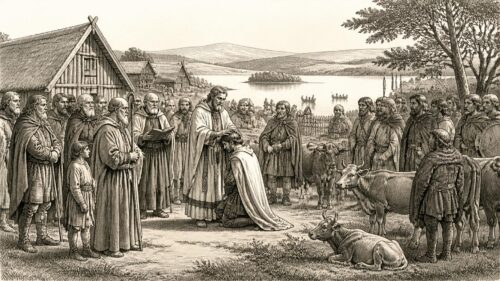
The most consequential Connacht development followed the death of Thomas Burke, Mac William and lord of the English of Connacht. The phrase “English of Connacht” did not denote a distant colonial garrison. The Burkes were a long-established lordly family whose power was deeply interwoven with Gaelic neighbours, clients and rivals. The Annals of Connacht say that Thomas ruled not only the Galls, or Anglo-Irish, but “a good part” of the Gaels of the province. His death exposed the flexibility, and the danger, of lordship in late medieval Connacht.
Two men were made Mac William: Uilleag, or Ulick, son of Richard Óg, and Walter, Thomas’s son. Rather than claiming that one immediately eliminated the other, the annals record a hierarchy: Walter acknowledged the seniority of the Mac William of Clanricarde. This was a political accommodation, not a modern inheritance settlement. Rank, kinship, military following, clientage and the ability to command hospitality all mattered. The outcome nevertheless shows that the Burke lordship was divided between competing branches, with Clanricarde in south Connacht asserting precedence over the Mayo-centred Mac William Íochtar tradition.
Another succession occurred in Uí Maine, across parts of modern east Galway and south Roscommon. Máel Sechlainn Ó Cellaigh died, praised by the Connacht annalist for bounty, valour and the qualities expected of a lord. His son Conchobar Anabaidh succeeded. Such praise was more than funeral ornament: generosity was a political obligation. A successful ruler fed retainers, protected dependants, rewarded learned people and sustained alliances. The same vocabulary of hospitality applied across Gaelic and Gaelicised Anglo-Irish society, even when men fought fiercely for territory.
Violence Around Lakes and Lordships
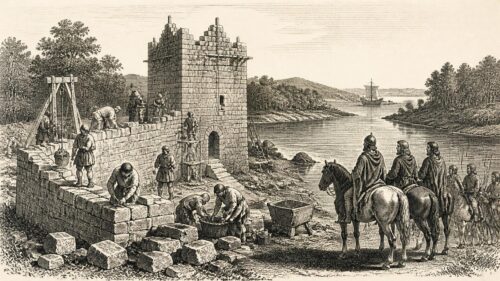
Elsewhere in Connacht and the midlands, the year carried a sharper message: authority could be won or lost by force. At the Rock of Lough Key, the island stronghold of the Mac Dermots in Moylurg, the sons of Fergal Mac Dermot captured the fortress. The Four Masters report that many people were killed or drowned around it and that its garrison surrendered for a reward. The image is revealing. Lough Key offered a defensive barrier, but boats, landing places and control of the shore made the island a prize rather than an impregnable refuge. Its possession had been contested before and would remain contested after 1401.
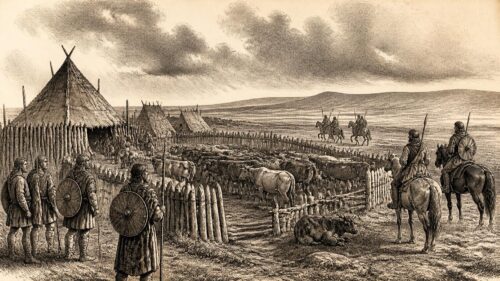
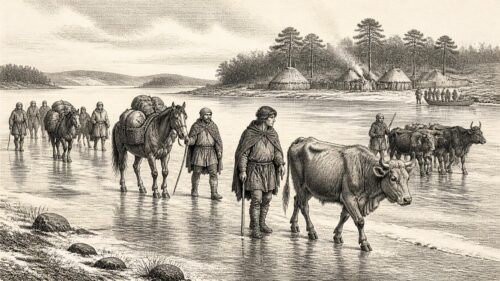
The annalists also record a succession struggle in Muintir Eolais, centred in the Leitrim–Longford borderland. Cathal Ruadh Mag Ragnaill was killed at Druim Chubhra by Geoffrey, son of Máel Sechlainn Mag Ragnaill. The Annals of Connacht date the killing to 3 March. Cathal’s son Máel Ruanaid was then killed later that year while pursuing a cattle prey. Cattle-raiding was not peripheral criminality: livestock was movable wealth, food, status and a means of imposing loss upon a rival community. The deaths demonstrate how quickly a feud within one ruling lineage could remove both a chief and his immediate heir.
Some records preserve unusually exact dates for local violence. Domhnall Ó Máelmuaid, an eligible prince of Fir Cell, was killed by the Galls in Leinster on 14 May; Tebaud Buí Ó Máelmuaid was killed on 29 September; and Muirchertach Óg Mag Eochagáin was slain in a night encounter on 5 October. These notices do not amount to a single national campaign. They instead show a landscape in which lordship, raiding and retaliation connected distant districts, from the Shannon basin to Leinster, without producing a unified Irish war.
The Caol Uisce Settlement
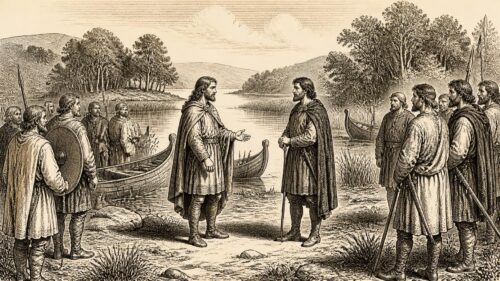
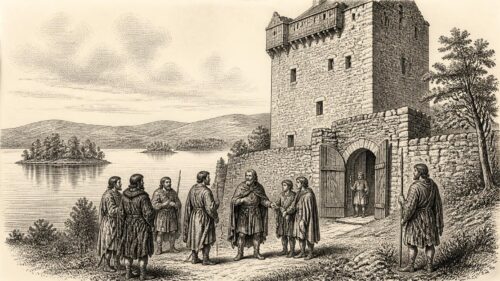
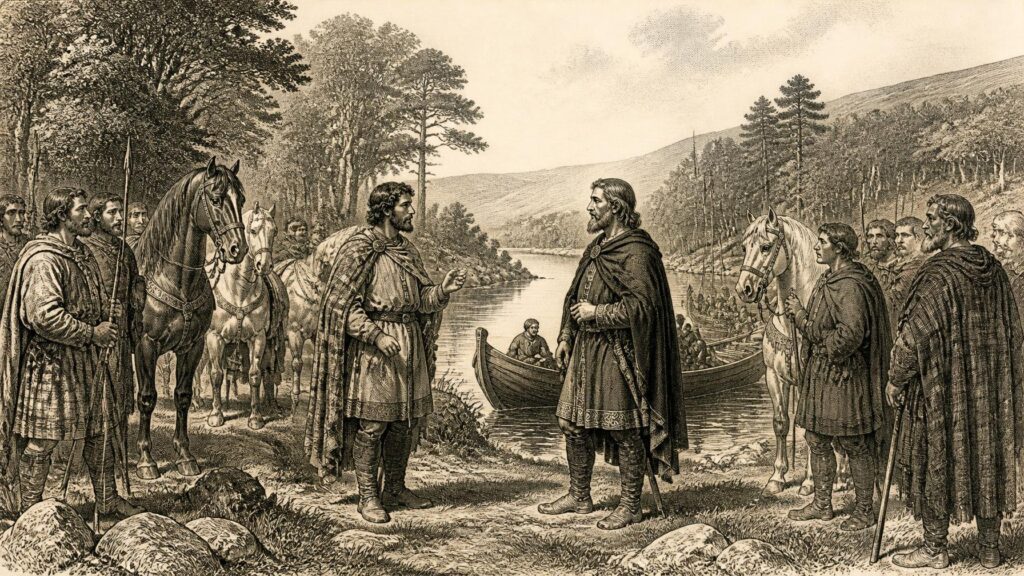
The northern political story was dominated by Niall Óg Ó Néill, king of Cenél nÉogain, and Toirdelbach Ó Domhnaill, lord of Tír Chonaill. Their rivalry had already devastated parts of north-west Ireland. In 1400 Niall’s army had entered Tír Chonaill and destroyed crops, only to suffer losses of men and horses when opposed by Cenél Conaill. That background makes the meeting at Caol Uisce especially significant. The Four Masters place a conference between Niall and Toirdelbach there in 1401 and state that they made peace. A modern biographical study of Niall Óg likewise places the agreement in 1401, although the Annals of Ulster records the peace under 1402 and adds that Ó Domhnaill submitted to Ó Néill.
Caol Uisce was in Fermanagh, in the waterways linking the Erne country. Choosing such a place made practical sense: it lay in a borderland whose rulers, especially the Maguires, mattered to both northern powers. The agreement did not mean that Ulster became peaceful. It ended, or at least paused, the direct contest between two leading dynasties, allowing both to address other threats. In a world without a permanent central army, a personal meeting and peace between rulers was an important instrument of government.
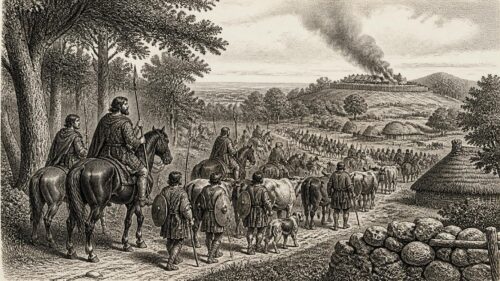
The immediate limits of the settlement were shown by war involving Brian, son of Henry Ó Néill. Brian entered Tír Chonaill, attacked Ó Domhnaill’s camp and killed prominent men, including Niall, son of Niall Garbh Ó Domhnaill, and Máel Sechlainn, son of Flaithbertach Ó Ruairc. He then drove away cattle taken from Henry Ó Gormly. Ó Domhnaill, his sons and Muintir Duirnín pursued him. In the ensuing battle Brian was killed and his followers routed, abandoning their prey. This was not a clash between two abstract nations. It joined an Ó Néill dynastic quarrel to the wider struggle between Tír Chonaill and Cenél nÉogain, and it shows how quickly cattle, kinship and military reputation drew lords into conflict.
Domhnall, another son of Henry Ó Néill, was ransomed from English custody in the same year according to the Four Masters. His earlier captivity had constrained one branch of the family; his return restored a dangerous contender. Thus the Caol Uisce peace strengthened Niall Óg in the short term, but did not settle the rival claims within the Ó Néill kindred. The following years would bring renewed destruction between Niall’s line and the sons of Henry.
Leinster, Disease and the Cost of War
In Leinster, the Annals of Connacht attribute enormous destruction in County Wexford to Art Mac Murchadha, king of Leinster. They add that the Galls of Dublin inflicted comparable damage upon the Gaels of Leinster, and that many hired troops from Munster, including Tadhg Ó Mechair, were killed. The wording cautions against imagining a simple one-sided offensive. Raiding, counter-raiding and the employment of fighters from beyond the immediate theatre of war burdened rural communities on both sides of the frontier between the Dublin-centred lordship and Mac Murchadha’s power.
The same annal records “a great plague” in Conmaicne Cúile and Clanricarde, and names Philip de Valle among those who died. The evidence supports a serious local outbreak; it does not support calling 1401 a plague year for all Ireland. Still, disease mattered politically. A lordship deprived of tenants, labourers, fighting men or a notable household member could be weakened just as surely as one defeated in battle. Combined with crop destruction in the northern campaigns and the continual seizure of cattle, the notice is a reminder that households experienced the year through food, security, illness and displacement as well as through high politics.
Church, Chancery and Historical Memory
Religion enters the record largely through the language used for death. Thomas Burke and Máel Sechlainn Ó Cellaigh were said to have died after penance; this was an idealised Christian ending, not merely a formula of affection. Yet the annals offer little evidence for a single ecclesiastical initiative in 1401. Their silence is itself useful: this was not a year defined by a major Irish church council, new foundation or famous miracle. Religious institutions nevertheless remained embedded in political life, preserving memory, serving as burial places and shaping the moral vocabulary by which rulers were judged.
Within the English administration, Thomas Cranley, archbishop of Dublin, was chancellor during 1401. Older reference traditions sometimes date his appointment to that year, but the Dictionary of Irish Biography places his reappointment in January 1400; it is therefore safer to say that he continued in office in 1401 rather than to present a new appointment as a firmly dated event. Cranley’s position joined church office, royal government and law, but it did not imply effective authority across the island. The principal events recorded for 1401 occurred beyond the reach of Dublin chancery, in lordships that made and unmade power through local alliances.
The year is best understood as one of negotiated but fragile rearrangement. Connacht saw overlapping successions and a disputed lake fortress; Muintir Eolais suffered a lethal kin-feud; Leinster endured reciprocal devastation; and a locally attested plague struck western districts. In Ulster, the Caol Uisce peace gave Niall Óg Ó Néill and Toirdelbach Ó Domhnaill room to turn from each other, only for the conflict surrounding Brian son of Henry Ó Néill to reveal the instability beneath it. Ireland in 1401 was not motionless between larger events. It was a country of intensely local decisions whose consequences travelled along kin networks, roads, rivers and cattle tracks.
Primary Sources
- Annals of the Four Masters, Part 3
- Annals of the Four Masters, Part 3 (Irish text)
- Annála Connacht
- Annála Connacht: Index to Each Annal
- The Annals of Ulster, Volume 3 English Translation
- The Annals of Ulster: Index to Each Year
- O'Neill (Ó Néill), Niall Óg
- O'Neill (Ó Néill), Domhnall Bog
- Cranley, Thomas
- Fleming, Nicholas
- McDermott’s Castle
- Gazetteer of Ireland / Gasaitéar na hÉireann
- Dinnseanchas, Imleabhar I, 1964–65
- The Later Middle Ages
- Decline of the Norman Colony
- Knox: The History of the County of Mayo
- Galway City
- Moymlough
- Life of Lord Chancellor Cranley
- The Lives of the Lord Chancellors and Keepers of the Great Seal of Ireland