Corann Castle1263 CE
In 1263 Walter de Burgh received the earldom of Ulster from Lord Edward, strengthening his claims while facing persistent resistance in Connacht. His Roscommon expedition against Fedlimid Ó Conchobair failed to secure plunder and suffered losses in an ambush. De Burgh built a castle at Ath in Gail, Corann, seeking durable control of a contested district. Donn Ó Breisléin was murdered in Raphoe’s episcopal court. Deaths among bishops and monastic leaders, papal revenue demands, a notably hot summer, and northern sea connections were recorded. Conflicting annal dates caution against certainty over a Desmond expedition, whose chronology remains uncertain in sources.
Dateline
In 1263, the most consequential Irish development recorded in the annals was not a single pitched battle but the tightening of power across Connacht and Ulster. Walter de Burgh, lord of Connacht and soon to be earl of Ulster, combined his standing at the court of the lord of Ireland with armed pressure at home. His advance met determined resistance from the followers of Fedlimid Ó Conchobair, king of Connacht. At the same time, a new castle at Ath in Gail in Corann marked an attempt to make lordship permanent in a contested north-western district. The year’s reports also preserve murder in an episcopal residence, notable deaths in major monasteries, a very hot summer, and a fresh papal demand for ecclesiastical revenue.
A New Earl of Ulster
Walter de Burgh’s elevation was firmly connected with events outside Ireland but altered the island’s political balance. In July 1263 he was with Lord Edward, Henry III’s eldest son and lord of Ireland, at Bristol, during the opening phase of the English baronial crisis. Edward granted Walter the earldom of Ulster, vacant since the death of Hugh de Lacy in 1242. The surviving evidence is clearer about the grant than about a formal investiture: Walter was not regularly styled earl in royal records until later. Yet the transaction of 1263 was decisive. It gave the Connacht lord a claim to the great Ulster inheritance and made him the leading Anglo-Irish magnate in potential reach as well as in wealth.
This was not simply a reward imported from England. Walter’s position had been built in Irish warfare, landholding and alliance. His family had long been entrenched in Connacht, while the de Lacy inheritance carried authority in eastern Ulster and the coast around Carrickfergus. The grant mattered because neither territory was securely governed merely by issuing a charter. Gaelic kings, kindreds, churchmen, settlers and rival Anglo-Irish families all had interests that could not be removed by a title. Walter’s enhanced rank therefore promised further competition, particularly with the FitzGerald interests in Connacht and north-western Ireland. That rivalry would break into open war in 1264, but its political cause was already present in 1263.
The Roscommon Expedition
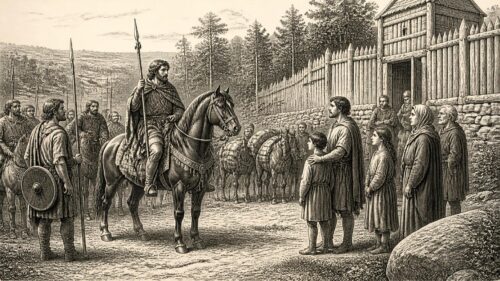
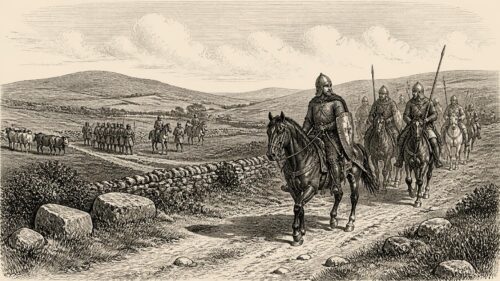
Annála Connacht records Walter—named there as Mac William Burke—marching against Fedlimid Ó Conchobair at Roscommon. Fedlimid was not a marginal opponent. He remained king of Connacht under immense pressure, negotiating when necessary with the Dublin government and Anglo-Irish lords while defending a reduced but still formidable Gaelic kingship. The campaign followed years in which de Burgh forces had raided Connacht, and in which Fedlimid’s family had alternated between resistance, accommodation and recovery.
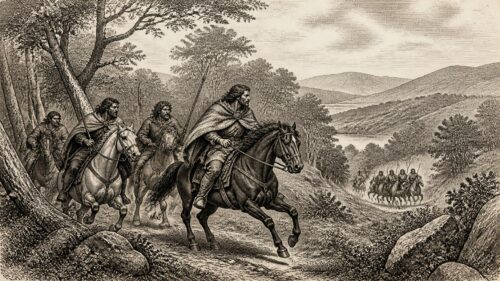
The annalist’s account is striking because the expedition did not achieve its immediate object. The Síl Muiredaig, the principal royal kindred of north Connacht, withdrew into the north of the province. Walter’s troops found no prey to carry off. That detail is important. A medieval host expected more than a military encounter: cattle, food, movable goods, captives and the public submission of opponents could all finance and justify a campaign. Denied plunder, the force was vulnerable on its return. Donnchad Ó Floinn and his son Tadc attacked a detachment and, according to the annal, killed one hundred men, both prominent and ordinary. Among the dead were Aitín Ruisel and his son, together with five sons of Cú Chonnacht Ó Conchobair. The number should be treated as the annalist’s reported total rather than a modern casualty count, but the result is unmistakable: the expedition went home in grief.
The episode shows a recurrent reality of thirteenth-century Irish conflict. Great lords could assemble mounted men, retainers and local allies, but the defenders did not need to offer battle on unfavourable terms. Moving people and cattle away from the line of march deprived an invading army of supplies and profit. Small attacks on separated parties could turn an imposing raid into a political embarrassment. Connacht was thus not a blank space awaiting conquest. Its rulers and communities used its distances, routes and cattle economy to constrain a stronger neighbour.
A Castle in Corann
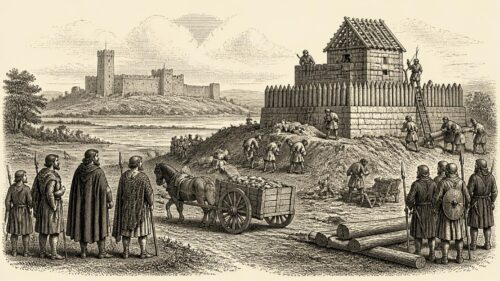
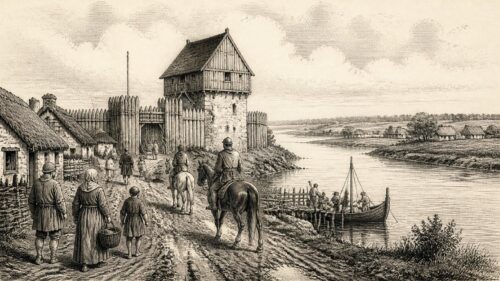
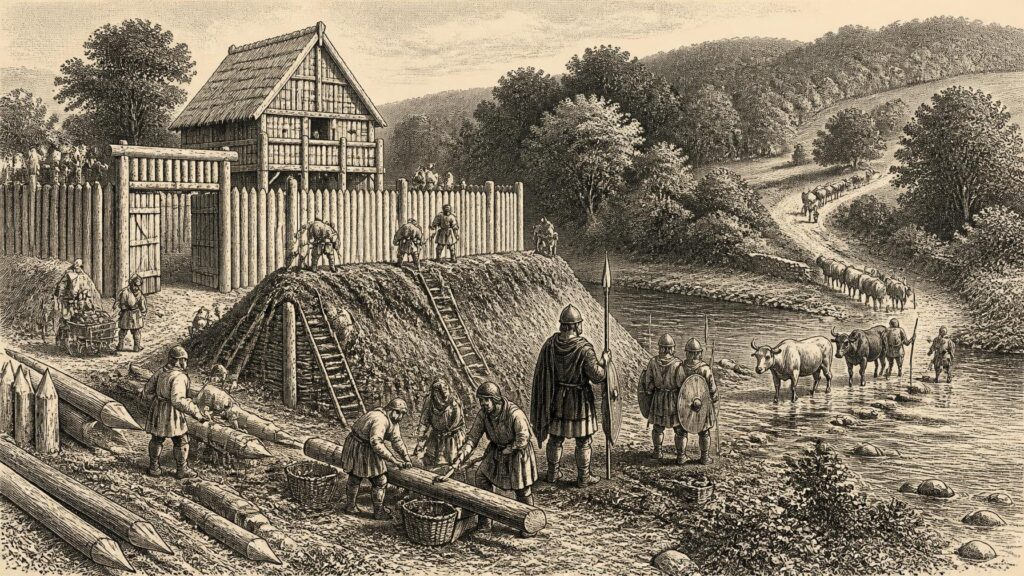
Against that reverse, the annals set a more durable act: Mac William built a castle at Ath in Gail in Corann. Corann lay in the north-west of Connacht, in the wider region of modern County Sligo. The annal does not provide a precise modern location, a foundation date within the year, or a description of the building; it would be irresponsible to supply stone towers, curtain walls or a named garrison from imagination. It does, however, make clear that the work belonged to 1263 and to Walter’s programme of lordship.
A castle was an assertion of control over movement, land and labour. It could shelter a garrison, receive rents or food renders, protect allies, oversee a route or crossing, and offer a base for later raids. Building it also required local resources: timber and stone where available, carts, food, craftsmen, labourers and armed protection. For neighbouring communities, such a foundation could bring a new market and employment, but also requisitioning, surveillance and the recurring burden of supplying soldiers. In Corann, near lands where both Gaelic and settler interests overlapped, the castle was therefore a political statement as much as a military structure.
Its significance becomes clearer when placed beside the failed Roscommon expedition. A seasonal army could be thwarted; a fortification sought to alter the conditions of the next season. The contrast captures Walter de Burgh’s position in 1263. His authority had grown dramatically through the Ulster grant, yet it still had to be enacted district by district, and it still faced capable Irish opponents.
Violence and Sanctuary at Raphoe
In the north-west, the year also brought a killing of particular symbolic force. Donn Ó Breisléin was killed by Domnall Ó Domhnaill in the bishop’s court or palace at Raphoe. Annála Connacht calls the act one of treachery and guile; the Annals of Ulster likewise place it in the bishop’s court. Even allowing for the moral language customary in annalistic reporting, the setting matters. Episcopal precincts were places of hospitality, judgement, record-keeping and protection, as well as worship. Violence there breached more than a personal relationship. It displayed the fragility of ecclesiastical peace amid rivalry within Tír Chonaill.
The event should not be enlarged into a fully documented war for which the sources provide no detail. We do not know the immediate quarrel, the exact role of the bishop’s household, or the legal aftermath. But the murder is securely assigned to the annalistic year and points to the political importance of Raphoe. Its church was embedded in the affairs of regional dynasties, rather than standing apart from them.
Church, Revenue and Learning
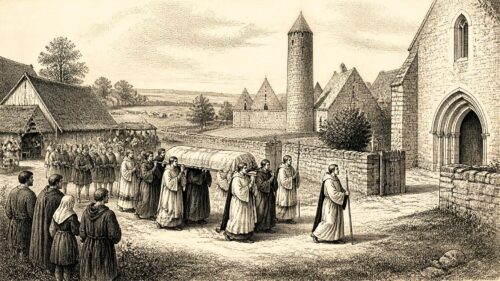
The obituaries of 1263 reveal the wide institutional landscape through which religious life was organised. Tomás Ó Ceallaig, bishop of Clonfert, died; so did David Ó Finn, abbot of Boyle; Gilla Pátraic, prior of Derrane; and Máel Ciaráin Ó Maíleoin, abbot of Clonmacnoise. These were not interchangeable offices. Bishops exercised diocesan authority; abbots and priors directed communities whose churches possessed land, tenants, hospitality obligations, manuscripts and links with local ruling families. Their deaths could therefore involve both spiritual succession and the redistribution of influence.
Clonmacnoise and Boyle were especially prominent religious centres in the Shannon and Connacht worlds. The record of their leaders’ deaths offers no licence to claim a crisis at either house, but it does show that monastic government remained visible to annalists alongside kings and warriors. The same year saw the death of Diarmait “the Clerk”, son of Cormac Mac Diarmata, a reminder that literacy and learned status were valued enough to be recorded within aristocratic society.
In November, a development with wider European connections touched Ireland directly. The Holy See nominated Máel Pátraic Ó Scanaill, archbishop of Armagh, and Hugh de Taghmon, bishop of Meath, to pursue monies raised in Ireland by the papal collector John de Frosinone but not delivered to Rome. The instruction concerned accounts accumulated from earlier ecclesiastical taxation, including levies associated with crusading finance. It demonstrates that Irish churches, whether in Gaelic or Anglo-Irish spheres, formed part of a papal fiscal network. It also hints at practical difficulty: money could be held in religious houses, records could be incomplete, and clerical willingness to release revenue was far from assured.
Heat, Sea Routes and Chronology
Both Connacht and Ulster annals note a very hot summer. This is valuable evidence for weather, but no more than that. The sources do not explicitly report drought, harvest failure, famine or prosperity in Ireland during 1263, so none should be inferred automatically. For cultivators, herders and travellers, prolonged heat would nonetheless have shaped water, pasture, haymaking and road conditions in ways the terse notice leaves undescribed.
The maritime world also briefly enters the record. Ebdonn, described as king of Lochlainn, died in Orkney while travelling to Ireland. The notice confirms that Ireland remained connected to the northern sea lanes linking Scotland, the Isles, Norway and the Norse Atlantic. It does not tell us why he was coming, nor whether his intended destination was political, commercial, religious or familial; those questions must remain open.
One apparent Munster event requires particular caution. The Annals of Inisfallen place in 1263 an expedition by Mac William de Burgo into Desmond, in which Cormac Mac Carthaig killed Gerald Roche before being killed himself, and some Mac Carthaig people gave hostages. Annála Connacht and the Annals of the Four Masters place a closely corresponding Mangerton encounter in 1262. Because the dating conflicts between important annalistic traditions, it cannot safely be presented as a firmly dated event of 1263. The discrepancy is itself a useful warning: medieval Irish annals are indispensable witnesses, but calendar years and parallel notices must be compared rather than simply repeated.
What can securely be said is that 1263 was a year in which authority was being rebuilt through title, raid, refuge, fortification, church government and finance. Walter de Burgh’s new earldom enlarged the map of his ambition, but Connacht’s defenders had already demonstrated its limits. At Ath in Gail, the new castle expressed a hope that power could be fixed in the landscape. The annals preserve a less certain conclusion: in Ireland, no charter or fortress ended the need to bargain, fight and adapt.
Source References
Hover over a number to see the source. Select it to open the source.

- [1] Annála Connacht: Annal 1263
- [2] Annals of Inisfallen: Annal AI1263
- [3] The Annals of Ulster: Year U1263
- [4] Annals of the Four Masters: Annals M1262–M1263
- [5] CELT Project: Annals of Ulster otherwise Annala Senait
- [6] Burgh, Walter de | Dictionary of Irish Biography
- [7] O'Connor (Ó Conchobair), Fedlimid | Dictionary of Irish Biography
- [8] FitzGerald, Maurice fitz Maurice | Dictionary of Irish Biography
- [9] Rochelle (Rokele, Rokesle, Rupella, Rupellis), Richard de la | Dictionary of Irish Biography
- [10] Ó Scanaill, Máel Pátraic (Patricius) | Dictionary of Irish Biography
- [11] Frosinone, John de | Dictionary of Irish Biography
- [12] Taghmon (Tachmon), Hugh de | Dictionary of Irish Biography
- [13] Lacy, Hugh de | Dictionary of Irish Biography
- [14] FitzGerald, Maurice fitz Gerald | Dictionary of Irish Biography
- [15] The Irish Annals: Exploring the Irish Annals
- [16] Annála Connacht | CELT, University College Cork
- [17] Annals of Inisfallen | CELT, University College Cork
- [18] The Annals of Ulster | CELT, University College Cork
- [19] Annals of the Four Masters | CELT, University College Cork
- [20] Annals of Loch Cé | CELT, University College Cork
- [21] Chronicon Scotorum | CELT, University College Cork
- [22] The Pope, a Knight and a Bishop on the Edge of Christendom: The Politics of Exclusion in Thirteenth-Century Ireland
- [23] Deeds Relating to the Earldom of Ulster, c.1230–1376
Primary Sources
- Annála Connacht: Annal 1263
- Annals of Inisfallen: Annal AI1263
- The Annals of Ulster: Year U1263
- Annals of the Four Masters: Annals M1262–M1263
- CELT Project: Annals of Ulster otherwise Annala Senait
- Burgh, Walter de | Dictionary of Irish Biography
- O'Connor (Ó Conchobair), Fedlimid | Dictionary of Irish Biography
- FitzGerald, Maurice fitz Maurice | Dictionary of Irish Biography
- Rochelle (Rokele, Rokesle, Rupella, Rupellis), Richard de la | Dictionary of Irish Biography
- Ó Scanaill, Máel Pátraic (Patricius) | Dictionary of Irish Biography
- Frosinone, John de | Dictionary of Irish Biography
- Taghmon (Tachmon), Hugh de | Dictionary of Irish Biography
- Lacy, Hugh de | Dictionary of Irish Biography
- FitzGerald, Maurice fitz Gerald | Dictionary of Irish Biography
- The Irish Annals: Exploring the Irish Annals
- Annála Connacht | CELT, University College Cork
- Annals of Inisfallen | CELT, University College Cork
- The Annals of Ulster | CELT, University College Cork
- Annals of the Four Masters | CELT, University College Cork
- Annals of Loch Cé | CELT, University College Cork
- Chronicon Scotorum | CELT, University College Cork
- The Pope, a Knight and a Bishop on the Edge of Christendom: The Politics of Exclusion in Thirteenth-Century Ireland
- Deeds Relating to the Earldom of Ulster, c.1230–1376