Archived: 27 October 2026
Abstract
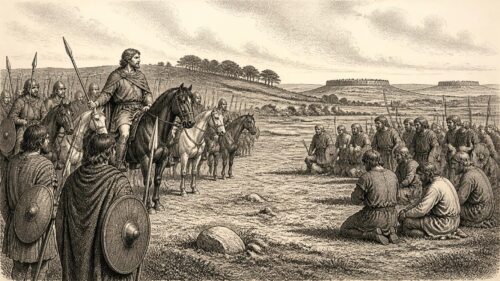
The securely dated core of 910 is not a Viking landing or a famous royal death, but a hard-fought assertion of power in Ireland’s central and western midlands. Flann Sinna, king of Tara and leading ruler of the southern Uí Néill, defeated the men of Bréifne with the help of his sons. The encounter, recorded in the Annals of Ulster and more fully in Chronicon Scotorum, cost the life of Flann son of Tigernán, king of Bréifne, as well as other nobles. It was a severe reverse for a kingdom situated on Mide’s north-western approaches, and a reminder that Flann’s
Read Article
Archived: 27 October 2026
Abstract
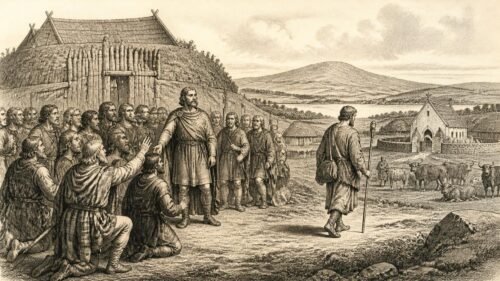
In 911 Domnall, son of Áed Findliath, relinquished the kingship of Ailech by adopting the pilgrim’s staff, a religious renunciation, and his brother Niall succeeded him. Annals of Inisfallen, Chronicon Scotorum and Ulster support the succession, although dating conventions preclude fuller detail. The transfer preserved Cenél nÉogain control of a major northern power, whose authority relied on clientage, tribute, military service and ecclesiastical connections. Domnall died in penitence in 915. Ireland remained politically fragmented under Flann Sinna of Tara; Niall was commander. Records also note a Leinster heir’s death and a phenomenon, while communities sustained networks through agriculture and obligations.
Read Article
Archived: 27 October 2026
Abstract
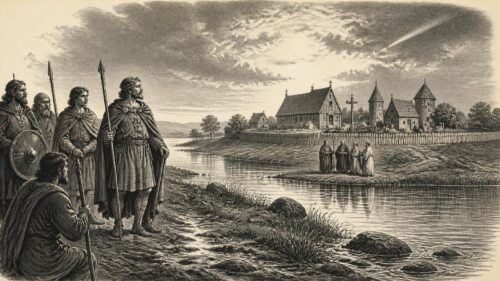
In 912, Irish annals centre on Cernachán son of Duiligén, who removed a captive from Armagh’s sanctuary and who was then killed at Loch Cerr. Niall son of Áed, king of Ailech, drowned Cernachán there, asserting Patrick’s church protection and northern Uí Néill authority. The episode reveals sanctuary, kinship and violence within fragmented kingship. Nearby notices record Niall’s campaigning, conflict between Brega and Leinster, clerical deaths and an accidental fire at Armagh. Annals also describe wet, dark weather and an appearance of Halley’s Comet. Maritime entries show Ulaid fleets, Welsh captives, ransom networks and Scandinavian activity across the Irish Sea.
Read Article
Archived: 27 October 2026
Abstract
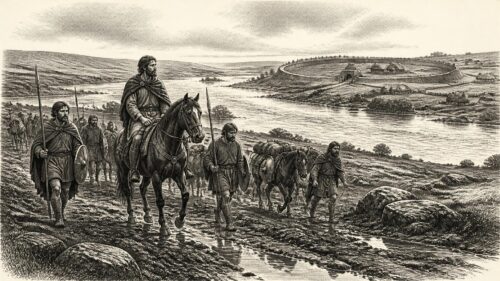
In the annalistic year conventionally called 913, Niall son of Áed, king of Ailech, campaigned in north Connacht, routing the Uí Amalgada and men of Umall, killing or capturing many. Elsewhere, Donnchad and Máel Mithig defeated forces from southern Brega and Leinster, while Congalach of Conaille Muirthemne was killed by his brother after attacking a church household. Vikings defeated a new Ulaid fleet off England, with Irish losses. Churchman Máel Brigte travelled to Munster to ransom a Welsh pilgrim. Death notices recorded clerics, nobles and a chief poet. Annals called the year dark and rainy, reflecting an interconnected, fractured island.
Read Article
Archived: 27 October 2026
Abstract
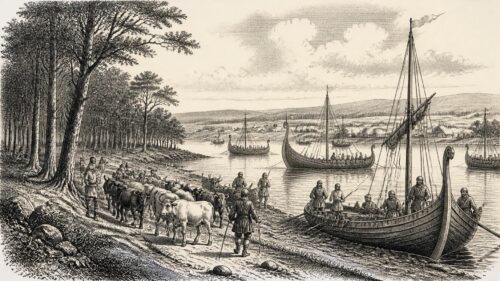
In 914, a great Scandinavian fleet entered Waterford harbour, raided northern Osraige, and inaugurated a renewed phase of Viking power in Ireland. The sheltered waterways offered access to south-eastern resources, while wider Irish Sea rivalries linked the newcomers to maritime politics. Meanwhile, Niall of Ailech defeated Ulaid forces, made peace with Áed of Ulaid, then suffered heavy losses when Mide men ambushed his foragers. Flann Sinna campaigned amid accusations of church profanation. Flaithbertach became king of Cashel and Eochu abbot of Emly. These events showed enduring Irish rivalries, institutions, and negotiated authority alongside Waterford's growing strategic importance in subsequent decades.
Read Article
Archived: 27 October 2026
Abstract
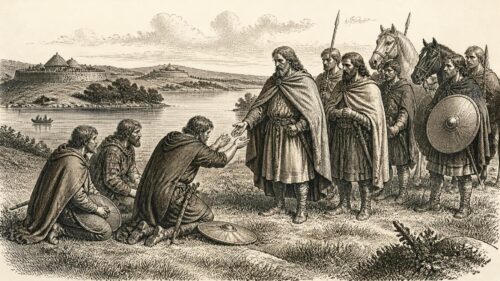
In 915, Ireland experienced interconnected political, religious and military pressures rather than a decisive battle. Óengus, Flann Sinna’s designated heir, died, weakening the ageing king of Tara, while Domnall of Ailech died in penitence, confirming his half-brother Niall Glúndub’s northern prominence. Flann’s sons Donnchad and Conchobor rebelled in Mide, but Niall’s army secured their submission and a truce with Brega, enhancing his influence. Scandinavian forces based at Waterford Harbour plundered Munster churches and settlements. Deaths of leading clerics and the treacherous wounding of a local king reveal institutional and regional instability. The year foreshadowed later succession conflicts and Viking warfare.
Read Article
Archived: 27 October 2026
Abstract
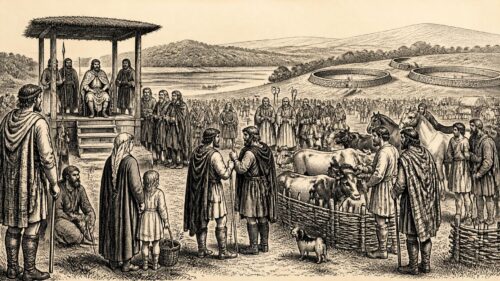
In 916, Flann Sinna died on 25 May after ruling Tara since 879, ending a long southern Uí Néill ascendancy. His son Conchobar succeeded in Mide, while Niall Glúndub of Cenél nÉogain became king of Tara, reflecting dynastic alternation rather than unified monarchy. Niall renewed the neglected Fair of Tailtiu, publicly asserting royal authority and the capacity to organise exchange, obligations and assembly. Elsewhere, raiders from Loch Dá Chae harried Munster and Leinster, killing Ainnle of Uaithne. Deaths among leading ecclesiastics and a lightning fire at Armagh exposed institutional vulnerability amid ceremony, rivalry and Scandinavian pressure throughout much of Ireland.
Read Article
Archived: 27 October 2026
Abstract
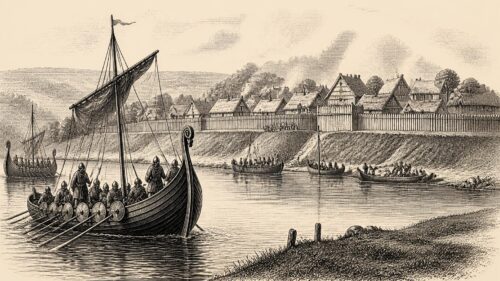
In 917, amid severe frost, animal mortality and portents recorded by annalists, related Scandinavian fleets led by Sitriuc and Ragnall ua Ímair returned to Ireland. Munster forces inflicted notable defeats, while high king Niall Glúndub campaigned in Mag Femen, fighting the invaders on 22 August without destroying them. Niall sought Leinster’s aid, but Sitriuc routed its army at Cenn Fuait, killing King Ugaire, lesser rulers and a leading bishop. The victory shattered Leinster’s leadership; Kildare was subsequently plundered. Sitriuc then forcibly seized Dublin, restoring Uí Ímair power and establishing a durable maritime, military and economic centre on Ireland’s eastern seaboard.
Read Article
Archived: 27 October 2026
Abstract
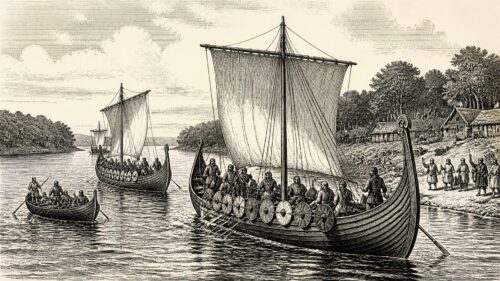
In 918, Ragnall ua Ímair, king of the dark foreigners, left Waterford Harbour with jarls Oitir and Gragabai, joining an Irish-Sea campaign that culminated in the inconclusive battle of Corbridge on the Tyne. Their force showed the Uí Ímair dynasty’s links between Ireland and Britain. In Ireland, Niall Glúndub of Tara continued warfare with Dublin’s Sitriuc Cáech, while Máel Mithig of Brega unsuccessfully sought Scandinavian assistance. Annals also recorded deaths of church leaders, scholar Dainél and Kildare’s abbess Muirenn. Evidence reveals political instability, maritime connections and ecclesiastical continuity, but records no harvest, famine or everyday events. Annalistic dating remains uncertain.
Read Article
Archived: 27 October 2026
Abstract
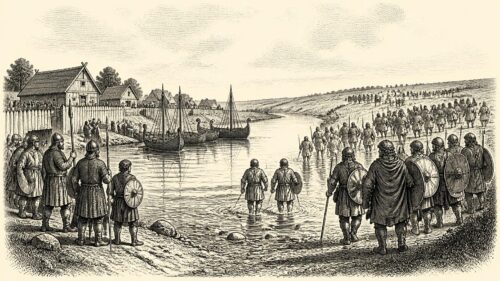
In 919, the struggle for Dublin produced one of the most consequential defeats of early medieval Irish politics. Niall Glúndub, king of Tara and leading figure of the northern Uí Néill, was killed when an Irish coalition attacked the Scandinavian rulers of the reoccupied settlement at Áth Cliath. The annals’ stark notice of a battle conceals a disaster of unusual scale: regional kings, royal heirs and noblemen from several northern dynasties died alongside him. Dublin’s rulers, led by Sitriuc Cáech, survived the assault. Their success did not make Ireland a Scandinavian kingdom, but it secured a major coastal power at
Read Article
