Tabanyama Assault

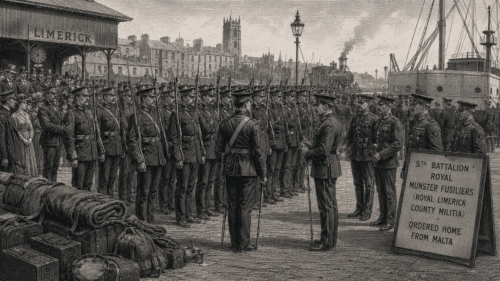
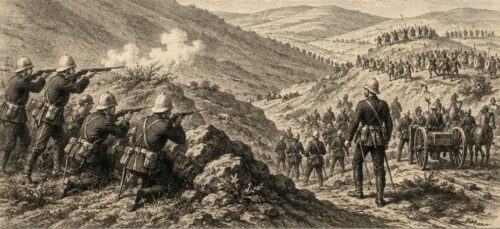
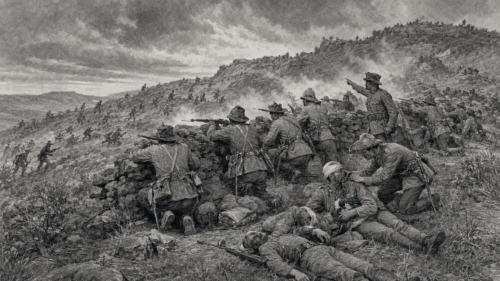
News of the fighting on the Tabanyama ridges carried particular weight in Limerick, where families with connections to British Army service followed the Natal campaign and the fortunes of Irish regiments abroad. Between 20 and 22 January 1900, Lieutenant-General Sir Charles Warren’s force attempted to break the Boer defensive line west of Spion Kop and open a route towards besieged Ladysmith. Major-General FitzRoy Hart’s 5th, or Irish, Brigade formed part of the attacking army, alongside Major-General Edward Woodgate’s Lancashire Brigade. The operation placed Irish soldiers within a difficult imperial campaign whose conduct and purpose remained politically contentious at home.
Roberts Arrives

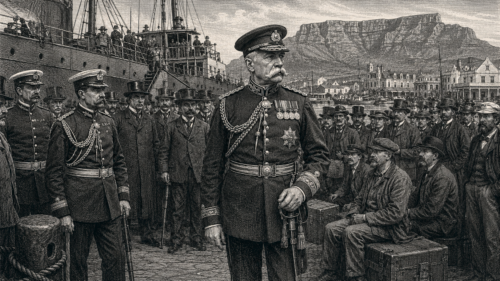
Field Marshal Lord Roberts arrived at Cape Town on 10 January 1900 and assumed supreme command of British forces in South Africa. He travelled aboard the Dunottar Castle with Lord Kitchener, who became his chief of staff. Their appointment followed the defeats of “Black Week,” when British reverses at Stormberg, Magersfontein and Colenso exposed serious weaknesses in command, intelligence and battlefield preparation. Roberts received a formal welcome at the harbour, but the ceremony could not conceal the gravity of his task. British garrisons remained besieged, casualties were rising and reinforcements arriving from across the Empire required organisation.

Ladysmith Assault

Boer commandos launched a major assault upon the British defensive line south of besieged Ladysmith before dawn on 6 January 1900. Their principal targets were Wagon Hill and Caesar’s Camp, two positions on the ridge known locally as the Platrand. Advancing through darkness and broken ground, the attackers surprised several forward posts and gained parts of the crest before the defenders could organise effective resistance. Confused close-range fighting followed, with British and colonial troops struggling to distinguish friend from enemy among rocks, scrub and unfinished defensive works.

Divided Loyalties

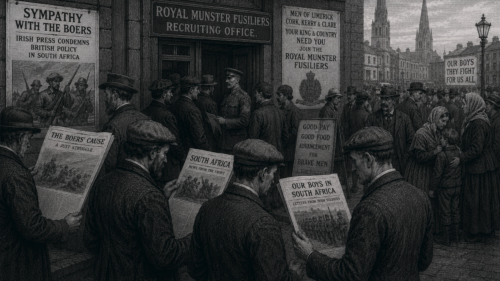
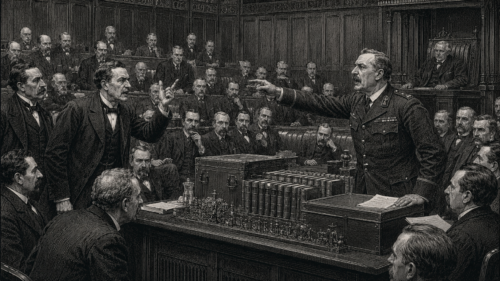
Irish public opinion during the South African War was divided in a manner that exposed the complicated relationship between nationalism, empire and military service. Nationalist newspapers and political organisations frequently expressed sympathy for the Boer republics, presenting their resistance to British expansion as a struggle resembling Ireland’s own opposition to imperial rule. Boer victories were sometimes welcomed as humiliations for a government that continued to deny Irish self-government. Public meetings, songs, newspaper commentary and street demonstrations gave the pro-Boer cause considerable visibility, making Ireland one of the strongest centres of anti-war and pro-Boer feeling in Europe.

Mounted Volunteers

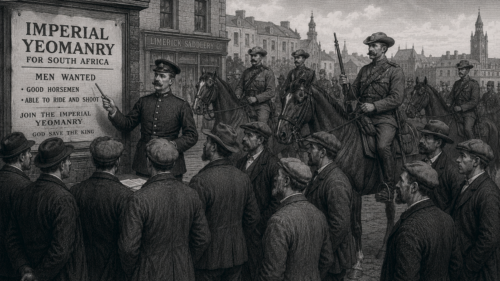
A Special Army Order issued at the beginning of January 1900 established the machinery for recruiting the Imperial Yeomanry, a volunteer mounted force intended for service in South Africa. The decision followed the British defeats of December 1899, when Boer commandos demonstrated the effectiveness of mobile riflemen operating across difficult country. Existing yeomanry units were invited to provide trained volunteers, while suitable civilians could also enlist for a limited period of overseas service. The new formation was organised as mounted infantry rather than conventional cavalry, emphasising movement, marksmanship and the ability to fight after dismounting.