University Demand

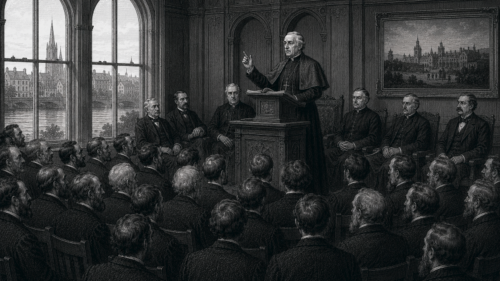
Bishop Edward Thomas O’Dwyer of Limerick delivered a prominent intervention in the continuing dispute over university education for Irish Catholics. He argued that the existing system failed to provide higher education on terms acceptable to the religious convictions of most of Ireland’s population. Catholic students could enter Trinity College Dublin or prepare for examinations through institutions connected with the Royal University, but church leaders maintained that neither arrangement offered a complete university environment shaped by Catholic belief and practice. O’Dwyer presented the question as one of educational equality rather than a request for clerical privilege.
Coal Dues

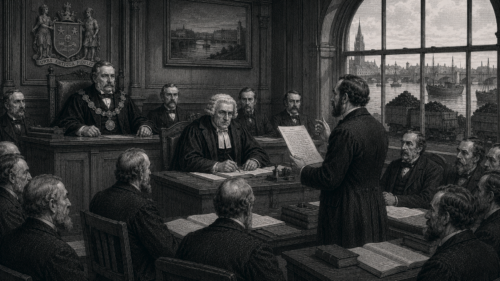
A substantial case before Judge Richard Adams examined the Mayor of Limerick’s asserted right to receive dues upon coal brought into the city. The proceedings, reported on 12 January 1900, required the court to consider whether this inherited privilege rested upon royal charter, lease, long-established prescription or some combination of those authorities. Counsel disputed both the legal foundation of the claim and the capacity in which the Mayor exercised it. What appeared to be an obscure municipal custom therefore became a serious test of whether an ancient commercial right remained enforceable within Limerick’s modern port economy.

Roads Dispute

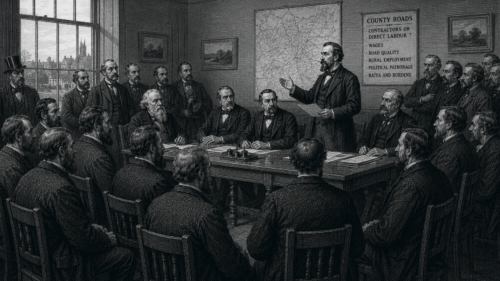
Arguments continued across County Limerick over whether public roads should be maintained through private contracts or by labourers employed directly under elected local authorities. The Munster News criticised what it regarded as Limerick County Council’s unsatisfactory handling of road tenders and the developing direct-labour question. The dispute followed the transfer of road administration from the Grand Jury system to the newly elected county and rural district councils. Councillors were now responsible for deciding how public money should be spent, who should receive employment and whether established contractors continued to offer the most economical and reliable method of keeping roads in repair.

Shannon Resistance

At the opening of the twentieth century, Limerick’s fishery interests faced a proposal they believed could transform the River Shannon at enormous local cost. The Limerick Fishery Conservators, presided over by Lord Massy, met to consider the Shannon Water and Electric Power Company’s plan to secure parliamentary authority for works near Lough Derg and Clonlara. The promoters argued that Shannon water could be diverted through engineered channels to generate electricity for Limerick and surrounding districts. The Conservators unanimously resolved to oppose the measure, regarding it as a direct threat to the river upon which fisheries, navigation and established livelihoods depended.

Kincora Preparations

A large public meeting reported on 4 January 1900 gathered in the Lecture Hall of Limerick’s Catholic Institute to organise a fête and fancy fair in aid of the new St Joseph’s Church then under construction in St Michael’s Parish. Bishop Edward Thomas O’Dwyer presided over an attendance of clergy, women, merchants and other prominent citizens. The gathering agreed that the event should take place during June and established committees to undertake the considerable work involved. Their responsibilities included subscriptions, entertainments, stalls, decorations, publicity and the practical management of what organisers intended to become a major civic fundraising occasion.