Archived: 18 October 2026
Abstract
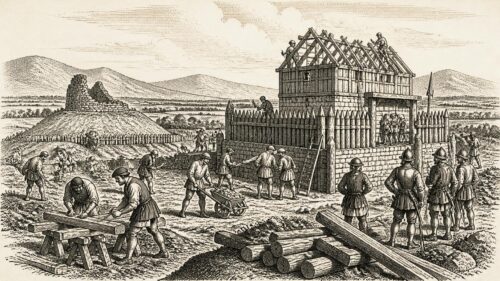
In 1546, Henry VIII's Irish government faced factional conflict and uneven authority. Sir Anthony St Leger defeated the Earl of Ormond in disputes over regional power, though Ormond's death soon exposed continued dependence on magnates. A fort at Daingean extended crown influence into the midlands, provoking annalistic accounts of destruction. In Ulster, Donnell O'Donnell's murder at Inis Saimer violated guarantees of protection and reflected enduring Gaelic politics. Debased copper coinage affected exchange, while episcopal appointments asserted royal control over the Church. The imprisonment of poet-teacher Teige O'Coffey highlighted pressures on bardic learning. These events reveal a kingdom undergoing contested transformation.
Read Article
Archived: 18 October 2026
Abstract
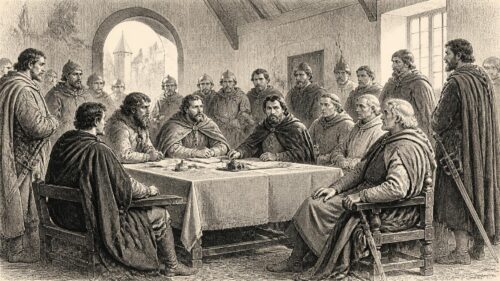
In 1544, Tudor authority in Ireland depended on negotiation rather than uniform control. During Sir Anthony St Leger’s absence, Lord Justice William Brabazon managed finance, military levies and invasion rumours, while Irish kern joined Henry VIII’s war against France and Scotland. Local conflicts persisted: English forces aided O’Donnell’s siege at Lifford, and warfare engulfed Ulster through raids, castles, hostages and Scottish mercenaries. At Limerick, a council addressed the Clanricarde succession after Ulick Burke’s death, recognising Richard Burke but empowering a rival custodian, leaving conflict unresolved. Former monastic property passed to crown servants, illustrating primarily economic, rather than immediate religious, transformation.
Read Article
Archived: 18 October 2026
Abstract
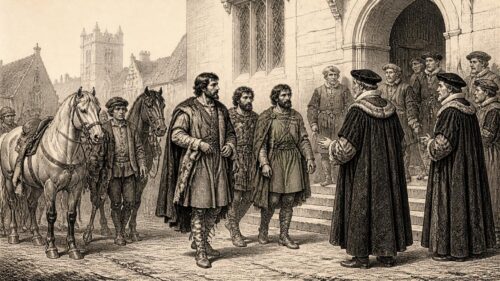
In 1543 the Tudor crown made one of its clearest attempts to translate Irish lordship into a form it could recognise, reward and regulate. The year’s decisive moments were not battles or conquests but acts of negotiation: Gaelic and Gaelicised magnates travelled to Henry VIII’s court; titles were exchanged for patents; rival kinsmen were reconciled at Dublin; and the vacancy at Armagh exposed the unsettled religious authority of the realm. These developments did not make Ireland obedient to a central government, nor did they erase older political habits. They did, however, show how Anthony St Leger’s administration hoped to extend
Read Article

