Archived: 13 October 2026
Abstract
William III’s death brought Queen Anne to the thrones of England, Scotland and Ireland, proclaimed in Dublin on 18 March. Her accession preserved a Protestant administration founded after Williamite war, while Catholics remained politically excluded and Jacobite legitimacy persisted. Ireland was governed by lords justices after Rochester’s departure, with Thomas Erle combining military and civil responsibilities amid War of Spanish Succession. Protestant elites resented Westminster’s resumption of forfeited estates and restrictions on woollen exports. December consultations at Dublin Castle addressed parliament, taxation and war costs without resolution. Michael Boyle died; Portarlington Huguenots gained lease security; Swift received his Trinity doctorate.
Read Article
Archived: 14 October 2026
Abstract
In 1700, the Act of Resumption required claimants to register interests in forfeited Irish estates at Chichester House, Dublin, producing over 3,000 claims involving families, creditors, tenants and purchasers. The process consolidated a post-Williamite Protestant order while exposing Catholic insecurity over land and rights. Ireland remained a separate but subordinate kingdom, governed through London-linked institutions amid confessional restrictions and commercial controls, notably woollen export limits. Agricultural life, regional trade and Dublin's growth continued under unequal conditions. Intellectual activity included Edward Lhuyd's antiquarian work, Ulster printing and George Berkeley's Trinity admission. Paperwork, property, religion and allegiance defined this unsettled post-war society.
Read Article

Archived: 14 October 2026
Abstract
In 1699, post-war Ireland remained shaped by land redistribution, Protestant security and contested trade. The Irish parliament concluded legislation imposing woollen export duties, supporting Church of Ireland clerical residences, protecting timber and regulating butter casks. Westminster's Woollen Act then barred most Irish wool and woollen exports to foreign markets, restricting a vital, widespread industry and encouraging, but not immediately replacing it with, linen. A parliamentary commission investigated Williamite forfeitures, reporting thousands attainted and over one million plantation acres affected, deepening uncertainty over titles. Anti-Catholic laws and proclamations restricted solicitors, arms and clerical jurisdiction. Dublin's print trade nevertheless demonstrated wider connections.
Read Article

Archived: 14 October 2026
Abstract
In 1697, post-war Ireland faced food scarcity, political consolidation and social disruption. Grain exports were restricted amid fears of shortages, while parliament reinforced Protestant ascendancy through property, security and religious legislation. It confirmed limited treaty protections for qualifying Jacobites but secured wartime forfeitures. The Banishment Act ordered Catholic bishops and regular clergy to leave, while restrictions targeted Protestant-Catholic marriages. Peace with France ended the Nine Years’ War, yet fears of Jacobitism persisted. Lightning destroyed Athlone Castle’s powder magazine, causing major damage. Scottish migration strengthened Ulster Presbyterian communities, while commercial tensions over Irish woollens and modest rebuilding reflected an uneven recovery.
Read Article

Archived: 14 October 2026
Abstract
In 1695 Lord Capell’s Dublin parliament, under Poynings’ Law, consolidated Williamite rule after the Treaty of Limerick, reconciling Crown revenue needs with Protestant demands for fiscal influence. Amid fears of France, Jacobite exile and Catholic rebellion, it initiated religious exclusion. The Disarming Act required Catholics to surrender weapons and restricted ownership of horses, extending officials’ powers of search and control. The Foreign Education Act curbed Catholic teaching, overseas study and support, attaching severe civil and property penalties. Parliament also regulated property, trade, coinage and worship. Its legislation strengthened administration while making Catholic disability a durable foundation of the post-war settlement.
Read Article
Archived: 14 October 2026
Abstract
In 1692, post-war Ireland remained unsettled despite Williamite victory. Authorities ratified and administered the Treaty of Limerick, processed claims, organised Jacobite departures, restored taxation, regulated currency, disarmed Catholics and addressed billeting, crime and militia security. Lord Sydney summoned the first Williamite parliament, whose Protestant members recognised William and Mary, defined Ireland’s attachment to England, and portrayed victory as deliverance from Catholicism and French influence. Commons nevertheless contested control of money bills under Poynings’ Law. Treaty protections coexisted with tightening restrictions on Catholics. Ruvigny’s advancement foreshadowed forfeiture and Protestant settlement, while Charles O’Kelly’s Jacobite history recorded a competing memory of defeat.
Read Article

Archived: 14 October 2026
Abstract
In 1689, deposed James II made Ireland the central theatre of his struggle against William of Orange, supported by Tyrconnell, Catholics and French aid. While Jacobite forces advanced, Protestant resistance at Derry and Enniskillen endured. James’s Dublin parliament funded war, asserted Irish legislative independence, repealed land settlements and passed an extensive Act of Attainder, alongside liberty of conscience. Naval relief ended Derry’s 105-day siege, while Enniskillen’s victory at Newtownbutler weakened Jacobite control in Ulster. Schomberg’s multinational Williamite army landed in August, but its autumn camp at Dundalk suffered devastating disease, exposure and supply failures, leaving the war unresolved that winter.
Read Article

Archived: 14 October 2026
Abstract
In 1687 Richard Talbot, earl of Tyrconnell, became Ireland’s lord deputy and reshaped government under James II. Although instructed not to remove Protestants solely for religion or overturn land settlements, he promoted Catholics to judicial, administrative, military and local offices. New sheriffs and judges challenged Protestant dominance and intensified fears over legal security. Through charter surrenders and renewals, municipal corporations were reorganised to expand Catholic influence and prepare a favourable parliament. James’s Declaration of Liberty of Conscience widened religious freedoms, though Anglican suspicion persisted. Trade continued, while army recruitment increased. By year’s end, Catholic hopes and Protestant anxieties transformed politics.
Read Article

Archived: 15 October 2026
Abstract
In 1640, Ireland remained formally peaceful, but Charles I’s war against Scotland exposed mounting political divisions. Parliament granted four subsidies and discussed an enlarged army, then challenged the government’s methods of taxation and collection. Christopher Wandesford, succeeding Strafford as lord deputy, lacked his authority and repeatedly prorogued parliament. The Commons’ November remonstrance denounced Strafford’s arbitrary administration, monopolies, financial exactions and land policies, linking Irish grievances to his Westminster impeachment. Wandesford’s removal of parliamentary journal entries worsened distrust. His death in December, followed by Bishop John Atherton’s execution, weakened government further. Theatre and Gaelic scholarship continued amid crisis, foreshadowing 1641’s upheaval.
Read Article
Archived: 16 October 2026
Abstract
In 1635, Thomas Wentworth’s Dublin administration intensified efforts to reshape Ireland through parliamentary legislation, religious conformity, economic regulation and investigations of land title. Parliament passed measures on correction houses, alehouses, husbandry, clergy and Protestant schools, but failed to secure promised protections for established estates. Crown pressure reached Ulster when London plantation companies lost their charter, and peaked in Connacht, where Galway jurors at Portumna rejected the king’s claimed title and were fined and imprisoned. Wentworth also crushed Lord Mountnorris politically. Meanwhile, Hugh Ward’s death at Louvain marked a loss to Irish scholarship. The year revealed widening distrust of coercive government.
Read Article

Archived: 16 October 2026
Abstract
In 1634, Thomas Wentworth convened Charles I’s first Irish parliament, tightly managing elections, procedure and debate from Dublin Castle. Parliament unanimously granted six subsidies, expecting enactment of the Graces, concessions sought by Catholic and Old English elites, especially secure land titles. Wentworth subsequently refused the crucial land-security measure, confirming that revenue did not purchase limits on royal power. He also constrained parliamentary action over Sir Vincent Gookin’s inflammatory letter. Church convocation adopted the English Thirty-Nine Articles under pressure, advancing conformity despite resistance. Meanwhile, Geoffrey Keating completed Irish-language history; customs, trade and emigration to Spanish Flanders linked Ireland to Stuart Europe.
Read Article
Archived: 16 October 2026
Abstract
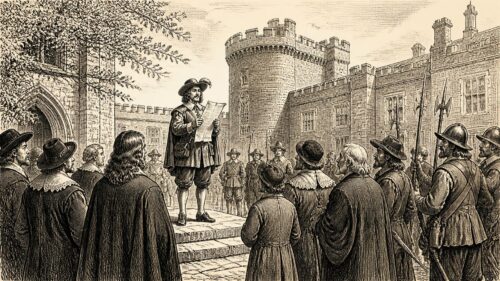
In 1628, Charles I’s government negotiated the Graces with Irish Catholic and Old English elites, exchanging reforms for £120,000 towards the army. The package sought security of land titles, limits on martial law, billeting, monopolies and administrative abuses, and relief from Catholic disabilities. Lord Deputy Falkland prepared an Irish parliament to ratify these measures, but procedural defects under Poynings’ Law caused its October deferral, leaving guarantees unconfirmed. Official proclamations revealed concern over grain supply, poverty and disorder. Catholic life gained an Irish College in Rome, while William Daniel died. The unresolved settlement deepened tensions over land, religion and Crown authority.
Read Article
Archived: 16 October 2026
Abstract
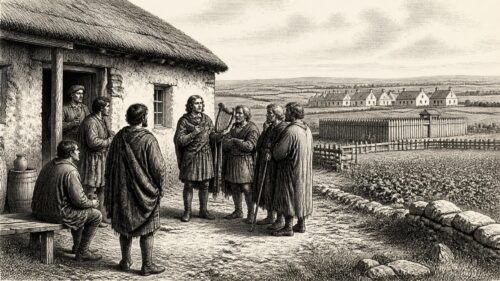
In 1615, Chichester’s government confronted the abortive Macosquin conspiracy amid Ulster Plantation’s insecure transformation. Alleged Gaelic plotters lacked arms, coordination and foreign support, yet officials feared renewed war and used torture, trials and executions; eleven of seventeen defendants were acquitted. Plantation surveys revealed incomplete settler obligations and continuing dependence on Irish tenants, while landholding and local life were nonetheless changing profoundly. The final 1613 parliament passed a highways measure before dissolution, as proclamations regulated markets and currency. Church convocation adopted 104 strongly Calvinist Irish Articles, probably shaped by James Ussher, while visitation exposed the established church’s weak reach. Coercion persisted.
Read Article
Archived: 16 October 2026
Abstract
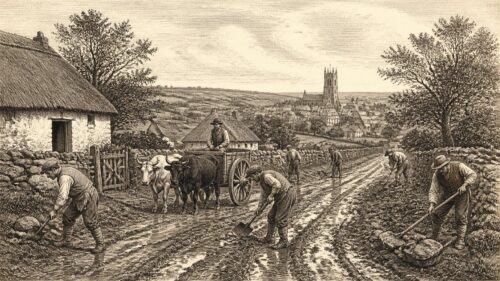
In 1614, James I’s government consolidated authority in Ireland through parliamentary management, anti-Catholic proclamations, trade regulation and parish responsibility for roads. Catholic representatives were rebuffed over the 1613 parliament’s new boroughs and religious exclusions, while priests and Jesuits faced expulsion orders. Yet Catholic organisation persisted: the Kilkenny synod reinforced Tridentine discipline and pastoral provision. Ulster Plantation reached a financial milestone when undertakers’ rents became due, accelerating changes in landholding, settlement and power. Deaths of William Bathe, Bonaventure O’Hussey and Thomas Butler, tenth earl of Ormond, highlighted transnational Catholic culture, Gaelic learning and the importance of aristocratic inheritance amid deepening divisions.
Read Article
Archived: 16 October 2026
Abstract
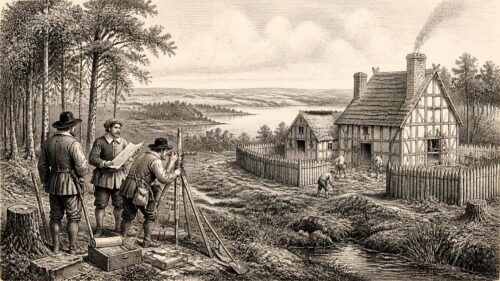
In 1613, the administration intensified its remaking of Ireland through Ulster plantation surveys, municipal charters and a contested parliament. Josias Bodley’s inspection exposed settlement, while London’s Irish Society incorporated Londonderry and developed its county; Belfast and Coleraine gained corporations and parliamentary representation. These boroughs promoted trade and security but supplied Protestant votes. When parliament met in Dublin, conflict over Sir John Davies’s election as Speaker revealed Catholic fears of engineered representation, religious coercion and dispossession. Petitions and a inquiry failed to secure accommodation. Henry Ussher’s death marked change amid conformity. New institutions reshaped land, faith and politics without achieving consent.
Read Article
Archived: 19 October 2026
Abstract
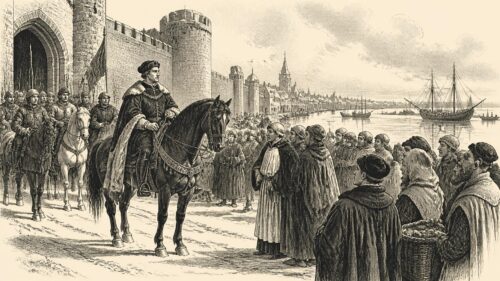
In 1467, John Tiptoft, earl of Worcester, returned as Edward IV’s deputy in Ireland and summoned a Dublin parliament, asserting royal authority within the limited reach of the English lordship. Its programme addressed coastal defence at Lambay, black rents, coinage, church affairs and Meath, while revealing dependence on local cooperation. Desmond’s later execution belonged to 1468, though Worcester’s arrival initiated the crisis. Beyond the Pale, dynastic successions, raids and warfare shaped politics, notably a bloody Connacht battle involving Clanricarde, Ó Ceallaigh and Burke factions. Annals also recorded plague, clerical deaths, learned men and hospitality, illustrating regional institutions and overlapping jurisdictions.
Read Article
Archived: 20 October 2026
Abstract
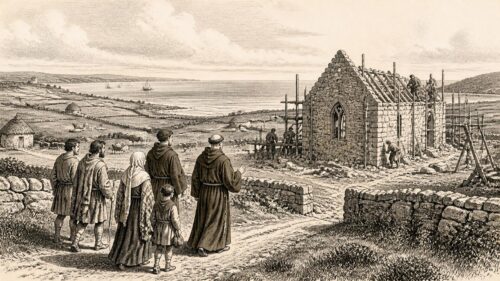
In 1460, Richard of York’s Drogheda parliament affirmed his lieutenancy and declared that Ireland was governed by laws accepted in its own parliament, while regulating defence, finance and local administration. Conflict exposed fragile frontiers: Conn O’Conor Faly defeated lordship forces, and English troops killed John O’Reilly of East Breifne, prompting Cathal O’Reilly’s succession. Captivity and maritime warfare further shaped regional politics. Franciscan patronage and Observant reform expanded through Moyne, Sherkin and Enniscorthy, although foundation dates remain uncertain. The killing of Killaloe’s bishop showed clerical vulnerability. Overall, the year revealed overlapping jurisdictions, military households, contested lordship power and resilient religious networks.
Read Article

Archived: 24 October 2026
Abstract
In 1297, John Wogan’s Dublin parliament introduced elected knightly representatives from counties and liberties of the English lordship, seeking consent for measures on defence, policing, road clearance and collective military contributions. It also advanced royal administration through the creation of counties Kildare and Meath, while preserving powerful private liberties. These reforms responded to persistent insecurity: Slieve Margy forces burned Leighlin, while leading Orior figures were killed near Dundalk. Elsewhere, annals recorded the deaths of Moylurg’s lord, chiefs and bishops, and disputes over Elphin. Edward I’s wars constrained affairs. The year revealed authority as selective, contested and dependent on local institutions.
Read Article

Archived: 25 October 2026
Abstract
On 18 June 1264, an assembly at Castledermot became the earliest securely documented Irish gathering to call itself a parliament. Chaired by the justiciar Richard de la Rochelle, it investigated Dublin archbishops’ claimed criminal jurisdiction against Prince Edward’s rights, illustrating contested authority rather than representation. Meanwhile Walter de Burgh’s war with the FitzGeralds devastated Connacht and exposed weakness in royal administration. Anglo-Irish leaders negotiated peace with Fedlimid Ó Conchobair at Athlone, acknowledging Gaelic power. In Armagh, Archbishop Máel Pátraic Ó Scannail built defences and welcomed Franciscans. Together, these events vividly reveal competing lordly, royal, Gaelic and ecclesiastical powers in Ireland.
Read Article

