
Year by Year
Explore Year by Year articles from the most modern historical year back to the oldest.
3,295 Articles Archived

Connacht Settlement
Archived: 25 October 2026
In 1255, Feidlim Ua Conchobair of Connacht and his son Áed strengthened their position through diplomacy, protected movement and negotiated peace. Áed travelled to Tír Eógain, reconciled his father with northern powers, and escorted Connacht exiles, dependants and goods safely home through hostile territory. Feidlim’s envoys and Archbishop Florence Mac Flainn secured favourable responses from Henry III, while Feidlim reached a major settlement with Mac William Burke at Tochar Mona Conneda. Elsewhere, Brian Ua Néill failed to obtain hostages in Breifne. Ecclesiastical appointments, clerical deaths, killings and raids reflected local instability. The year demonstrated peace’s strategic, fragile role amid rivalries.

Edward's Lordship
Archived: 25 October 2026
The records for 1254 preserve a revealing contrast. At the highest level, Henry III of England reassigned much of the royal lordship of Ireland to his teenage heir, Lord Edward. In Dublin, the rebuilt church of St Patrick was dedicated as a cathedral. Yet the Irish annals are equally attentive to a burned Dominican house in north Mayo, killings around Lough Ree and Cluain Conmaicne, an arrest and blinding ordered by the king of Connacht, and an exceptionally productive year of milk, acorns and other foodstuffs. Ireland was not one political unit moving in step with an English royal decision.

Sligo Dominicans
Archived: 25 October 2026
In 1253, Sligo gained a Dominican friary and consecrated cemetery, establishing a centre for preaching, learning, burial and patronage in a strategic Geraldine settlement. The foundation reflected mendicant expansion supported by both Anglo-Irish and Gaelic rulers, also evident at Roscommon. Politically, Maurice FitzGerald’s Anglo-Irish expedition into Tír Eógain failed to secure hostages from Brian Ó Néill, demonstrating limits to colonial power and strengthening Ó Néill’s position. Church notices recorded deaths of leading bishops and construction of an episcopal residence at Elphin. Annals described a notably productive summer, while December royal orders sought Irish military and logistical aid for threatened Gascony.
Moycova Fortifications
Archived: 25 October 2026
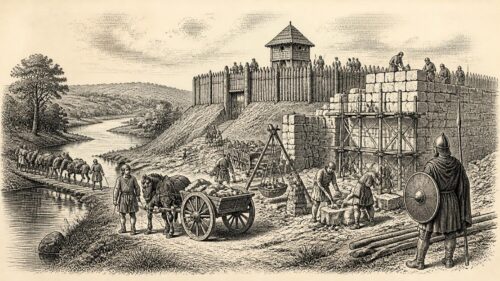
In 1252, Crown authority in Ireland was asserted through fortification, campaigning and monetary reform, amid persistent regional conflict. Maurice FitzGerald built castles at Cáel Uisce and Moycova, the latter under oversight, while Henry III ordered fortification and expansion at Annaghdown. Justiciar John FitzGeoffrey’s expedition secured Brian Ó Néill’s submission and his brother Ruaidrí as hostage, though rivalry divided both colonial forces and Irish lordships. Annals recorded raids, killings and deaths, alongside Máelmaedóc Ó Beolláin’s death at Drumcliff. A winter wind preceded exceptional drought and early harvest. New Dublin coinage strengthened royal control, but personal alliances, cattle and churches remained central.
Tuam Synod
Archived: 25 October 2026
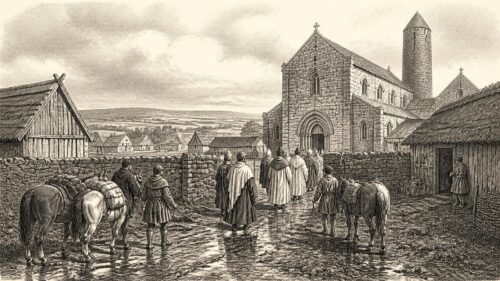
In 1251, Ireland’s fragmented political order combined royal administration, Gaelic rivalry, ecclesiastical organisation and environmental disruption. John Fitz Geoffrey’s wardship purchase illustrated links between office, inheritance and lordship, while Henry III approved Hugh’s election to Ossory and authorised an Irish coinage exchange. Connacht clergy held a synod at Tuam under Archbishop Flann Mac Flainn, although its decisions are unknown. Annals record killings among Connacht and northern kindreds, clerical deaths and Archbishop Raighned’s journey to Rome. Grants of privileges expressed royal authority locally. Summer lightning and flooding, followed by severe winter frost, damaged people, cattle, travel and livelihoods without proving famine.
Connacht Restoration
Archived: 25 October 2026
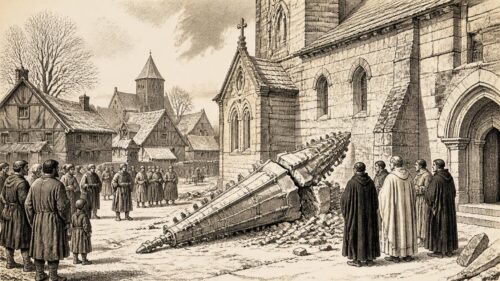
In 1250, Ireland experienced interconnected regional conflicts rather than a single national crisis. Feidlimid Ó Conchobair returned to Connacht with northern support, regained kingship through negotiation with English authorities, and expelled a rival, while Connacht hostages were blinded at Athlone. In Ulster, an expedition failed to secure Ó Néill submission; Niall Ó Canannáin was captured and killed, and Cecilia Mac Lochlainn, wife of Brian Ó Néill, died. In Desmond, Fíngen Mac Carthaig was killed after a peace breach. Derry’s church pinnacle collapsed on 8 February. Episcopal and monastic deaths further underscored institutional uncertainty during that year amid violent, contested lordship.
Athenry Assault
Archived: 25 October 2026
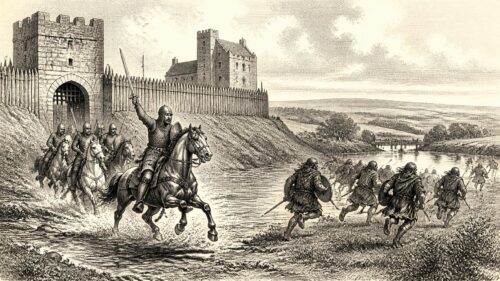
In 1249, conflict swept across Ireland’s fragmented political landscape. Justiciar John FitzGeoffrey punished resistant Leinster rulers and, with Maurice FitzGerald, invaded Connacht, devastated Ó Conchobair lands and installed Toirrdelbach Ó Conchobair in place of King Fedlimid. Fighting also afflicted Desmond and Ossory, while dynastic raids and counter-raids unsettled north-west Connacht. Fedlimid safeguarded his movable wealth beyond the Shannon as royal forces plundered territories and Loch Cé. On 15 August, Connacht princes attacked Anglo-Norman Athenry but were routed by Jordan de Exeter’s armoured sortie; Áed Ó Conchobair and many allies died. Annals also record notable ecclesiastical deaths, hospitality, learning, and chronology.

Bann Bridge
Archived: 25 October 2026
In 1248, military and political struggle linked northern and western Ireland across contested regions. Justiciar John FitzGeoffrey compelled Cenél nEógain to give hostages, then built a bridge over the Bann and a castle near Coleraine, strengthening royal leverage without securing conquest. Maurice FitzGerald intervened in Tír Conaill, backing Gofraid Ó Domnaill, whose rival was later killed. In Connacht, revolts, raids, cattle seizures, island warfare and a reverse in Connemara exposed limits to colonial power. Meanwhile, Fedlimid Ó Conchobair endowed Kilmore’s Augustinians, Armagh’s primate returned from Rome, and Henry III addressed baronial liberties, demonstrating intertwined warfare, lordship, church patronage and administration.

Ballyshannon Campaign
Archived: 25 October 2026
In 1247, warfare across north-western Ireland and Connacht exposed fragile power among Gaelic, Anglo-Irish and maritime allies. Maurice FitzGerald’s force outmanoeuvred Tír Conaill’s defenders at Ballyshannon, killing Máel Sechlainn Ó Domhnaill and installing a provisional ruler, though losses followed during withdrawal. In Connacht, Toirrdelbach Ó Conchobair and allies captured strongholds, burned Galway and other settlements, while retaliatory raids devastated communities. Waterways, fords, crannogs and castles shaped campaigning, and sea travel brought both opportunity and disaster. Churchmen mediated evacuations and maintained wider connections. Meanwhile, partition of the Marshal inheritance reshaped Leinster’s lordship. The year ended without lasting political settlement or conquest.

Sligo Hostages
Archived: 25 October 2026
In 1246, newly built Sligo Castle became a focus of conflict between Maurice FitzGerald's expanding Anglo-Irish power and Máel Sechlainn Ó Domhnaill of Tír Chonaill. After attackers burned Sligo's enclosure but failed to seize the castle on 1 November, its garrison hanged two hostages, Ó Domhnaill's foster-father and foster-brother. FitzGerald also sought to reshape northern politics through Cormac Ó Conchobair and hostage-taking. Elsewhere during that turbulent year, John Fitz Geoffrey became justiciar; Connacht dynastic prisoners escaped, were recaptured, or were killed; bishops changed at Elphin and Armagh; Drumlane burned; Oriel suffered violence; and a stranded whale enriched coastal Sligo communities.
Some records do not yet have a verified historical year and are awaiting chronological placement.