Naghtan’s Ransom and Escape1426 CE
In 1426, Ireland comprised overlapping English, Gaelic and Gaelicised jurisdictions rather than a unified state. Naghtan O’Donnell was ransomed from English captivity by his brother Niall, who provided extensive property and hostages; Turlough O’Donnell subsequently escaped with four fellow hostages. Annals record successions, deaths and kin violence, including O’Brien inauguration, Mac Mahon’s killing, and O’Conor losses. Reconciliation between Owen O’Neill and O’Neill aimed to recover alienated lands. Learned historians, hospitality, penance and plague also feature. Dublin received royal compensation for earlier military service, while an Ormond deed leased Kilkenny mills, demonstrating administrative, economic and seigneurial institutions alongside regional personal power.
Dateline
In 1426, Ireland’s political map was not governed from one centre. The young Henry VI was lord of Ireland, and the king’s Dublin administration retained courts, officials, boroughs and a shrinking but important zone of effective influence in the east. Beyond it, and often across its frontiers, Gaelic and Gaelicised lordships exercised power through kinship, clientage, tribute, military followings and control of land. The events entered under this year in the Irish annals are therefore not fragments of a single national narrative. They are local and regional acts of ransom, succession, reconciliation, killing, learning and religious death. Taken together, they show how authority was made and unmade in fifteenth-century Ireland.
A Ransom in the North-West
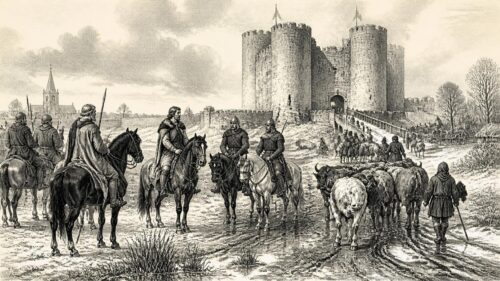
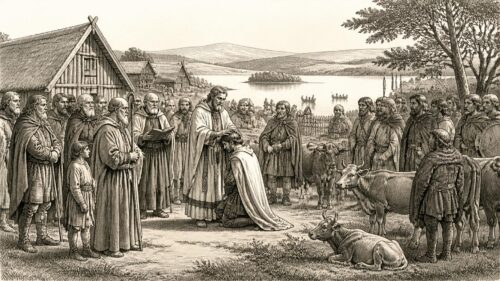
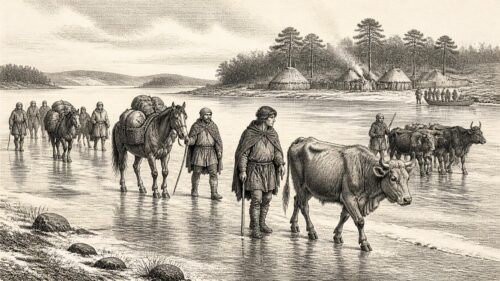
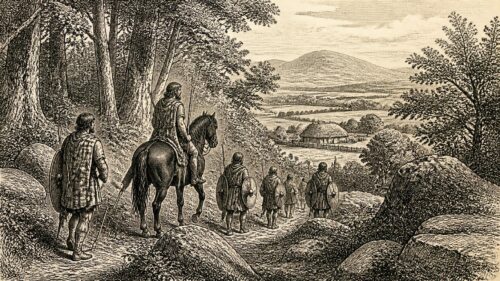
The most revealing recorded episode concerns Naghtan O’Donnell, who had been imprisoned by the English. The Annals of the Four Masters state that his brother Niall O’Donnell secured his release by ransom, giving property so extensive that the annalist declined to enumerate it all, as well as hostages in Naghtan’s place. One was Turlough O’Donnell. During the same year Turlough escaped, accompanied by four other hostages.
The entry gives no firm date, no list of goods, and no certain identification of the place of detention. Those limits matter. Yet its essentials are unusually clear: a captive lord was exchanged for wealth and human sureties, while the successful escape immediately weakened the settlement meant to guarantee his release. Hostage-taking was not an incidental cruelty at the edge of politics. It was one of the means by which agreements, tribute and obedience could be enforced where neither side could rely on a permanent bureaucracy or a universally recognised court. A hostage was both a relative and a political pledge; his safety bound a wider kindred to the bargain.
The episode also belonged to a recent northern crisis. Naghtan had been among several Ulster leaders seized after the death of the earl of March, the king’s deputy, in 1425. His ransom in 1426 did not mean that relations between the O’Donnells and the Dublin government had become settled. Rather, it demonstrates negotiation across a contested frontier. The English administration could capture powerful Gaelic figures; an O’Donnell lord could mobilise the resources, kin and hostages necessary to redeem one; and a hostage party could still evade custody. Political influence was real, but it was mobile, personal and incomplete.
Succession and Violence
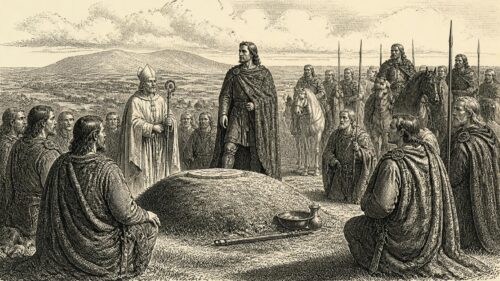
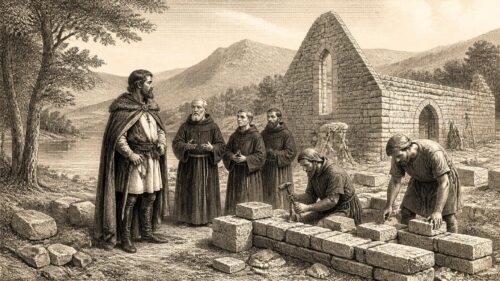
Across the island, the annals record leadership passing through death, inauguration and force. In Thomond, Conor Brian O’Brien died at an advanced age on Easter Saturday. The annals then record that Tadhg, son of Brian O’Brien, was inaugurated in his place. The wording is important. This was not merely an inheritance automatically passing from father to eldest son in the English legal manner. Inauguration made a lord publicly: it involved acceptance within the ruling lineage and the political community that sustained it. The precise ceremonial setting is not recorded for 1426, and should not be invented, but the annal’s use of inauguration confirms that the transfer required recognised action.
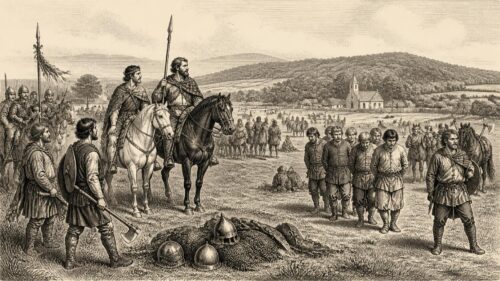
Another change in the same broad region was far harsher. Turlough Mac Mahon Bodhar, described as king of Corca Bhaiscinn in western Thomond, was killed and burned during a night attack by his own kinsmen. The account does not supply the attackers’ names or motives. It nevertheless makes plain that proximity of blood offered no automatic security. Competition within a ruling kindred could be as consequential as war with a neighbouring lord. The destruction of a household at night was an attack on the social and material basis of lordship: the residence, dependants, stores and retainers through which authority operated.
Connacht also lost a major figure. Turlough Ruadh O’Conor died in 1426, with the Annals of Ulster calling him a warrior and protector of Connacht, renowned for battle, counsel and knowledge. The phrase is an annalist’s commemoration rather than a neutral assessment, but it indicates the qualities expected of a high-ranking lord: military capacity, defence of dependants, practical judgement and learned reputation. Feidhlim, son of Murtough O’Conor and heir to the lordship of Lower Connacht, also died. Their deaths did not themselves establish a new political order, but they narrowed the field of experienced claimants and patrons in a province accustomed to competing branches of the O’Conor dynasty.
Kin, Household and Settlement
Several entries show conflict occurring not between distant peoples but inside households and lineages. Rory Magennis was killed in his own house by Brian Magennis. Henry Caech MacNeill Buidhe was blinded by the sons of Brian Ballagh MacNeill Buidhe, his own kinsmen. Blinding was a calculated political punishment: in a society where bodily wholeness could bear on a leader’s public fitness, it could remove or diminish a rival without immediately killing him. The sources do not permit a full reconstruction of the dispute, but they preserve a stark reminder that lordship brought danger from close relatives as well as enemies.
There was, however, an important act of reconciliation among the Clann Néill. Owen O’Neill and “the O’Neill” made peace; Owen entered O’Neill’s house and submitted, and they then moved to recover lands alienated during their divisions. The annal does not identify every tract of land or explain how long the reconciliation endured. It does show why peace mattered materially. Factional rivalry had enabled land to pass away from the dynasty’s control. Reconciliation was therefore not simply an exchange of gestures between leaders: it was a programme to rebuild a territorial base, restore dues and reassert authority over communities whose loyalties had been pulled in different directions.
Other killings underline how closely local politics, lordly service and family interests overlapped. Richard Mac Jordan of the Wood was captured by Owen, son of Flaherty, handed to Mac Jordan Dubh and killed. John, son of Mac Feorais Bermingham, was slain by his nephew Thomas. The annals provide no courtroom record, witness testimony or social detail for either case. They cannot tell us what ordinary neighbours thought. But their selection of these deaths confirms that the chain of custody, the household and the kin group were central arenas of power.
Learning, Hospitality and Faith
Not every notable death in 1426 was martial. Philip Ó Duibhgeannáin of Kilronan died; he was ollamh, or chief learned master, of Clann Mhaoilruanaidh in history. His family was associated with the learned culture of Connacht, in which hereditary scholarly lineages preserved genealogies, historical tradition, legal expertise and literary knowledge for patrons. His obituary is evidence that historical learning was an organised and valued occupation, not an occasional pastime.
The death of Kian Mac Gowan is recorded with equally human specificity. A learned historian who had maintained a house of general hospitality, he died after being kicked by a horse. The annalist’s notice joins learning with hospitality. To keep an open house was a public obligation and a claim to status: travellers, poets, clerics, clients and allies could be received, fed and accommodated. Such hospitality depended upon livestock, labour, grain, brewing and household management. Kian’s accidental death, far from being a trivial anecdote, offers a rare glimpse of the working rural world surrounding scholarship.
Religion shaped how these deaths were remembered. Turlough Ruadh O’Conor was said to have died with the “victory of penance”, and Conor O’Brien’s death was placed within the Easter season. Such language did not erase warfare or rivalry; it set secular lordship within a Christian moral horizon in which confession, penance and a good death mattered. By contrast, Feradhach, son of Brian O’Kelly, was said to have died of plague. This is firm evidence for one plague death in 1426, not proof of an island-wide epidemic in that year. The distinction is essential, particularly in a period when disease was recurrent and annalists did not always describe its local reach.
Dublin, Kilkenny and Recorded Economy
The year also leaves documentary traces from the English lordship. On 6 February, the crown granted Dublin’s mayor and citizens £20 in recognition of services connected with earlier expeditions. The surviving notice does not specify precisely what the citizens did in 1426 itself; it was retrospective payment for military burdens incurred in the preceding campaigns. It nonetheless reveals a civic community expected to supply men and resources for frontier defence, and one able to seek reimbursement through royal government.
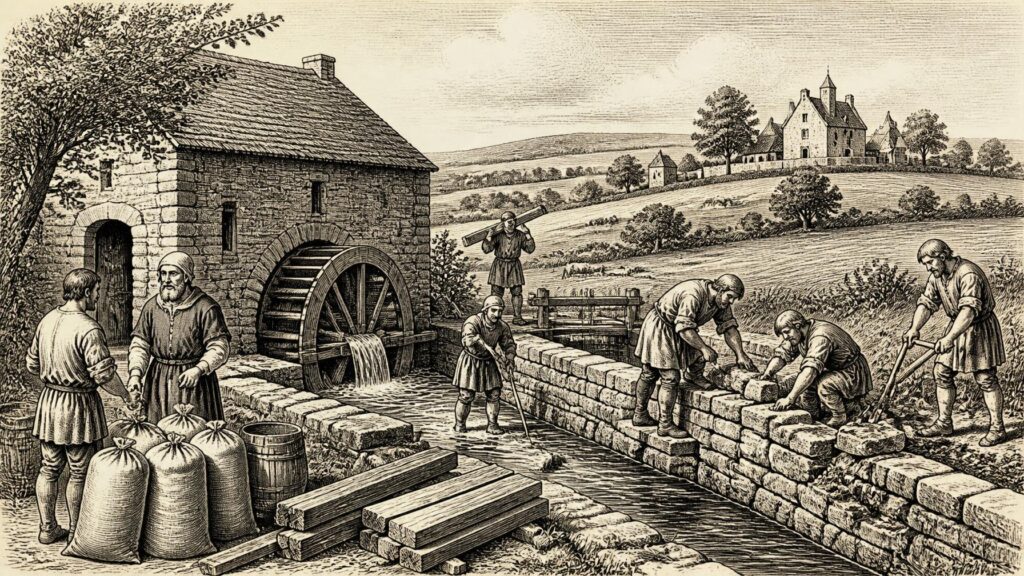
In Kilkenny, an Ormond deed dated 4 May records James Butler, earl of Ormond, leasing the stone mills called the Stone Mills, with their watercourse, to William Archer for life at an annual rent of eleven marks. Archer was authorised to take timber from the earl’s woods for repairs. This is unusually concrete evidence of the ordinary economic structures behind political power: water management, milling, woodland access, rent, maintenance and legal tenure. Grain brought to mills was fundamental to household food supplies, while control of a mill and its stream could generate reliable income for a great lord.
These Dublin and Kilkenny records must not be treated as describing all Ireland. They belong to written administrative and seigneurial systems strongest in particular towns and lordships. Alongside the annals’ record of ransom, kin violence, inauguration and scholarly households, they instead show the coexistence of different institutions. Ireland in 1426 was neither lawless nor centrally governed in a modern sense. It was a country of overlapping jurisdictions, where a city could receive royal compensation, an earl could lease a mill by indenture, and powerful families elsewhere could secure land, peace or survival through hostages, submission and force.
Primary Sources
- Annals of the Four Masters, Part 6: Annal M1426
- Annals of Ulster, Part 49: Year U1426
- Annals of Ulster
- Annals of the Four Masters
- CELT Project: Annals of the Four Masters
- Annála Connacht
- CELT Project: Annála Connacht
- TEI Header for Annála Connacht
- Calendar of Ormond Deeds, Volume III, 1413–1509
- Annals of Dublin from 1173 to 1500
- Chronicle of the Law Officers of Ireland: Lord Chancellors and Keepers of the Great Seal
- Patentee Officers and High Sheriffs in Ireland, 1173–1826
- Exploring the Irish Annals
- Irish Texts at CELT
- Translated Texts at CELT
- ‘Geographical loyalty’? Counties, palatinates, boroughs and ridings
- Gaelic Lordship and Tudor Conquest: Tír Eoghain, 1541–1603
- Gaelic Ireland: Land, Lordship and Settlement, c.1250–c.1650
- The Later Middle Ages
- Ceann Léime / Loop Head: Headland of the Leap