-
Independence Demanded
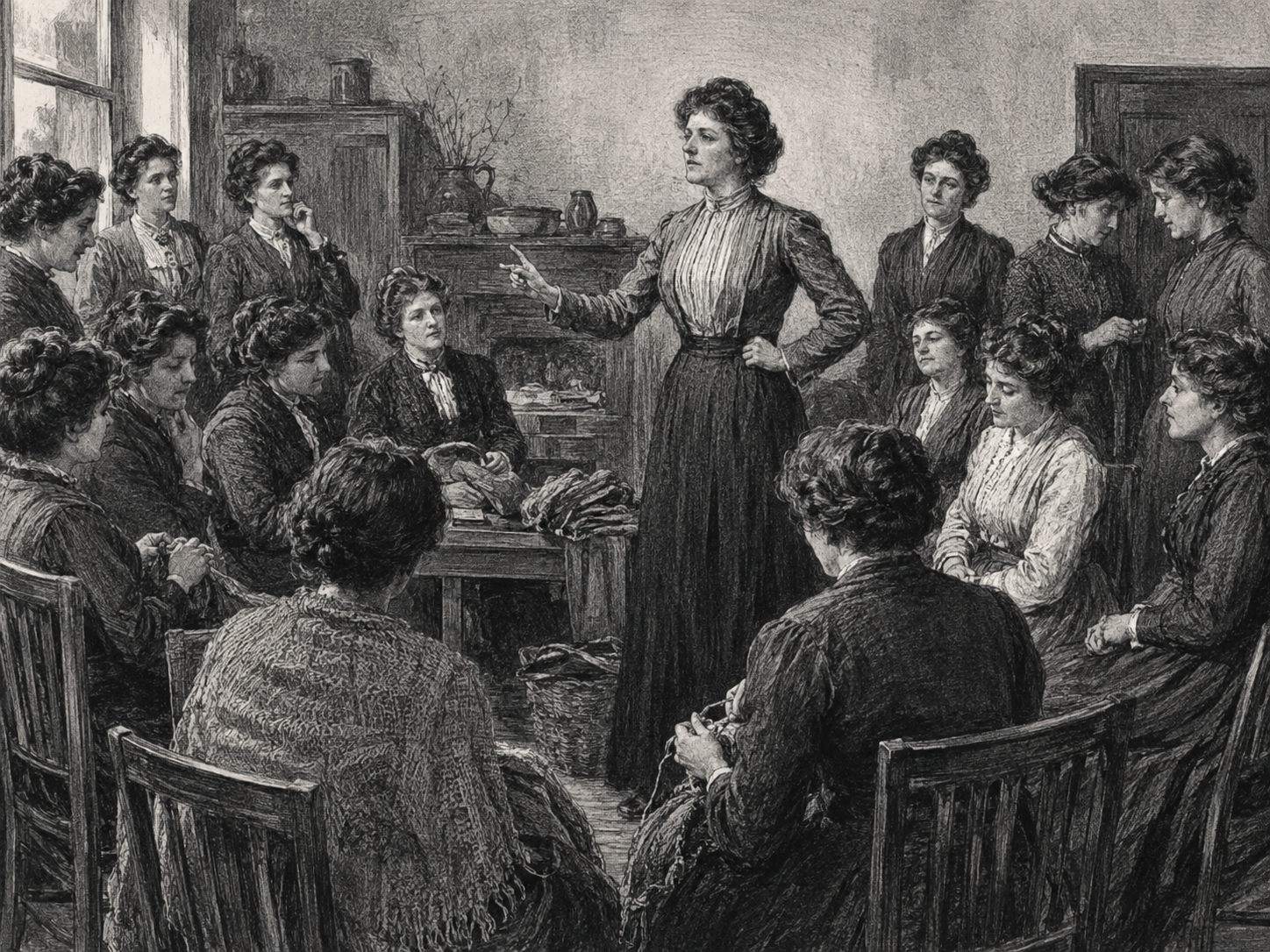
Read Article: Independence DemandedInghinidhe na hÉireann has declared that the restoration of an Irish legislature under Home Rule would not satisfy its political programme. The women’s organisation established under Maud Gonne’s leadership seeks the complete independence of Ireland rather than limited self-government within the United Kingdom. Its members argue that an Irish parliament remaining subject to Westminster and the Crown would leave the central question of national sovereignty unresolved. The declaration places the Daughters of Ireland firmly within advanced nationalism and separates the new movement from the constitutional programme pursued by John Redmond and the reunited Irish Parliamentary Party.
Home Rule supporters believe an Irish legislature could manage domestic affairs while preserving the connection with Britain. They hope disciplined parliamentary action at Westminster will eventually secure that settlement. Inghinidhe na hÉireann rejects the assumption that British institutions should determine the limits of Irish freedom. Its founding objectives place the re-establishment of complete independence before all other aims. The organisation regards Ireland as a nation entitled to govern itself, control its resources and shape its cultural life without external authority. This uncompromising position will attract separatists while alarming constitutional nationalists who fear that more radical demands may divide the movement.
The Daughters of Ireland connects political independence with cultural and economic self-reliance. Members intend to promote the Irish language, literature, history, music and art, especially among children and young people. They also support Irish manufacture and oppose cultural influences they believe encourage dependence upon Britain. These activities are not treated as decorative additions to political campaigning. The organisation considers national education, cultural confidence and domestic industry essential foundations of freedom. Ireland could not become independent merely through a constitutional document, its members argue, unless Irish people first developed the knowledge, organisation and confidence required to sustain national government.
The organisation’s programme also gives women an autonomous role within separatist politics. Women cannot vote in parliamentary elections and remain excluded from most positions of formal political authority. Inghinidhe na hÉireann nevertheless allows its members to determine policy, arrange public activities, publish arguments, raise funds and educate younger nationalists. The movement therefore challenges the political settlement between Britain and Ireland while also challenging assumptions within nationalism about women’s proper place. Its members do not intend merely to assist male leaders seeking independence. They claim the right to define the nation’s objectives and participate directly in the work required to achieve them.
In Limerick, the distinction between Home Rule and independence will become increasingly important as nationalist organisations compete for public support. Many voters remain loyal to constitutional methods and regard an Irish parliament as an attainable first step. Advanced nationalists answer that partial concessions may weaken the demand for sovereignty and reconcile Ireland permanently to British rule. The Daughters of Ireland has entered that dispute with unusual clarity. Its programme does not seek administrative reform, improved representation or a subordinate legislature. It demands an Ireland exercising complete national authority, and it places organised women among those responsible for bringing that objective into public life.
- Inghinidhe na hÉireann, early rules, objectives, membership records and annual reports, Maud Gonne MacBride Papers, National Library of Ireland, including MS 49,531/33. Exact folios should be confirmed before formal citation.
- Maud Gonne MacBride, writings concerning the aims and activities of Inghinidhe na hÉireann, Maud Gonne MacBride Papers, National Library of Ireland. Exact manuscript number and folio should be confirmed before formal citation.
- Helena Molony, Bureau of Military History Witness Statement No. 391, recollections concerning Inghinidhe na hÉireann and advanced-nationalist women’s organisation. Exact page should be confirmed before formal citation.
- United Irishman, Dublin, 1900–1901, reports and commentary concerning Inghinidhe na hÉireann, Home Rule and complete Irish independence. Exact issue, page and column should be confirmed before formal citation.
- Margaret Ward, Irish Nationalist Women, 1900–1918, Manchester: Manchester University Press, 1983; consult the chapter concerning the Daughters of Ireland and its separatist programme.
-
Women Organise
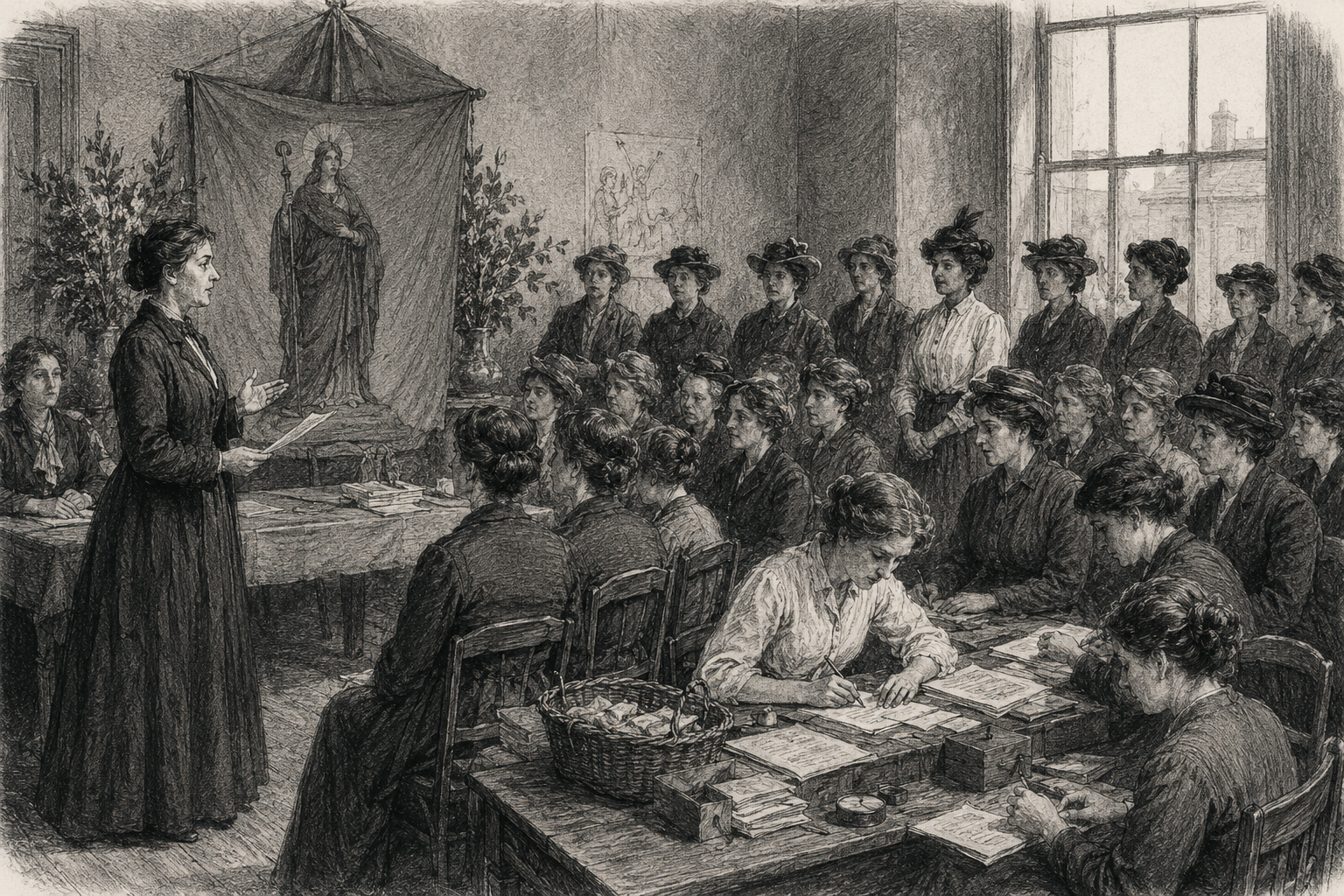
Read Article: Women OrganiseThe establishment of Inghinidhe na hÉireann has provided women with a distinct and independent place in advanced-nationalist politics. Founded under the leadership of Maud Gonne, the Daughters of Ireland differs from political organisations in which women are permitted only to collect subscriptions, prepare refreshments or assist male speakers. Its members intend to organise, educate and campaign in their own name. The organisation’s appearance during opposition to Queen Victoria’s visit demonstrates that women are no longer willing to remain silent observers of Ireland’s constitutional struggle. Nationalist women in Limerick will watch closely as this new political association develops.
Membership is reserved exclusively for women, allowing its officers and committees to determine their own programme without direction from parliamentary leaders. The organisation supports complete Irish independence rather than the limited restoration of an Irish legislature under Home Rule. It also intends to promote national self-reliance, women’s suffrage, Irish manufacture and relief for impoverished children. These objectives unite political separatism with social reform and cultural revival. By adopting Saint Brigid as its patron, the organisation connects contemporary female activism with an Irish historical tradition while asserting that women possess responsibilities to the nation extending beyond domestic and charitable work.
The Daughters of Ireland will use education and public culture as political instruments. Members plan to arrange Irish-language classes, lectures, dramatic performances, historical commemorations and activities for children intended to strengthen national awareness. Their organisation grew directly from preparations for a Patriotic Children’s Treat challenging the royal celebration held in Phoenix Park. That undertaking required women to raise money, secure provisions, coordinate volunteers and address large public gatherings. Such work demonstrated administrative ability normally denied recognition within political life. It also offered working and middle-class women opportunities to cooperate across social divisions through a shared commitment to Irish independence.
The new organisation challenges the structure of nationalism as well as British authority. Parliamentary politics remains overwhelmingly controlled by men, while women cannot vote in Westminster elections or stand as parliamentary candidates. Even nationalist movements often describe women as symbols of Ireland rather than political actors capable of shaping strategy. Inghinidhe na hÉireann rejects that passive role. Its members may speak publicly, publish political arguments, organise demonstrations and train younger women in nationalist activity. Their independence may create disagreement with male leaders who welcome women’s labour but remain reluctant to share authority, particularly when female activists advance more radical political and social demands.
For Limerick women, the development carries significance beyond Dublin. Women already sustain households, schools, shops, factories, religious societies, charitable organisations and cultural associations throughout the city and county. The Daughters of Ireland offers a model through which such experience can be directed towards political organisation. Its separatist programme will not attract every nationalist woman, and constitutional supporters may consider its methods too uncompromising. Nevertheless, the organisation has created a recognised female space within advanced nationalism. Women who were previously expected to assist from the margins may now determine policy, organise campaigns and speak publicly as political representatives of their own national convictions.
- Maud Gonne MacBride, writings on the history, activities and aims of Inghinidhe na hÉireann, Maud Gonne MacBride Papers, National Library of Ireland, MS 49,531/19.
- Helena Molony, Bureau of Military History Witness Statement No. 391, recollections of her involvement with Inghinidhe na hÉireann and advanced-nationalist women’s organisation.
- Inghinidhe na hÉireann, early rules, objectives, membership records and annual reports, Maud Gonne MacBride Papers, National Library of Ireland. Exact manuscript numbers and folios should be confirmed before formal citation.
- United Irishman, Dublin, April–July 1900, reports concerning the Patriotic Children’s Treat, Maud Gonne and the organisation of nationalist women. Exact issue, page and column should be confirmed before formal citation.
- Margaret Ward, Irish Nationalist Women, 1900–1918, Manchester: Manchester University Press, 1983; consult the chapter concerning the Daughters of Ireland and women’s autonomous nationalist organisation.
-
Daughters Founded
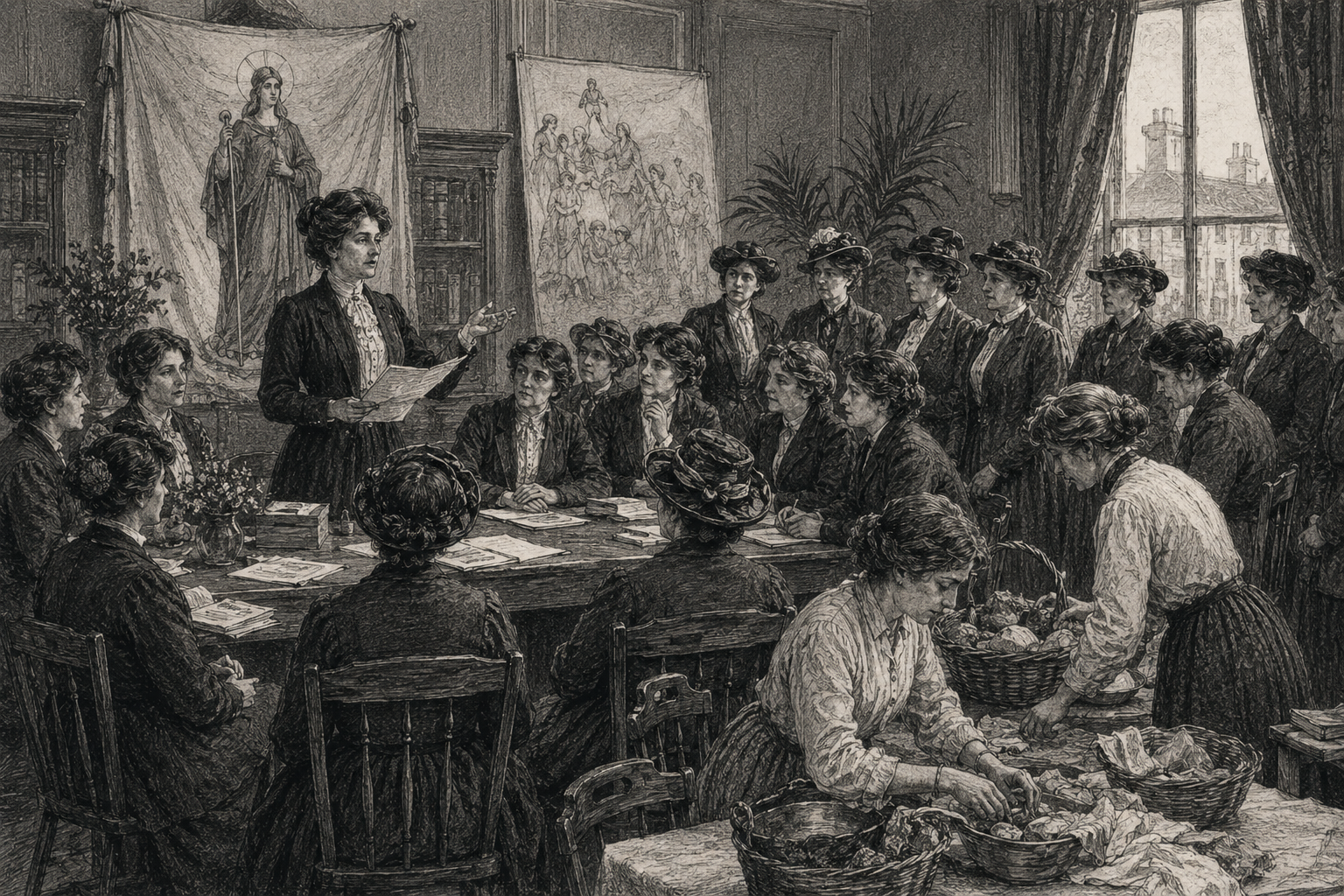
Read Article: Daughters FoundedInghinidhe na hÉireann, translated as the Daughters of Ireland, has been established in Dublin under the leadership of Maud Gonne. The women’s nationalist organisation emerged from a meeting held in the rooms of the Celtic Literary Society on Easter Sunday, where participants discussed practical opposition to Queen Victoria’s visit and its accompanying children’s celebrations. The founders intend to give women an independent place within advanced nationalism rather than restricting them to supporting roles in organisations directed by men. News of the initiative will attract attention in Limerick among women already active in cultural, charitable and political life.
The immediate concern of the meeting was the organisation of a Patriotic Children’s Treat as an alternative to the official gathering held for schoolchildren in Phoenix Park. Gonne and her colleagues objected to the association of childhood, education and public generosity with loyalty to the British Crown. They proposed instead to provide children with food, recreation, music and instruction centred upon Irish history and national identity. The project required fundraising, donated provisions and extensive voluntary labour. Its planning demonstrated that nationalist women could organise a large public undertaking independently and turn opposition to royal ceremony into practical community activity.
Inghinidhe na hÉireann adopted Saint Brigid as its patron and committed itself to the complete independence of Ireland. Its programme encouraged the study of the Irish language, literature, history, music and art, particularly among younger people. Members also intended to support Irish manufacture and resist cultural influences they believed weakened national self-respect. These aims placed political separatism beside education, economic self-reliance and cultural revival. The organisation rejected the limited objective of Home Rule and sought a sovereign Irish nation. Its work would therefore challenge both British administration and the more cautious constitutional methods pursued by the reunited Irish Parliamentary Party.
The new organisation also marks an important development in women’s public participation. Women remain excluded from parliamentary voting and from many political bodies, despite their extensive work in education, charity, labour organisation and nationalist campaigning. Gonne’s leadership offers women an organisation through which they can speak, raise funds, teach, publish and arrange demonstrations in their own name. Jennie Wyse Power, Anna Johnston, Annie Egan, Alice Furlong and other activists helped shape its early direction. Their involvement shows that nationalist politics is no longer confined to male parliamentarians, councillors and public speakers, but is extending into autonomous female organisation.
Limerick women have long sustained families, schools, religious societies, shops, workshops and charitable work, yet their political influence is rarely acknowledged formally. The creation of the Daughters of Ireland may encourage local women to connect national independence with education, culture, employment and the welfare of children. Critics will regard the organisation as excessively separatist, while constitutional nationalists may fear that it will deepen divisions within the movement. Nevertheless, its formation gives advanced nationalism a disciplined women’s voice. The opposition to one royal visit has produced an organisation whose ambitions extend far beyond the ceremonies of April 1900.
- Helena Molony, Bureau of Military History Witness Statement No. 321, stating that Inghinidhe na hÉireann was founded on Easter Sunday 1900 in the rooms of the Celtic Literary Society. Exact page should be confirmed before formal citation.
- Maud Gonne MacBride Papers, National Library of Ireland, MS 49,531/33, containing early membership lists, rules, objectives and documents concerning Inghinidhe na hÉireann.
- Maud Gonne MacBride, manuscript and typescript writings on the history, activities and aims of Inghinidhe na hÉireann, National Library of Ireland, Maud Gonne MacBride Papers. Exact manuscript and folio should be confirmed before formal citation.
- United Irishman, Dublin, April–May 1900, reports concerning Maud Gonne, the formation of the women’s organisation and preparations for the Patriotic Children’s Treat. Exact issue, page and column should be confirmed before formal citation.
- Inghinidhe na hÉireann, second annual report and early membership documents, circa 1900–1902, National Library of Ireland, MS 49,531/33.
-
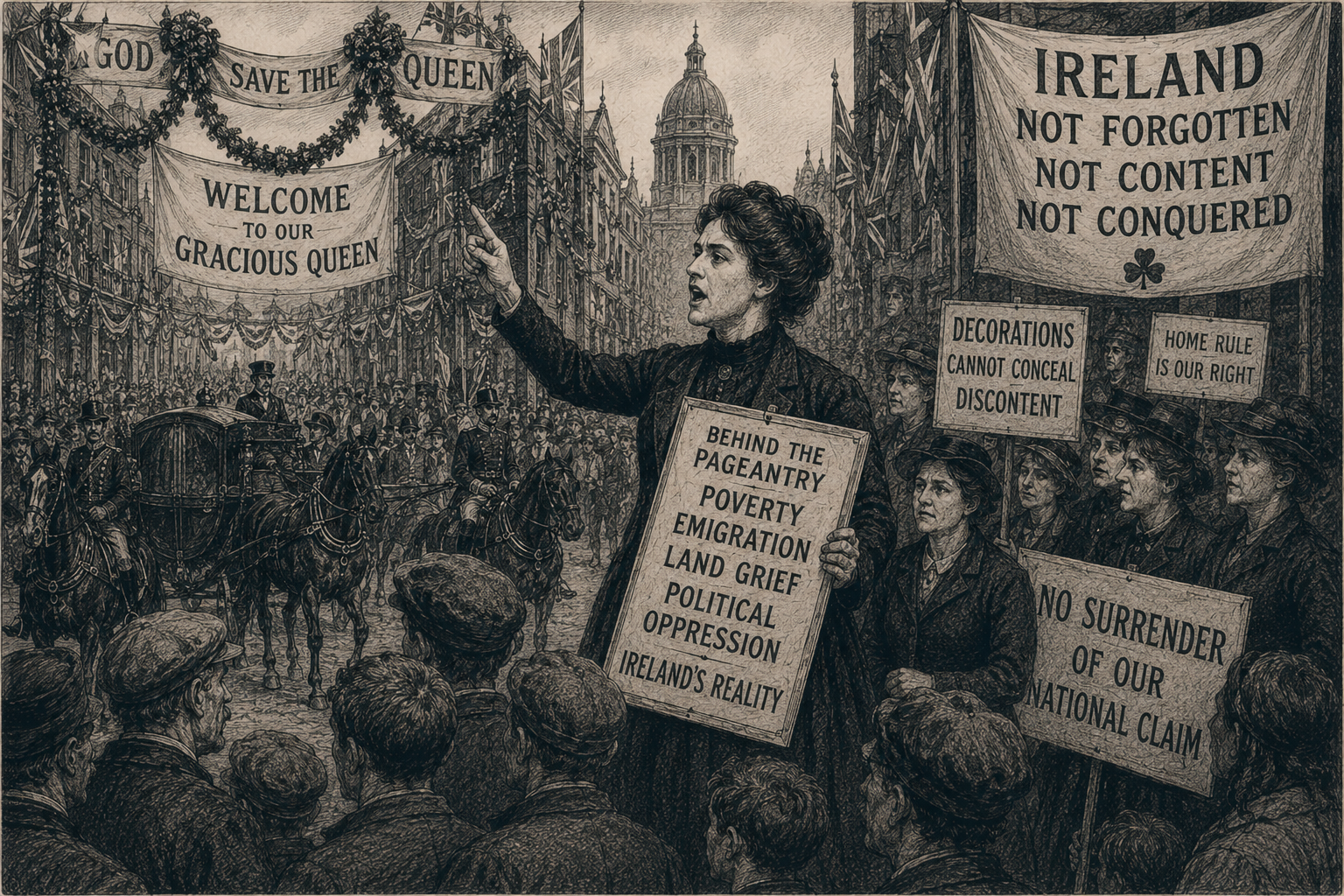
Hidden Discontent
Read Article: Hidden DiscontentAdvanced nationalists have rejected claims that Queen Victoria’s public reception demonstrates widespread Irish loyalty, arguing that the decorations and official ceremonies conceal deep political discontent. Dublin’s principal streets have been covered with garlands, ceremonial arches and symbols of imperial authority, while military escorts, civic addresses and organised celebrations have presented an image of national harmony. Separatist critics insist that this display was created by government departments, loyal institutions and commercial interests rather than by an Ireland content with British rule. In Limerick, their argument will appeal to nationalists who see Home Rule delayed, poverty unresolved and political authority retained at Westminster.
The royal programme has been carefully organised through Dublin Castle, municipal authorities, military commanders and participating institutions. Unionist newspapers interpret the cheering crowds as evidence of genuine affection for the Crown, but advanced nationalists distinguish attendance from allegiance. Spectators may have gathered to witness an elderly monarch, enjoy a public holiday or observe an exceptional procession without endorsing the Union. The presence of large crowds therefore cannot reveal every private conviction. Behind the decorated façades remain households affected by unemployment, insecure housing, rural hardship and emigration, conditions that nationalist critics believe offer a more truthful measure of Ireland’s relationship with British government.
Maud Gonne and other separatist organisers have placed famine memory at the centre of their opposition. Their criticism contrasts royal splendour with the suffering experienced during Victoria’s reign and with the continued departure of Irish people overseas. The South African War has intensified the argument, as advanced nationalists compare Boer resistance with Ireland’s demand for independence and condemn efforts to associate the Queen’s visit with military recruitment. Loyalists regard such comparisons as inflammatory, yet the opposition campaign has prevented the ceremonies from being interpreted as an uncontested national welcome. Every decoration has acquired political meaning because each side claims it represents Ireland differently.
Nationalist newspapers and public meetings have also challenged the authority of loyal addresses presented by corporations and institutions. An address approved by councillors or officials may express the position of a governing body without representing every resident, elector or member. Some nationalist-controlled authorities resisted participation, while dissenting representatives objected to public money being spent upon ceremonial displays. These disputes exposed the difference between official Ireland and popular political opinion. The institutions appearing before the Queen possessed legal and social authority, but advanced nationalists denied that they could speak for a people who repeatedly returned Home Rule representatives and sustained organisations opposed to British administration.
Limerick contains the same tensions beneath its public institutions and political life. Barracks, courts, commercial organisations and government offices connect the city with the Crown, while nationalist clubs, land organisations and electoral majorities express opposition to the constitutional settlement. Some residents may admire the Queen while rejecting Westminster government; others may support the Union without joining public celebrations. Advanced nationalists refuse such ambiguity and insist that official spectacle disguises national subjection. The visit has therefore produced competing pictures of Ireland: one decorated, orderly and loyal, the other politically dissatisfied and demanding freedom. Neither the arches nor the cheering can silence the constitutional argument continuing beneath them.
- Maud Gonne, “The Famine Queen,” United Irishman, 3 April 1900. Exact page and column should be confirmed before formal citation.
- United Irishman, Dublin, March–April 1900, editorials and reports opposing Queen Victoria’s visit, imperial ceremony and military recruitment. Exact issue, page and column should be confirmed before formal citation.
- Freeman’s Journal, Dublin, April 1900, nationalist reporting and editorial discussion of the royal decorations, public crowds, civic addresses and Home Rule opinion. Exact issue, page and column should be confirmed before formal citation.
- Senia Pašeta, “Nationalist Responses to Two Royal Visits to Ireland, 1900 and 1903,” Irish Historical Studies, vol. 31, no. 124, 1999, pp. 488–504.
- James H. Murphy, Abject Loyalty: Nationalism and Monarchy in Ireland During the Reign of Queen Victoria, Washington, D.C.: Catholic University of America Press, 2001.
-
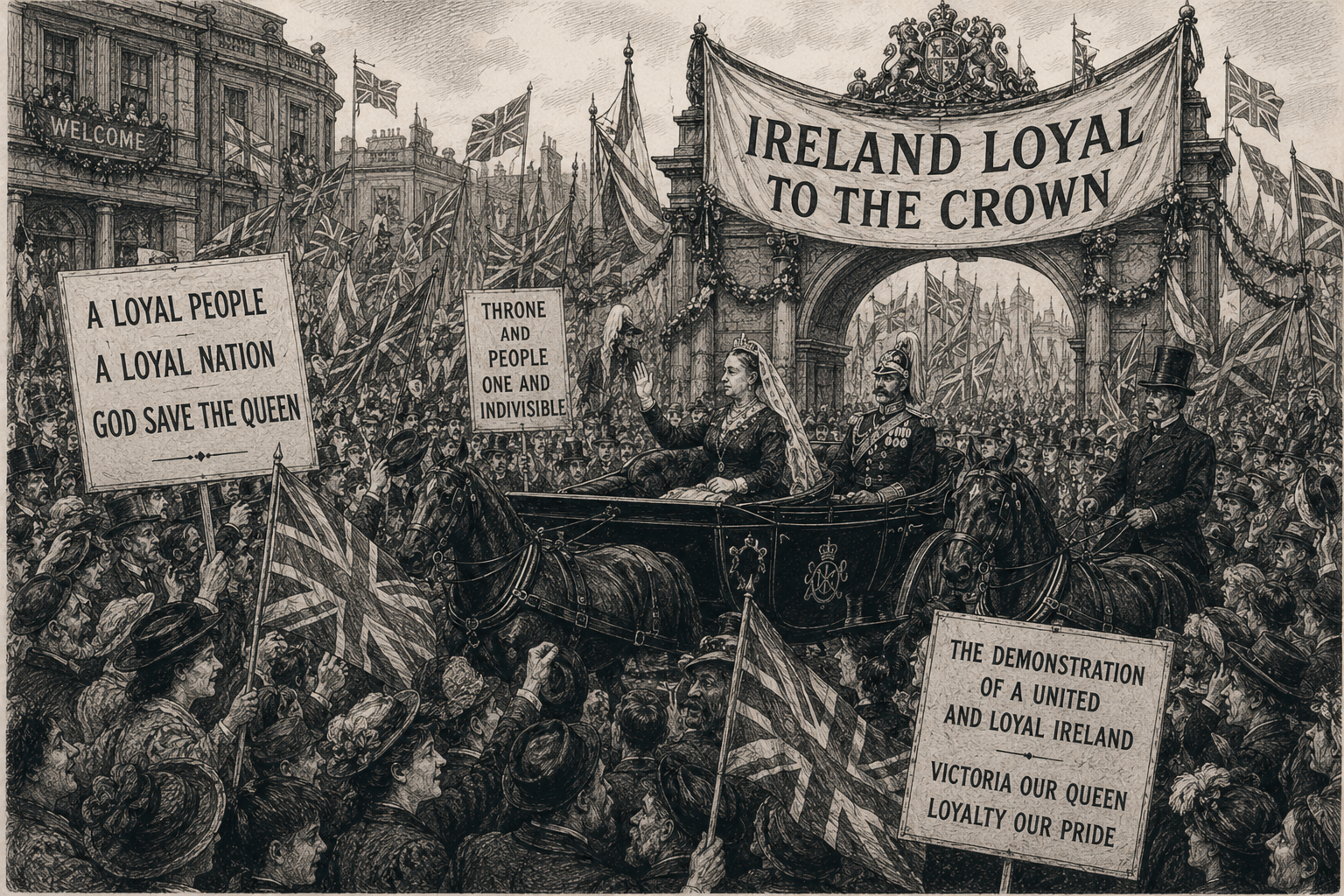
Loyal Ireland
Read Article: Loyal IrelandUnionist opinion has interpreted the enthusiastic public welcome given to Queen Victoria as convincing evidence that Ireland remains loyal to the Crown and firmly attached to the United Kingdom. Reports from Dublin describe immense crowds lining the route from Kingstown, cheering as the royal carriage passed through extensively decorated streets towards Phoenix Park. Loyalist newspapers and organisations argue that such scenes contradict nationalist claims to speak for the whole Irish population. In Limerick, supporters of the Union will regard the reception as proof that allegiance to the monarchy continues among military families, merchants, officials, Protestants and many citizens attracted by imperial identity.
The Queen herself recorded a loud and enthusiastic reception throughout her journey into Dublin. Unionist commentators have emphasised the crowds gathered along the quays and in poorer districts, maintaining that participation extended beyond privileged officials and wealthy loyalists. They point also to civic addresses, school celebrations, military reviews and institutional receptions as expressions of genuine public affection. The visit has been presented as a spontaneous national welcome rather than a spectacle created solely by Dublin Castle. For defenders of the constitutional settlement, the visible excitement demonstrates that Irish identity and loyalty to the British Crown need not be considered incompatible.
The South African War has strengthened the military meaning attached to the ceremonies. Irish soldiers are serving throughout the British Army, and the Queen’s visit has been linked publicly with recognition of their bravery and sacrifice. Unionists regard this service as evidence that Ireland contributes willingly to the defence and expansion of the Empire. The royal procession, mounted escorts and troop reviews allow that connection to be displayed before large civilian audiences. In Limerick, where barracks and recruiting traditions have long shaped employment and family life, some households will understand imperial service through relatives whose welfare depends upon the army rather than through political argument alone.
Unionist leaders also believe the welcome weakens the case for Home Rule. They argue that membership of the United Kingdom provides parliamentary representation, commercial access, military protection and participation in an empire offering employment across the world. Nationalist electoral strength is acknowledged, but unionists insist that repeated nationalist victories cannot erase loyal minorities or compel them to accept government by an Irish legislature. The cheering crowds will therefore be used as evidence that constitutional opinion is more varied than parliamentary figures suggest. Loyalists maintain that public loyalty deserves protection against any political settlement that might place their identity and institutions under nationalist control.
Nationalist critics reject this interpretation, observing that crowds may gather from curiosity, holiday excitement or interest in royal spectacle without endorsing British rule. Nevertheless, the welcome has given unionists a powerful public image with which to defend the existing constitutional order. The packed streets, decorated buildings and formal addresses can be presented as visible signs of loyalty, even while opposition meetings and hostile newspapers reveal deep disagreement. For Limerick, the visit confirms that allegiance cannot be measured by one procession alone. Yet unionists will remember the cheering as proof that the Crown still commands affection and that Ireland’s place within the United Kingdom retains substantial popular support.
- Queen Victoria, journal entry for 4 April 1900, Royal Archives, Windsor Castle, describing the crowds, cheering, civic welcome and journey from Kingstown through Dublin. Exact archival volume and folio should be confirmed before formal citation.
- The Irish Times, Dublin, 5 April 1900, contemporary reports and editorial commentary on the royal arrival, public welcome and loyal demonstrations. Exact page and column should be confirmed before formal citation.
- Daily Express, Dublin, April 1900, unionist reports and editorials interpreting the royal reception as evidence of Irish loyalty to the Crown and Union. Exact issue, page and column should be confirmed before formal citation.
- Robert Augustus Henry L’Estrange, photographic collection documenting Queen Victoria’s royal visit to Dublin, 4–26 April 1900, Queensland University of Technology Digital Collections.
- Senia Pašeta, “Nationalist Responses to Two Royal Visits to Ireland, 1900 and 1903,” Irish Historical Studies, vol. 31, no. 124, 1999, pp. 488–504.
-
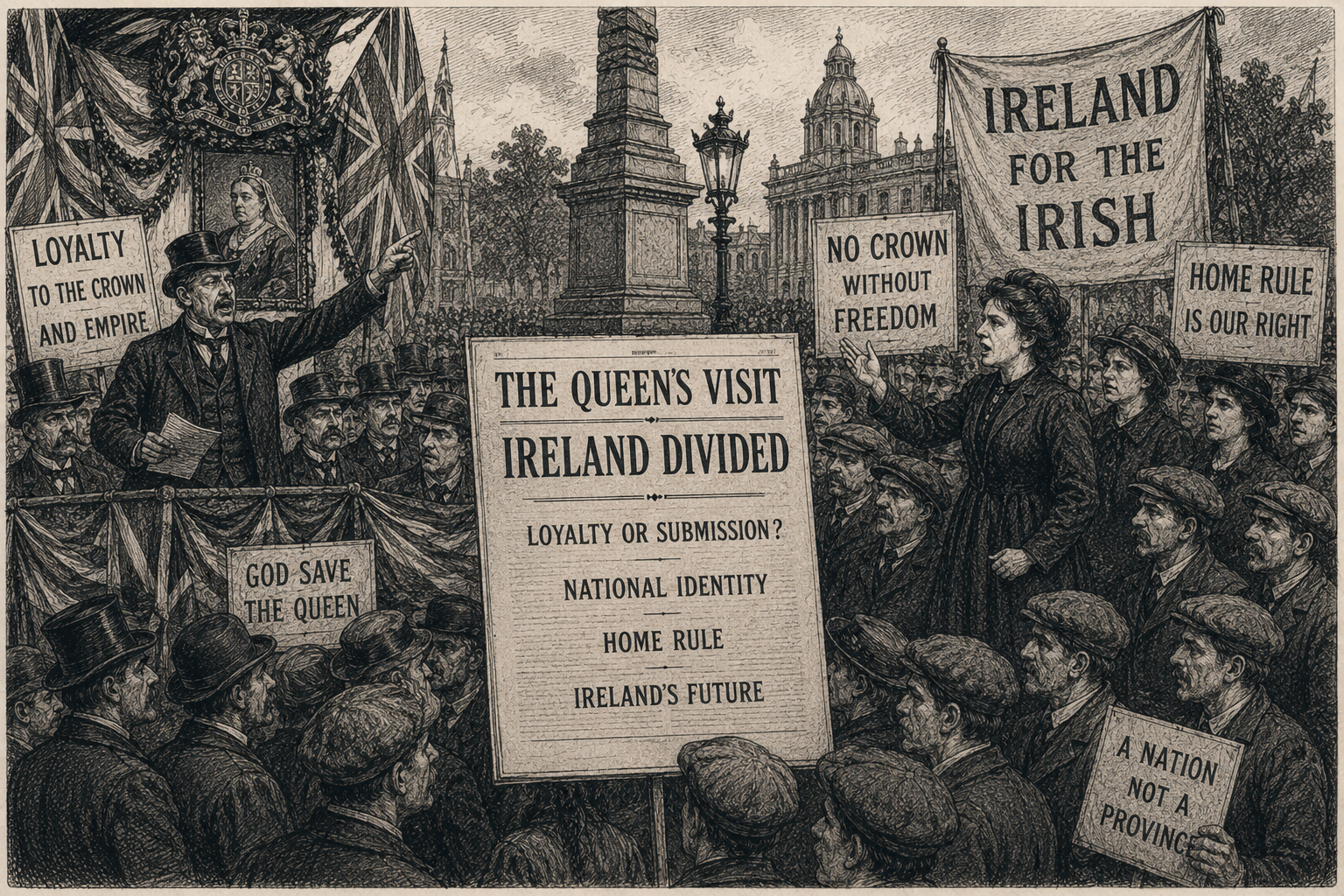
Divided Allegiance
Read Article: Divided AllegianceQueen Victoria’s final visit has intensified argument across Ireland over loyalty, national identity and the country’s constitutional position within the United Kingdom. Unionist organisations and public institutions have treated the royal ceremonies as evidence that attachment to the Crown remains strong, while nationalist critics insist that cheering crowds cannot settle Ireland’s demand for self-government. Limerick residents are following the dispute through newspapers, political clubs and public conversation. The same procession may appear to one observer as a dignified expression of loyalty and to another as an imperial display staged by a government lacking democratic authority in Ireland.
Supporters of the Union point to decorated streets, civic addresses, military reviews and the large numbers attending public events. They argue that Ireland benefits from membership of the United Kingdom through trade, defence, imperial employment and representation at Westminster. For Protestant communities, military families, merchants and officials, loyalty to the Crown may form part of religious, social and professional identity as well as political conviction. Unionist newspapers therefore reject the claim that nationalist representatives speak for the entire country. They present the Queen’s reception as proof that many Irish people remain willing participants in British public life and imperial affairs.
Constitutional nationalists occupy a more complicated position. Many support Home Rule and an Irish legislature while remaining prepared to offer personal courtesy to the monarch. John Redmond and his reunited parliamentary colleagues seek constitutional change through Westminster rather than separation from Britain. Their opponents accuse them of weakening the national demand whenever they accept loyal ceremonies or distinguish between the Crown and the government acting in its name. The visit has therefore exposed disagreement within nationalism itself: whether Ireland may preserve a ceremonial connection with the monarchy under self-government, or whether genuine national freedom requires the rejection of British authority altogether.
Advanced nationalists led by figures including Maud Gonne interpret the ceremonies as political propaganda. They connect the visit with the South African War, army recruitment, famine memory, eviction and continuing emigration. The establishment of Inghinidhe na hÉireann during April has given nationalist women an organised role in promoting complete independence, cultural revival and political education. Their resistance demonstrates that national identity is being contested not only in Parliament but through newspapers, schools, children’s celebrations and public ritual. Royal pageantry has become a struggle over symbols, with each side seeking to define what Ireland is and who possesses the right to speak for it.
In Limerick, these questions reach beyond abstract constitutional theory. The Union is encountered through barracks, courts, constabulary stations, government offices and commercial connections, while nationalism is expressed through elections, land agitation, political societies and memories carried within families. Individuals may combine identities that political speeches present as incompatible: an Irish nationalist may respect the Queen, an Irish soldier may support Home Rule, and a loyal subject may still demand reform. Victoria’s visit has not resolved Ireland’s position. Instead, it has made visible the overlapping loyalties and deep disagreements that will continue shaping political life after the decorations have been removed.
- Queen Victoria, journal entries concerning her final Irish visit, 4–26 April 1900, Royal Archives, Windsor Castle. Exact volume and folio should be confirmed before formal citation.
- Freeman’s Journal, Dublin, April 1900, nationalist reporting and editorial commentary on the royal visit, Home Rule, civic participation and competing claims of loyalty. Exact issue, page and column should be confirmed before formal citation.
- The Irish Times, Dublin, April 1900, contemporary reports and editorials concerning royal ceremonies, unionist opinion and Ireland’s constitutional relationship with the United Kingdom. Exact issue, page and column should be confirmed before formal citation.
- Senia Pašeta, “Nationalist Responses to Two Royal Visits to Ireland, 1900 and 1903,” Irish Historical Studies, vol. 31, no. 124, 1999, pp. 488–504.
- James H. Murphy, Abject Loyalty: Nationalism and Monarchy in Ireland During the Reign of Queen Victoria, Washington, D.C.: Catholic University of America Press, 2001.
-
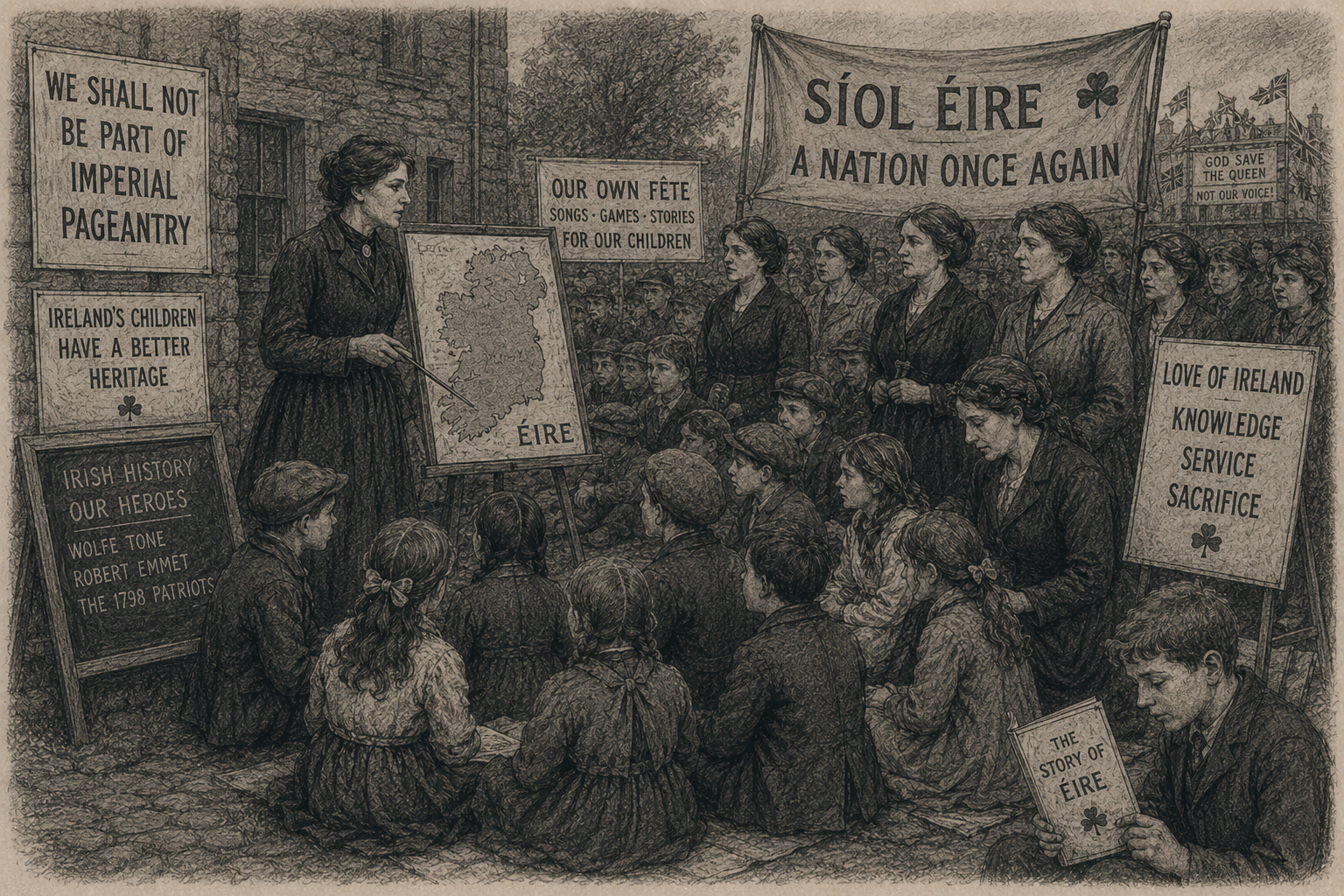
Patriotic Children
Read Article: Patriotic ChildrenNationalist women have organised a vast Patriotic Children’s Treat in Dublin as a direct challenge to the royal celebration arranged for school pupils during Queen Victoria’s April visit. Led by Maud Gonne, the women gathered children whose families had rejected or avoided the Phoenix Park festivities and offered them a separate day of food, music, recreation and national instruction. The event demonstrates that women excluded from formal political power can still influence public opinion through community organisation. Limerick nationalists will follow the gathering closely, recognising its attempt to place Irish identity rather than imperial loyalty before the country’s children.
The organising committee emerged from a meeting of nationalist women held in the rooms of the Celtic Literary Society on Easter Sunday. Their discussion turned towards the children’s royal celebration, which they regarded as an effort to associate youth, education and generosity with the British monarchy. Maud Gonne became president of the committee, while volunteers collected money, provisions and practical assistance across Dublin. With few established resources, the women relied upon subscriptions, donated food and extensive unpaid labour. Their preparations revealed considerable organisational ability and created a political role for women beyond attendance at meetings directed by male nationalist leaders.
Children and stewards assembled at Beresford Place before proceeding towards Clonturk Park in Drumcondra, where the principal entertainment was held. Contemporary accounts place attendance between approximately twenty-five thousand and thirty thousand, making the occasion one of the largest nationalist children’s events yet organised. Wagons carried buns, biscuits, sweets and drinks for distribution, while games, music and speeches filled the afternoon. The gathering offered pleasure to children from working families but also carried an unmistakable political purpose. Its organisers intended to demonstrate that patriotism, charity and public celebration did not require allegiance to the Crown or participation in imperial ceremony.
The women contrasted their event with the official Phoenix Park treat, arguing that Irish children should learn national history rather than be displayed as evidence of loyalty to British rule. Sympathy for the Boer republics and opposition to military recruitment formed part of the wider atmosphere surrounding the gathering. Yet the organisers understood that political education could not depend upon speeches alone. Food, companionship, music and shared enjoyment made the nationalist message tangible to children and parents. The event joined social care with political mobilisation, presenting the national cause as something capable of providing community, dignity and practical generosity rather than merely demanding sacrifice.
The committee’s work is expected to produce consequences extending beyond one afternoon. The women involved are establishing stronger organisational ties that will develop into Inghinidhe na hÉireann, the Daughters of Ireland, under Maud Gonne’s leadership. The new movement will promote Irish independence, language, culture and political education while giving women an autonomous place within advanced nationalism. For Limerick, the Patriotic Children’s Treat offers an important example of how public life may be shaped outside Parliament and municipal government. By organising thousands of children, nationalist women have challenged both royal pageantry and the assumption that political leadership belongs exclusively to men.
- Helena Molony, Bureau of Military History Witness Statement No. 321, describing the foundation of Inghinidhe na hÉireann and the nationalist women associated with its earliest activities.
- United Irishman, 5 May 1900, report concerning preparations for the Patriotic Children’s Treat. Exact page and column should be confirmed before formal citation.
- Irish Independent, 2 July 1900, contemporary report on the Patriotic Children’s Treat at Clonturk Park, including attendance and organisational details. Exact page and column should be confirmed before formal citation.
- Maud Gonne MacBride Papers, National Library of Ireland, documents concerning Inghinidhe na hÉireann and its children’s activities, MS 49,531/33.
- Mary Hay, “What Did Advanced Nationalists Tell Irish Children in the Early Twentieth Century?”, Éire-Ireland, vol. 47, nos. 1–2, 2012, discussion of the Patriotic Children’s Treat and nationalist education.
-
Nationalist Defiance
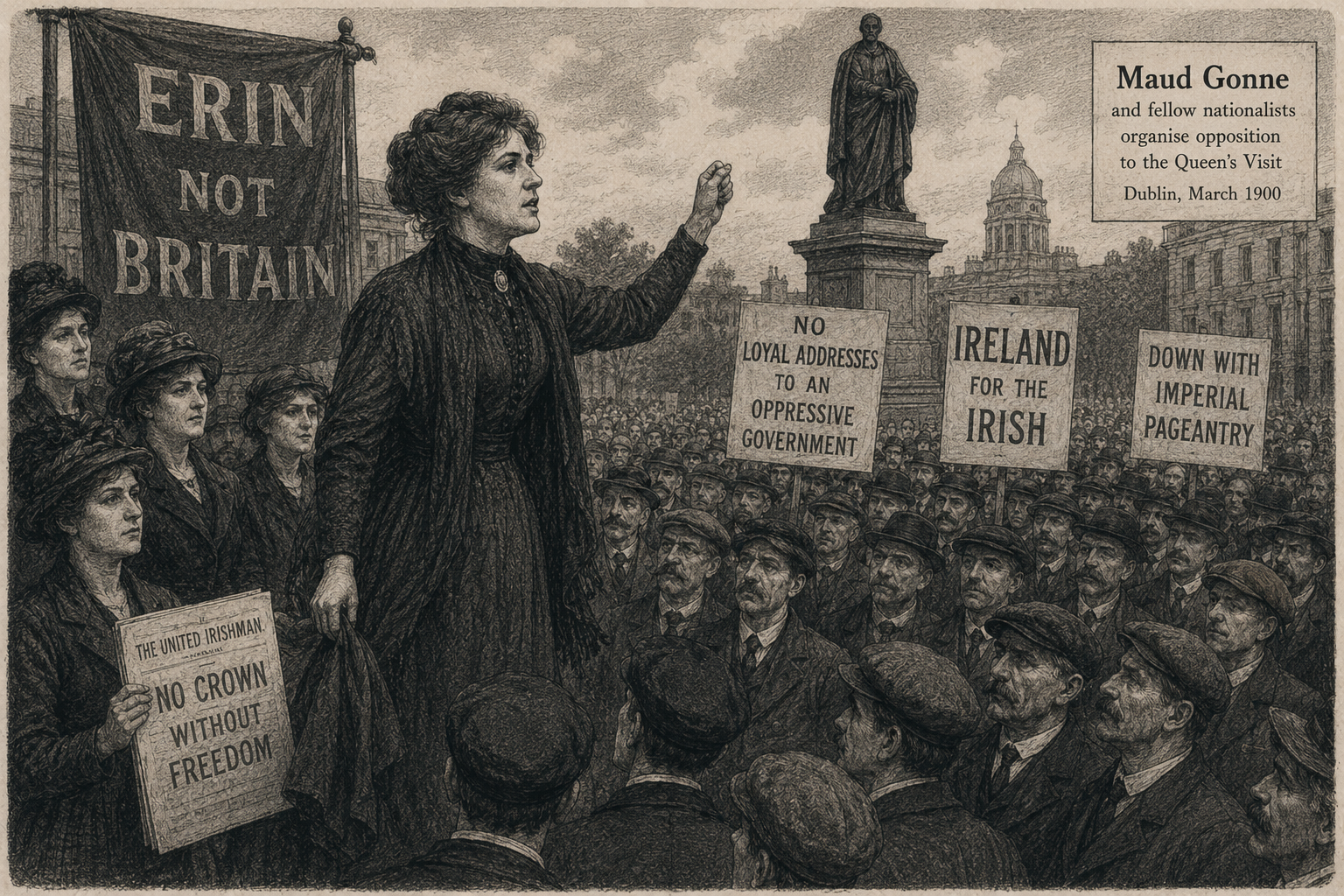
Read Article: Nationalist DefianceMaud Gonne and other advanced nationalists have organised determined opposition to Queen Victoria’s visit, rejecting official claims that the royal ceremonies represent the will of the Irish people. Gonne’s article “The Famine Queen,” published immediately before the monarch’s arrival, condemns the visit as an imperial and military demonstration conducted during the South African War. Her supporters have challenged loyal addresses, public decorations and attempts to present cheering crowds as evidence of national contentment. In Limerick, where nationalist opinion is strong, the campaign will attract attention among readers who regard Home Rule as insufficient and seek complete Irish independence.
Gonne’s attack places the Great Famine, eviction and emigration at the centre of the dispute. She argues that the splendour surrounding the Queen cannot be separated from the suffering endured during her reign or from the continued departure of Irish men and women. Advanced nationalists also believe the visit is intended to encourage recruitment for Britain’s war against the Boer republics. Their opposition therefore joins Irish separatism with sympathy for another small nation resisting imperial power. Supporters of the Queen denounce the language as bitter and unjust, but the controversy has ensured that royal celebration will not proceed without an organised nationalist answer.
Women have assumed a conspicuous role in the resistance. Gonne and a group of nationalist women are developing an organisation that will become Inghinidhe na hÉireann, or the Daughters of Ireland, devoted to independence, Irish culture and political education. Their activity challenges the exclusion of women from many established nationalist organisations and creates a new space for female leadership. Rather than remaining spectators to male political debate, they are raising funds, organising meetings and preparing an alternative patriotic celebration for children. The movement demonstrates that opposition to the royal visit is helping to reshape both nationalist organisation and women’s participation in public life.
The planned Patriotic Children’s Treat will answer the official celebration held for schoolchildren in Phoenix Park. Nationalist organisers object to children being assembled beneath royal and military influence and intend to offer an alternative gathering centred upon Irish history, music and national identity. The event is expected to attract children whose families refused participation in the royal festivities or rejected their political purpose. By organising food, entertainment and instruction, Gonne’s supporters seek to prove that separatism can provide practical community action as well as protest. The contest over the Queen’s visit has consequently extended into education, childhood and the loyalties of a rising generation.
Limerick nationalists will recognise many of the arguments advanced by Gonne and her associates. Memories of famine, rural hardship and emigration remain powerful throughout the city and county, while sympathy for the Boers has strengthened criticism of British imperial policy. Constitutional nationalists may disagree with the severity of the separatist campaign and continue to distinguish courtesy towards the Queen from support for the Union. Advanced nationalists reject that compromise, insisting that every loyal ceremony strengthens foreign rule. The royal visit has therefore exposed divisions within nationalism itself while giving women activists and separatist organisers a prominent platform from which to challenge imperial authority.
- Maud Gonne, “The Famine Queen,” United Irishman, 3 April 1900. Exact page and column should be confirmed before formal citation.
- United Irishman, Dublin, March–April 1900, editorials and reports opposing Queen Victoria’s visit, British recruitment and the South African War. Exact issue, page and column should be confirmed before formal citation.
- Helena Molony, Bureau of Military History Witness Statement No. 321, account of the founding of Inghinidhe na hÉireann on Easter Sunday 1900 and its early nationalist activities.
- Maud Gonne MacBride Papers, National Library of Ireland, writings concerning the history, aims and activities of Inghinidhe na hÉireann. Exact manuscript number and folio should be confirmed before formal citation.
- Senia Pašeta, “Nationalist Responses to Two Royal Visits to Ireland, 1900 and 1903,” Irish Historical Studies, vol. 31, no. 124, 1999, pp. 488–504.
-
Pageantry Challenged
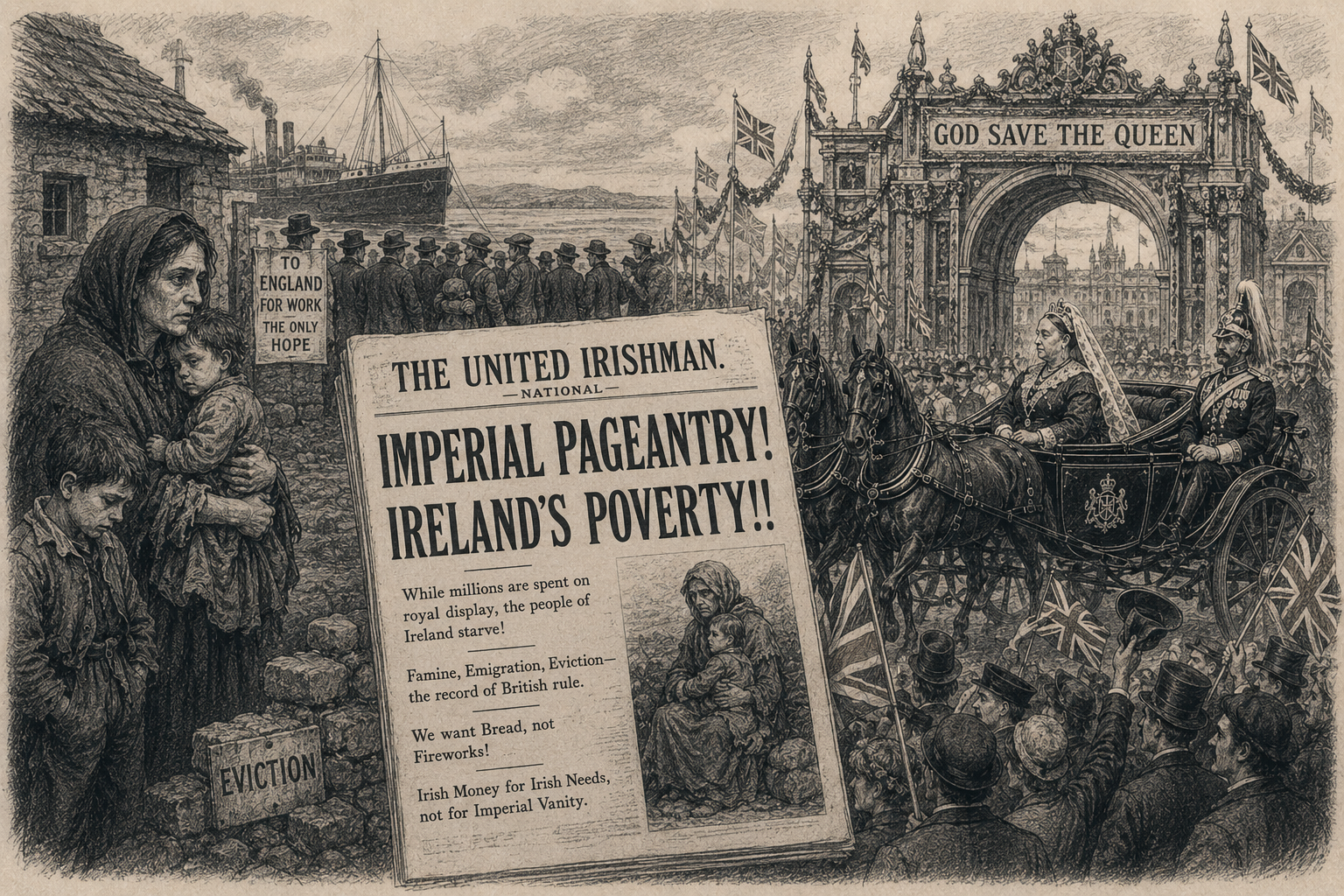
Read Article: Pageantry ChallengedNationalist newspapers have criticised Queen Victoria’s visit as an elaborate imperial spectacle staged while poverty, overcrowding and emigration continue to shape Irish life. Their editorials argue that decorated streets, military escorts and loyal addresses cannot conceal the economic hardship experienced in towns, rural districts and labouring households. Reports of cheering crowds are being answered with reminders of families divided by migration, tenants struggling upon poor land and workers surviving upon uncertain wages. In Limerick, where poverty and departure remain familiar realities, such criticism will find readers unwilling to accept royal ceremony as evidence that Ireland is prosperous, contented or politically satisfied.
Advanced-nationalist writers have presented the visit as an attempt to strengthen loyalty during the South African War and revive support for British imperial authority. Maud Gonne’s polemical attack upon the Queen connected the royal celebrations with memories of the Great Famine, eviction and the continuing departure of Irish people overseas. The argument was deliberately severe: a monarch surrounded by wealth and ceremony was contrasted with communities diminished by hunger, insecure employment and lost population. Supporters of the visit dismissed such language as inflammatory, yet the controversy ensured that famine memory became inseparable from public discussion of Victoria’s final appearance in Ireland.
Moderate nationalist newspapers adopted a more cautious position but still questioned extravagant displays of allegiance. They could distinguish personal courtesy towards an elderly sovereign from approval of government through Westminster, while warning that official addresses did not settle Ireland’s demand for Home Rule. Their criticism focused upon the claim that crowds and decorations represented unanimous loyalty. Thousands may have attended from curiosity, holiday excitement or interest in military spectacle rather than political conviction. Nationalist editors therefore urged readers to look beyond the procession and consider the daily conditions experienced in tenements, labourers’ cottages, congested rural districts and emigrant households throughout the country.
Emigration gave the criticism particular force. Every departing ship and railway journey carried young men and women away from Irish families, reducing rural populations and leaving parents dependent upon money sent from Britain, America and other destinations. Limerick city and county knew this pattern intimately, as limited employment and uncertain agricultural prospects encouraged repeated departure. Nationalist commentators argued that a government celebrating imperial unity had failed to create conditions in which Ireland’s people could remain at home. Royal pageantry might fill Dublin’s streets for several weeks, but it could not replace absent children, restore declining communities or provide secure work for those considering departure.
The newspaper dispute revealed two sharply different interpretations of the same visit. Unionist publications portrayed the crowds, ceremonies and institutional addresses as evidence of affection for the Crown and Ireland’s place within the United Kingdom. Nationalist journals saw an administration arranging magnificence around unresolved poverty and political subordination. Neither decoration nor protest alone could express the full range of Irish opinion, but the criticism prevented the royal programme from passing as uncomplicated celebration. For Limerick readers, the argument returned attention from Dublin’s ceremonial avenues to ordinary households, where rent, wages, food, emigration and family separation carried more immediate authority than imperial display.
- Maud Gonne, “The Famine Queen,” published in connection with Queen Victoria’s April 1900 visit and circulated through advanced-nationalist journalism; consult the surviving contemporary text and publication history. Exact issue, page and column should be confirmed before formal citation.
- United Irishman, Dublin, March–April 1900, editorials and reports opposing Queen Victoria’s visit and criticising imperial ceremony, recruitment and British government. Exact issue, page and column should be confirmed before formal citation.
- Freeman’s Journal, Dublin, April 1900, nationalist reporting and editorial commentary concerning the royal visit, Home Rule, public loyalty and Irish social conditions. Exact issue, page and column should be confirmed before formal citation.
- Senia Pašeta, “Nationalist Responses to Two Royal Visits to Ireland, 1900 and 1903,” Irish Historical Studies, vol. 31, no. 124, 1999, pp. 488–504.
- James H. Murphy, Abject Loyalty: Nationalism and Monarchy in Ireland During the Reign of Queen Victoria, Washington, D.C.: Catholic University of America Press, 2001; consult the discussion of the 1900 visit, nationalist journalism and competing public interpretations.
-
Nationalist Resistance
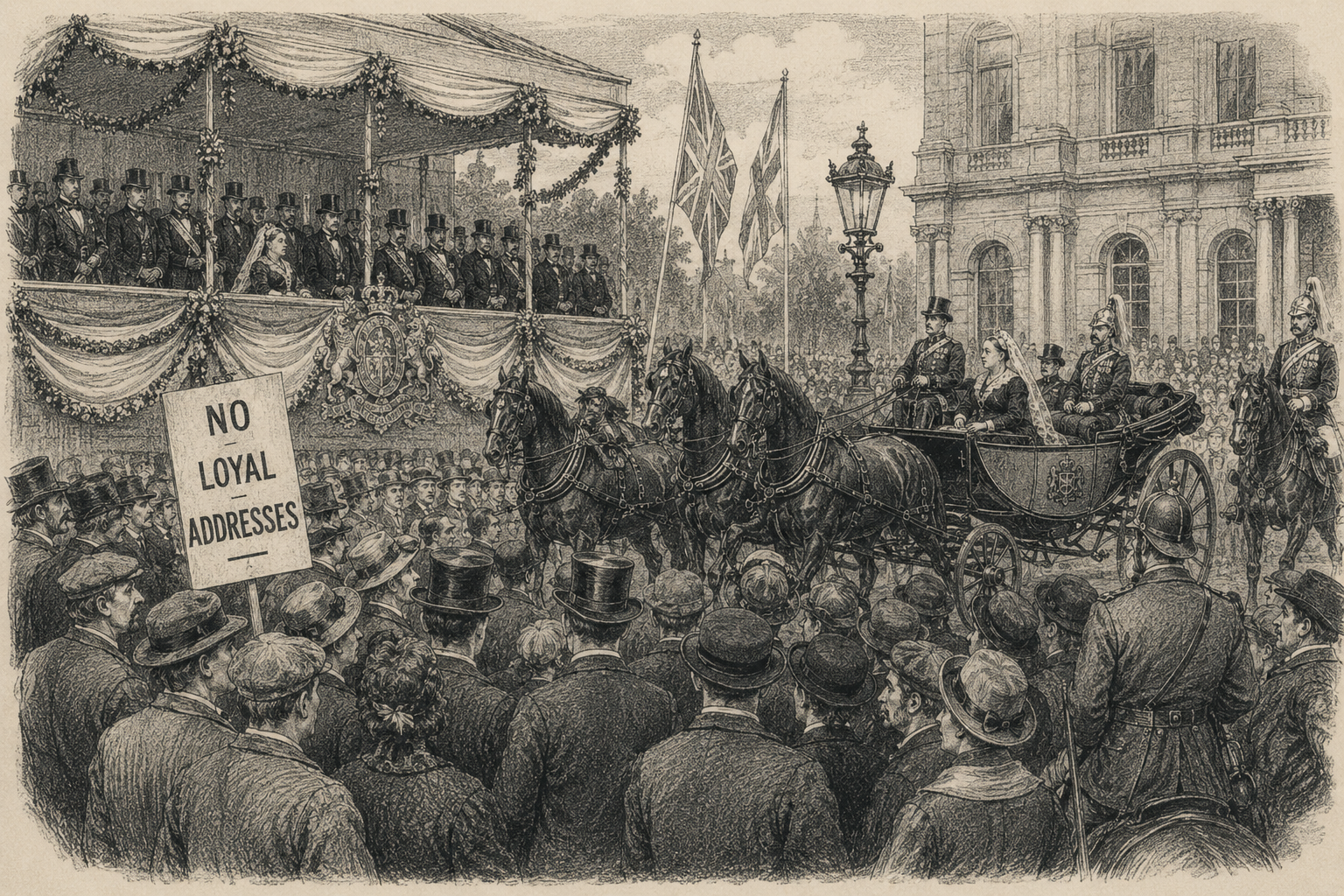
Read Article: Nationalist ResistanceNationalist-controlled authorities and public representatives in several districts have resisted demands that they participate fully in the loyal ceremonies surrounding Queen Victoria’s visit to Ireland. Motions, public meetings and newspaper statements have challenged the claim that municipal addresses and official receptions represent the settled opinion of the Irish people. Some nationalist councillors refused to associate themselves with declarations of allegiance, while others attended civic proceedings only after arguing that formal courtesy towards the monarch did not amount to approval of British government. The disputes have reached Limerick, where public bodies must balance local political convictions against established ceremonial expectations.
Dublin Corporation ultimately presented a loyal address, but the decision exposed serious division among nationalist representatives. Opponents condemned the action as inconsistent with the demand for Irish legislative independence and accused participating councillors of lending national authority to an imperial demonstration. Supporters answered that a municipal welcome could be offered to the Queen without surrendering support for Home Rule. The disagreement revealed the complicated position of constitutional nationalists, many of whom distinguished between personal respect for the monarch and opposition to government from Westminster. Advanced nationalists rejected that distinction and regarded every public address as an endorsement of the Union.
Resistance also appeared through absence, delayed decisions and refusals to decorate public property or finance celebrations from local rates. Nationalist-controlled bodies faced pressure from loyalist residents, commercial interests and government officials who expected visible participation. Yet councillors were equally answerable to electors who remembered the Great Famine, eviction, coercion and the repeated failure to establish an Irish legislature. A refusal to join the ceremonies could therefore express political principle, concern over public expenditure or fear of appearing submissive before nationalist voters. Even where an authority participated, dissenting members could publicly repudiate its decision and deny that the resulting address spoke for their district.
The controversy demonstrated that local government had become an important arena of national politics. County councils and district councils created under recent legislation gave elected representatives greater influence over roads, public health, housing and local administration. Nationalists viewed these bodies as evidence that Irish people were capable of governing their own affairs, while unionists feared that nationalist majorities would use them to weaken allegiance to the Crown. Decisions concerning the royal visit consequently carried significance beyond decoration and ceremony. Every address, refusal, amendment or abstention became part of the wider argument over whether Ireland remained willingly incorporated within the United Kingdom.
In Limerick city and county, similar tensions existed among councillors, Poor Law guardians, clergy, merchants and political organisations. Loyalists expected public institutions to honour the sovereign, while nationalists questioned whether bodies elected by Irish voters should affirm a political settlement those voters repeatedly sought to change. Moderates attempted to separate civic hospitality from constitutional submission, but more militant voices regarded that compromise as impossible. The royal visit has therefore revealed not only loyalty and popular curiosity but organised resistance within Irish public life. Official ceremony may present an image of unity, yet the debates within elected authorities show that allegiance to the Crown remains contested.
- Freeman’s Journal, Dublin, March–April 1900, reports and editorials concerning nationalist opposition to loyal addresses, municipal participation and Queen Victoria’s visit. Exact issue, page and column should be confirmed before formal citation.
- United Irishman, Dublin, March–April 1900, nationalist commentary and reports of meetings opposing the royal visit and official declarations of loyalty. Exact issue, page and column should be confirmed before formal citation.
- Dublin Corporation, council minutes and ceremonial papers concerning the decision to present Queen Victoria with a loyal address on 4 April 1900, Dublin City Archives. Exact volume, meeting date and archival reference should be confirmed before formal citation.
- Senia Pašeta, “Nationalist Responses to Two Royal Visits to Ireland, 1900 and 1903,” Irish Historical Studies, vol. 31, no. 124, 1999, pp. 488–504.
- James H. Murphy, Abject Loyalty: Nationalism and Monarchy in Ireland During the Reign of Queen Victoria, Washington, D.C.: Catholic University of America Press, 2001; consult the chapters concerning Victoria’s final Irish visit and disputes over loyal addresses.
-
Loyal Addresses
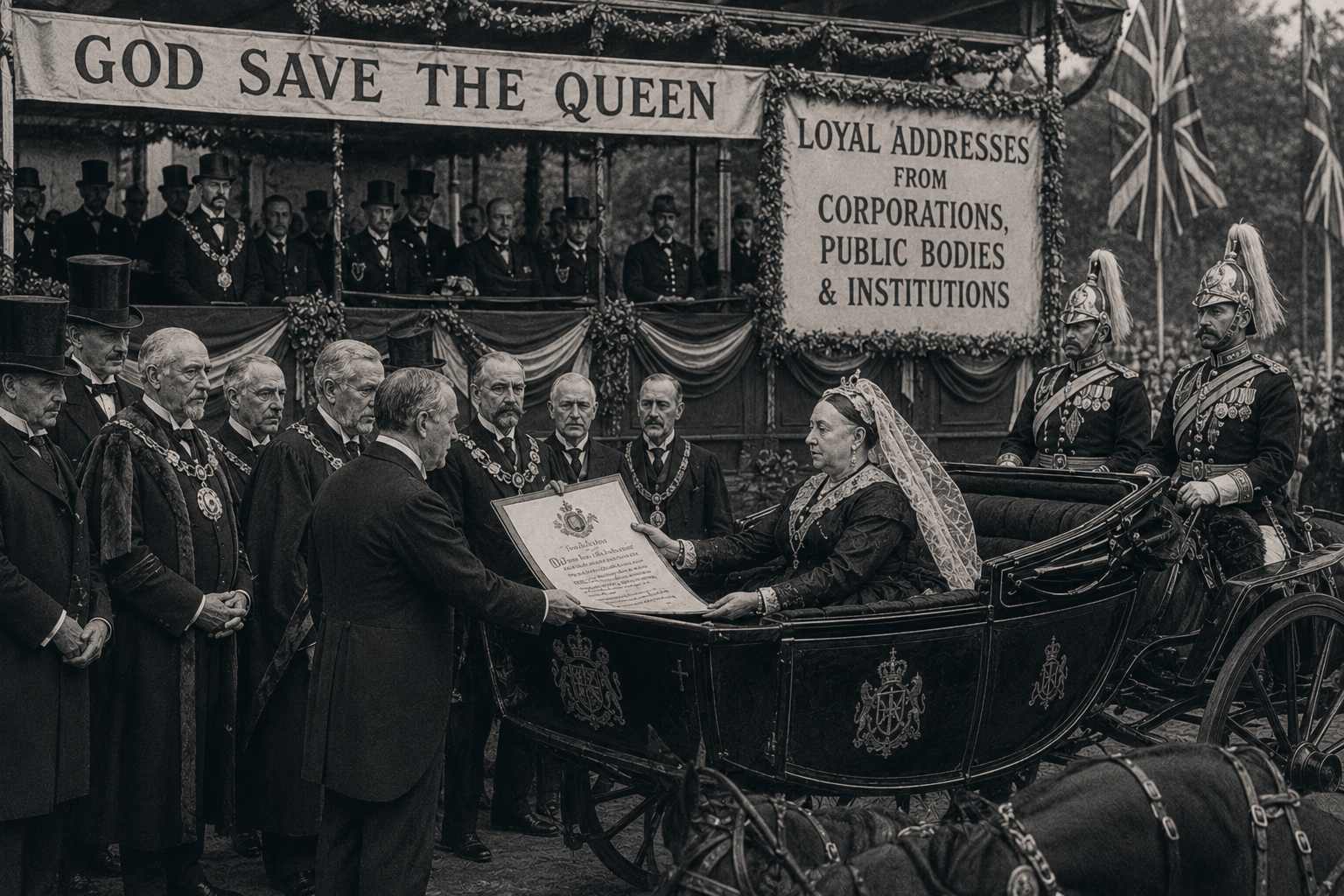
Read Article: Loyal AddressesLoyal addresses have been presented to Queen Victoria by municipal representatives and public institutions during the opening ceremonies of her final visit to Ireland. At Kingstown, the chairman and councillors formally welcomed the monarch before her carriage procession departed for Dublin. The Lord Mayor, aldermen and councillors later received her at the city boundary, where the ancient keys and ceremonial sword of Dublin were produced. A written address expressing loyalty to the Crown was presented in an ornate casket. Reports of these proceedings have reached Limerick, where royal supporters regard them as proof of continuing institutional attachment to the monarchy.
The presentation of an address was among the most carefully regulated customs surrounding a royal visit. Corporations, harbour authorities, universities, schools, hospitals, charitable bodies and professional organisations used such occasions to declare allegiance, describe their public work and request royal recognition. Their representatives normally appeared in formal dress while clerks or senior officials read prepared words before the monarch delivered a brief reply. The ceremony connected local government and civic society directly with the Crown. It also allowed participating institutions to secure public attention, demonstrate respectability and strengthen their position within the administrative order maintained through Dublin Castle and Westminster.
Dublin Corporation’s welcome possessed particular importance because the city contained strong nationalist representation as well as loyalist and commercial interests. Queen Victoria recorded that the Lord Mayor and councillors received her with the historic city keys, sword and a loyal address enclosed in a golden casket. She replied by thanking them for their welcome and expressing pleasure at returning to Ireland. The ceremony allowed municipal leaders to honour the sovereign without necessarily abandoning support for Home Rule. Constitutional nationalists could distinguish between courtesy to the monarch and acceptance of unrestricted government from Westminster, although advanced nationalists rejected that separation and condemned official participation.
Other bodies sought opportunities to present their own expressions of loyalty during the royal programme. Educational institutions, hospitals, charitable societies, military organisations and representatives of commerce could portray their activities as contributions to Irish order and public improvement under the Crown. Competition for recognition sometimes revealed divisions of religion, class and political allegiance, since invitations and access were controlled carefully. Institutions included within the ceremonies gained prestige, while those excluded or refusing participation made their absence politically meaningful. Behind the polished language of each address lay questions concerning who possessed authority to speak for Ireland and whether formal loyalty represented the convictions of members, officials or the wider population.
Limerick’s corporations, boards, schools, churches, charities and commercial associations operated within the same culture of public addresses and ceremonial loyalty. Some local representatives would welcome the opportunity to affirm connection with the monarchy and Empire, particularly where military, professional or commercial interests were involved. Others would consider such declarations incompatible with Ireland’s demand for legislative independence. The addresses presented in Dublin therefore carried a meaning extending beyond courtesy. They displayed the relationship between the Crown and Ireland’s governing institutions while exposing disagreement over whether those institutions truly represented the people. Respectful words temporarily softened political division without resolving the struggle over national authority.
- Queen Victoria, journal entry for 4 April 1900, Royal Archives, Windsor Castle, recording the address presented by the chairman and councillors of Kingstown and the subsequent Dublin Corporation ceremony. Exact volume and folio should be confirmed before formal citation.
- Michael J. F. McCarthy, Five Years in Ireland, 1895–1900, London: Simpkin, Marshall, Hamilton, Kent & Co., 1901, account of Queen Victoria’s final Irish visit and the presentation of loyal addresses. Exact page should be confirmed before formal citation.
- The Irish Times, Dublin, 5 April 1900, contemporary report on the Kingstown reception, Dublin civic welcome, city keys, ceremonial sword and loyal address. Exact page and column should be confirmed before formal citation.
- Freeman’s Journal, Dublin, 5 April 1900, report and nationalist commentary concerning the civic ceremonies and official addresses presented to Queen Victoria. Exact page and column should be confirmed before formal citation.
- Dublin Corporation records, minutes and ceremonial papers relating to Queen Victoria’s reception on 4 April 1900, Dublin City Archives. Exact volume, meeting entry and archival reference should be confirmed before formal citation.
-
Military Review
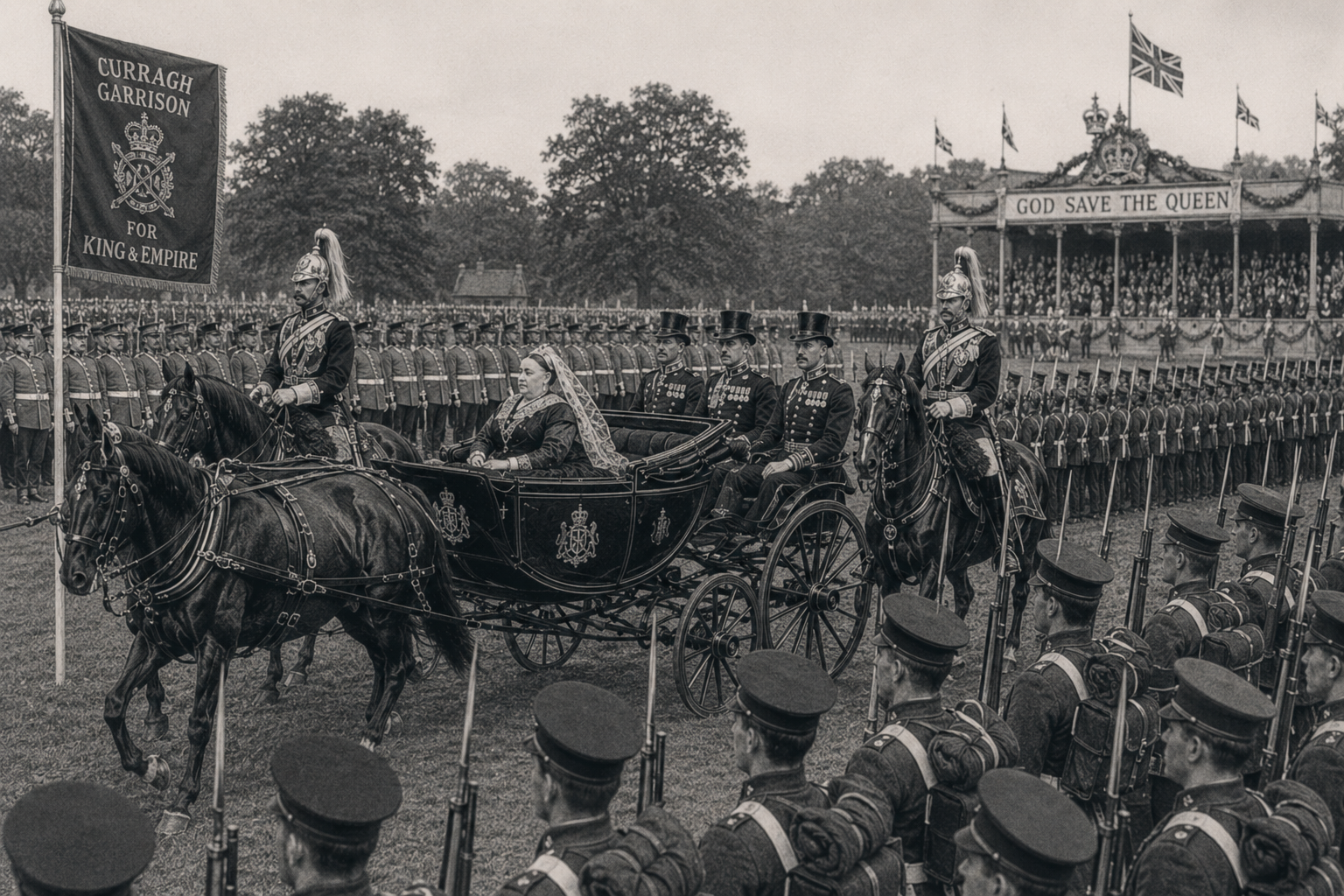
Read Article: Military ReviewQueen Victoria has reviewed troops drawn from the Dublin garrison and the Curragh Camp during her final visit to Ireland, placing the British Army prominently within the royal programme. The review was held in Phoenix Park, where infantry, cavalry and artillery units assembled before large crowds. Soldiers marched past the Queen in formal order while officers, mounted escorts and military bands completed the spectacle. Reports reaching Limerick describe an event intended to honour the armed forces and demonstrate their discipline. The ceremony also connected Ireland directly with the continuing war in South Africa, where Irish regiments were serving throughout the British campaign.
The Curragh in County Kildare was the principal military training centre in Ireland and one of the largest permanent camps maintained by the British Army. Units stationed there could be moved rapidly by rail towards Dublin, the ports or districts where military support might be required. Its soldiers trained for imperial service as well as domestic security duties, making the camp an important institution within British government in Ireland. The Phoenix Park review displayed that military presence before the monarch and public. For supporters of the Union, the ordered ranks represented stability and service; for nationalists, they symbolised the armed power sustaining British authority.
The South African War has given the review particular significance. Irishmen are fighting in numerous British regiments, and recent battles have brought heavy casualties, imprisonment and public anxiety to families throughout Ireland. Queen Victoria has praised the courage of Irish soldiers and authorised Irish regiments to wear the shamrock on Saint Patrick’s Day in recognition of their conduct. The creation of the Irish Guards has further associated the visit with military service. Loyalist commentators regard these gestures as evidence that Irish bravery is valued throughout the Empire, while critics argue that praise and ceremony are being used to encourage recruitment for an unpopular imperial conflict.
Limerick has longstanding military connections through its barracks, recruiting offices, soldiers’ families and commercial dependence upon garrison expenditure. Men from the city and county have entered the army through poverty, family tradition, employment necessity and loyalty to the Crown. News from South Africa is therefore followed not merely as distant imperial reporting but as information concerning neighbours and relatives. The review in Phoenix Park may inspire pride among some households, particularly those with serving sons, brothers or husbands. Others will remember that Irish nationalists have expressed sympathy for the Boer republics and condemned Irish participation in Britain’s military campaign.
The Queen’s inspection combined royal ceremony, military discipline and political symbolism in a single public display. The troops from the Curragh represented Ireland’s practical contribution to British imperial power, while the crowds demonstrated the attraction of uniform, music and spectacle. Yet the review could not settle the dispute surrounding Irish service in South Africa. One observer might see Irish soldiers honoured by their sovereign; another might see Irishmen employed against a smaller nation resisting British rule. For Limerick, the ceremony revealed how deeply the army remained woven into local employment, family life and political division at the beginning of the twentieth century.
- The Irish Times, Dublin, April 1900, contemporary coverage of Queen Victoria’s military review in Phoenix Park involving troops of the Dublin garrison and the Curragh Camp. Exact issue, page and column should be confirmed before formal citation.
- Freeman’s Journal, Dublin, April 1900, reports and nationalist commentary concerning the royal military review, Irish regiments and the South African War. Exact issue, page and column should be confirmed before formal citation.
- Queen Victoria, journal entries for her Irish visit in April 1900, Royal Archives, Windsor Castle, concerning military ceremonies and official engagements. Exact date, volume and folio should be confirmed before formal citation.
- War Office records relating to the Dublin District, Curragh Camp and troop arrangements for Queen Victoria’s Irish visit, April 1900, The National Archives, Kew. Exact series, file and folio should be confirmed before formal citation.
- National Army Museum, “For the Queen and Old Ireland”, Boer War collection record, concerning Irish regiments, the shamrock order and Irish military service in South Africa.
-
Children Gather
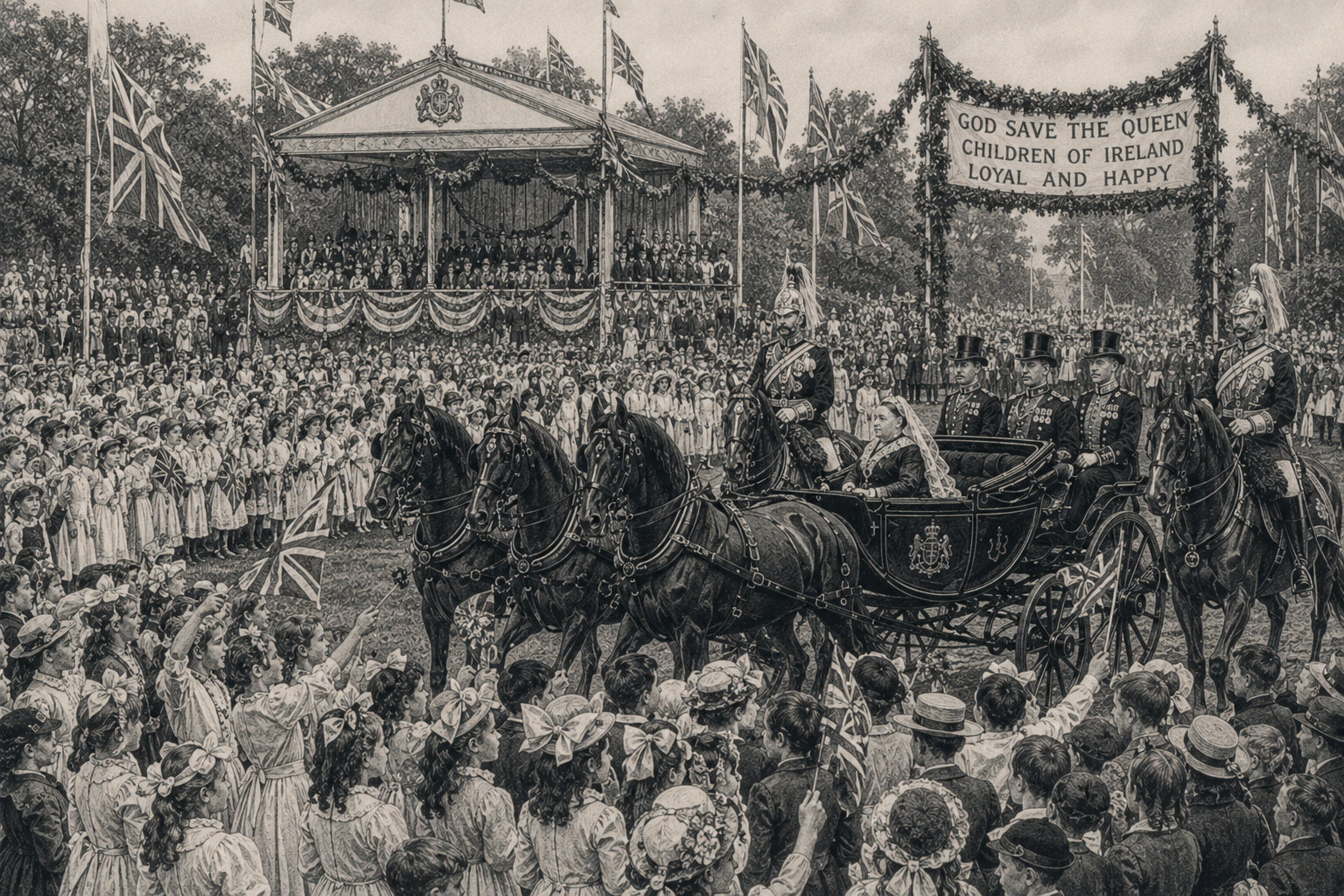
Read Article: Children GatherA vast children’s celebration has been held in Phoenix Park as part of Queen Victoria’s final visit to Ireland, bringing together school pupils from Dublin and numerous districts beyond the capital. Special trains, organised parties and local escorts carried children towards the park, where extensive arrangements had been made for their reception. Contemporary estimates of attendance vary, but all describe a gathering numbering many tens of thousands. News of the spectacle has reached Limerick, where families, teachers, clergy and political organisers are considering both the scale of the occasion and the use of schoolchildren within an explicitly royal ceremony.
The children assembled across a broad section of Phoenix Park, arranged in groups under the supervision of teachers, stewards and officials. Many had travelled considerable distances and endured long hours of waiting for the brief opportunity to see the Queen’s carriage pass. Military bands, mounted escorts and uniformed police added to the carefully organised spectacle. Refreshments and commemorative arrangements helped present the gathering as a generous royal treat. For children accustomed to school discipline, crowded homes and limited recreation, the journey itself may have been as memorable as the monarch, offering an extraordinary day beyond the routines of classroom, farm, workshop district or city street.
The event was also intended to display loyalty across social, religious and geographical divisions. British officials and unionist supporters could point to the assembled pupils as evidence of affection for the Crown and Ireland’s place within the United Kingdom. Yet attendance cannot be interpreted as a simple political declaration by the children themselves. Many came because their schools participated, their parents approved, or the excursion promised excitement and food. Others may have been drawn by curiosity rather than imperial attachment. The gathering united thousands within one ceremonial landscape, but it did not erase the different political meanings attached to their presence.
Nationalist opponents strongly criticised the celebration, arguing that Irish children were being used to support an imperial demonstration during the South African War. Maud Gonne and other nationalist women objected particularly to the effort to associate childhood, education and public charity with loyalty to the monarchy. Their opposition helped inspire plans for a separate patriotic children’s gathering later in the year. The dispute revealed how deeply politics had entered schooling and family life. A day presented by its organisers as harmless celebration was understood by its critics as an attempt to shape the loyalties of a rising generation before those children could judge the constitutional question for themselves.
Limerick’s response is likely to reflect the same divisions. Some local families will admire the organisation, music and royal generosity associated with the Phoenix Park celebration, while others will resent the prominence given to imperial loyalty. Teachers and parents may judge the occasion more practically, recognising the pleasure offered to children whose lives contained few such excursions. Whatever its political purpose, the gathering has become one of the largest public events of the Queen’s visit. The sight of thousands of pupils waiting in the park demonstrated the power of schools, railways, clergy and government officials to assemble childhood itself as part of a national spectacle.
- The Irish Times, Dublin, 9 April 1900, contemporary report on the children’s celebration in Phoenix Park, including attendance estimates and organisational details. Exact page and column should be confirmed before formal citation.
- Freeman’s Journal, Dublin, 9 April 1900, reporting and nationalist commentary on the Phoenix Park gathering of schoolchildren. Exact page and column should be confirmed before formal citation.
- Queen Victoria, journal entry for 7 April 1900, Royal Archives, Windsor Castle, concerning the children’s gathering and royal progress through Phoenix Park. Exact archival volume and folio should be confirmed before formal citation.
- British Mutoscope and Biograph Company, film footage associated with Queen Victoria’s 1900 Dublin visit and the Phoenix Park ceremonies, preserved by the Irish Film Institute. Exact catalogue record should be confirmed before formal citation.
- Dublin Castle administrative and policing records concerning the organisation, transport, supervision and security of the Phoenix Park children’s celebration, 7 April 1900. Exact collection, file and folio should be confirmed before formal citation.
-
Royal Residence
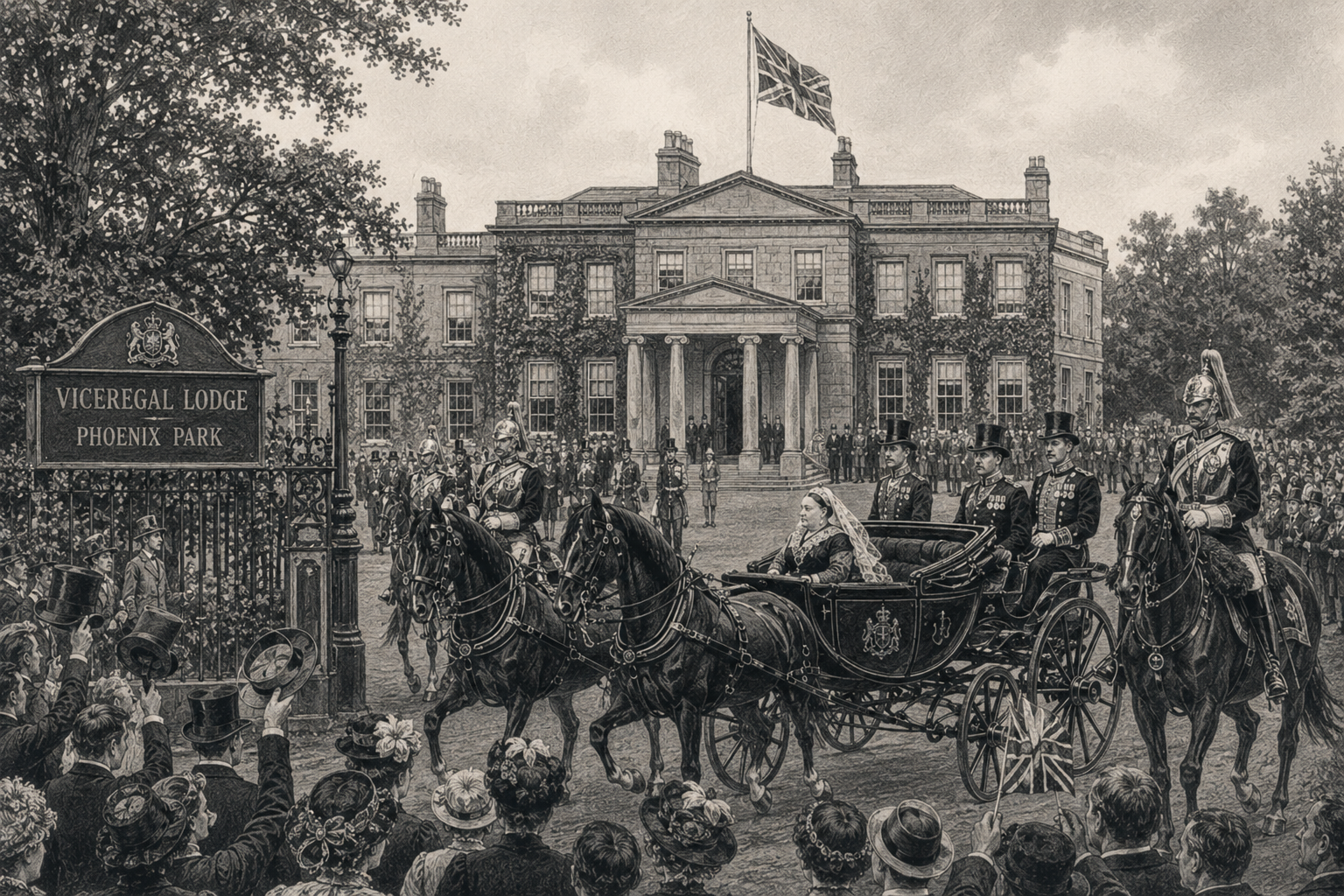
Read Article: Royal ResidenceQueen Victoria has taken up residence at the Viceregal Lodge in Phoenix Park following her arrival at Kingstown and ceremonial journey through Dublin. The house, normally occupied by the Lord Lieutenant of Ireland, will serve as the monarch’s principal residence throughout her final Irish visit. Situated within the extensive parklands west of the capital, the lodge provides both privacy and convenient access to the military, charitable and public engagements arranged for the coming weeks. Reports reaching Limerick describe an elaborate administrative operation involving royal officials, Dublin Castle, police forces, military escorts and household servants responsible for the Queen’s accommodation and security.
The Viceregal Lodge was built during the eighteenth century and later acquired as a residence for the British viceroys who governed Ireland on behalf of the Crown. Its position within Phoenix Park placed it close to Dublin while separating the royal household from the crowded streets surrounding the official ceremonies. The building had already been enlarged before Queen Victoria’s first Irish visit in 1849, when an additional wing was prepared for her use. During the present visit, its reception rooms, private apartments, gardens and surrounding avenues provide the setting from which the ageing monarch will receive officials, dignitaries and selected representatives of Irish public life.
For Dublin Castle, the Queen’s occupation of the lodge gives the residence renewed political importance. The Lord Lieutenant, Earl Cadogan, and his administration have organised a programme intended to demonstrate the efficiency, dignity and stability of British government in Ireland. Royal movements through Phoenix Park will be carefully controlled, while military and police personnel guard the approaches to the residence. Loyalists regard the Queen’s presence as an affirmation of Ireland’s place within the United Kingdom. Nationalists may instead see the guarded lodge as a visible symbol of government by a Crown-appointed administration rather than an Irish legislature responsible to the Irish electorate.
The Queen’s programme will include military reviews, visits to hospitals and institutions, formal receptions and a major gathering of schoolchildren in Phoenix Park. The lodge therefore functions not merely as sleeping accommodation but as the centre of a temporary royal court. Household officials, messengers, soldiers, policemen, servants and invited guests will pass through its grounds throughout April. In Limerick, where the Crown’s authority is encountered through barracks, courts, constabulary stations and public administration, the arrangements will be understood as part of the wider machinery of imperial government. The splendour surrounding the Queen depends upon extensive labour carried out beyond public view.
Victoria is expected to remain at the Viceregal Lodge until her departure from Kingstown later this month. The residence will eventually become Áras an Uachtaráin, the official home of an independent Ireland’s president, but in 1900 it remains closely associated with British rule and the office of the Lord Lieutenant. For the present generation, the building represents power exercised from Dublin Castle under Westminster authority. Its occupation by the Queen transforms Phoenix Park into the ceremonial centre of the United Kingdom’s Irish administration. The peaceful lawns and guarded gateways conceal the political disagreement surrounding the royal visit and Ireland’s constitutional future.
- Queen Victoria, journal entry for 4 April 1900, Royal Archives, Windsor Castle, describing her arrival at Kingstown, journey through Dublin and entry into Phoenix Park. Exact archival volume and folio should be confirmed before formal citation.
- Michael J. F. McCarthy, Narrative of Queen Victoria’s Visit to Ireland, April 1900, contemporary account describing the Queen’s residence at the Viceregal Lodge until 26 April. Exact edition and page should be confirmed before formal citation.
- The Irish Times, Dublin, April 1900, reports on the Queen’s arrival, residence in Phoenix Park and programme of official engagements. Exact issue, page and column should be confirmed before formal citation.
- Freeman’s Journal, Dublin, April 1900, contemporary reports and commentary concerning the royal household, Phoenix Park ceremonies and political response. Exact issue, page and column should be confirmed before formal citation.
- Office of the President of Ireland, institutional history of Áras an Uachtaráin, formerly the Viceregal Lodge, recording its acquisition for the viceroys and enlargement for Queen Victoria’s 1849 visit.
-
Unionist Display
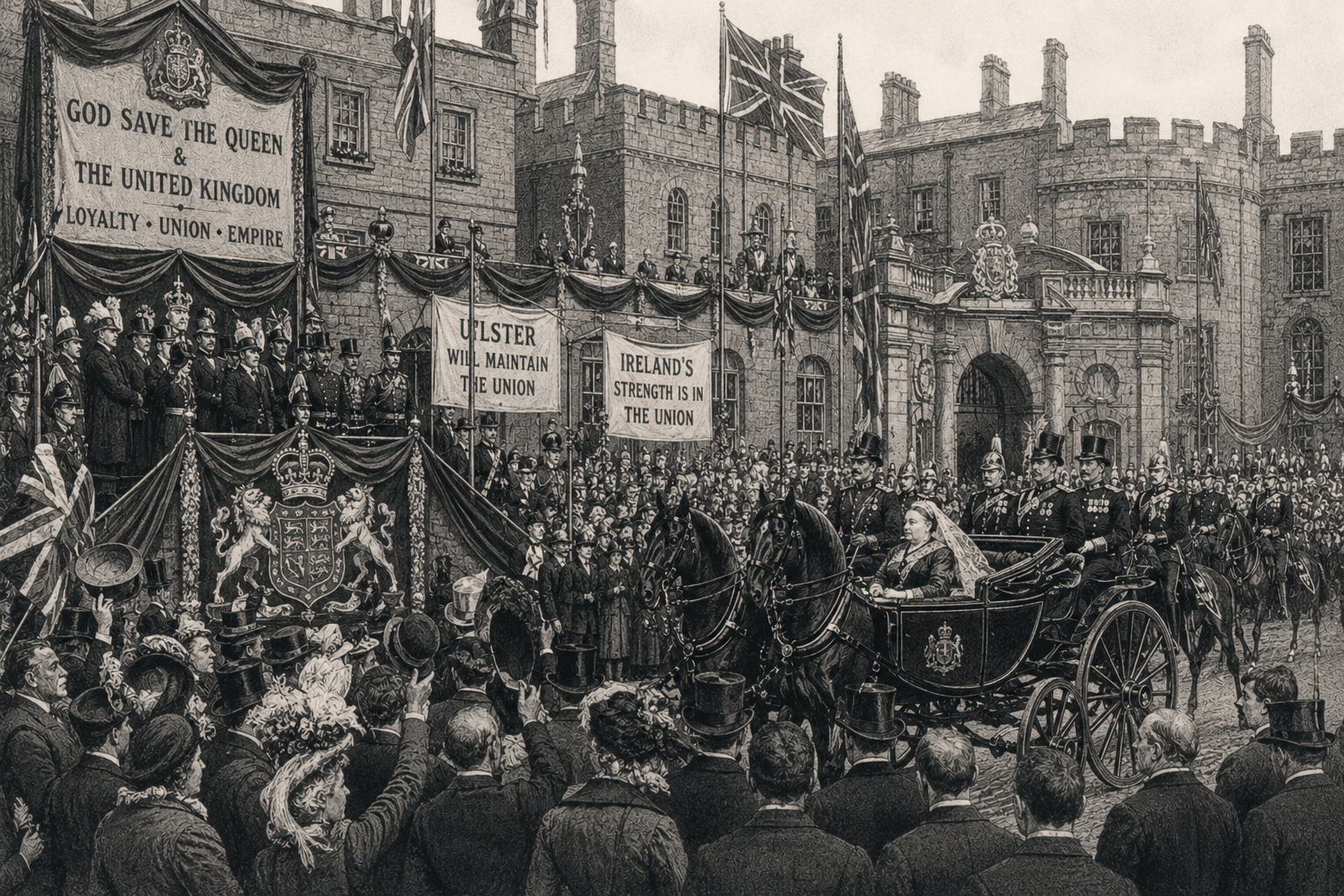
Read Article: Unionist DisplayDublin Castle and unionist organisations have used Queen Victoria’s arrival to affirm Ireland’s constitutional place within the United Kingdom. The administration directed an elaborate programme of ceremonial receptions, military escorts, civic addresses and public decoration intended to display loyalty to the Crown. Reports reaching Limerick describe streets filled with spectators and buildings dressed for the royal occasion. Unionist newspapers and public figures have welcomed the visit as proof that attachment to the monarchy remains substantial despite nationalist demands for Home Rule. The ceremonies present Ireland not as a nation awaiting separation, but as an established and valued part of the Union.
Dublin Castle stands at the centre of British administration in Ireland, housing the officials responsible for government, policing and royal arrangements. The Lord Lieutenant, Earl Cadogan, received the Queen and assisted in organising the programme that will continue throughout April. Castle officials coordinated with the military, Dublin Metropolitan Police, Royal Irish Constabulary, harbour authorities and civic representatives to secure the procession route and manage the crowds. The visit has therefore become an extensive demonstration of administrative power. Every escort, inspection and formal address reinforces the authority of institutions through which British government operates in Ireland.
Irish unionists regard the Queen’s presence as a timely answer to the renewed organisation of constitutional nationalism. The Irish Parliamentary Party has recently restored unity after years of internal division, while the United Irish League is extending nationalist organisation throughout the country. Unionist leaders argue that Home Rule would weaken the connection with Britain, threaten economic stability and place loyal minorities beneath a permanent nationalist majority. Royal ceremony allows them to express an alternative political identity grounded in allegiance to the Crown, Parliament and Empire. The cheering crowds and decorated streets will consequently be cited as evidence that nationalist leaders cannot speak for every Irish citizen.
In Limerick, unionism commands less electoral strength than nationalism but remains visible among sections of the Protestant community, military families, merchants, professional households and those whose employment depends upon imperial institutions. The city’s barracks, courts, police administration and commercial connections ensure that the Union is experienced through ordinary employment as well as political principle. Loyal residents may view the royal visit as reassurance that their identity and interests remain protected. Nationalists, however, will question whether ceremonies arranged by Dublin Castle can demonstrate genuine national consent while Ireland continues to be governed from Westminster without its own legislature.
The visit therefore carries significance extending beyond personal respect for the elderly Queen. Dublin Castle is presenting royal loyalty as a public and constitutional fact, while unionists are using the occasion to defend Ireland’s membership of the United Kingdom. Yet the spectacle also exposes the depth of political disagreement. The same procession that represents stability to loyalists represents foreign rule to separatists and unfinished government reform to Home Rulers. Limerick observers will interpret the ceremonies through local experiences of religion, class, military service, land ownership and political allegiance. Royal pageantry has temporarily united the streets in spectacle without settling the argument over Ireland’s future.
- Queen Victoria, journal entry for 4 April 1900, Royal Archives, Windsor Castle, describing her reception at Kingstown, the military escort and the journey through decorated Dublin. Exact archival volume and folio should be confirmed before formal citation.
- Dublin Castle administrative papers concerning Queen Victoria’s visit to Ireland, April 1900, including ceremonial, policing, harbour and expenditure arrangements. Exact collection, file and folio should be confirmed before formal citation.
- The Irish Times, Dublin, 4–27 April 1900, reports and editorials concerning the royal visit, official receptions and expressions of unionist loyalty. Exact page and column should be confirmed before formal citation.
- Daily Express, Dublin, April 1900, unionist newspaper coverage of Queen Victoria’s arrival, the public decorations and Ireland’s relationship with the Crown. Exact issue, page and column should be confirmed before formal citation.
- Limerick Chronicle, Limerick, April 1900, local reporting and commentary on the royal visit, loyalist opinion and official ceremonies in Dublin. Exact issue, page and column should be confirmed before formal citation.
-
Cheering Crowds
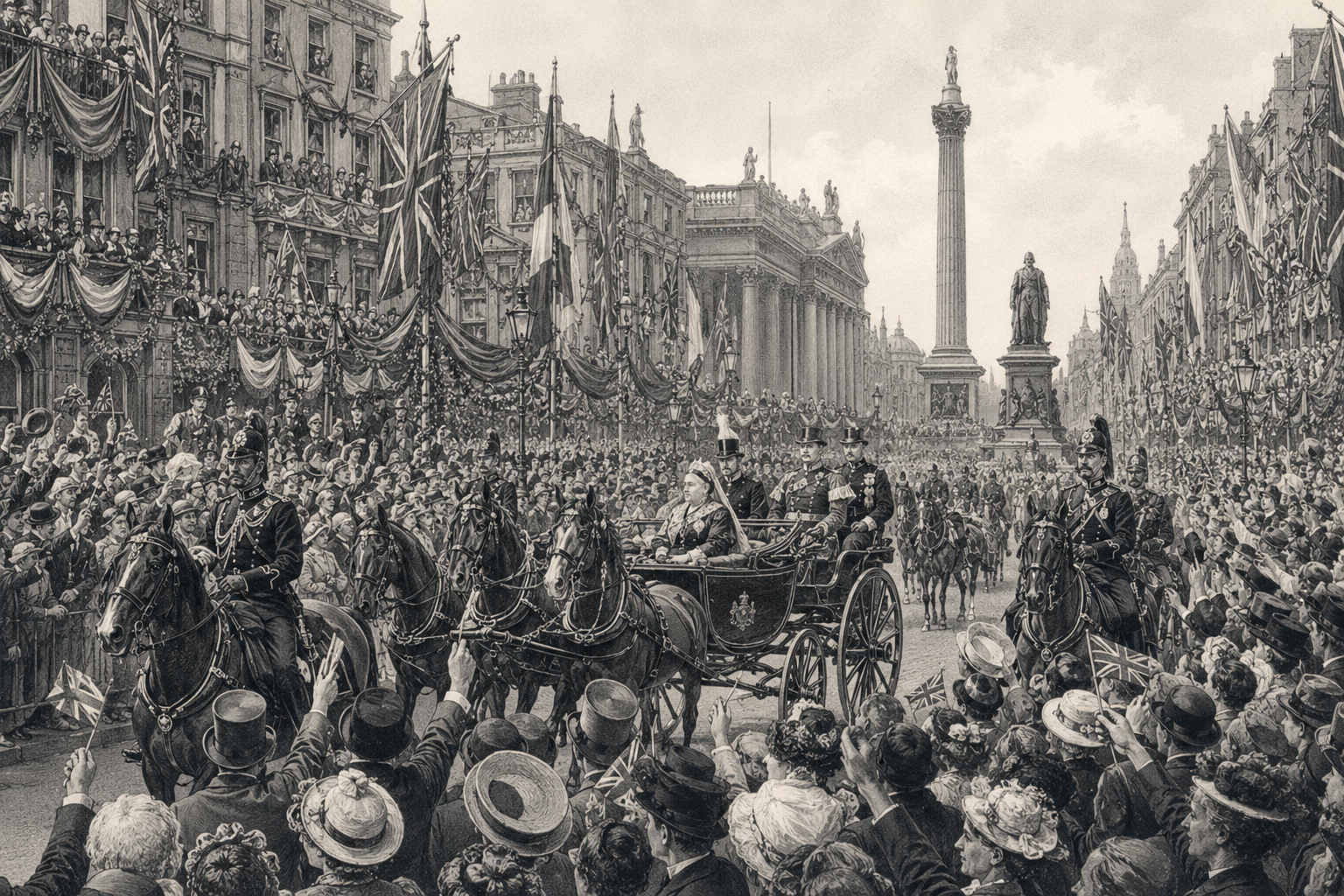
Read Article: Cheering CrowdsLarge crowds have lined the route of Queen Victoria’s procession from Kingstown towards Dublin, creating one of the most striking public spectacles witnessed during her final visit to Ireland. The royal carriage passed through heavily decorated streets while spectators filled pavements, windows and temporary viewing places. Reports reaching Limerick describe sustained cheering as the procession moved towards the capital and the Viceregal Lodge in Phoenix Park. The gathering revealed more than official organisation alone. Public curiosity drew thousands outdoors, while loyalist residents and supporters of the Union treated the Queen’s arrival as an opportunity to demonstrate attachment to the Crown and British Empire.
The Queen recorded that the entire road from Kingstown was crowded and that the people cheered loudly as her carriage passed. She travelled with a military escort in a procession of four carriages, accompanied by members of the royal family and senior officials. Decorative arches, greenery, garlands and imperial emblems marked the route, transforming the approach to Dublin into a carefully arranged ceremonial landscape. Contemporary photographs and moving pictures preserved the density of the gathering and the scale of the preparations. For many spectators, the occasion offered a rare chance to see the elderly monarch whose reign had shaped Irish public life for more than sixty years.
The enthusiasm visible along the procession route should not be mistaken for unanimous Irish approval of British government. Dublin contained substantial loyalist, Protestant, military, commercial and administrative communities, while many constitutional nationalists sought Home Rule without necessarily rejecting the monarchy. Others may have attended from simple curiosity, drawn by the holiday atmosphere, decorations, music, soldiers and unusual movement through the streets. Railway and tram services carried additional visitors into the capital. The crowds therefore represented several impulses at once: sincere royal loyalty, imperial patriotism, fascination with ceremony, commercial opportunity and the ordinary human desire to witness an event that might never be repeated.
Opposition remained active beyond the cheering streets. Advanced nationalists condemned the visit as imperial propaganda during the South African War, while Maud Gonne and her associates invoked memories of famine, eviction and emigration in their protests. The Catholic hierarchy also maintained a cautious distance from some of the official celebrations. Such hostility did not prevent large numbers from attending, but it complicated claims that the procession proved complete Irish devotion to the Crown. In Limerick, where nationalist politics remained powerful but British military connections were deeply established, residents could recognise the same mixture of loyalties, resentments and personal curiosity displayed in Dublin.
The procession consequently revealed an Ireland more politically varied than either loyalist celebration or nationalist protest alone could suggest. The cheering was genuine, as were the decorations and the public excitement, yet attendance did not necessarily amount to approval of British rule. Some spectators honoured the Queen, others admired the display, and still others simply wished to observe history passing before them. For Limerick readers, the scene offers a reminder that imperial attachment and Irish nationalism could exist beside one another within the same city, family or individual. The royal carriage travelled through a crowd united briefly by spectacle, though divided profoundly over what the spectacle represented.
- Queen Victoria, journal entry, 4 April 1900, Royal Archives, Windsor Castle; the Queen described the route from Kingstown to Dublin as heavily crowded, with loud cheering and extensive decoration. Exact archival volume and folio should be confirmed before formal citation.
- The Irish Times, 5 April 1900, contemporary report on Queen Victoria’s arrival, the decorated procession route and the crowds gathered throughout Dublin. Exact page and column should be confirmed before formal citation.
- Freeman’s Journal, 5 April 1900, contemporary nationalist newspaper coverage of the royal arrival, public attendance and political reactions. Exact page and column should be confirmed before formal citation.
- British Mutoscope and Biograph Company, Queen Victoria in Dublin, 4 April 1900, surviving actuality film showing the royal carriage, procession and spectators; preserved by the Irish Film Institute.
- Robert Augustus Henry L’Estrange, photographic series of Queen Victoria’s royal visit to Dublin, 4–26 April 1900, Queensland University of Technology Digital Collections, Robert Augustus Henry L’Estrange Collection.
-
Royal Dublin
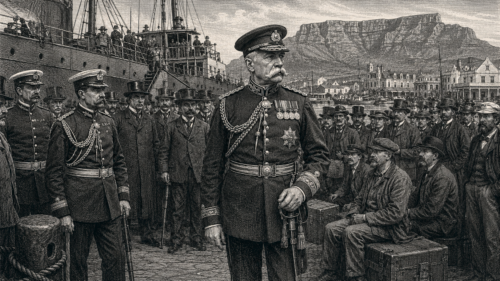
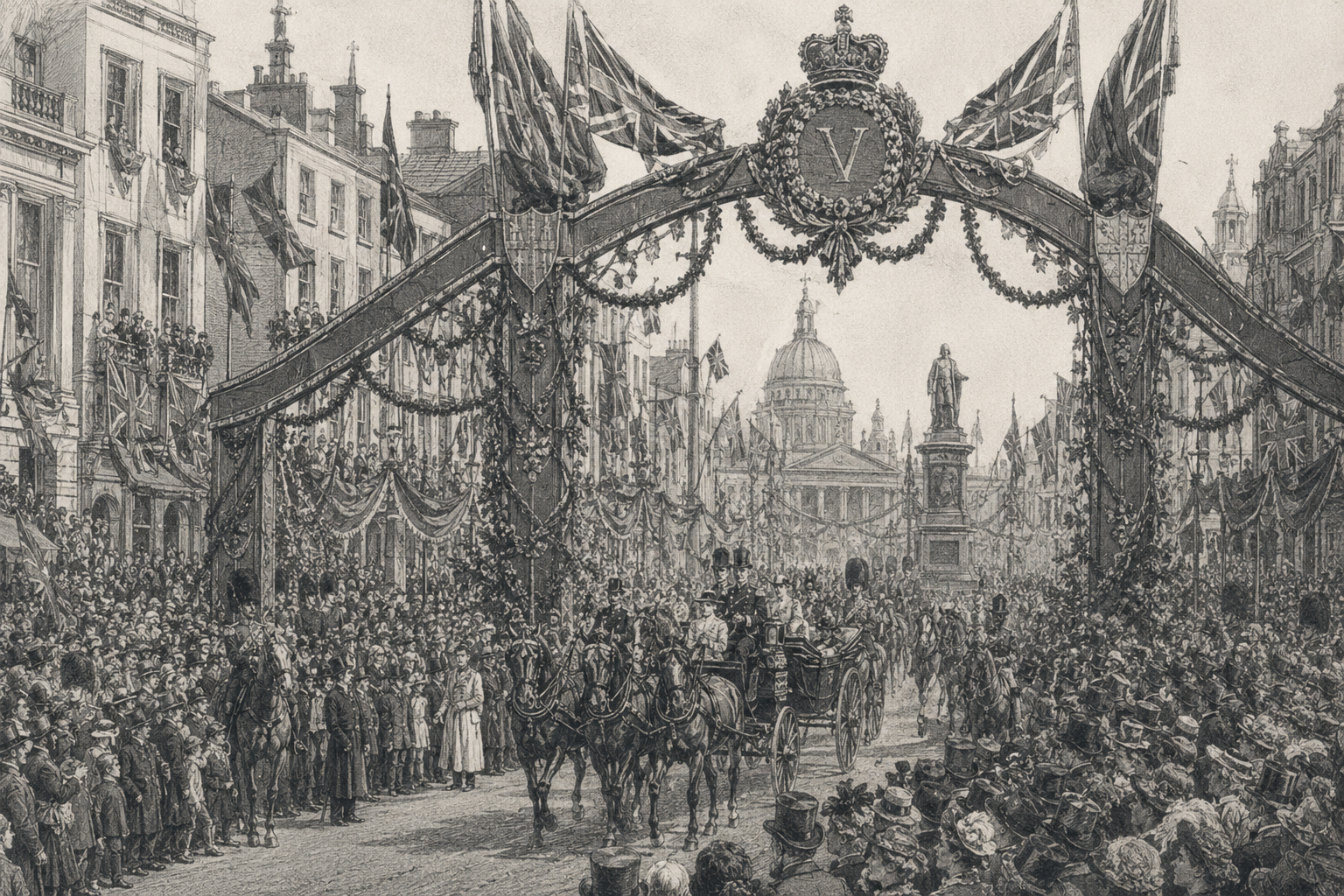
Read Article: Royal DublinQueen Victoria arrived in Ireland today for what will become the final Irish visit of her long reign. The royal programme is centred principally upon Dublin, where streets, public buildings, railway approaches and the route towards the Viceregal Lodge have been extensively decorated. Crowds gathered at Kingstown and throughout the capital to witness the arrival and procession. Although Limerick is not included prominently in the itinerary, reports of the ceremonies are being followed closely throughout the city and county by loyalists, nationalists, soldiers’ families, clergy, merchants and political organisations.
The Queen landed at Kingstown before travelling through Dublin in an open carriage accompanied by members of the royal household, military officers and senior representatives of the administration. Decorative arches, garlands, flags and greenery transformed the principal streets, while balconies and windows were filled with spectators. Authorities have arranged receptions, military displays, institutional visits and a large gathering of schoolchildren during the royal stay. Supporters of the Crown regard the elaborate preparations as evidence of Irish loyalty, while critics believe the decorations present an artificial picture of national contentment.
The visit takes place during the South African War, when Ireland remains sharply divided over British imperial policy. Irish soldiers are serving in British regiments overseas, and many families in Limerick have relatives connected with military life. At the same time, strong sympathy for the Boer republics has developed among nationalists who compare their resistance with Ireland’s own demand for self-government. The royal ceremonies therefore possess an unmistakable political character. Cheers for the Queen may express genuine loyalty, but they also occur amid continuing arguments over Home Rule, land ownership, poverty, emigration and British authority.
Nationalist opponents have criticised the expense and symbolism of the visit. Maud Gonne and other separatist campaigners have drawn attention to memories of the Great Famine and accused the monarchy of representing an imperial system that failed Ireland during its greatest catastrophe. Such arguments are understood in Limerick, where famine memory, eviction, rural hardship and emigration remain part of family experience. Loyalist residents, however, see the Queen as a source of constitutional stability and regard the hostile demonstrations as an insult to the Crown and to Irish people who continue to identify themselves with the United Kingdom.
The royal programme will continue for several weeks before the Queen departs from Kingstown later this month. Its pageantry may briefly place Dublin at the centre of imperial attention, but it cannot conceal the political divisions revealed by the reception itself. Limerick observers will judge the visit according to their own loyalties, memories and expectations. For some, the decorated capital represents honour and royal recognition. For others, the same arches, flags and military escorts symbolise a government that has not answered Ireland’s national demands. The splendour of the occasion has illuminated division as clearly as loyalty.
- Queen Victoria, journal entry for 4 April 1900, Royal Archives, Windsor, recording her landing at Kingstown and journey through Dublin. Exact archival reference should be confirmed before formal citation.
- Freeman’s Journal, Dublin, April 1900, contemporary reports on the Queen’s arrival, the decorations in Dublin and the official programme. Exact page and column should be confirmed before formal citation.
- The Irish Times, Dublin, April 1900, detailed coverage of the royal procession, ceremonial arrangements and public reception. Exact page and column should be confirmed before formal citation.
- Limerick Chronicle, Limerick, April 1900, local reports and commentary concerning Queen Victoria’s visit to Ireland. Exact issue, page and column should be confirmed before formal citation.
- Dublin Castle records concerning policing, ceremonial arrangements and official preparations for Queen Victoria’s visit, April 1900. Exact document and archival reference should be confirmed before formal citation.
-
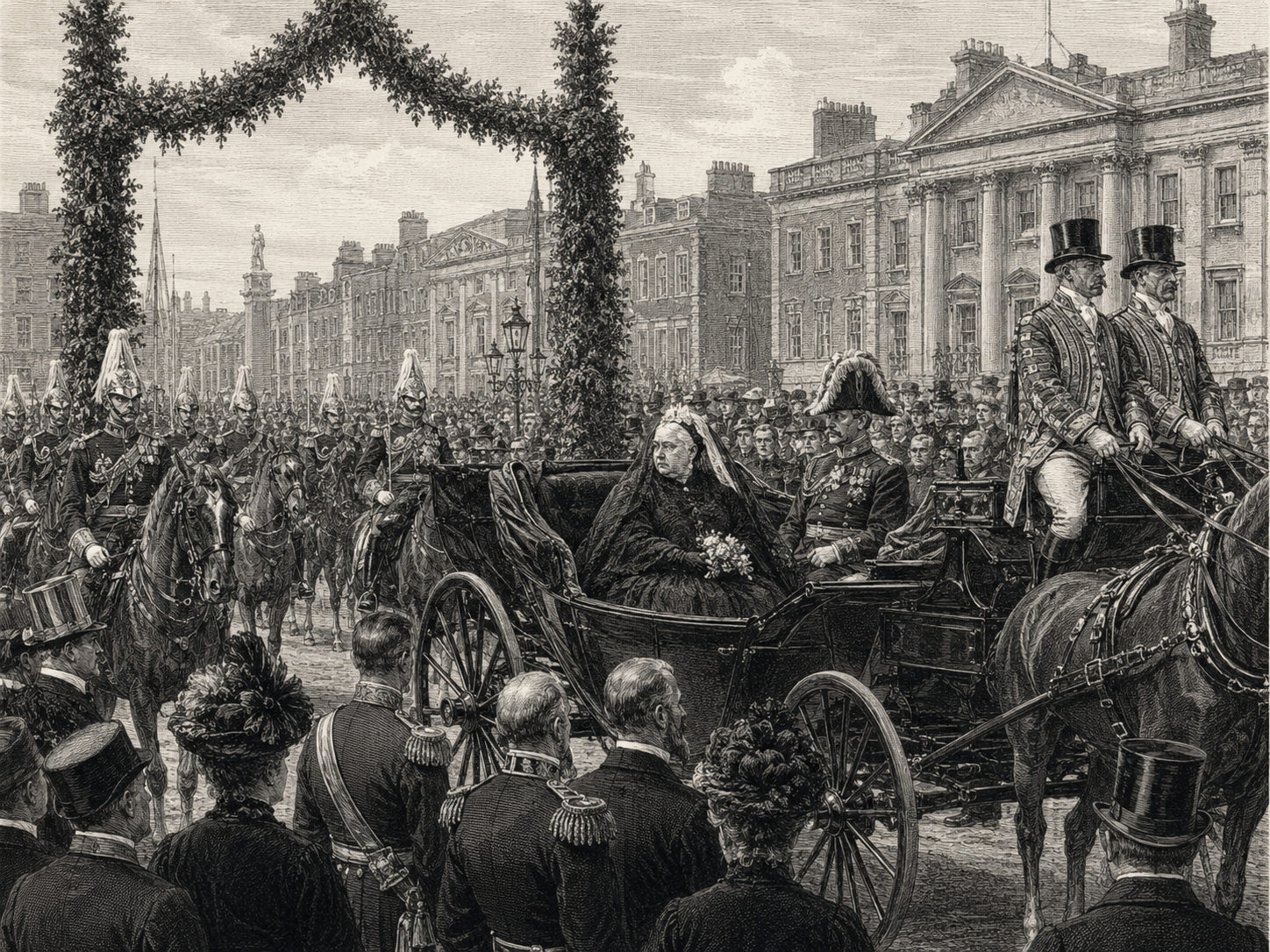
Royal Farewell
Read Article: Royal FarewellQueen Victoria arrived at Kingstown today for what would prove to be her final visit to Ireland, beginning a three-week residence centred largely upon Dublin and the Vice-Regal Lodge in Phoenix Park. Although the royal party will not travel to Limerick, accounts of the landing, the ceremonial procession and the extensive public decorations are already attracting attention throughout the city and county. Unionist residents may regard the visit as an affirmation of loyalty to the Crown, while nationalists are likely to judge it against continuing demands for Home Rule, land reform and recognition of Ireland’s political grievances.
The Queen travelled aboard the royal yacht Victoria and Albert and landed at Kingstown, where civic representatives presented an address before she proceeded towards Dublin in an open carriage. Crowds lined the decorated route through the southern suburbs, and mounted troops accompanied the procession towards Phoenix Park. Victoria, approaching her eighty-first birthday and increasingly limited in mobility, had not visited Ireland since 1861. Her return came during the South African War, when Irish soldiers were serving in British forces while nationalist sympathy for the Boer republics had generated meetings, protests and sharp political controversy across Ireland.
The official purpose of the journey was presented as an acknowledgement of Irish military service and an expression of royal goodwill. The Queen ordered that Irish soldiers should be permitted to wear shamrock on Saint Patrick’s Day, and she herself displayed shamrock during the visit. Her programme included ceremonial drives, military engagements, civic receptions and a large gathering of schoolchildren in Phoenix Park. The administration hoped that the royal presence would encourage loyalty and soften political hostility, but the splendour of the arrangements could not conceal the deep divisions between Unionists, constitutional nationalists and more advanced opponents of British rule.
Responses to the visit were therefore mixed. Loyal addresses and cheering crowds demonstrated genuine enthusiasm among many spectators, while others attended chiefly for the holiday, pageantry and rare public spectacle. Nationalist organisations differed over whether the occasion should be opposed, ignored or treated with formal courtesy. Critics recalled the suffering of the Great Famine and objected to royal celebration while poverty, emigration and agrarian insecurity continued. Supporters answered that the ageing monarch should be received respectfully and that Irish service in the armed forces deserved recognition. The visit became both a public celebration and a test of competing political loyalties.
In Limerick, the royal tour was experienced through newspaper reports, political discussion, commercial interest and the differing loyalties of local communities rather than through the Queen’s physical presence. The city contained nationalists, Unionists, military families, veterans, clergy, merchants and workers who could interpret the occasion in sharply different ways. For some, Victoria represented constitutional authority and the wider empire; for others, she embodied a government that continued to deny Ireland its own legislature. Her last Irish visit displayed ceremonial confidence, yet it also revealed how difficult it had become for royal pageantry to rise above the unresolved questions of land, poverty and national government.
- Queen Victoria’s Journals, 4–26 April 1900, Royal Archives. The entries record the Queen’s arrival at Kingstown, her journey into Dublin, official engagements, public receptions and personal impressions of the visit. Exact journal volume and folio references should be confirmed before formal citation.
- Queen Victoria in Dublin, 4 April 1900, surviving actuality film held by the Irish Film Institute Irish Film Archive. The film records the Queen travelling in an open carriage after arriving at Kingstown and provides direct visual evidence of the procession, escort and assembled crowds.
- Freeman’s Journal and Daily Commercial Advertiser, 4 and 5 April 1900. Contemporary reports describe preparations, the royal landing, the procession through Dublin and nationalist responses to the visit. Exact page and column should be confirmed before formal citation.
- The Irish Times, 4 and 5 April 1900. Contemporary coverage records the official programme, civic addresses, decorations, security arrangements and loyalist reactions surrounding the Queen’s arrival. Exact page and column should be confirmed before formal citation.
- Dublin Castle records concerning Queen Victoria’s visit to Ireland, April 1900, National Archives of Ireland. The administrative correspondence includes arrangements for Kingstown Harbour, ceremonial dress, policing, transport, decorations and official receptions. Exact file and archival reference should be confirmed before formal citation.
-
Wyndham Appointed
Read Article: Wyndham AppointedGeorge Wyndham has been appointed Chief Secretary for Ireland in succession to Gerald Balfour, placing a younger Conservative minister in charge of Irish administration at a moment of renewed nationalist organisation and growing agitation over the land. His appointment will be watched closely throughout Limerick city and county, where tenant ownership, congested holdings, rural poverty and the position of evicted families remain pressing political concerns. Wyndham enters office after the reunited Irish Parliamentary Party secured seventy-seven seats at the general election, although Lord Salisbury’s government remains firmly opposed to Home Rule and possesses a substantial Westminster majority.
The Chief Secretary serves as the government’s principal minister for Irish affairs and answers in the House of Commons for administration conducted through Dublin Castle. Gerald Balfour held the office from 1895, overseeing the Local Government Act of 1898, which transferred important administrative responsibilities to elected county and district councils. His policy followed the Unionist belief that practical reform could reduce support for Home Rule without conceding an Irish legislature. Wyndham inherits that approach, but he also confronts a revitalised United Irish League, a reunited nationalist parliamentary movement and persistent dissatisfaction with the laws governing relations between landlords and tenant farmers.
Wyndham, Conservative member for Dover, previously served as Parliamentary Under-Secretary for War and is closely associated with Arthur Balfour, the government leader in the Commons. Though lacking long experience in Irish administration, he possesses an unusual family connection with Ireland as a great-grandson of Lord Edward FitzGerald, the United Irish leader who died during the rebellion of 1798. The association may attract public curiosity but offers no guarantee of sympathy with nationalist constitutional demands. Wyndham takes office committed to the Union, and his immediate authority will depend upon cooperation with the Lord Lieutenant, Dublin Castle officials and the government’s parliamentary leadership.
The land question is likely to provide the earliest and most difficult test of the new Chief Secretary. Existing purchase legislation has enabled some tenants to acquire their farms, but transactions remain too limited to settle the wider dispute. Nationalists demand easier purchase terms, assistance for evicted tenants and action against congestion, while landlords seek prices that will protect their financial interests. Wyndham has not yet announced the comprehensive settlement later associated with his name, and no outcome can be assumed in 1900. Nevertheless, the strength of agrarian organisation ensures that land reform will occupy a central place in his administration.
For County Limerick, Wyndham’s appointment carries practical importance beyond the formal politics of Dublin Castle. Farmers considering purchase, tenants burdened by rent, labourers seeking access to land and elected councillors administering the new local government system will judge him by measures rather than ancestry or promises. Nationalist representatives are expected to press both Home Rule and agrarian reform, while Unionists will look to the Chief Secretary to maintain public order and preserve the legislative union. Wyndham begins with no Irish mandate of his own, but decisions taken under his authority may shape landownership, rural security and political argument throughout Limerick.
- The London Gazette, November 1900, official notice concerning George Wyndham’s appointment as Chief Secretary for Ireland. This can verify the appointment and ministerial succession. Exact issue, page and notice should be confirmed before formal citation.
- House of Commons Debates, November and December 1900, contributions and ministerial records concerning George Wyndham’s assumption of responsibility for Irish affairs. These can verify his office, parliamentary role and the Irish questions placed before him. Exact date, volume and columns should be confirmed before formal citation.
- The Times, 10 November 1900. Contemporary reporting can verify the ministerial appointment, Wyndham’s previous service and political reaction to the government reconstruction. Exact page and column should be confirmed before formal citation.
- Freeman’s Journal and Daily Commercial Advertiser, 10 November 1900. Contemporary Irish reporting can verify nationalist reaction to Wyndham’s appointment and expectations concerning land reform and Irish administration. Exact page and column should be confirmed before formal citation.
- Irish Land Act, 1903, 3 Edward VII, chapter 37. The enacted statute provides the definitive primary record of the major land-purchase legislation subsequently introduced under Wyndham, including government advances for tenant purchase and the administration of estate sales.
-
Home Rule Deferred
Read Article: Home Rule DeferredThe opening of the new Parliament has confirmed that Home Rule remains outside the immediate programme of the government, despite the strong electoral recovery of John Redmond’s reunited Irish Parliamentary Party. Nationalists returned seventy-seven members from Ireland’s 103 constituencies, giving the demand for an Irish legislature a commanding parliamentary voice. Yet the administration of Lord Salisbury, strengthened by its general-election victory, has offered no proposal for restoring domestic government in Dublin. In Limerick city and county, where nationalist representatives were returned and Home Rule remains central to organised political life, the omission will be received as a deliberate refusal to recognise Ireland’s electoral verdict.
Two Home Rule Bills have already failed at Westminster. William Ewart Gladstone’s first measure was defeated in the House of Commons in 1886, while the second passed that chamber in 1893 only to be rejected overwhelmingly by the House of Lords. The Liberal defeat of 1895 then removed Home Rule from practical government business. During the years that followed, Irish nationalism was weakened by the divisions arising from Charles Stewart Parnell’s downfall. The reunion of the principal factions under Redmond in 1900 restored parliamentary discipline, but it did not alter the Conservative and Unionist majority governing Britain and Ireland.
Redmond’s party now possesses renewed strength but lacks the Westminster balance of power required to force constitutional change. The Conservatives and their Liberal Unionist allies won a substantial majority in the election fought during the South African War. Their coalition remains committed to maintaining the legislative union and is supported by eighteen Irish Unionist MPs, chiefly representing north-eastern Ulster. The government may consider land purchase, local administration, education and other Irish questions separately, but such reforms do not concede the nationalist demand for a legislature controlling Ireland’s domestic affairs. Parliamentary recovery has therefore restored the Irish Party’s voice without restoring its immediate influence over government policy.
The omission presents Redmond with a difficult strategic choice. His members can press Home Rule through debates, amendments and parliamentary obstruction, but the government possesses sufficient numbers to defeat them. Cooperation with the Liberal opposition offers another course, although the Liberals themselves remain weakened and cannot promise early office. Meanwhile, William O’Brien and the United Irish League will continue linking constitutional nationalism with land agitation and local organisation. Success on the land question might bring practical relief to tenants, yet it could also allow ministers to argue that Irish grievances can be addressed without creating a separate parliament. Home Rule remains the declared objective but not an approaching government measure.
For Limerick nationalists, the contrast between electoral success and parliamentary exclusion will reinforce the belief that Irish majorities carry limited weight within the Union. Local branches of the United Irish League, public representatives, tenant organisations and nationalist newspapers may use the omission to strengthen meetings, subscriptions and political discipline. Unionists will answer that the government’s majority, together with determined opposition in Ulster, gives ministers a clear authority to resist constitutional separation. Limerick’s returned members can speak for Home Rule in the Commons, but they cannot place it upon the government programme. The election has revived nationalist organisation while leaving the central constitutional demand unanswered.
- Parliamentary Debates, House of Commons, “Address in Answer to Her Majesty’s Most Gracious Speech,” 6 December 1900. The debate records the programme presented at the opening of Parliament and contemporary responses to its treatment of Irish affairs. Relevant columns should be confirmed before formal citation.
- Her Majesty’s Most Gracious Speech to Both Houses of Parliament, 6 December 1900, reproduced in the official parliamentary debates. The speech can verify which legislative matters the government announced and the absence of an immediate Home Rule proposal. Relevant columns should be confirmed before formal citation.
- Parliamentary Election Returns, General Election of 1900, House of Commons Parliamentary Papers, Irish constituency returns. These official returns verify the election of seventy-seven Irish Parliamentary Party members and the government’s wider parliamentary majority. Exact volume and page references should be confirmed before formal citation.
- Freeman’s Journal and Daily Commercial Advertiser, 7 December 1900. Contemporary reporting can verify nationalist reaction to the Queen’s Speech, Redmond’s parliamentary position and criticism of the government’s Irish programme. Exact page and column should be confirmed before formal citation.
- The Irish Times, 7 December 1900. Contemporary coverage can verify Unionist and government interpretations of the parliamentary programme and the opening debates following the election. Exact page and column should be confirmed before formal citation.