Archived: 26 September 2026
Abstract
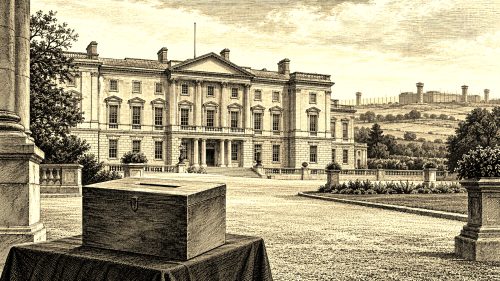
In 1983, Ireland confronted constitutional, political and security questions that would echo for decades. Voters approved the Eighth Amendment, inserting constitutional protection for the unborn. Garret FitzGerald’s coalition launched the New Ireland Forum, while Gerry Adams won West Belfast at Westminster. In Northern Ireland, thirty-eight IRA prisoners escaped from the Maze Prison, intensifying debate over security. The kidnapping of supermarket executive Don Tidey ended with two members of the security forces killed during his rescue. Economic recession, unemployment and emigration remained severe. Together, these events made 1983 a year of constitutional change, political realignment, conflict and social strain across Ireland.
Read Article
Archived: 14 October 2026
Abstract
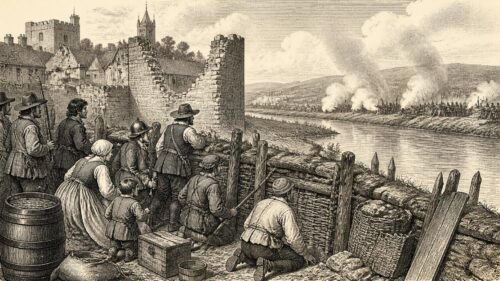
In 1650, the Cromwellian conquest advanced despite continuing resistance in Connacht, Limerick and Ulster. Cromwell’s agreement with Protestant royalists weakened Ormond’s Catholic–royalist coalition. At Clonmel, Hugh Dubh O’Neill’s improvised inner defence repelled a costly assault, although shortages enabled the garrison’s escape and the town’s surrender. Broghill defeated a relief force at Macroom, while Scarrifholis destroyed the Ulster Catholic army and led to Heber MacMahon’s execution. After Cromwell departed, Henry Ireton captured plague-stricken Waterford and Duncannon, pressured Athlone and failed before Limerick. Clergy repudiated Ormond; garrisons, blockade, disease and resource seizures established groundwork for further conquest and settlement in Ireland thereafter.
Read Article

Archived: 17 October 2026
Abstract
In 1591, Tudor authority pressed unevenly upon Gaelic Ireland through military, legal and administrative measures. Brian na Múrtha O’Rourke, lord of West Bréifne, fled to Scotland after invasion, was surrendered to England, tried for treason and executed at Tyburn, demonstrating the crown’s expanding reach. Monaghan’s contested settlement and mass pardons revealed efforts to reorganise lordship and land. Hugh O’Neill’s marriage to Mabel Bagenal intensified Ulster rivalries. Catholic appointments and continental contacts sustained religious networks and official fears of foreign intervention. Annalistic deaths and praise for lords preserved Gaelic values. Although no rebellion began, distrust and dispossession sharpened conditions preceding war.
Read Article
Archived: 18 October 2026
Abstract
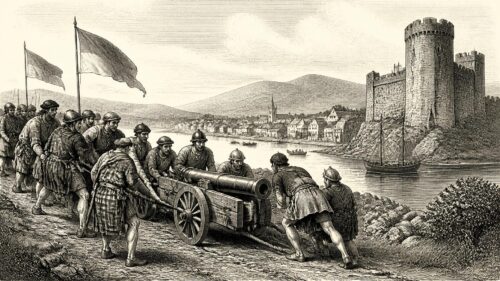
In 1516, Ireland was governed through overlapping royal, Gaelic and urban powers. As Henry VIII’s deputy, Kildare led a coalition that captured Leap Castle, secured hostages and imposed authority in the midlands. In the north-west, Manus O’Donnell obtained French-linked artillery after a pilgrim’s visit to Lough Derg, used it to take Sligo Castle, and later negotiated peace with O’Neill under Dublin’s mediation. Kildare’s Dublin parliament addressed markets, ports, taxation and defence. Religious life, travel and scholarship remained vital: friars drowned on Lough Erne, the Book of Fenagh was completed, and Desmond’s Gaelic lord died amid continuing regional warfare and connections.
Read Article
Archived: 19 October 2026
Abstract
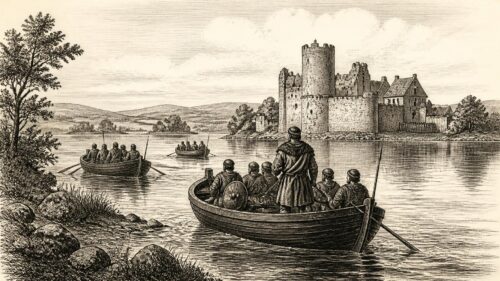
In 1508 Aodh Óg Ó Domhnaill transformed power in Fermanagh by travelling across Lough Erne, capturing Enniskillen castle from Ruaidhrí Mag Uidhir, installing a rival Maguire and taking hostages. His expeditions also reached Lower Connacht, illustrating negotiated, military lordship. Elsewhere, feuds produced killings, raids, castle destruction, exile and attacks around churches, including a St Patrick’s Day defence at Domhnach Mhaighe Dá Chlaoine. Eoghan Ó Ruairc and Margaret O’Brien began the Franciscan friary at Creevelea, demonstrating aristocratic patronage. Annals also record clerical deaths, hospitality and learning. In the Pale, parliament authorised taxation, revealing overlapping Gaelic and English political systems within Ireland.
Read Article
Archived: 20 October 2026
Abstract
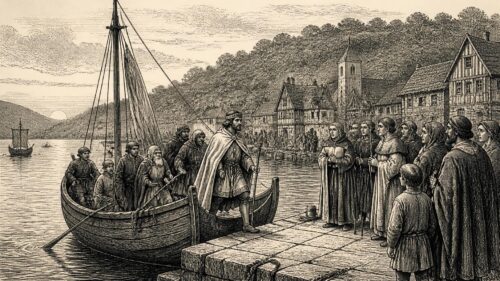
In 1428, Irish annals recorded no single national crisis but interconnected regional events. Aedh Mag Uidhir, a Fermanagh lord returning from pilgrimage to Compostela, died at Kinsale on 11 August and was buried at Cork, illustrating maritime, religious and political links. His death coincided with Maguire dynastic violence, including seizure of his sons’ castle and the killing of Aedh Óg. In Leinster, Donnchadh Mac Murchadha Caomhánach’s ransom, return and cooperation with English authority reflected negotiated power. Deaths of ecclesiastical and local rulers, notably a Mac Conmara chief, reveal hereditary offices, patronage, protection and peace as foundations of Ireland’s diverse lordships.
Read Article

Archived: 23 October 2026
Abstract
For Ireland, 1360 is remembered most clearly through a stark cluster of fires. The Annals of Connacht record “great burnings” at Roscommon, Devenish, Sligo, the monastery of Lisgoole, Fenagh and Drumlease. The entry gives no date within the year, no named commander and no narrative explaining whether these were connected attacks, separate raids, or destruction arising from several local conflicts. That silence matters. It would be unsafe to turn the notice into a single, neatly organised campaign. Yet its geographical reach, from Connacht into Fermanagh and the north-west, makes it an unusually vivid indication of insecurity in a year otherwise
Read Article
Archived: 2 October 2026
Abstract
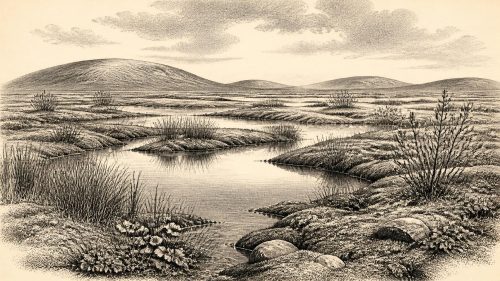
At the modernly assigned date of 30,379 BCE, Ireland has no year-specific historical record. Derryvree, County Fermanagh, preserves organic freshwater sediments between two glacial tills, dated broadly to 34,950–29,750 BCE. They show that north-central Ireland was locally ice-free during Marine Isotope Stage 3 before renewed glaciation buried the wetland. Macrofossils indicate shallow water, mossy margins, sedges and sparse arctic-alpine tundra vegetation under severe periglacial conditions. Comparable deposits confirm changing regional ice cover. Castlepook Cave records cold-stage fauna over millennia, but not a contemporary local census. Possible early human evidence remains uncertain; no settlements, systems or year-specific events can be reconstructed.
Read Article
Archived: 24 September 2026
Abstract
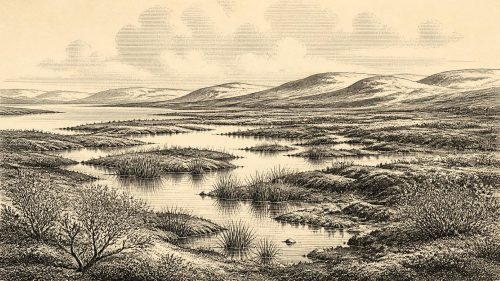
Labelled 30,726 BCE, this period cannot be dated precisely and is best understood through environmental evidence from MIS 3. At Derryvree, County Fermanagh, freshwater organic deposits between glacial tills record an interval of cold, treeless tundra-like terrain, with shallow water, marsh plants, mosses and Arctic-adapted insects. The site shows that Ireland was not continuously ice-covered, although advancing glaciers and unstable climates transformed landscapes. Castlepook Cave fauna indicates that mammoths, reindeer, predators and other cold-climate mammals reached Ireland. A possibly tool-marked reindeer bone raises, but does not prove, early human visits. No evidence supports settlement, political or cultural events in Ireland.
Read Article
Archived: 24 September 2026
Abstract
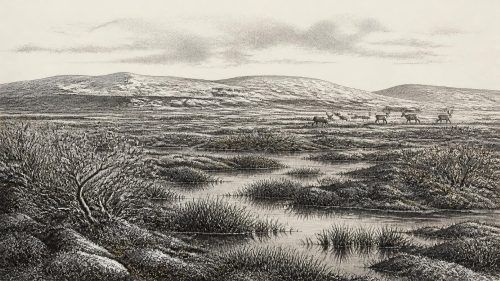
Thirty thousand seven hundred and forty-four BCE is a notional filing point within Marine Isotope Stage 3, not a dated event. Derryvree, County Fermanagh, preserves freshwater organic sediments between glacial tills, radiocarbon-dated broadly to 36,900–31,700 calibrated years BP. Its pollen, plants, insects and bogbean seed indicate cold, open, treeless wetland with pools, sedges, mosses and Arctic-alpine vegetation. Castlepook Cave, County Cork, records a time-averaged pre-Last Glacial Maximum fauna including mammoth, giant deer, reindeer, bear and hyaena. Ireland’s ice, coastlines and habitats fluctuated greatly. Human presence remains unproven for this period, despite a possible cut-marked bone; later glaciation destroyed much evidence.
Read Article

Archived: 24 September 2026
Abstract
Around 30,763 BCE, Ireland lay within the climatically unstable Late Pleistocene MIS 3, rather than a precisely recoverable historical year. Derryvree, County Fermanagh, preserves freshwater sediments between tills, showing that local ice-free wetlands supported tundra plants, including water-milfoil, bogbean, sedges and dwarf willow. Elsewhere, ice conditions varied considerably. Castlepook Cave in County Cork records a broad MIS 3 fauna of mammoth, reindeer, giant deer, predators and smaller cold-adapted animals, although individual remains differ in age. No secure contemporary settlement exists. A possibly stone-cut reindeer bone suggests tentative human visitation, but cannot establish permanent occupation, identity or society there with certainty.
Read Article
Archived: 22 September 2026
Abstract
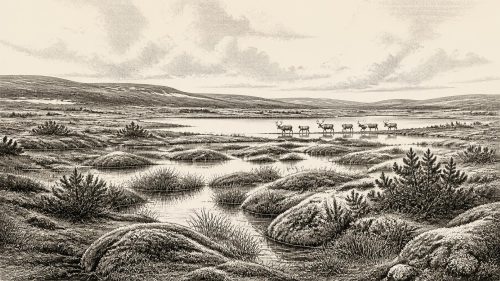
Around 30,849 BCE, Ireland lay within the climatically unstable Late Pleistocene MIS 3, not a recoverable historical year. At Derryvree in County Fermanagh, freshwater sediments sealed between glacial tills record a locally ice-free interval around 33,500 years ago. Pollen, plants and insects indicate cold, treeless wetland with mosses, sedges, shallow pools and sparse vegetation. Castlepook Cave in County Cork yielded diverse Ice Age mammals, including mammoth, giant deer, reindeer and hyaena, accumulated over millennia. A possibly tool-marked reindeer bone suggests early human activity, but no secure evidence establishes settlement or population. These fragile records depict changing habitats before wider glaciation.
Read Article

Archived: 21 September 2026
Abstract
Around 30,982 BCE, Ireland was entering a worsening Late Pleistocene climate, as ice expansion increasingly reshaped land, habitats and routes for animals. Evidence cannot reconstruct conditions in a single year. At Derryvree, County Fermanagh, sediments between glacial tills preserve an earlier MIS 3 freshwater tundra, with sedges, aquatic plants, dwarf willow and arctic-alpine mosses, demonstrating an ice-free cold interval. Castlepook Cave, County Cork, records varied Ice Age fauna, but its mixed deposits cannot date species precisely. A possibly cut-marked reindeer bone suggests early human contact, though no settlement is proven. Later glaciation destroyed much evidence, leaving a provisional environmental history.
Read Article
Archived: 19 September 2026
Abstract
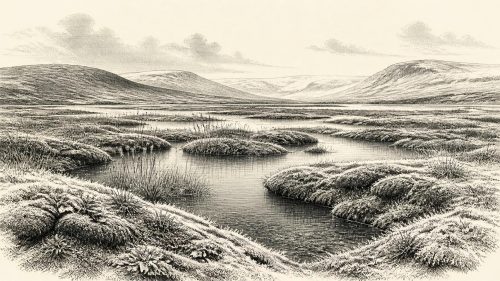
Around 31,162 BCE, Ireland lay within the variable late Marine Isotope Stage 3, approaching major glaciation. Derryvree, County Fermanagh, preserves freshwater organic sediments between two glacial tills, indicating a temporary ice-free tundra wetland with pools, mosses, sedges and cold-adapted plants. Its radiocarbon date covers millennia, not a precise year. Ice margins, drainage and habitats changed regionally, while cave remains show intermittent cold-stage mammal communities but cannot date individual species to this time. No evidence confirms human settlement, political communities or cultural activity. The period is therefore understood chiefly through fragmentary environmental archives, documenting changing ice, vegetation, wetlands and animal possibilities.
Read Article
Archived: 18 September 2026
Abstract
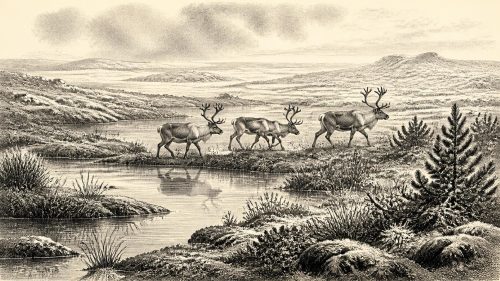
Labelled 31,299 BCE, this period cannot be identified as a precise Irish historical year, but falls within a broad late Marine Isotope Stage 3 interval. Derryvree, County Fermanagh, preserves freshwater and organic sediments between glacial tills, showing locally ice-free, biologically productive tundra-like wetland conditions. Its radiocarbon date BIRM-166 calibrates broadly to 36,900–31,700 years before present. Castlepook Cave, County Cork, records reindeer, mammoth and hyaena from changing pre-maximum glacial faunas. A marked reindeer femur may indicate human butchery, but proves neither settlement nor population. Evidence instead reveals intermittent ecological opportunities before later glaciation, not continuous habitation, societies, or events with certainty.
Read Article
Archived: 17 September 2026
Abstract
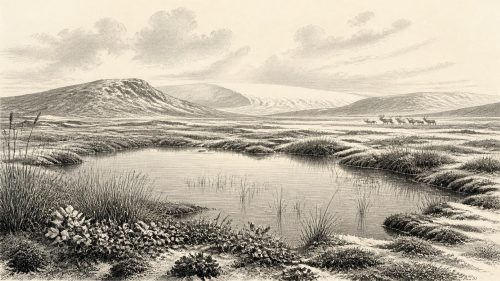
Around 31,435 BCE, Ireland lay within the variable Midlandian cold stage, not a precisely reconstructable single year. Derryvree, County Fermanagh, preserves freshwater organic sediments between glacial tills, radiocarbon-dated broadly to 36,900–31,700 cal BP. Its bogbean, sedges, mosses and aquatic plants indicate treeless wet tundra with seasonal liquid water, rather than permanent ice or temperate woodland. Comparable deposits show changing local climates and ice limits. Cave fauna demonstrate that reindeer, mammoth, giant deer and predators occurred during overlapping Late Pleistocene phases, but not necessarily together. No securely dated human activity exists. Later ice expansion buried Derryvree and erased many older landscapes.
Read Article


