Archived: 26 September 2026
Abstract
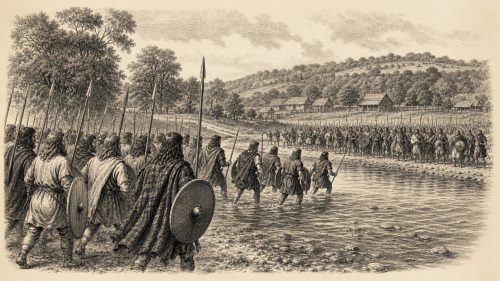
In 1159, Muirchertach Mac Lochlainn, Ireland’s leading overking, contested Ruaidrí Ua Conchobair’s power through shifting alliances across Meath, Bréifne, Airgíalla and Thomond. After reshaping Meath’s kingship, Mac Lochlainn faced Ruaidrí’s Connacht-Bréifne coalition, whose campaign was marked by Áed Ua Conchobair’s death at Athlone’s wicker bridge. At Ardee, northern and Airgíalla forces routed Ruaidrí’s army, killing numerous regional leaders. Mac Lochlainn subsequently ravaged Connacht and pressured Meath and Leinster, but gained neither Ruaidrí’s submission nor lasting control. Local raids, church deaths and rural military burdens reflected wider instability. Ardee confirmed his supremacy temporarily, yet preserved rivals and left Ireland’s kingship unresolved.
Read Article

Archived: 26 September 2026
Abstract
In 1155, Ireland’s competing overkings, Tairrdelbach Ua Conchobair and Muirchertach Mac Lochlainn, struggled for influence through Meath, hostages, cattle raids and control of Shannon crossings. Following Maelsechlainn Ua Mael Sechlainn’s death, Mac Lochlainn installed Donnchad, who was deposed by Meathmen. Campaigns destroyed bridges and fortifications, while captives, oaths and restitution shaped alliances. Fires affected major ecclesiastical settlements amid continuing church reform and construction. Rural life depended on farming, livestock and lordly obligations, while coastal towns traded. Henry II considered, but abandoned, an Irish expedition. Laudabiliter’s disputed papal authority later furnished arguments supporting English conquest, although no intervention occurred until 1169.
Read Article
Archived: 26 September 2026
Abstract
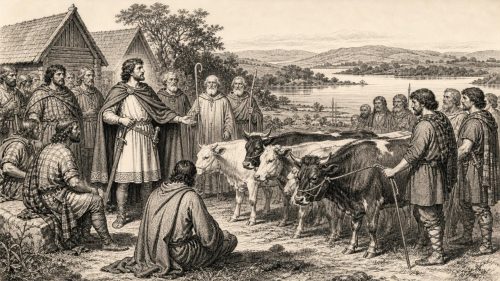
In 1144, Conchobar Ua Conchobair, Tairdelbach of Connacht’s son and king of Meath, was assassinated by Meath conspirators after six months’ rule. Tairdelbach invaded, inflicted heavy losses, accepted 400 cows in compensation, and reorganised Meath between Ua Mael Sechlainn rulers and neighbouring powers. Epidemic claimed his son Tadc and others, while clergy secured the conditional release of imprisoned Ruaidrí Ua Conchobair and mediated peace with Munster. Annals also record aristocratic deaths, kindred violence, Kells burning three times, and losses at Clonard. Events exposed high-kingship’s dependence on local dynasties, hostages, wealth, negotiation and ecclesiastical authority during a year of widespread disruption.
Read Article
Archived: 26 September 2026
Abstract
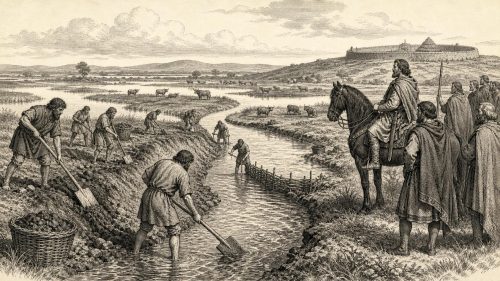
In 1139, Ireland remained politically fragmented, with Tairdelbach Ua Conchobair’s high-kingship dependent on force, alliances and hostages. He demonstrated authority by diverting the River Suck through marshes, strengthening Connacht’s eastern frontier, and by blinding a rival. Across Ireland, dynastic feuds brought killings, church burnings, plundering and violated sanctuary, while Munster’s Uí Briain exploited Cormac Mac Carthaig’s recent death. Church leaders negotiated peace between Munster and Leinster, and Malachy began his journey towards Rome, linking reformers with continental Christianity. Dublin’s religious life developed, poets and clerics died, and ordinary people directly bore warfare, tribute and labour demands during the troubled year.
Read Article

Archived: 26 September 2026
Abstract
In 1138, Ireland’s contested political order produced both stalemate and upheaval. Toirdelbach Ua Conchobair’s coalition confronted Meath, Leinster and Dublin without battle, confirming his reach but not supremacy. In Munster, Cormac Mac Carthaig, royal patron of reform and Cashel’s Romanesque chapel, was murdered through an Uí Briain-backed conspiracy, restoring their over-kingship while preserving Mac Carthaig resistance in Desmond. Raids, killings and crop destruction exposed local rivalries and contributed to famine. Armagh’s new primate, Gilla Meic Liac, visited Munster, while clerical deaths and fires affected churches. At Armagh, Máel Brigte completed a Gospel manuscript, demonstrating enduring scholarship amid conflict and instability.
Read Article

Archived: 26 September 2026
Abstract
In 1125 Tairdelbach Ua Conchobair, king of Connacht, extended his supremacy across central and southern Ireland through campaigns, tribute and political appointments. After southern revolts, warfare affected Limerick, Lismore and coastal Munster. He exacted compensation at Aghaboe, asserted influence over Leinster and Dublin, then invaded Meath after Murchad Ua Mael Sechlainn destroyed Shannon bridges. Tairdelbach expelled Murchad and partitioned Meath among dependent rivals, provoking immediate killings and continued instability. Fighting also affected Brega, Airgialla and Connacht. Meanwhile Armagh’s church received a new roof, prominent clerics died, and warfare burdened farming, trade and local communities. His authority remained powerful but insecure.
Read Article

Archived: 26 September 2026
Abstract
In 1120, Ireland remained divided among competing rulers rather than subject to a single high king. Toirdelbach Ua Conchobair of Connacht invaded Meath, expelling Murchad Ua Máel Sechlainn despite disputed ecclesiastical guarantees, before confronting Domnall Mac Lochlainn at Athlone; their peace proved fragile. Toirdelbach reinforced power by building three strategic bridges and celebrating Tailtiu’s royal assembly. In Munster and Osraige, hostage-taking, payments and imprisonment exposed overlapping claims. Cellach of Armagh visited Munster, collecting dues and affirming church influence in diplomacy and reform. Regional killings, trade, agriculture and labour underpin the annals’ portrait of political conflict, mobility and contested authority throughout.
Read Article

Archived: 26 September 2026
Abstract
In 1094 Muirchertach Ua Briain, king of Munster, recovered influence across Ireland amid rivalry with Domnall Ua Lochlainn. After campaigning involving Dublin, Meath, Leinster and northern forces, he expelled Gofraid Méránach, probably Godred Crovan, from Dublin, securing its maritime wealth. Domnall Ua Máel Sechlainn of Meath was killed and Muirchertach divided Meath between dependent rivals. His authority nevertheless met limits: Connacht’s Síl Muiredaig defeated Munster-backed forces at Fidnach, and one expedition failed to obtain hostages. Armagh’s abbot visited Munster successfully, while violence, severe weather and scarcity compounded disruption. Dublin’s trade and crafts endured. The year redistributed power without unifying Ireland.
Read Article

Archived: 26 September 2026
Abstract
In 1039, Ireland remained divided among competing provincial and regional rulers after the collapse of broadly accepted high kingship. Donnchad mac Gilla Pátraic, overking of Leinster and Osraige, led a destructive hosting through Meath to Knowth and Drogheda before dying during or soon after it. His death weakened Osraige’s wider authority and aided conditions for Diarmait mac Máel na mBó’s later ascent. Annals also record killings, blinding and contested lordships across Leinster, the midlands, Ulster and Connacht. Church leaders died, Clonard’s bell tower reportedly collapsed, and a solar eclipse was observed. Rural production, monasteries and Hiberno-Norse trading towns sustained society.
Read Article

Archived: 26 September 2026
Abstract
In 1028, Ireland remained politically fragmented after Brian Bórama and Máel Sechnaill, with power contested through raids, killings, hostages and cattle wealth. Cenél nEógain plundered Tír Conaill, while the Conaille killed regional rulers. Sitriuc Silkbeard, Hiberno-Norse king of Dublin, and Flannacán of Brega made a prestigious pilgrimage to Rome, signalling wider Christian connections and developments associated with Dublin’s cathedral. Severe Lent snow disrupted people and livestock. Ecclesiastical deaths, Duleek’s plundering, and Slane’s collapsed oratory reveal churches’ institutional importance and vulnerability. Conflicting annals record violent regional succession, especially Connacht’s Brian Ua Conchobair, portraying a literate, agrarian, martial society linked to Europe.
Read Article

Archived: 26 September 2026
Abstract
In 1026, Ireland’s contested politics reflected the unsettled aftermath of Brian Bóruma and Máel Sechnaill’s deaths. Donnchadh mac Briain asserted Munster’s wider ambitions by taking hostages in Mide, Brega, Dublin, Leinster and Osraige, while hosting Patrick’s successor at Cenn Corad. Northern king Flaithbertach Ua Néill raided Mide, crossing ice to ravage Inis Mochta. Dublin remained a wealthy Hiberno-Norse power, alternately submitting and fighting. Leinster, Osraige and Mide saw killings, raids and shifting local leadership. Church offices, pilgrimages to Irish centres and Rome, and road building at Clonmacnoise demonstrate how religion, infrastructure and lordship sustained fragile regional power overall across Ireland.
Read Article
Archived: 26 September 2026
Abstract
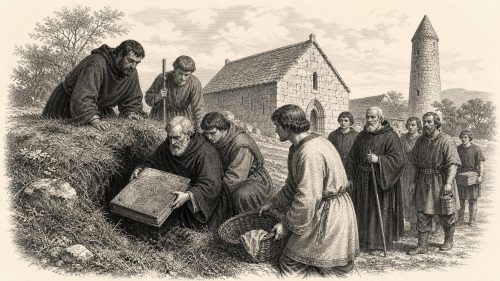
In 1007, Brian Bóruma reinforced his authority by campaigning towards Armagh, securing Ulaid hostages and involving Norse allies. Ulaid suffered rival killings, revenge and violations of church sanctuary, alongside intervention by Flaithbertach Ua Néill. In Mide, the displaced high king Máel Sechnaill revived Tailtiu’s assembly, installed a Columban successor and funded Clonmacnoise’s altar-front through local levies, asserting ceremonial kingship. At Kells, the Great Gospel of Colum Cille, probably the Book of Kells, was stolen for its precious cover but recovered. Ecclesiastical obits reveal religious networks. The annals depict Ireland as politically fragmented, wealthy, and shaped by power, sanctity and violence.
Read Article
Archived: 8 October 2026
Abstract
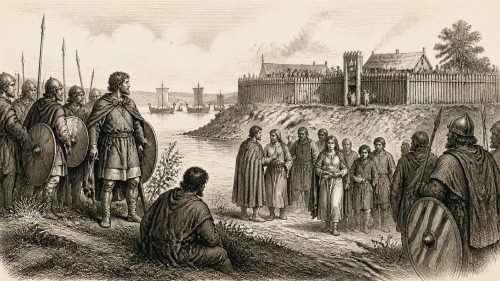
In 980, amid succession following Domnall ua Néill’s death, Máel Sechnaill mac Domnaill of Clann Cholmáin defeated Dublin and Isles forces at Tara. The victory, although not an expulsion of Norse power or unification of Ireland, enhanced his claim to wider supremacy. With Eochaid of Ulaid, he besieged Dublin for three days, securing hostages, tribute, release from Dublin’s exactions, and freedom for some Irish people held in bondage. Ragnall, Dublin’s heir, died in battle, while Amlaíb Cuarán retired penitently to Iona. Dublin’s commerce endured, but its political influence declined. Church deaths and regional killings exposed Ireland’s continuing fragmented, unstable kingship.
Read Article
Archived: 28 October 2026
Abstract
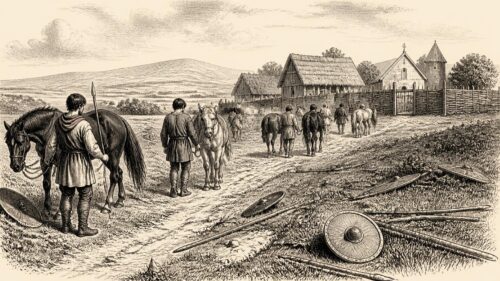
On 13 September 908, Munster’s king-bishop Cormac mac Cuilennáin was defeated and killed at Belach Mugna, or Mag Ailbe, by forces led by Flann Sinna of Tara, Cerball of Leinster and Cathal of Connacht. The battle ended Munster’s expansion, killing allied rulers and ecclesiastical leaders, including Cellach of Osraige, and strengthened Flann’s influence without unifying Ireland. Cormac’s reputation as scholar, scribe, bishop and anchorite illustrates overlapping royal and clerical authority. Annals record northern aggression, church deaths and uncertain reports, revealing rivalry, institutional Christianity and Irish Sea connections. Sources caution against treating later narratives, casualty totals or Viking involvement as certain.
Read Article
Archived: 28 October 2026
Abstract
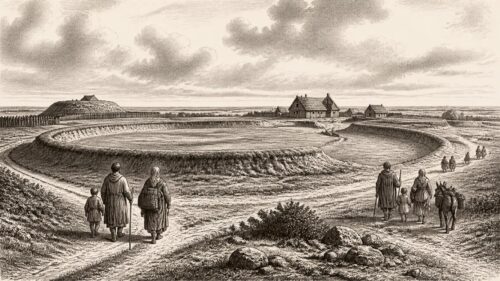
In 889, unevenly dated annals record political strain across Ireland. Domnall, son of Áed Findliath, led northern Uí Néill forces and a foreign contingent against the southern Uí Néill, though no battle or outcome is described. The royal assembly at Tailtiu was not held, signalling impaired authority in the midlands. Dub Lachtna became king of Cashel and Tadc king of Connacht, while Tuadcar, bishop of Clonmacnoise, died. These notices demonstrate contested power, fragile public institutions and significant succession, but do not establish a coordinated crisis or provide evidence for wider conditions such as famine, weather, or economic disruption in Ireland.
Read Article
Archived: 28 October 2026
Abstract
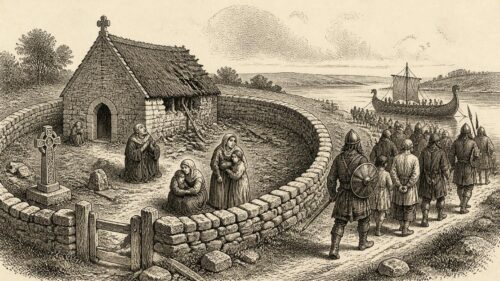
In the annalistic sequence assigned to AD 880, Scandinavian raiders destroyed Cianán’s oratory at Duleek, County Meath, and carried away many people. The attack struck a wealthy, well-connected ecclesiastical community, demonstrating the continuing vulnerability of Irish churches despite growing Scandinavian settlement around Dublin. Bárid, a prominent Norse leader probably linked to Dublin and perhaps son of Ímar, died soon afterwards; annalists attributed his death to Cianán’s supernatural vengeance, though its circumstances remain uncertain. Occurring early in Flann Sinna’s reign, the raid illustrates limited royal control, Irish Sea power, captivity’s human cost, and the overlap of raiding, settlement, religion, and politics.
Read Article
Archived: 28 October 2026
Abstract
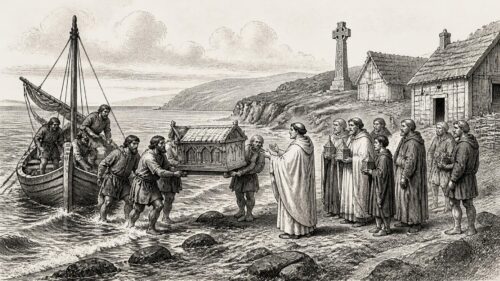
In 878, whose annalistic dating requires caution, Ireland experienced local political instability, disrupted public ceremony, unusual weather reports and significant religious refuge. Gairbíth of Conaille and Cumuscach of Uí Chremthainn were killed in northern conflicts, while Congal of Ciarraige Luachra died in Munster. Tailtiu’s major fair was cancelled without stated justification, signalling a failure of collective order and lost opportunities for trade and negotiation. Annals recorded a great wind, lightning, supposed blood-rain, and lunar and solar eclipses in October. Most notably, Colum Cille’s shrine and relics reached Ireland, removed from danger posed by Scandinavian foreigners, affirming Columban resilience and continuity.
Read Article
Archived: 29 October 2026
Abstract
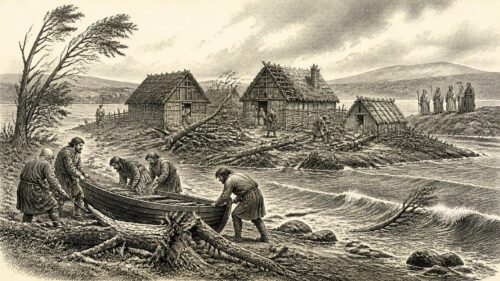
In 857, Ímar and Amlaíb routed Caitil Find and his Gall-Gaídil in Munster, demonstrating competition among Scandinavian-Gaelic forces rather than a simple Irish-Viking conflict. The annals provide no location, casualties or outcome for Caitil. The Annals of Inisfallen also record Búitíne’s fleet arriving in Ireland, without explaining its purpose. Matudán, king of Ulaid, died, possibly after entering clerical life, while Maengal of Fore and Siadal of Dísert Ciaráin also died. At Tailtiu, three people were killed by lightning, and a severe windstorm damaged trees and lake islands. These notices depict Ireland connected through maritime movement, regional power and monastic networks.
Read Article
Archived: 29 October 2026
Abstract
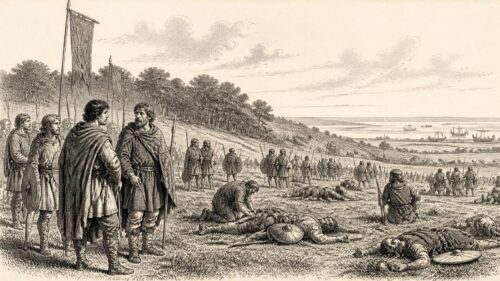
In 848, Irish annals recorded a cluster of victories over Viking forces, although later compilations and exaggerated casualty figures require caution. Máel Sechnaill of Tara defeated raiders at Forach, while Ólchobar of Munster and Lorcán of Leinster killed Tomrair, a prominent Scandinavian jarl and deputy, at Scíath Nechtain. Tigernach of Lagore and the Eóganacht of Cashel won further successes. Ólchobar also campaigned against the Viking fort at Cork, though its outcome is unknown. These actions demonstrated regional resistance, not national unity, amid disruption to communities and churches. Viking bases and activity endured, but victory enhanced Irish confidence and standing abroad.
Read Article
Archived: 29 October 2026
Abstract
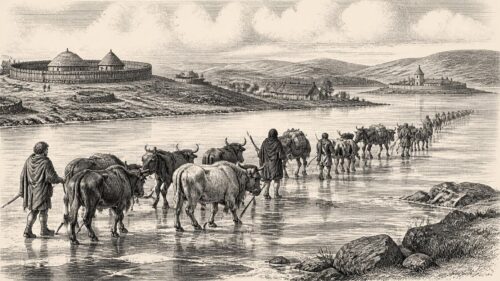
In 822, Irish annals recorded an exceptional frost that froze seas, lakes and rivers, enabling herds, horses and laden traffic to cross waterways. Political conflict centred on Brega, where Murchad of Cenél nEógain gained secret submissions before Conchobor of Clann Cholmáin reasserted control through devastation and coercion. Warfare also killed rulers and nobles in Connacht, Bréifne, Ard Ciannachta and the midlands. Ecclesiastical leaders died at Birr, Achad Bó Cainnig and Lugbad, illustrating churches’ roles. Chronicon Scotorum reports raids on Daiminis and Corcach. These notices portray a Ireland shaped by environmental change, dynastic rivalry, local warfare, religious institutions and seaborne vulnerability.
Read Article
Archived: 30 October 2026
Abstract
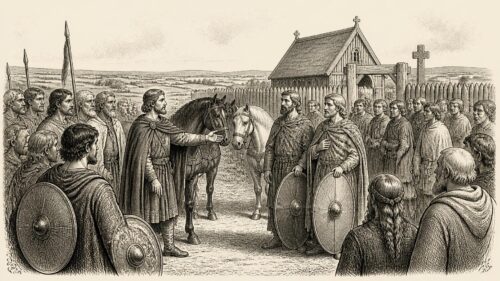
In 805, Áed Oirdnide, king of Tara, led a hosting to uncertainly located Dún Cuair and divided Leinster between Muiredach son of Ruaidrí and Muiredach son of Bran, asserting northern Uí Néill overlordship. The settlement favoured rival Leinster dynasties, limiting consolidation against Tara, though not ending provincial independence. Annalistic dating is problematic, but modern scholarship associates the intervention with 805. That year also saw the death of Ólchobar, a Munster royal heir, without recorded succession details. Churches wielded land, learning and political influence amid rural farming society. A possible pestilence is chronologically uncertain; no securely recorded Viking raid occurred there.
Read Article
Archived: 30 October 2026
Abstract
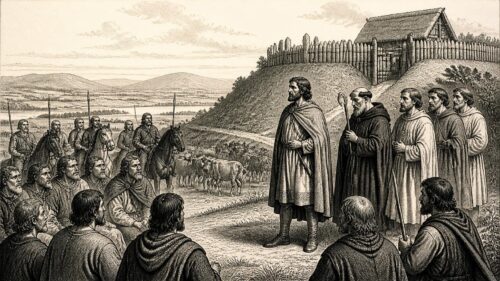
Recorded under Annals of Ulster U804, conventionally AD 803, the year saw Áed Oirdnide devastate Leinster twice, compelling Fínshnechtae Cetharderc’s submission. At Dún Cuair, an Uí Néill assembly presided over by Armagh’s abbot Connmach linked royal and ecclesiastical authority. At Fothad na Canóine’s urging, Áed exempted Irish clerics from military hostings, establishing an influential ideal of clerical immunity. Notices also record deaths of regional rulers and church officers, a local northern battle, and a destructive storm in Corcu Baiscinn. Cenannas, later Kells, was granted without conflict to Colum Cille’s Columban community, strengthening its religious importance in Meath for subsequent centuries.
Read Article

Archived: 30 October 2026
Abstract
In 783, Irish annals recorded political rivalry, regional warfare, ecclesiastical change and royal deaths across a connected but divided island. Donnchad, southern Uí Néill ruler, and Fiachna of Ulaid met at Inis na Ríg, yet neither would enter the other’s sphere, exposing limits to high-kingship. Battles occurred among northern Uí Néill groups and at Carn Conaill in Connacht, while Áth Truim was burned. Church leaders died, including Flann of Inis Caín Dega, killed by poison; Dúnchad of Uí Maine adopted religious observance. Relics reached Tailtiu, demonstrating ecclesiastical authority and mobility. The notices reveal shifting local power rather than unified rule.
Read Article

Archived: 30 October 2026
Abstract
In 779, Irish annals record converging environmental, ecclesiastical and political crises. A continuing cattle murrain, human deaths from want, widespread smallpox and an autumn windstorm placed severe pressure on rural communities and their pastoral economy. On 11 June, Kildare burned; fires also damaged Clonmore and Kildalkey, though causes and connections remain unknown. Several prominent clerics died, including Clonard’s bishop and Roscommon’s abbot. Donnchad Midi, king of Tara, secured hostages from northern king Domnall son of Áed Muinderg, demonstrating contested overlordship. In Munster, Breislén of Béirre killed Fergal of Desmumu in internal conflict. Fragmentary sources portray exceptional vulnerability and rivalry alike.
Read Article
Archived: 31 October 2026
Abstract
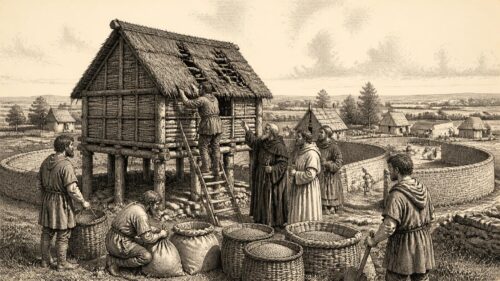
In 751, Irish annals recorded regional political and ecclesiastical change rather than a national event. Half the stored grain at Clonard, a major Meath monastery, was destroyed in uncertain circumstances, exposing the dependence of religious communities upon agricultural production, estates and redistribution. Flann of Uí Fhailgi and Fergus of southern Brega died, creating potential succession openings without recorded conflict. Numerous abbots, bishops, rulers and learned figures also died across Ireland, illustrating the reach of connected churches and monastic networks. The evidence does not establish famine, epidemic, warfare or Viking activity. Instead, 751 reveals fragmented kingship, clerical influence and material vulnerability.
Read Article
Archived: 1 November 2026
Abstract
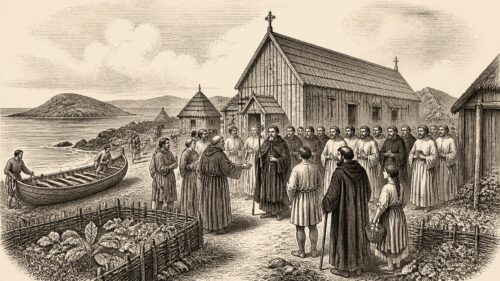
In 724, Fogartach mac Néill was killed by Cináed mac Írgalaig at Cenn Deilgden, probably in the Brega–Mide region, strengthening Cináed’s claim to paramount kingship among the southern Uí Néill. The battle reflected competitive dynastic politics rather than rule over a unified Ireland, and its military details remain unknown. Elsewhere, Fáelchú, abbot of Iona, died and Cilléne Fota succeeded, possibly reuniting contested offices. Nechtan’s withdrawal and Drust’s accession marked a Pictish change of ruler. Cuinnles of Clonmacnoise and Cáech Scúili, scribe of Derry, also died. These records illuminate interconnected political, ecclesiastical and literary authority, while leaving everyday conditions largely undocumented.
Read Article

