Explore every Emerald Archives article connected with Upper Palaeolithic.
31680–31671 BCE
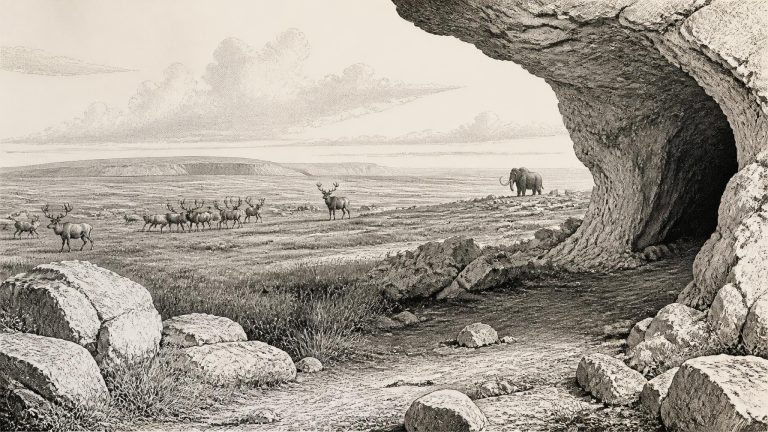
Around 31,674 BCE, Ireland lay within the variable MIS 3 phase of the last glacial period, before the Last Glacial Maximum. Rather than a uniformly frozen landscape, it contained regionally diverse open habitats of grasses, sedges, shrubs and wet ground, shaped by changing ice and lower seas. Castlepook Cave in north Cork preserves bones of mammoth, reindeer, giant deer, hyaena and other cold-adapted animals, indicating a dynamic food web, though deposits span long periods. Sediments elsewhere provide botanical evidence. A marked reindeer femur may indicate human visitation, but remains contested. No evidence supports permanent settlement, polities, beliefs or continuous occupation.
31990–31981 BCE
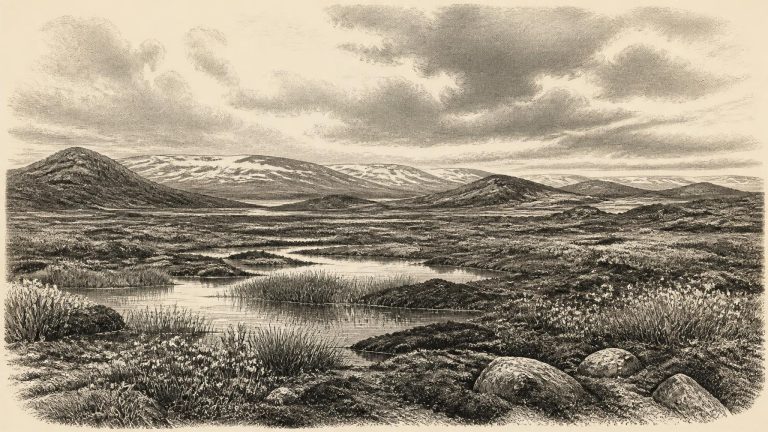
About 31,989 BCE, Ireland lay within Marine Isotope Stage 3, a cold Late Pleistocene interval preceding the last ice sheet’s greatest expansion. Evidence from Fermanagh, notably Derryvree freshwater sediments, indicates locally ice-free, open, treeless tundra or wet muskeg, with sedges, grasses, mosses and pools. Glacial landforms and offshore records show an ice mass developing unevenly, not uniform island-wide cover. Fossils suggest intermittent presence of large mammals, including mammoth and reindeer, but cannot establish contemporaneous communities. Lower sea levels altered coasts and access. No credible evidence demonstrates human occupation. Environmental phase helped create landscapes and conditions encountered by Ireland’s Mesolithic settlers.