
Year by Year
Explore Year by Year articles from the most modern historical year back to the oldest.
3,295 Articles Archived
Great Famine
Archived: 26 October 2026
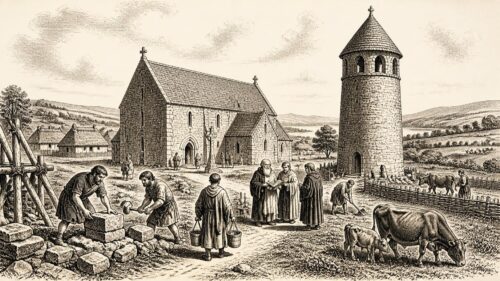
In 965 Ireland suffered a great famine, recorded by the Annals of Ulster as so severe that families reportedly sold children for food. Its causes and regional effects remain unknown, but scarcity threatened households, churches and political communities dependent on crops, cattle and stored resources. Domnall ua Néill, king of Tara, raided Connacht and took hostages from Ua Ruairc, while the Uí Channannáin won a battle killing Domnall. Ecclesiastical successions and deaths occurred at Tír dá Glas, Lismore and Armagh. Chronicon Scotorum associates bishop Cormac Ua Cillín with Tomgraney's church and bell-house, though its construction date and form remain uncertain.
Kildare Ransom
Archived: 26 October 2026
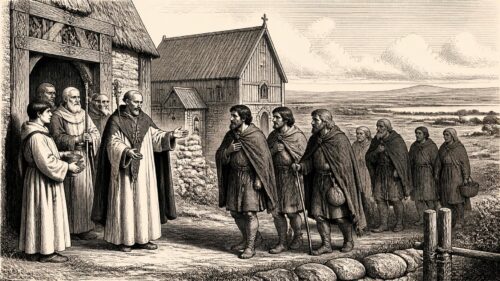
In 964, Dublin’s foreigners, led by Amlaíb Cuarán, plundered the wealthy ecclesiastical settlement of Kildare, demonstrating Dublin’s ability to project power into Leinster. Annals report that many captured clerics were ransomed by Niall ua Eruilb, whose silver-funded intervention restored people and enhanced his standing as protector of Brigit’s community. Muirenn, Kildare’s abbess or related female church officer, also died, though no source links her death directly to the raid. Chronicon Scotorum records cold, scarcity and grain dearth, while killings among northern kings and heirs reveal wider political instability. The selective record portrays a year of violence, hardship, patronage and survival.
Sliabh Fuait
Archived: 26 October 2026
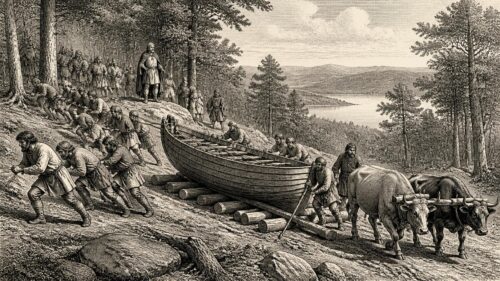
In 963, Ireland’s annals record local crises rather than a single national event. Domnall ua Néill, king of Tara, remarkably hauled ships across Sliabh Fuait, demonstrating logistical strength and political ambition. In Airgialla, Éicnech and his son were murdered by Murchad, who was himself swiftly killed, exposing dynastic instability. Donnchadh of Caisel died, Congal of Ciarraige Luachra was slain, and Tuadmumu suffered disaster on the Shannon. Ecclesiastical change included Máel Muire’s birth within Armagh’s succession and Cáenchomrac’s death at Clones. Gothfrith son of Amlaíb died. Despite uncertain annalistic chronology, these events reveal plural lordships linked by kinship, churches and waterways.
Flaithbertach's Expedition
Archived: 26 October 2026
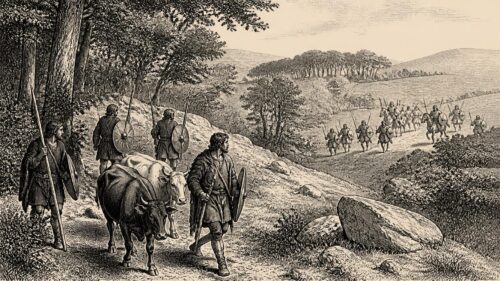
For Ireland, 962 is a year best approached through a small cluster of annalistic notices rather than a single commanding narrative. Those notices are unusually revealing. They record a failed northern raid, the killing or death of several rulers across the island, and a parallel change in Alba. Together they show a political world made up not of a unitary state but of overlapping kingships, kin-groups, ecclesiastical interests and strategic routes. The clearest event was the death of Flaithbertach son of Conchobar, king of Ailech, after an expedition into Dál nAraide.
Fiery Arrow
Archived: 26 October 2026
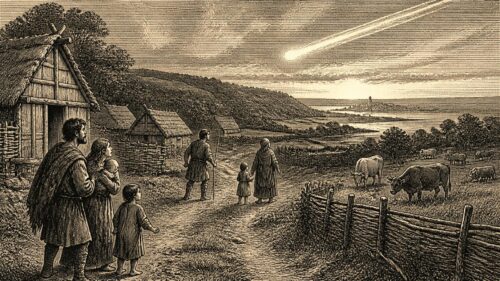
Conventionally assigned to 961, though annalistic chronologies differ, the year is chiefly marked by a reported fiery arrow travelling across Leinster from the south-west towards Áth Cliath, killing people and livestock. Its nature and stated thousand deaths remain unverifiable, but the notice records an exceptional environmental shock affecting agrarian communities and Dublin’s hinterland. The annals also note deaths of rulers in Uí Briúin Seóla, Dartraige and Cashel, the latter two killed by their own people, revealing unstable regional lordship. Ecclesiastical leaders at Clogher, Cork and Lismore died, underscoring churches’ institutional importance. Together, the entries depict politically fragmented, interconnected tenth-century Ireland.
Dál Araide
Archived: 26 October 2026
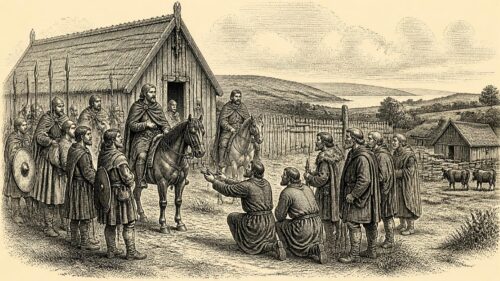
For Ireland in 960, the surviving record is brief but unusually revealing. It does not offer a single decisive battle, a royal inauguration or a named treaty. Instead, the nearest contemporary annalistic sequence preserves a cluster of movements: a northern ruler took pledges in Dál Araide; a man of the Dublin dynasty suffered defeat at an otherwise uncertain place; a figure called Muiredach made a wide circuit of Connacht; and Cathmug, associated with the great church of Lismore, died. Read carefully, these notices illuminate the practical business of power in a country of many kings, river routes and ecclesiastical communities.
Shannon Plundering
Archived: 26 October 2026
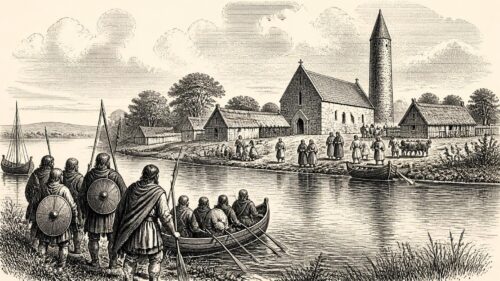
In 959, Irish annals record Munster men plundering Clonmacnoise, a wealthy ecclesiastical settlement strategically placed on the Shannon. The sources provide no commander, destruction or link to the killing of Dub dá Bairenn, king of Cashel, by his own people, but together indicate instability within Munster. In the north, Domnall son of Muirchertach led an expedition into Dál nAraidi and took hostages, demonstrating lordship through coercion. Deaths of senior churchmen, including successors of Caemgen and Colum Cille and Lismore's superior Maenach, marked important ecclesiastical successions. Differing annalistic dates require caution, although the evidence supports securely assigning these events to 959.
Tuathal's Death
Archived: 27 October 2026
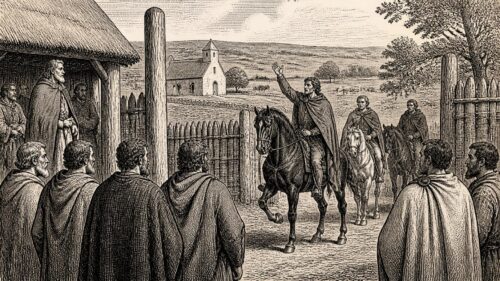
In 958, Ireland’s annalists recorded no single battle that reordered the island, no spectacular raid on a famous monastery, and no weather disaster on the scale sometimes preserved in their terse notices. Yet the year mattered. It marked the death of Tuathal son of Augaire, overking of Leinster, at a moment when authority in the province was being contested between rival Irish dynasties and negotiated under the shadow of Viking Dublin. It also brought a cluster of deaths among abbots, bishops and church administrators. Taken together, these entries reveal an Ireland in which political succession, ecclesiastical office and regional power were closely entwined.
Armagh Succession
Archived: 27 October 2026
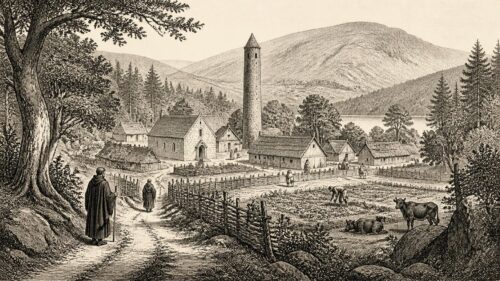
In 957, Irish annals chiefly record deaths of important royal and ecclesiastical office-holders rather than warfare or major events. During Domnall ua Néill’s early reign, following Congalach’s violent death, Máel Fothartaig, king of Caisel, and Máel Coluim ua Canannáin, king of Cenél Conaill, died, opening significant regional successions. Cathasach of Druimthorraid, successor of Patrick and learned bishop, also died, leaving Armagh’s influential Patrician institution without its head. Flann ua hAedacáin, superior of Glendalough, Colmán, successor of Mo-Laise, and other figures were likewise commemorated. The sparse record reveals interconnected political, religious and local authority, while obscuring ordinary lives and succession processes.
Congalach's Death
Archived: 27 October 2026
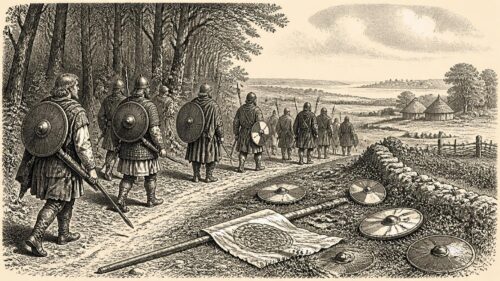
The decisive Irish event conventionally placed in 956 was the killing of Congalach Cnogba, king of Ireland, at Tech Giurann in Leinster. The Annals of Ulster name his attackers as the foreigners of Áth Cliath—Dublin—and the Laigin, or Leinstermen; they also record the death of Áed son of Aichid, king of Tethbae, and “many others”. Chronicon Scotorum makes the disaster still more explicit: Congalach fell with his royal household, and names Matudán son of Áed son of Máel-mithig and Cormac son of Cathalán, king of Fir Arda, among the dead. This was not a routine raid or a minor dynastic killing.
Some records do not yet have a verified historical year and are awaiting chronological placement.