Tairdelbach’s Waterford Fleet1137 CE
Ireland in 1137 remained politically fragmented, as Tairdelbach Ua Conchobair of Connacht asserted contested overlordship through warfare and naval power on the Shannon. Rivalries involved Bréifne, Mide, Leinster, Munster and Hiberno-Norse towns. An allied fleet from Leinster, Dál Cais, Dublin and Wexford besieged Waterford, gaining hostages but not conclusively conquering it. Dynastic killing and raids destabilised Mide and Connacht. In the church, Malachy yielded Armagh to reformer Gilla meic Liac. A severe storm and widespread fires damaged communities. Despite violence, trade, maritime capacity, scholarship, artistic patronage and ecclesiastical reform demonstrated a dynamic, connected society within a rapidly changing medieval world.
Dateline
Ireland in 1137 was a land of ambitious overkings, shifting alliances and increasingly organised churches, but it was not a unified kingdom governed from a single capital. Authority rested upon personal lordship, dynastic claims, tribute, hostages and the ability to mobilise warriors and fleets. The surviving annals preserve an unusually varied picture of the year: warfare on the Shannon, a major expedition against Waterford, political killing in Mide, ecclesiastical succession at Armagh, destructive fires and a deadly storm. Their chronology is not perfectly consistent, so events placed under 1137 by one compilation may appear in an adjacent year elsewhere. Exact dates should not be supplied where the records give none.
Power on the Shannon
The foremost ruler was Tairdelbach Ua Conchobair, king of Connacht and claimant to the high-kingship. His authority, often described by historians as high-kingship “with opposition”, depended upon maintaining pressure on neighbouring kingdoms while controlling rivals within his own dynasty. His ambitions extended far beyond Connacht, but powerful regional rulers retained their own armies, alliances and political objectives.
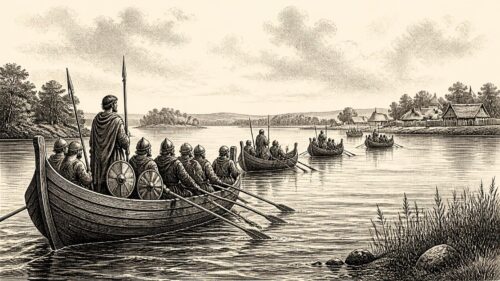
One of the year’s most striking episodes was a confrontation on Lough Ree. The Annals of the Four Masters describe Tairdelbach taking a fleet onto the Shannon and the lake against vessels commanded by Tigernán Ua Ruairc of Bréifne and Murchad Ua Mael Sechlainn of Mide. They claim that the opposing force had some 200 craft while Tairdelbach possessed only twenty. The Annals of Tigernach give different details, identifying a large gathering of vessels belonging to the Conmaicne and the men of Tethba, but agree that they failed to overcome him. Medieval numbers are not always literal counts, yet both accounts emphasise the daring and effectiveness of the Connacht king’s smaller force.
This was more than a dramatic encounter between boats. The Shannon and Lough Ree formed a strategic corridor linking Connacht, Mide, Bréifne and Munster. Fleets could transport troops, threaten lakeside settlements and bypass difficult overland routes. Tairdelbach’s investment in naval power was therefore an instrument of kingship. It also anticipated his later construction of bridges and other works around Athlone, where control of a major crossing could regulate movement between eastern and western Ireland.
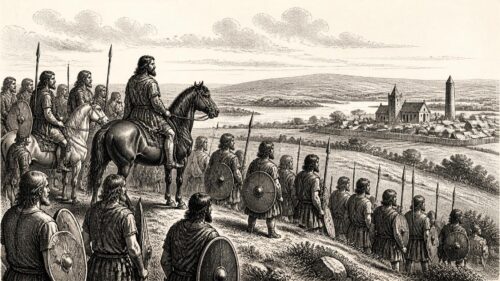
Tigernán Ua Ruairc remained a dangerous neighbour rather than an obedient subordinate. The Annals of Tigernach record a Bréifne raid into Connacht, crossing at Áth an tSruthra, plundering Clann Uadach at Druim Drestan and returning by Athlone. Another entry states that Connacht was laid waste from the Drowes south-eastwards to the Shannon and the mountains of Echtge, generally associated with the Slieve Aughty region, while inhabitants were forced towards western Connacht. The annal does not clearly identify a single cause or attacker. It may compress the consequences of several campaigns, and should not be treated as evidence that the entire province became literally empty.
Conflict Within Mide
Dynastic tension also erupted within Mide. Domnall, son of Murchad Ua Mael Sechlainn, was killed by the Saithne and the people of eastern Mide, together with members of his following. The Four Masters explain that he had made war upon his father and upon them. They nevertheless praise him as a former royal heir of Tara and compare his hospitality to that of Guaire Aidne, the legendary model of princely generosity. Such praise reveals what annalists expected of an admired ruler: courage and lineage mattered, but so did the public distribution of food, valuables and protection.
The peace between Mide and Bréifne also broke down during the year. These disturbances show that provincial boundaries were neither fixed nor peaceful frontiers. Local peoples, lesser kings and rival branches of ruling families could determine whether an overking’s settlement endured. Hostages and agreements might restrain conflict temporarily, but a disputed succession or profitable cattle raid could quickly reopen it.
The Struggle for Waterford
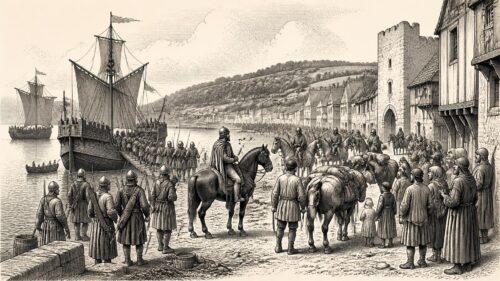
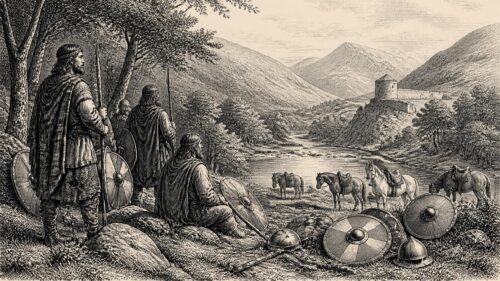
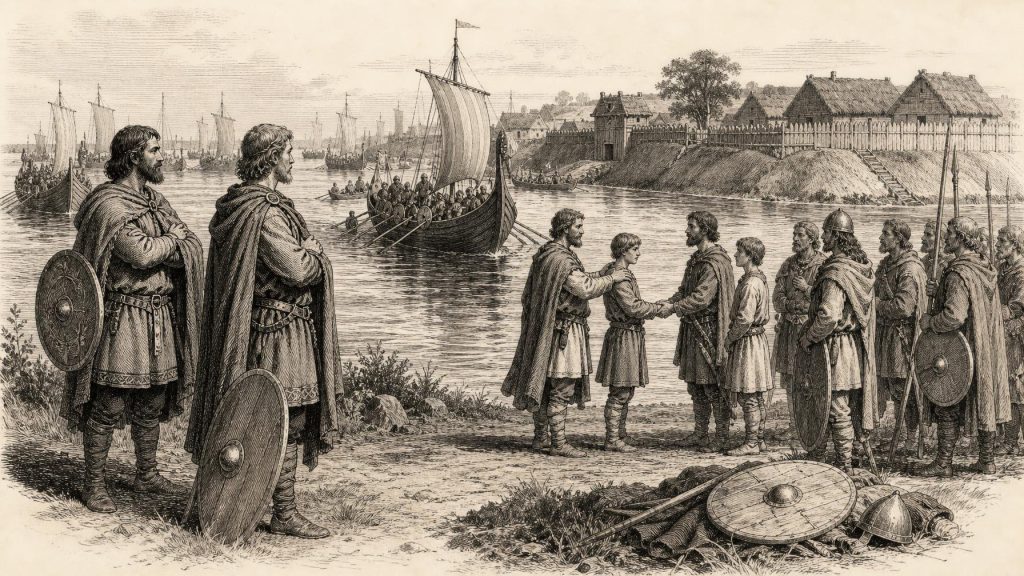
The most important southern expedition centred upon Waterford. According to the Four Masters, Diarmait Mac Murchada, king of Leinster, and Conchobar Ua Briain of the Dál Cais acted with the Hiberno-Norse forces of Dublin and Wexford. Their fleet was said to number 200 ships. They besieged Waterford and obtained hostages from Donnchad Mac Carthaigh, the Déisi and the inhabitants of the town. Here the annals’ “foreigners” were the Christian, Irish-based descendants and associates of Scandinavian settlers, not a newly arrived Viking army.
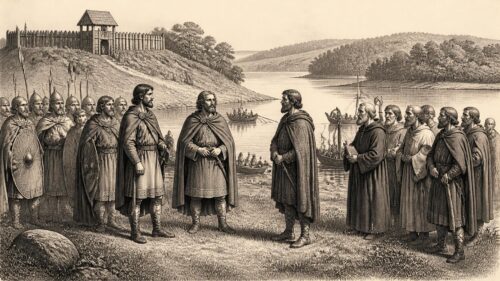
Mac Carthaigh’s Book presents a valuable southern perspective. It records Cormac Mac Carthaigh and leading rulers of Desmond assembling at Waterford to oppose the Leinster and Dál Cais host, after which the attackers returned home. The accounts are not necessarily irreconcilable: an expedition might secure hostages or concessions without permanently occupying the town, while defenders could still claim that the invading host had withdrawn. The evidence does not justify describing Waterford as conclusively conquered or annexed in 1137.
The campaign demonstrates the importance of Ireland’s towns and seaborne forces. Waterford’s harbour, ships, craftspeople and trading connections made it a prize worth contesting. Dublin and Wexford likewise supplied rulers with naval resources unavailable to most inland dynasties. Conchobar subsequently left hostages with Diarmait in return for support in Desmond, while Cormac Mac Carthaigh raided Cennétig Ua Briain and the Hiberno-Norse community of Limerick. These actions formed part of the long contest between the Uí Briain and Mac Carthaigh dynasties for Munster.
A New Head at Armagh
The year also marked an important transition in the Irish church. St Malachy, or Máel Máedóc Ua Morgair, relinquished leadership at Armagh and was succeeded by Gilla meic Liac, the reform-minded head of the Columban church of Derry. The Four Masters place Malachy’s resignation under 1136, but Bernard of Clairvaux’s near-contemporary Life and modern scholarship favour 1137 for the effective transfer. It is therefore best understood as a change completed around this year rather than an event with a securely known day.
The succession mattered because Armagh’s leadership had been contested by hereditary ecclesiastical interests. Gilla meic Liac was a cleric associated with monastic reform, and his appointment strengthened the principle that the successor of Patrick should be an ordained churchman. Malachy returned to his work in Down. His journeys to Rome and Clairvaux, his appointment as papal legate and his role in introducing the Cistercians all lay in the future, but the settlement of 1137 helped make those later developments possible.
The annals also record the death of Domnall Ua Conaing, archbishop of the southern half of Ireland, praising his prayer, wisdom and generosity. Their obituary notices include bishops, a Connacht cleric, Macraith Ua Forreith the historian and spiritual adviser, Aed Ua Finn the chief lector of Bréifne, and a learned man called Ua Cadhla. This cluster illustrates the breadth of Ireland’s learned church culture. Lectors taught and interpreted texts; historians preserved genealogy and political memory; spiritual advisers guided penitents and patrons.
Storm and Burning
A great windstorm was remembered as occurring throughout Ireland. It felled trees and damaged houses, churches and other buildings. In Mag Conaille, a district broadly associated with County Louth, people and livestock were reportedly swept into the sea. No precise date is preserved. Although annalistic descriptions can be dramatic, the reference to damage across several categories of building suggests an exceptional and frightening weather event.
Fire was another recurring danger. Cloyne and Ardagh of Bishop Mel were burned, including houses and churches. Other entries report fires at Armagh, Tuam, Cong, Termon Callainn, Mayo and Boyounagh. The annals do not consistently explain whether these were accidental, caused by warfare or connected with the storm. Timber, wattle and thatch remained common building materials, so a settlement could be devastated quickly. Churches were also embedded within inhabited enclosures containing dwellings, workshops and stores; their burning affected whole communities, not merely places of worship.
Life Beyond the Courts
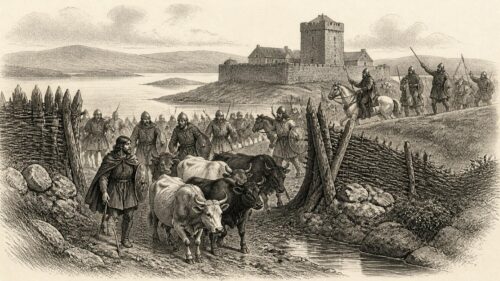
For most inhabitants, life remained rural and dependent upon mixed farming. Cattle supplied food, hides and mobile wealth, explaining why herds were repeatedly targeted during raids. Ordinary families faced the loss not only of animals but also of stored provisions, tools, shelter and relatives taken captive. The reported displacement in Connacht would have placed pressure on western communities expected to receive fugitives and their stock.
Along the coasts, however, towns supported merchants, metalworkers, shipbuilders and other specialists. Waterford’s siege and the large allied fleet show how closely commerce and warfare were connected. Recent achievements also reveal the period’s cultural confidence. The Cross of Cong, commissioned for Tairdelbach in the 1120s, united Irish metalworking with Scandinavian-derived ornament. Cormac Mac Carthaigh’s Romanesque chapel at Cashel had been consecrated in 1134. Neither was created in 1137, but both belonged to the world of its rulers: competitive, internationally connected and capable of sponsoring sophisticated religious art.
The year consequently resists any simple description as one of decline or disorder. Violence, environmental danger and political fragmentation were real, yet so were organised fleets, diplomatic hostage-taking, scholarship, ecclesiastical reform and thriving maritime communities. Ireland in 1137 was unsettled, but it was also adapting rapidly to new forms of royal, urban and religious power.
Primary Sources
- Part 24 of Annals of the Four Masters
- Part 24 of Annals of the Four Masters: Irish Text
- Annals of Tigernach
- Part 2 of Mac Carthaigh's Book
- Mac Carthaigh's Book
- The Annals of Ulster
- Chronicon Scotorum
- Annals of Inisfallen
- St Bernard of Clairvaux's Life of St Malachy of Armagh
- Malachy (Máel-M'áedóc) Ua Morgair
- Gilla meic Liac (Gelasius)
- Ua Conchobair, Tairdelbach (O'Conor, Turlough)
- Ua Ruairc, Tigernán
- Mac Murchada, Diarmait (MacMurrough, Dermot)
- The Viking Age in Ireland
- 950–1450: Vikings, Normans and Medieval Mints
- The Cross of Cong
- Conservation Works at Cormac’s Chapel, Rock of Cashel, Co. Tipperary
- Romanesque Churches
- The First Normans in Munster
- County Waterford and Waterford City Urban Archaeology Survey
- Glenamaddy–Boyounagh Parish History
- Cogadh Gaedhel re Gallaibh: The War of the Gaedhil with the Gaill