
Soda Cakes
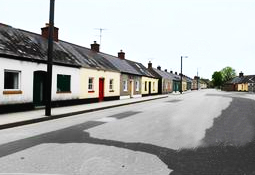
People from Thomondgate in Limerick are commonly called sodacakes or soda cakes in local speech. The name links to the plain soda bread once central to working class kitchens across Ireland where yeast was scarce and quick leavening mattered. In Limerick the term evolved into a neighbourhood nickname during the long nineteenth century and is recorded in local memory, newspapers, directories and personal testimony. It can be affectionate or teasing depending on context. The identity carries pride for many Thomondgate families and remains part of the city’s living vernacular, community humour, and appears in songs, poems, columns, and sporting reports.
Several folk explanations survive to explain the nickname. One recalls Thomondgate women baking soda cakes and leaving them on windowsills to cool, a visible sign of household competence and modest prosperity that neighbours recognised. Another maintains that during sieges and shortages bread was smuggled into the walled city from the north bank and handed in as relief; the small quick breads being practical for carrying. A third account says toll collectors accepted baked goods in lieu of coin at Thomond Bridge when cash was scarce. These stories coexist and point to food, proximity and exchange as central themes in Limerick.
Local newspapers, directories and oral testimony record the phrase across the twentieth century, often without formal explanation because it was locally understood. Interviews with Thomondgate residents in community oral history collections show people self-describing as sodacakes with humour and pride, reclaiming the term as a positive marker. Newspaper match reports and social notices sometimes label players or families sodacakes, and the name appears in school memories and popular songs. Modern use is frequently celebratory, a reclaimed local identity, though outsiders may employ it teasingly. Its survival demonstrates how everyday food terms transform into long-standing markers of place and belonging today.
There is documentary evidence supporting aspects of these stories without proving a single origin. Ordnance Survey maps and trade directories show bakeries and shops on Sexton Street and in Thomondgate through the nineteenth century, while census returns list many people employed in domestic service, baking, or retail. Municipal minutes and bridge toll accounts record receipts and informal arrangements, suggesting barter and non-cash payments occurred around Thomond Bridge. Contemporary printed accounts of the 1690s sieges record food shortages and relief efforts. Caution is necessary when connecting that period to the modern nickname because folk memory frequently blends distinct eras and events.
Today many Thomondgate people accept sodacake as a badge of neighbourhood belonging, and local writers use the term proudly. Shops and a café named Soda Cakes on Sexton Street make the connection visible in the streetscape, while older residents recall teasing or class‑based overtones when the word was used by outsiders. Understanding the nickname requires listening to family stories and consulting parish registers, trade directories, newspapers, oral collections and census records to trace continuities and change. For historians the sobriquet offers a compact case study of how food, gendered labour and urban geography produce durable local identities and collective memory.
Primary Sources
- Census of Ireland 1901, returns for Limerick city parishes including Thomondgate (National Archives of Ireland). Source Link
- Census of Ireland 1911, returns for Limerick city parishes including Thomondgate (National Archives of Ireland). Source Link
- Ordnance Survey twenty five inch map, Limerick sheet covering Thomondgate and Sexton Street, c.1888–1913 (National Library of Ireland or Ordnance Survey Ireland map collection).
- Limerick Municipal Council minutes and toll books relating to Thomond Bridge and bridge receipts, nineteenth century (Limerick City and County Archives).
- Trade directories and commercial listings for Limerick (for example Slater’s and Thom’s directories, late nineteenth century) showing bakers and shopkeepers on Sexton Street and Thomondgate.
- Social columns, match reports and local notices in the Limerick Leader and the Limerick Chronicle that use the sobriquet 'sodacake' or report Thomondgate social life, various dates across twentieth century (local newspaper archive runs at Limerick Library).
- Contemporary printed accounts and proclamations relating to the Siege of Limerick, 1690–1691, recording shortages, relief and movements of foodstuffs (early printed pamphlets and state papers held in national and university collections).
- Photographic views of Sexton Street, Thomondgate and domestic windowsills in Limerick photographic collections (Limerick City and County Council photographic archive; National Library of Ireland photographic collections).
- Oral history interviews and community memory recordings with long term Thomondgate residents, collected by local history projects and the Limerick City Museum oral history programme (catalogue entries and recordings).
- Parish registers and baptismal, marriage and burial entries for St John’s and related north bank parishes showing household names, occupations and family networks in Thomondgate across the nineteenth and twentieth centuries (diocesan archives and local parish registers).
Image Prompt
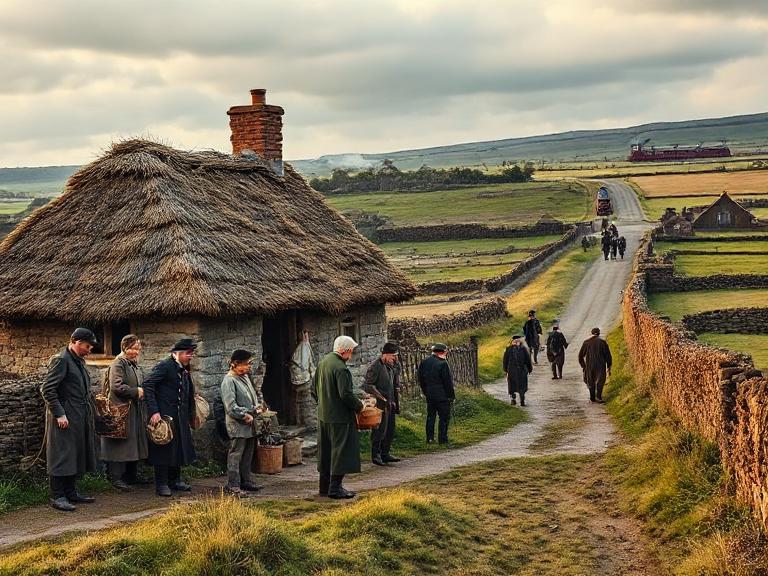
Photorealistic, full colour landscape photograph of Sexton Street North, Thomondgate, Limerick, late nineteenth century to early twentieth century setting. Natural daylight, accurate period clothing for working class men, women and children (plain dresses, shawls, caps, flat caps, waistcoats), women placing round soda cakes on wooden windowsills to cool, small bakery and shopfronts with correct Irish vernacular brick and plaster architecture, horse cart outside a bakery, cobbled street surface, correct signage but no written words visible on image, historically accurate street furniture and period-appropriate lighting, photographic realism, high detail, historically accurate props and textures, no modern objects or written words.