
Carrigans Living(c.1410s)
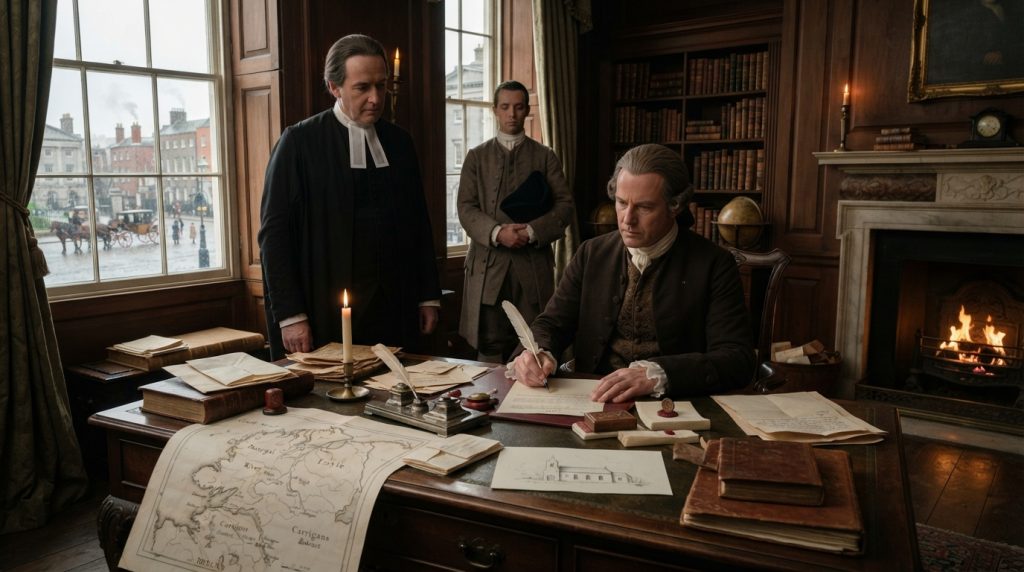
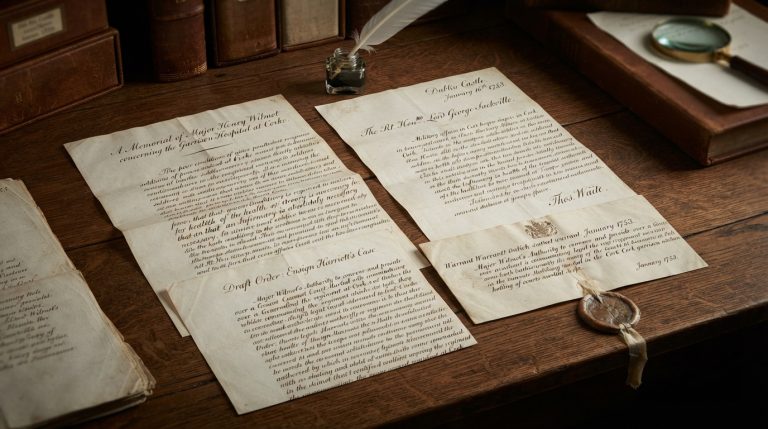
On Thursday, 18 January 1753, Marcus Beresford, first Earl of Tyrone, wrote from Dublin to Lord George Sackville asking that the Reverend William Law be made vicar of Carrigans. The short surviving catalogue description records an ordinary request for ecclesiastical preferment, yet it provides a remarkably precise glimpse into the relationship between religion, landed influence and government in eighteenth-century Ireland. Beresford was one of the kingdom’s leading peers, while Sackville served as chief secretary. A clergyman’s appointment in a northern parish could therefore become the subject of correspondence passing through some of the highest political circles in Dublin.
The Carrigans concerned can be connected with Carrigans in County Donegal, close to Derry and associated with the Church of Ireland parish of Killea. Later architectural records identify a Reverend William Law as rector there and state that the present Church of St Fiach was constructed for him in 1765. This later evidence strongly supports the identification of the William Law recommended in 1753 with the clergyman subsequently serving the Carrigans congregation. The church that stands today therefore offers a physical connection with the ecclesiastical career whose advancement entered Dublin political correspondence twelve years earlier.
A Church of Ireland “living” was far more than permission to preach. It was an ecclesiastical benefice carrying responsibility for a parish and usually providing an income derived from tithes, glebe lands or other church revenues. Appointment to such a position could give a clergyman financial security, social standing and opportunities for later advancement. The formal process involved patronage, presentation and ecclesiastical institution. Consequently, Tyrone’s request was not merely a friendly recommendation. If successful, it could materially shape William Law’s career and place him within a local network of landowners, clergy, parishioners and diocesan authority that might endure for decades.
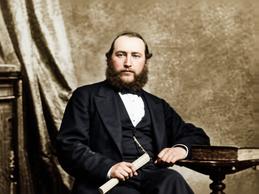
Marcus Beresford was an especially influential figure to make such a request. Born in 1694, he had risen within Ireland’s Protestant landed elite and was elevated to the title Earl of Tyrone in 1746. His family possessed enormous social and political influence, particularly through the Beresford and Power connections. The patent creating his earldom had been issued during the reign of George II only seven years before the Carrigans letter. By 1753 his recommendation carried the weight of aristocratic status within a political culture where personal relationships, family connections and patronage played major roles in appointments.
The letter also fits an extraordinary sequence of surviving correspondence from the same week. On 17 January, only one day earlier, Dublin Castle had acknowledged authority for the presentation of Robert Baillie to another church living. Then, on 18 January, Tyrone requested Carrigans for William Law. These documents show clerical patronage arriving at the chief secretary’s desk on consecutive days. Church appointments were therefore not peripheral to government business. The established Church of Ireland formed part of the constitutional order, and its benefices provided positions through which political patrons could reward suitable clergymen and strengthen networks of influence throughout the country.
That established church represented only a minority of Ireland’s population. Most Irish people were Roman Catholic, while Ulster also contained substantial Presbyterian communities. Nevertheless, the Church of Ireland possessed legal establishment, property, tithes, ecclesiastical courts and representation through its bishops in the Irish House of Lords. Catholic religious and educational life remained constrained by legislation inherited from the Penal era. Thus the appointment of an Anglican clergyman to Carrigans occurred within a society where religious denomination carried significant legal and political consequences. The parish church was simultaneously a place of worship, a local institution and part of the wider structure through which eighteenth-century Ireland was governed.
Carrigans itself stood in a border landscape close to Londonderry, in an area where Anglican, Presbyterian and Catholic communities existed alongside one another. The older ecclesiastical provision at Killea preceded the surviving church now associated with William Law. Later local and architectural evidence records that the present church was erected in 1765, replacing an earlier place of worship, while William Law was rector. The building was described as a relatively modest parish church rather than a grand cathedral or aristocratic chapel. Its scale reflects the local nature of the ministry to which Tyrone was recommending him in January 1753.
The surviving building also demonstrates how an appointment could have consequences extending far beyond the date of the original letter. If, as the evidence strongly indicates, the Reverend William Law recommended by Tyrone became the later Carrigans incumbent, he remained associated with the parish long enough to oversee the construction of its new church in 1765. Architectural records specifically describe it as a “new church for Rev. William Law.” What began as a brief political request in Dublin therefore appears to connect directly with a structure that became part of the religious landscape of County Donegal and survives as historical evidence more than two and a half centuries later.
Elsewhere on 18 January, ordinary Irish life continued beyond these circles of patronage. The Dublin Gazette, Number 250, issued on 16 January and running until 20 January, was the official newspaper then circulating. Dublin Castle officials simultaneously handled military affairs, public works, petitions and financial questions. Only days earlier correspondence had concerned rebuilding at Dublin Castle and military medical provision in Cork. The surviving papers therefore reveal how varied government business could be. An officer’s court martial, an architectural estimate and the future of a Donegal clergyman might all pass through the same administrative network within the space of a single week.
The importance of 18 January 1753 lies in that seemingly simple request: Lord Tyrone wanted Reverend William Law appointed at Carrigans. The document opens a window onto aristocratic influence, the established church, clerical careers and the mechanisms by which local appointments could depend upon political relationships in Dublin. Later evidence carries the story forward to the building of St Fiach’s Church in 1765 under a rector named William Law. For a day-by-day history of Ireland, the letter demonstrates the value of preserving small administrative acts. A few lines written in Dublin can illuminate the beginnings of a ministry whose physical legacy remains embedded in the landscape of County Donegal today.
Primary Sources
- Marcus Beresford, Earl of Tyrone — Letter to Lord George Sackville — Dublin, 18 January 1753.
The principal exact-date source. Tyrone asks that Reverend William Law be made vicar of Carrigans. Derbyshire Record Office, Wilmot-Horton Papers, D3155/C/H/1417. - Irish administration — Draft correspondence associated with Lord George Sackville’s office — 18 January 1753 — D3155/C/H/1418.
Preserved immediately beside Tyrone’s letter in the Dublin administration papers and part of the exact-date governmental record. - Richard James and John Butler — The Dublin Gazette, No. 250 — 16–20 January 1753.
Official Irish government newspaper circulating on the exact target date. Houses of the Oireachtas Library and Research Service / Virtual Treasury of Ireland. - P. Donnellan — Letter concerning the presentation of Robert Baillie to a church living — Dublin Castle, 17 January 1753.
Written one day before Tyrone’s request and providing direct comparative evidence of ecclesiastical patronage being processed through Dublin government circles. - George, Lord Forbes — Letter to Lord George Sackville — 19 January 1753.
Contemporary petitionary correspondence from the following day seeking a mark of royal favour and illustrating the wider culture of political patronage surrounding the chief secretary’s office. - George, Lord Forbes — Memorial accompanying his letter — 19 January 1753.
Primary petition submitted through the same administrative network immediately after Tyrone’s request. - Richard James and John Butler — The Dublin Gazette, No. 249 — 13–16 January 1753.
The preceding official Gazette issue, preserving governmental and public information from the days immediately before the target date. - Richard James and John Butler — The Dublin Gazette, No. 251 — 20–23 January 1753.
The official issue immediately following the target date. - Richard James and John Butler — The Dublin Gazette, No. 252 — 23–27 January 1753.
Contemporary official newspaper continuing the governmental record later in the same month. - George Faulkner — Faulkner’s Dublin Journal — January 1753 issues.
Contemporary Dublin newspaper containing notices, advertisements, political news and social information from the period in which Tyrone’s request was made. - Publishers of Pue’s Occurrences — January 1753 issues.
Contemporary Dublin newspaper offering an independent view of Irish public, commercial and social affairs during the target month. - George II — Letters Patent creating Marcus Beresford Earl of Tyrone — 18 July 1746.
The original royal instrument establishing the rank under which Beresford wrote the 1753 letter. - Church of Ireland, Diocese of Raphoe — Clerical institution and presentation records concerning Killea/Carrigans — eighteenth century.
Ecclesiastical records documenting the formal appointment and tenure of clergy within the parish associated with Carrigans. - Church of Ireland, Killea Parish — Parish and vestry records — eighteenth century.
Contemporary parish documentation relating to worship, parish administration, church finances and the ministry of the incumbent at Carrigans. - St Fiach’s Church, Carrigans — Original 1765 building fabric and associated inscription/initials.
The surviving church itself is a primary material source from William Law’s incumbency. Architectural records identify it as a new church for Reverend William Law. - Church of Ireland / Diocese of Raphoe — Records relating to construction of the new church at Carrigans — 1765.
Contemporary ecclesiastical and building documentation associated with the replacement parish church erected while William Law was rector. - Ireland, Parliament, House of Commons — Journals of the House of Commons of the Kingdom of Ireland — 1753 proceedings.
Official primary record of the political establishment within which government patronage and the established church operated. - Ireland, Parliament, House of Lords — Journals of the House of Lords of Ireland — proceedings for 1753.
Particularly relevant because Church of Ireland bishops and peers such as Tyrone formed part of the governing elite represented in the upper house. - Parliament of Ireland — An Act to Prevent the Further Growth of Popery, 2 Anne c.6 — 1704.
Primary legislation forming part of the Penal Law framework that shaped the religious and political environment of Ireland in 1753. - Parliament of Great Britain — Calendar (New Style) Act 1750, 24 Geo. II c.23 — implemented in 1752.
The original statutory authority establishing the calendar under which 18 January 1753 was officially recorded.