Archived: 27 October 2026
Abstract
Records conventionally associated with 949 illuminate violence and chronological uncertainty in tenth-century Ireland. Annals differ over the date of Ruaidrí Ua Canannáin’s raid into Fir Lí, during which Flaithbertach, son of Muirchertach and grandson of Niall Glúndub, was killed. The episode marked Cenél Conaill’s success against rival Cenél nEógain. Elsewhere, Matudán of Ulaid and Niall grandson of Erulb plundered Conaille and districts, while Congalach of Brega ravaged Uí Méith and Fernmag, demonstrating authority. Obits for Aedán of Tuaim Dá Ghualann and Fogartach of Airgialla reflect ecclesiastical importance and Christian commemoration. Sparse sources reveal local warfare, not a national turning point.
Read Article
Archived: 27 October 2026
Abstract
In 950, Ruaidrí ua Canannáin of Cenél Conaill pursued a serious claim to Tara, maintaining pressure on Mide and Brega for six months. His campaign ended at Muine Brócáin, where Dublin’s foreigners killed him and his kinsman Niall, preserving Congalach Cnogba’s position. Annalistic dates and battle figures vary, but the principal events are secure. Dublin’s forces also burned Sláine’s bell-house, killing clergy and destroying sacred objects. Elsewhere, Donnchad of Mide and Matudán of Ulaid died in kin-based conflicts. The year exposed fragmented kingship, politically engaged churches, Dublin’s inland influence, rural warfare, and seasonal environmental conditions, including an exceptional mast crop.
Read Article
Archived: 27 October 2026
Abstract
Annals for 951 record a Munster foray by Cellachán and Donnchadh against Clonfert and Clonmacnoise, illustrating monasteries’ religious and political importance. They also note the death of Cennétig son of Lorcán, Dál Cais ruler and Cashel claimant, whose loss altered north Munster’s balance without ensuring his descendants’ ascendancy. Differently aligned annals associate the period with Dublin-led raids in Meath, captivity, disease among Dublin’s foreigners and bee mortality, but chronology remains uncertain. Congalach remained high king amid fragmented authority. The records portray Ireland as a contested network of dynasties, churches and Scandinavian forces, where violence, wealth, belief and environmental disruption intersected.
Read Article
Archived: 27 October 2026
Abstract
In 952, Amlaíb Cuarán was expelled from York and, according to Irish tradition and modern scholarship, returned to Dublin, redirecting his ambitions towards Ireland. His arrival followed Dublin’s recent raids, disease and political disruption, and unsettled his alliance with Congalach Cnogba, king of Tara. Domnall son of Donnchad, Clann Cholmáin heir to Tara, died, weakening a rival midlands dynasty; Flann ua Cléirig of southern Connacht also died. Ferdomnach of Clonmacnoise and Glendalough, alongside other ecclesiastical leaders, died. Dublin remained a thriving maritime trading centre using mixed forms of wealth, not yet its own coinage. No securely dated Irish battle occurred.
Read Article
Archived: 27 October 2026
Abstract
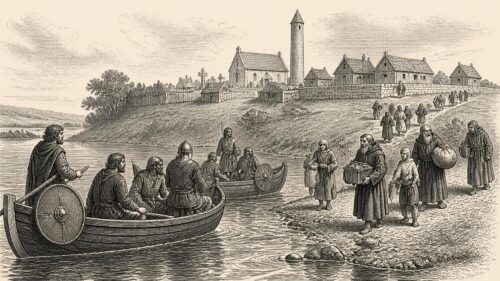
In 953, Clonmacnoise, a wealthy ecclesiastical settlement and strategic Shannon crossroads, was plundered by Munstermen accompanied by foreigners from Limerick. Although annals differ in dating and identify no commander, the raid demonstrates cooperation between Gaelic rulers and Norse-Gaelic urban forces, rather than a simple Irish-Viking division. It exposed the vulnerability of churches whose wealth, communications and prestige made them political targets. Congalach mac Máel Mithig’s high kingship provided precedence but limited practical control, while local conflict continued elsewhere. Annals also note dynastic and ecclesiastical deaths, including Congalach’s wife Eithne, illustrating interconnected political, religious and regional networks in tenth-century Ireland then.
Read Article
Archived: 27 October 2026
Abstract
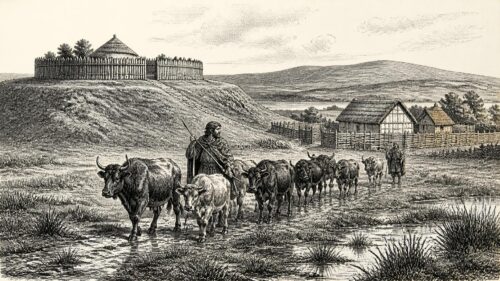
In 954, Irish annals record a great cattle murrain throughout Ireland, threatening wealth, food supplies, tribute and political power. Ua Ruairc inflicted a major defeat on Cairpre and Tethba, killing their king, amid wider instability in the midlands and north-west. Congalach of Tara faced growing pressure from Domnall ua Néill, supported by Dublin, while violence also affected Brega. Cellachán, king of Cashel, died, weakening Éoganacht prominence as Dál Cais influence grew. Numerous bishops, abbots and ecclesiastical successors also died, demonstrating church networks’ importance. Differing annalistic accounts require caution, particularly because Congalach’s death belongs to 956, not 954, in reliable records.
Read Article
Archived: 27 October 2026
Abstract
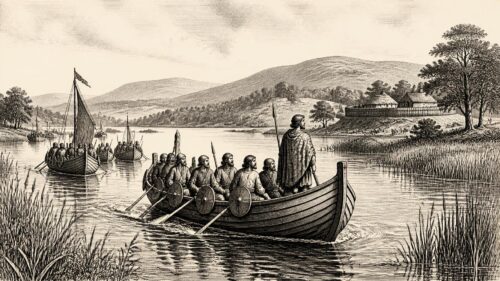
In 955, according to annalistic chronology, Domnall son of Muirchertach led ships from northern waters through Lough Neagh, Airgialla, Lough Erne and Lough Oughter into Bréifne, where he plundered and took hostages from Ua Ruairc. The expedition demonstrated the political importance of waterways and coercive overlordship. Dates and claims to high kingship remain disputed: Congalach Cnogba was still campaigning before his recorded death in the following annalistic year. Other notices record Leinster fighting and Domnall’s raid, Fearghal’s fleet on Loch Cé, and deaths among secular and ecclesiastical leaders. Together, they depict Ireland where forces, lordship, monasteries and networks shaped power.
Read Article
Archived: 27 October 2026
Abstract
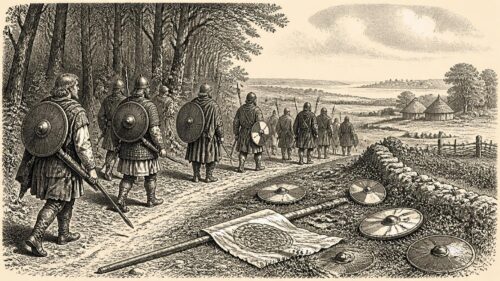
A King Killed in Leinster The decisive Irish event conventionally placed in 956 was the killing of Congalach Cnogba, king of Ireland, at Tech Giurann in Leinster. The Annals of Ulster name his attackers as the foreigners of Áth Cliath—Dublin—and the Laigin, or Leinstermen; they also record the death of Áed son of Aichid, king of Tethbae, and “many others”. Chronicon Scotorum makes the disaster still more explicit: Congalach fell with his royal household, and names Matudán son of Áed son of Máel-mithig and Cormac son of Cathalán, king of Fir Arda, among the dead. This was not a routine
Read Article
Archived: 27 October 2026
Abstract
In 957, Irish annals chiefly record deaths of important royal and ecclesiastical office-holders rather than warfare or major events. During Domnall ua Néill’s early reign, following Congalach’s violent death, Máel Fothartaig, king of Caisel, and Máel Coluim ua Canannáin, king of Cenél Conaill, died, opening significant regional successions. Cathasach of Druimthorraid, successor of Patrick and learned bishop, also died, leaving Armagh’s influential Patrician institution without its head. Flann ua hAedacáin, superior of Glendalough, Colmán, successor of Mo-Laise, and other figures were likewise commemorated. The sparse record reveals interconnected political, religious and local authority, while obscuring ordinary lives and succession processes.
Read Article
Archived: 27 October 2026
Abstract
In 958, Ireland’s annalists recorded no single battle that reordered the island, no spectacular raid on a famous monastery, and no weather disaster on the scale sometimes preserved in their terse notices. Yet the year mattered. It marked the death of Tuathal son of Augaire, overking of Leinster, at a moment when authority in the province was being contested between rival Irish dynasties and negotiated under the shadow of Viking Dublin. It also brought a cluster of deaths among abbots, bishops and church administrators. Taken together, these entries reveal an Ireland in which political succession, ecclesiastical office and regional power
Read Article
