
Archived: 17 October 2026
Abstract
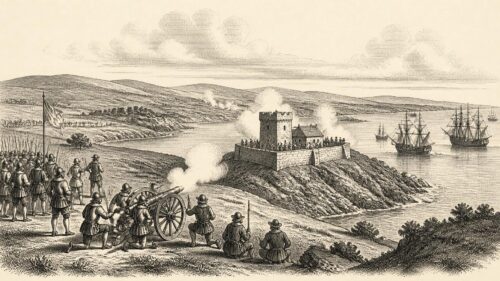
In 1601, Spain’s landing at Kinsale internationalised the Nine Years’ War, offering Hugh O’Neill and Hugh Roe O’Donnell support but far from their Ulster bases. Don Juan del Águila’s 3,300 troops fortified Kinsale and Rinncorran, while Mountjoy and Carew imposed a land and naval siege. Elsewhere, crown garrisons, allied Irish lords, arrests and campaigning weakened resistance, while civilians endured plunder, requisitioning and famine. O’Donnell and O’Neill marched south to relieve the town, threatening besiegers’ supplies. A poorly coordinated Christmas Eve attack collapsed in disorder on 24 December, routing the confederates. O’Donnell sailed for Spain; Mountjoy regained initiative, although war continued.
Read Article
Archived: 17 October 2026
Abstract
In 1602, the Nine Years’ War moved towards crown victory after Kinsale’s surrender removed Spain’s main force, though resistance persisted. Hugh Roe O’Donnell sailed to Spain seeking aid, but died there in August, weakening the Irish confederacy. In Munster, Sir George Carew besieged, captured and demolished Dunboy Castle, ending its role as a potential Spanish foothold and O’Sullivan Beare stronghold. In Ulster, Mountjoy used garrisons, allied forces and systematic destruction of crops and livestock to impose famine. Royal advances shattered Gaelic lordships; Ruaidhrí O’Donnell submitted in December, while Hugh O’Neill continued fighting until 1603. The conflict remained unresolved that winter.
Read Article
Archived: 17 October 2026
Abstract
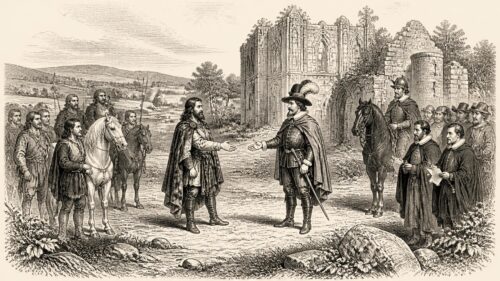
In 1603, Hugh O’Neill’s submission at Mellifont formally ended the Nine Years’ War, as James I succeeded Elizabeth I. O’Neill retained lands and title but surrendered key Gaelic powers, while Ulster faced recovery from severe military devastation and local rivalries. Southern and western Catholic towns, expecting religious toleration, resisted Protestant worship and delayed James’s proclamation; Crown forces compelled their submission without renewed general war. Royal patents in Ulster strengthened selected local lords directly under the Crown, weakening traditional overlordship. Trinity College’s expanding library reflected developing Protestant institutions. Peace ended major warfare but left land, religion, authority and political allegiance unresolved.
Read Article
Archived: 17 October 2026
Abstract
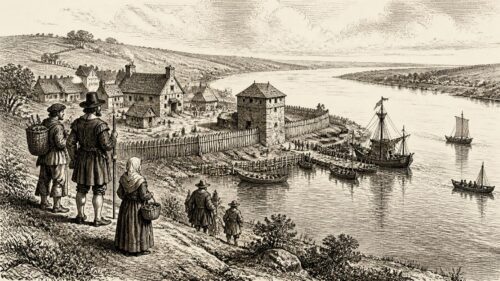
In 1604, after the Nine Years’ War, the crown sought to convert military victory in Ireland into durable administration. James I’s 11 July charter for Derry envisaged a fortified commercial town on the Foyle, combining garrison, trade, law and settlement, though it preceded the later Ulster Plantation. Recovery remained painful amid famine, displacement and contested land rights; Brian Óg O’Rourke’s death symbolised defeated resistance. Knighthoods, patents and territorial grants rewarded cooperative elites while reshaping Gaelic lordship and provoking rivalries. Anglo-Spanish peace reduced prospects of intervention. Arthur Chichester’s appointment and John Davies’s policies foreshadowed stronger crown government, surveys and planned settlement.
Read Article
Archived: 17 October 2026
Abstract
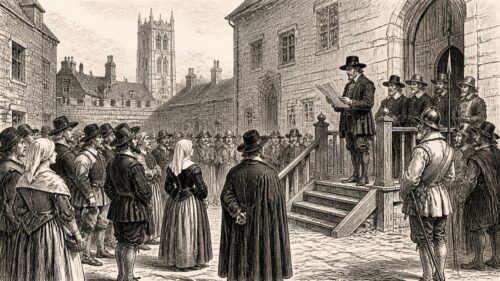
In 1605, Sir Arthur Chichester became lord deputy, seeking to convert victory in the Nine Years’ War into durable royal control through law, land reform, revenue and Protestant conformity. March’s proclamation declared Irish people direct subjects of James I, challenging Gaelic lordship and encouraging fixed rents and tenures. Hamilton’s November grant in County Down foreshadowed Scottish settlement, without constituting the later Ulster Plantation. July’s proclamation expelled Catholic clergy and demanded Church of Ireland attendance, while mandates targeted Dublin Catholics. Administrative changes strengthened Protestant authority. Continental Catholic education and military service across Europe also underscored an uneasy post-war settlement in Ireland.
Read Article
Archived: 17 October 2026
Abstract
In 1606, administrative and legal interventions reshaped Ireland after the Nine Years’ War. Arthur Chichester’s government sought to establish authority through new territorial arrangements, courts and religious pressure. County Wicklow was created, Scots settled in north Down under private landlords, and judicial activity extended through Munster. Catholic townspeople faced demands for conformity, while Gaelic rulers confronted new interpretations of landholding. These developments connected local experiences to a broader programme of royal consolidation. Peace did not remove insecurity or competing jurisdictions. Instead, the year reveals efforts to translate military success into institutions, property arrangements and obligations across an unevenly governed kingdom.
Read Article
Archived: 17 October 2026
Abstract
In September 1607, Hugh O’Neill, Ruaidhrí O’Donnell and Cúchonnacht Maguire left Rathmullan with families, followers and clerics, beginning the Flight of the Earls. Their departure reflected insecurity after the Nine Years’ War, as crown law, land investigations and rival Irish claimants undermined Gaelic lordship. Tadhg Ó Cianáin recorded the hazardous voyage: ninety-nine passengers sailed on a French ship, endured storms and shortages, and reached Normandy after twenty-one days. Continental Catholic communities welcomed them, but offered no assured military restoration. Their flight created an opening for stronger crown control in Ulster, preceding, rather than initiating, the later official Plantation of Ulster.
Read Article
Archived: 17 October 2026
Abstract
In 1608, Sir Cahir O’Doherty, formerly a Crown ally and lord of Inishowen, rebelled amid disputes over land, authority and Governor George Paulet’s conduct. His followers seized Culmore Fort, stormed, plundered and burned Derry, killing Paulet, but failed to create a wider Ulster coalition. Crown forces suppressed the rising after O’Doherty’s death near Kilmacrennan in July, followed by reprisals and executions. The revolt intensified official distrust of Gaelic landholders and expanded forfeitures. Surveys of six Ulster counties documented lands and resources for redistribution, while planning for plantation advanced. Deaths among exiled Gaelic leaders further weakened resistance, leaving Crown power strengthened.
Read Article
Archived: 17 October 2026
Abstract
In 1609, following the Flight of the Earls and O’Doherty’s rising, James I’s government surveyed six Ulster counties to prepare their plantation. Sir Josias Bodley’s commissioners recorded townlands, resources, church lands and strategic sites, converting Gaelic territories into proposed estates. The scheme favoured English and Scottish undertakers, servitors and selected Irish proprietors, linking Protestant settlement, fortified building, common law and economic development to security. Most settlers and plantation towns arrived later, while native inhabitants remained but faced mounting insecurity. London was courted for north-western colonisation, Scottish migration encouraged, and soldiers removed. Kilkenny received a city charter, diocesan cathedrals gained status.
Read Article
Archived: 17 October 2026
Abstract
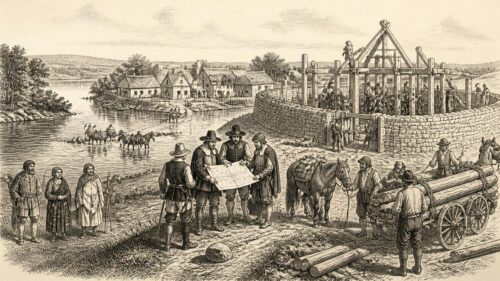
In 1610, James I’s government advanced the Plantation of Ulster, converting confiscated land into surveyed, conditional estates across Armagh, Cavan, Coleraine, Donegal, Fermanagh and Tyrone. English and Scottish undertakers, Crown servitors and selected Irish grantees received terms, while Gaelic communities endured dispossession, tenancy and presence. Building obligations required fortified houses and bawns, and new settlements depended upon labour, materials and commerce. In Cavan, William Bailie’s Tonergie grant and Belturbet’s plantation foundation illustrated emerging centres of authority and trade. Similar title-based policies reached Wexford. Protestant settlement expanded without rapid Catholic conversion, while writers Barnabe Rich and Geoffrey Keating represented contrasting voices.
Read Article

