
Archived: 17 October 2026
Abstract
In 1591, Tudor authority pressed unevenly upon Gaelic Ireland through military, legal and administrative measures. Brian na Múrtha O’Rourke, lord of West Bréifne, fled to Scotland after invasion, was surrendered to England, tried for treason and executed at Tyburn, demonstrating the crown’s expanding reach. Monaghan’s contested settlement and mass pardons revealed efforts to reorganise lordship and land. Hugh O’Neill’s marriage to Mabel Bagenal intensified Ulster rivalries. Catholic appointments and continental contacts sustained religious networks and official fears of foreign intervention. Annalistic deaths and praise for lords preserved Gaelic values. Although no rebellion began, distrust and dispossession sharpened conditions preceding war.
Read Article

Archived: 17 October 2026
Abstract
In 1592 Hugh Roe O’Donnell escaped Dublin Castle, where he had been held to restrain Ulster alliances, and returned to Tír Chonaill. Supported by his mother Iníon Dubh, Scottish connections and Hugh O’Neill, he became The O’Donnell, resisted garrisons and negotiated a fragile submission at Dundalk. His revival intensified conflicts within Ulster and exposed limits of crown authority. In Dublin, Elizabeth I chartered the College of the Holy and Undivided Trinity on the former All Hallows priory, to educate Protestant clergy and officials. Meanwhile, Catholic diplomacy with Spain heightened anxieties. These developments foreshadowed wider political, religious and military confrontation ahead.
Read Article

Archived: 17 October 2026
Abstract
In 1593, resistance to the English appointment of Captain Humphrey Willis as sheriff of Fermanagh brought Hugh Maguire into conflict with crown authority. Supported by Cormac MacBaron O’Neill, Hugh Roe O’Donnell and Brian Óg O’Rourke, Maguire’s rising spread through Ulster and Connacht amid disputes over rents, cattle and jurisdiction. Meanwhile, Hugh O’Neill assumed effective rule of Tír Eoghain while maintaining loyalty to Elizabeth I. Catholic hopes of Spanish intervention accompanied the unrest, although no force arrived. Sir Henry Bagenal’s October expedition defeated Maguire at Erne Ford and devastated Fermanagh, but failed to establish lasting control, foreshadowing the Nine Years’ War.
Read Article
Archived: 17 October 2026
Abstract
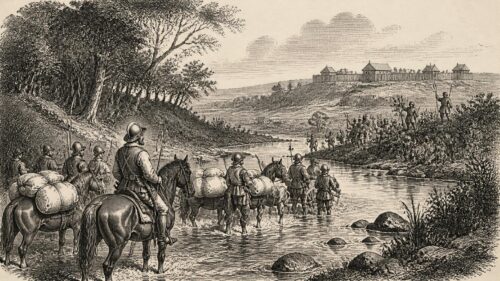
In 1594, fighting around Enniskillen demonstrated the dangers of extending crown government into Fermanagh through garrisons and military supply. Hugh Maguire resisted threats to his lordship from sheriffs, fortified positions and prospective land settlement. Allies included Hugh Roe O’Donnell and men associated with Hugh O’Neill, linking local resistance to Ulster networks. Crown capture of Enniskillen created a vulnerable position that required reinforcement. Irish success at the Arney River exposed the weaknesses of that strategy. Often treated as the opening year of the Nine Years’ War, 1594 reveals a conflict whose immediate causes remained rooted in regional power and contested jurisdiction.
Read Article
Archived: 17 October 2026
Abstract
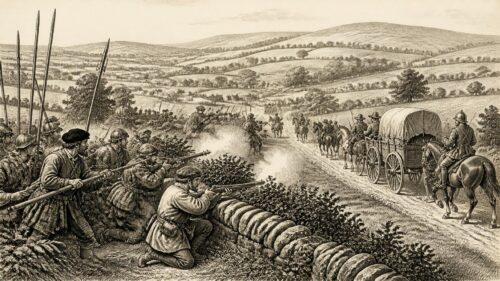
In 1595, the Nine Years’ War became an open challenge to Elizabeth I’s rule as Hugh O’Neill and Hugh Roe O’Donnell expanded resistance across Ulster and beyond. After the Blackwater fort’s seizure, Crown attempts to sustain exposed garrisons faltered. At Clontibret, O’Neill’s forces badly mauled Sir Henry Bagenal’s returning convoy through disciplined firearms, fieldworks and mobile warfare, though they did not destroy it. O’Donnell’s campaigns destabilised Connacht, using raids, hostages and alliances to extend influence. Fighting also ravaged Wicklow and civilian communities. Despite negotiation and continued Crown control of towns, 1595 established a broader, organised and destructive conflict in Ireland.
Read Article
Archived: 17 October 2026
Abstract
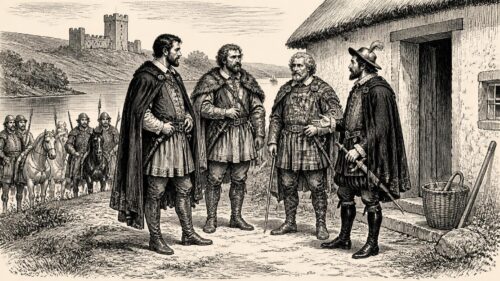
In 1596, attempts to settle the Ulster conflict through pardons and limited autonomy failed as Hugh O’Neill and Hugh Roe O’Donnell linked territorial claims with Catholic liberty. Spanish envoy Alonso de Cobos met them at Lifford, prompting an appeal to Philip II for troops and a Habsburg ruler, and tying Irish resistance to European war. In Connacht, Norreys’s large expedition stalled beside the River Robe when provisions ran out, revealing the importance of supply and alliances. Succession disputes, raids, coercive administration and religious tensions widened disorder across Ireland. Changes in Connacht’s government and continued local rivalries failed to restore stability.
Read Article
Archived: 17 October 2026
Abstract
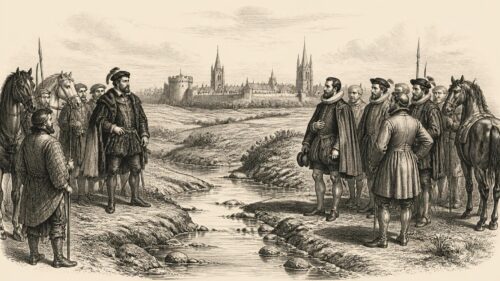
In 1597, Ireland’s war exposed the Tudor administration’s logistical and military weakness while Hugh O’Neill’s confederacy extended its influence. A gunpowder explosion in Dublin killed 126 people, damaged the capital’s supply system, and highlighted insecure wartime labour and logistics. The Crown killed Fiach MacHugh O’Byrne in Glenmalure, weakening but not pacifying Leinster. Hugh Roe O’Donnell raided Connacht, reaching Athenry and Galway. Lord Burgh’s Ulster offensive failed to unite royal forces, although Blackwater Fort was re-established; his death worsened the crisis. Irish victories near Carrickfergus and Daingean compelled talks outside Dundalk. O’Neill accepted a two-month cessation, gaining recognition without surrendering authority.
Read Article
Archived: 17 October 2026
Abstract
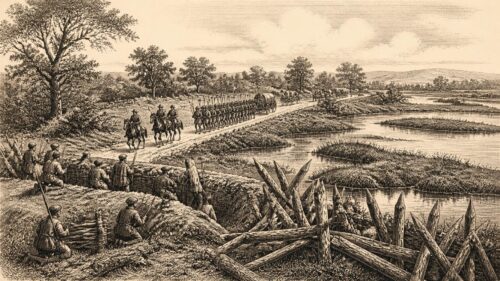
In 1598, the Battle of the Yellow Ford transformed the Nine Years’ War into a crisis for English government in Ireland. On 14 August, a crown army suffered devastating defeat near the River Blackwater in County Armagh. Confederates associated with Hugh O’Neill and Hugh Roe O’Donnell gained confidence, while royal forward positions became harder to maintain. Revolt widened beyond Ulster into Leinster and Munster. The outcome emerged from a year combining warfare, negotiation and political manoeuvre, rather than inevitable rebel victory. Yellow Ford’s significance lay in its consequences: weakened royal strategy, strengthened resistance and an expanding challenge to crown authority.
Read Article
Archived: 17 October 2026
Abstract
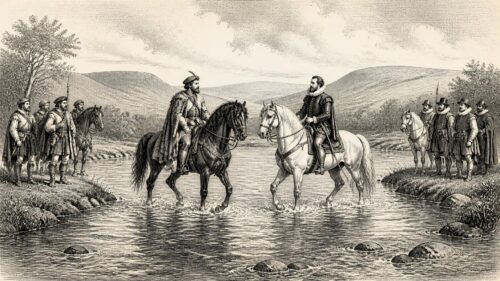
In 1599, Elizabeth I sent the earl of Essex to Ireland with an unprecedented army to suppress the Nine Years’ War. Despite capturing Cahir Castle and campaigning through Munster, his forces were weakened by supply difficulties, resistance, sickness and garrison demands. Sir Conyers Clifford’s defeat and death at Curlew Pass strengthened Hugh Roe O’Donnell’s confederates. Essex’s September river meeting with Hugh O’Neill at Bellaclinthe produced only a temporary truce. Essex then left Ireland without permission, provoking a court crisis. O’Neill subsequently appealed to Pale Catholics, while the year demonstrated that Tudor authority faced intertwined military, religious, political and economic challenges.
Read Article
Archived: 17 October 2026
Abstract
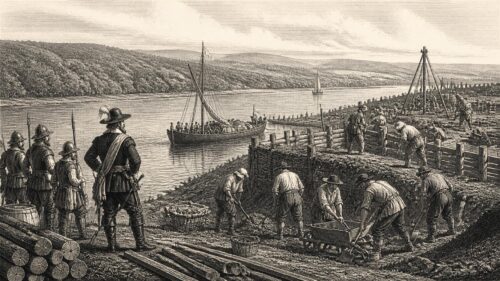
In 1600, the Nine Years’ War shifted strategically without decisive resolution. Lord Mountjoy and Sir George Carew restored English military organisation and recovered much of Munster through garrisons, raiding and coercion, while Ormond’s capture exposed continuing instability. Hugh O’Neill’s southern expedition demonstrated confederate reach but cost him Hugh Maguire and intensified internal disputes. Sir Henry Docwra’s landing at Lough Foyle created a vulnerable but enduring northern bridgehead, strengthened by Niall Garbh O’Donnell’s defection. At Moyry Pass, O’Neill blocked Mountjoy’s advance into Ulster. By year’s end, pressure on the confederacy had grown, making Spanish intervention at Kinsale increasingly urgent in 1601.
Read Article

