Derryvree’s Juniper Pollen
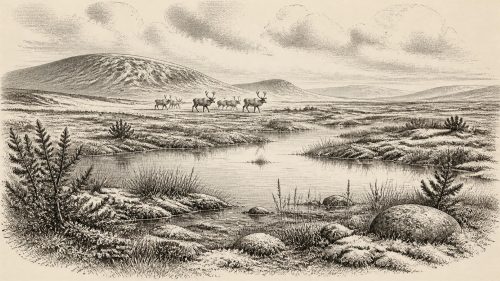
Around 31,363 BCE, Ireland lay within the unstable MIS 3 phase of the Late Pleistocene, not a date permitting annual historical reconstruction. At Derryvree, County Fermanagh, organic sediments between glacial tills indicate a cold, open, wet periglacial landscape with freshwater pools, grasses, sedges, juniper, mosses and insects. Comparable deposits and Kerry speleothems show locally varied climatic and ice conditions. Before the ice sheet’s later maximum, Ireland supported large mammals, documented at Castlepook Cave, including mammoth, reindeer, giant deer, bear and hyena. Human settlement is unproven; one possibly cut-marked reindeer bone suggests only a tentative, fleeting human presence on the island.
View Record
Mosses Between Fermanagh Tills
Around 31,364 BCE, Ireland lay within the climatically unstable Late Pleistocene, not a recoverable historical year. At Derryvree, County Fermanagh, freshwater organic beds between glacial tills reveal a temporary non-glacial interval of tundra-like wetlands, mosses, sedges, insects and shallow pools under severe periglacial conditions. Cave faunas, especially at Castlepook, County Cork, demonstrate repeated presence of mammoth, reindeer, giant deer, bears, hyaenas and other cold-stage animals in open, largely treeless terrain. A marked reindeer bone may indicate Upper Palaeolithic human activity, but cannot securely prove settlement. Glacial change, uncertain dating and fragmentary deposits preclude political, social or year-specific narratives with confidence.
View Record
Castlepook’s Palaeolithic Incision
Circa 31,365 BCE, Ireland lay within the climatically unstable Late Pleistocene, before the Last Glacial Maximum. Dates are approximate, reflecting calibrated radiocarbon uncertainties and disturbed cave deposits. Derryvree sediments show locally ice-free treeless tundra, wetlands and harsh periglacial conditions. Castlepook Cave yielded mammoth, reindeer, giant deer and carnivore remains, indicating intermittent animal access to open landscapes. A deeply incised reindeer femur may record stone-tool butchery, potentially Ireland’s earliest human trace, but cannot prove settlement. No securely associated tools, hearths, dwellings or burials survive. The evidence instead portrays a fragmented archive of changing ice, sea levels, habitats and possible human visits.
View Record
Ballyhoura Reindeer Country
Labelled 31,366 BCE only approximately, this period belongs to later Marine Isotope Stage 3, when Ireland formed a cold, unstable, seasonally severe western fringe of Ice Age Europe. Lower seas altered connections with Britain and the continent, while open ground, local ice and periglacial conditions formed a changing mosaic before major glaciation. Castlepook Cave near the Ballyhouras preserves bones of mammoth, reindeer, giant deer and carnivores, but disturbed deposits and revised dating limit certainty. A possibly tool-marked reindeer bone may indicate human butchery, not settlement. No Irish evidence supports reconstructed societies; environmental change and approaching ice dominate this remote history.
View Record
BIRM-166’s Muskeg Basin
Although 31,367 BCE is a modern label, Derryvree, County Fermanagh, illuminates a broader MIS 3 interval. Organic silts between glacial tills, dated BIRM-166 to 30,500 ± 1,100 radiocarbon years BP, indicate a cold freshwater wetland amid shifting ice. Plants reveal largely treeless, tundra-like vegetation, while regional conditions varied rapidly. Castlepook Cave fauna demonstrate that reindeer, mammoth, hyaena and other Ice Age animals reached Ireland, though deposits span different times. A cut-marked reindeer bone may indicate Upper Palaeolithic human activity, but does not prove settlement. Evidence supports temporary environmental opportunity, not a permanently inhabited or historically organised Ireland during this period.
View Record
Derryvree’s Mossland Clock
31,368 BCE is not recoverable as a specific Irish year, but falls within unstable MIS 3 during the last Ice Age. Derryvree, County Fermanagh, provides the best environmental archive: freshwater silts between glacial tills indicate an ice-free interval with cold, treeless, moss-rich wetland supporting grasses, sedges, herbs and aquatic plants. Ireland was approaching major ice-sheet expansion, amid variable climate and uncertain coastal connections. Cave evidence shows intermittent cold-stage fauna, though assemblages cannot date species precisely. Possible butchery on a Castlepook reindeer bone suggests debated early human activity, not settlement. Environmental evidence, rather than political or cultural history, defines this period.
View Record
Derryvree’s Between-Till Waters
Around 31,369 BCE, Ireland lay within the climatically unstable Late Pleistocene MIS 3 interval, not a datable historical year. Derryvree, County Fermanagh, preserves freshwater silts between glacial tills, indicating a locally ice-free, periglacial tundra environment during roughly 36,900–31,700 calibrated years before present. Open vegetation and freshwater habitats supported cold-adapted life. Castlepook Cave, County Cork, records MIS 3 fauna including mammoth, reindeer, giant deer, hyaena, wolf and Arctic fox, demonstrating ecological connections during lower sea levels. Human occupation remains unproven: a possibly butchered reindeer bone is contested. Evidence chiefly reveals changing climate, ice, habitats and animals, rather than societies or events.
View Record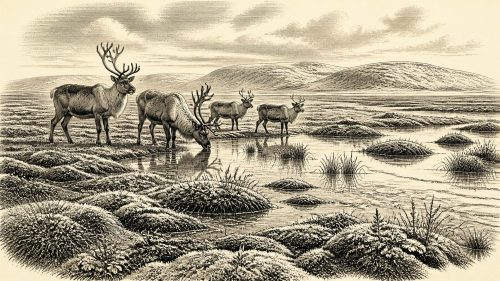
The Fermanagh Freshwater Interval
31,370 BCE is a modern label within a broad Late Pleistocene range, not a recoverable Irish year. Derryvree, County Fermanagh, preserves freshwater silts and organic deposits between glacial tills, demonstrating an ice-free interval with cold, open tundra, shallow water and hardy vegetation. Castlepook Cave, County Cork, contains MIS 3 fauna including mammoth, reindeer, giant deer, hyaena and wolf, although its disturbed remains span different periods. A marked reindeer femur may indicate early human butchery, but cannot establish settlement. Ireland’s evidence reflects glacial erosion and preservation biases. The period reveals climates, habitats and animal movements rather than societies, politics or culture.
View Record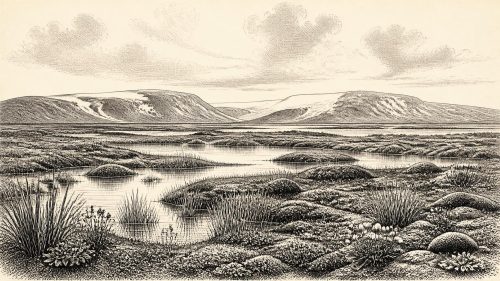
Fermanagh’s Sub-Till Herbarium
31,371 BCE denotes a broad, uncertain Late Pleistocene horizon in Marine Isotope Stage 3, not a recoverable Irish year. Derryvree, County Fermanagh, preserves freshwater organic sediments between glacial tills, documenting treeless tundra, wetlands, cold-adapted plants and insects during an ice-free interval. Castlepook Cave, County Cork, contains MIS 3 fauna including mammoth, reindeer, giant deer, predators and small Arctic mammals, demonstrating links with wider European ecosystems. A possibly cut-marked reindeer bone may indicate human handling, but cannot prove settlement or population. Advancing ice later reshaped and destroyed evidence. The surviving records reveal environmental change, animal movement and only tentative human presence.
View Record
Rangifer Beneath Fermanagh Ice
Around 31,372 BCE, a modern label rather than a recoverable year, Ireland experienced fluctuating Late Pleistocene conditions during MIS 3. Derryvree, County Fermanagh, preserves freshwater organic deposits between glacial tills, indicating cold, open tundra wetlands with pools, mosses, grasses, sedges, juniper and insects during an ice-free interval. Crag Cave confirms episodic milder, wetter conditions in south-west Ireland. Ice advances and retreats created a changing regional patchwork. Castlepook Cave yields remains of mammoth, reindeer, giant deer, predators and other fauna, though deposits are mixed. A marked reindeer bone may indicate human activity, but no evidence demonstrates permanent settlement, society or polity.
View Record