Awbeg Reindeer and Fermanagh Silt
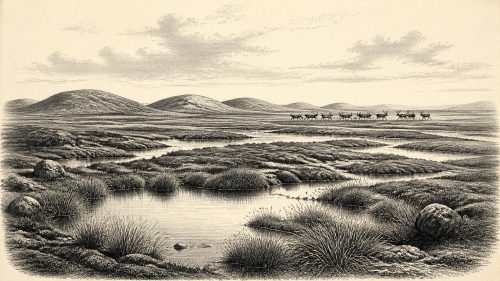
Around 31,459 BCE, Ireland was in the climatically unstable Late Pleistocene, not uniformly ice-covered. At Derryvree, County Fermanagh, a freshwater organic layer later buried by glacial till records mossy, sedgy tundra-steppe wetlands during a broad interval spanning the notional date. Castlepook Cave, County Cork, yielded reindeer, mammoth, giant deer, horse, carnivores and lemmings, demonstrating cold open habitats and intermittent animal access before major ice expansion. Cave deposits accumulated over time, however, so they cannot define a single community. A cut-marked reindeer femur may indicate human carcass processing, but lacks contextual evidence. No settlement, culture or political history can be inferred.
View Record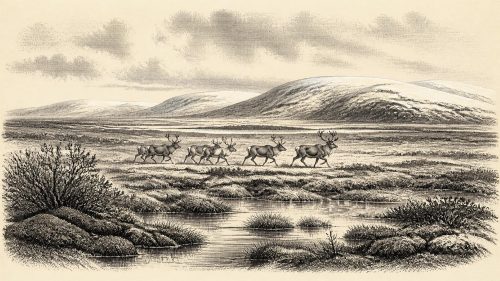
Maguirebridge’s Sealed Silts
31,460 BCE is not a date identifiable in Ireland’s prehistoric record, but lies within late MIS 3. At Derryvree, County Fermanagh, freshwater silts sealed between glacial tills, dated broadly to 36,900–31,700 calibrated years BP, reveal treeless, cold wetlands of sedges, mosses, herbs and aquatic plants. They show local ice-free conditions, not nationwide deglaciation. Cave deposits, especially Castlepook in Cork, preserve reindeer, mammoth, hyaena and fauna, indicating intermittent ecological connections with Europe. A possibly tool-marked reindeer bone suggests, but cannot prove, human presence. Climatic fluctuations, advancing ice and uncertain routes constrained this landscape; no settlement, polity or cultural tradition is documented.
View Record
The Reindeer’s Deep Groove
Around 31,461 BCE, Ireland lay within the climatically unstable Middle Midlandian of Marine Isotope Stage 3, not a uniformly frozen landscape. Derryvree, County Fermanagh, preserves evidence of ice-free, treeless wetland, while Crag Cave indicates episodic milder conditions. Castlepook Cave, County Cork, contains MIS 3 remains of reindeer, mammoth and other cold-adapted fauna, although accumulated over long periods. A grooved reindeer femur may bear a stone-tool butchery mark, potentially indicating fleeting Upper Palaeolithic human activity. However, no associated settlement, tools or social evidence survives. Subsequent ice-sheet growth transformed Ireland, destroying or burying much early evidence from this exceptionally ancient Irish period.
View Record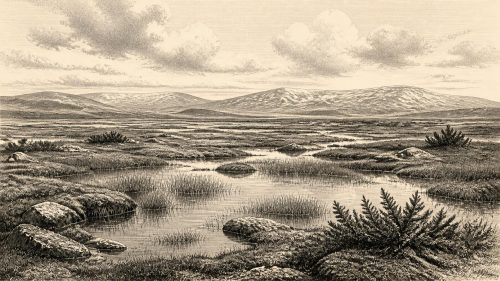
Derryvree’s Long Thaw
31,462 BCE is a notional date within the later Middle Midlandian, not a precisely datable Irish event. Derryvree, County Fermanagh, preserves freshwater sediments between glacial tills, indicating a cold, treeless, sedge-rich wetland with liquid water and seasonal tundra conditions during an ice-free or ice-distal interval. Ireland’s ice margins varied regionally before the later Last Glacial Maximum. Cave fauna, especially at Castlepook, records mammoth, reindeer, giant deer, predators and Arctic species, showing ecological links with north-western Europe. A possibly tool-marked reindeer bone suggests, but does not confirm, early human visits. No evidence supports settlement, polities, farming or culture; evidence is fragmentary.
View Record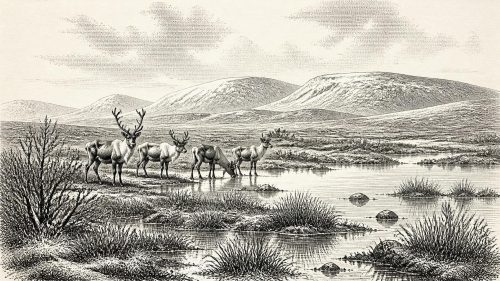
Ballyhoura’s Scored Reindeer
Around 31,463 BCE, Ireland lay within the unstable cold conditions of Marine Isotope Stage 3, not a precisely identifiable historical year. Derryvree, County Fermanagh, preserves freshwater sediments between glacial tills, showing an ice-free periglacial tundra of wetlands, sedges, mosses and grazing animals during a broadly relevant interval. Castlepook Cave, County Cork, contains a complex accumulation of cold-climate fauna, including mammoth, reindeer, predators and lemmings. A scored reindeer femur may record butchery by Upper Palaeolithic people, but cannot prove settlement. Routes into Ireland remain uncertain. The strongest evidence depicts environmental change as expanding ice increasingly transformed habitats across the island's landscapes.
View Record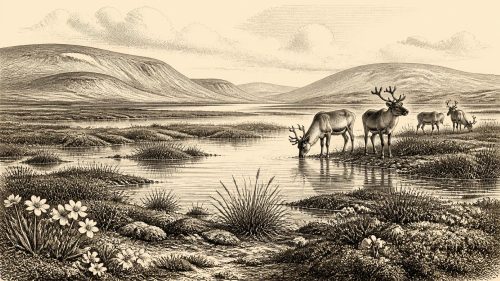
Derryvree’s Buried Summer
Although 31,464 BCE is a modern notional date, evidence places Ireland within the climatically unstable Marine Isotope Stage 3. At Derryvree, County Fermanagh, freshwater organic sediments between glacial tills record a temporary ice-free, cold, treeless wetland, demonstrating local environmental change rather than island-wide conditions. Castlepook Cave, County Cork, preserves pre-Last Glacial Maximum remains of mammoth, giant deer, reindeer, bear and hyaena, indicating intermittent animal dispersal across changing landscapes. A marked reindeer bone may suggest brief human activity, but no settlement or occupation is proven. Ireland had no polities, farming or trade, and remained environmentally dynamic, intermittently habitable and archaeologically uncertain.
View Record
BIRM-166’s Ice-Free Interval
31,465 BCE is an imprecise label for a broad late Marine Isotope Stage 3 interval. At Derryvree, County Fermanagh, freshwater sediments and organic remains between glacial tills demonstrate a local ice-free episode, with treeless, wet tundra conditions, sometime roughly 34,950–29,750 BCE. Castlepook Cave, County Cork, preserves diverse cold-climate fauna, including mammoth, reindeer and hyaena, although deposits span separate episodes. A cut-marked reindeer femur may indicate a brief human visit around 33,000 years ago, but proves neither settlement nor occupation. Dynamic ice, shifting coasts and uncertain routes shaped connectivity. Ireland intermittently supported north-west European Ice Age ecosystems, while evidence remains fragmentary.
View Record
Derryvree’s Two Tills
Around 31,466 BCE, Ireland was in the later Marine Isotope Stage 3, increasingly cold but not yet wholly covered by the British–Irish Ice Sheet. At Derryvree, County Fermanagh, freshwater sediments between tills, dated broadly to 33,500 calendar years BP, preserve treeless wetland plants and invertebrates, demonstrating local vegetated, unfrozen habitats. Castlepook Cave, County Cork, contains varied cold-stage fauna, including mammoth, reindeer, giant deer and hyena, though deposits span different periods. A marked reindeer femur may indicate brief Upper Palaeolithic butchery, but secure settlement evidence is absent. Glacial erosion explains much archaeological loss; Ireland remained an unstable Ice Age landscape overall.
View Record
Derryvree’s Sedge Hollow
Around 31,467 BCE, Ireland lacked written records, so evidence offers only calibrated reconstructions. During Marine Isotope Stage 3, before the Last Glacial Maximum, conditions were cold, open and harsh, though not uniformly ice-covered. Organic sediments at Derryvree, County Fermanagh, between glacial tills, preserve sedges, aquatic plants and treeless wetlands, demonstrating an ice-free interval later sealed by glaciation. Cave remains at Castlepook, County Cork, show Late Pleistocene fauna including reindeer, mammoth and hyaena. A cut-marked reindeer femur may indicate human activity, but proves neither settlement nor continuous occupation. These records reveal changing landscapes capable of sustaining wildlife and perhaps mobile hunter-gatherers.
View Record
Castlepook’s Faunal Clock
Around 31,468 BCE, Ireland lay within the climatically unstable later Marine Isotope Stage 3, not a historically identifiable year. Castlepook Cave in County Cork preserves faunal evidence for cold, open habitats, including mammoth, reindeer, giant deer, bear, wolf, Arctic fox and spotted hyaena. These remains show episodic links with wider Pleistocene Europe, though cave deposits accumulated through varied processes. A marked reindeer femur may record human butchery, potentially indicating a brief visit by mobile foragers, but lacks secure archaeological context. Derryvree wetland sediments in Fermanagh document treeless periglacial vegetation between glacial phases. Evidence supports neither permanent ice cover nor settlement.
View Record