
Archived: 17 September 2026
Abstract
31,437 BCE is a modern label within a broad calibrated Late Pleistocene MIS 3 range, not a datable Irish year. At Derryvree, County Fermanagh, freshwater silts between glacial tills preserve mosses, sedges, aquatic plants and cold-adapted insects, indicating locally ice-free, open tundra-like wetland during fluctuating glaciation. Castlepook Cave, County Cork, contains MIS 3 fauna including reindeer, mammoth, giant deer, predators and other cold-stage species, demonstrating diverse open habitats. A marked reindeer femur may suggest human butchery, but lacks secure archaeological context and cannot prove occupation. No evidence supports contemporary Irish politics, settlements, beliefs or culture. The evidence records ice-age environments.
Read Article

Archived: 17 September 2026
Abstract
31,447 BCE cannot be treated as a precise Irish historical year; evidence instead describes a broad late Pleistocene cold interval before the Last Glacial Maximum. Derryvree, County Fermanagh, preserves buried freshwater wetland deposits indicating treeless, tundra-like conditions with sedges, mosses, insects and limited forage. Castlepook Cave, north Cork, contains time-averaged remains of reindeer, mammoth, giant deer, hyaena and other animals, showing intermittent links with Britain and continental Europe. A possibly cut-marked reindeer bone suggests brief Upper Palaeolithic human activity, but lacks supporting artefacts or settlement evidence. Later ice expansion erased much evidence, leaving a cautious picture of habitable, fluctuating landscapes.
Read Article

Archived: 17 September 2026
Abstract
Around 31,480 BCE, Ireland’s history is reconstructed from environmental evidence rather than records. At Derryvree near Maguiresbridge, Fermanagh, freshwater sediments trapped between glacial tills preserve pollen, mosses, insects and bogbean seeds, indicating treeless, tundra-like wetland during part of MIS 3. Radiocarbon dating places this landscape broadly between 36,900 and 31,700 calibrated years BP, not at a precise year. Southern caves reveal a varied cold-climate fauna, including mammoths, reindeer, lemmings, predators and giant deer. A cut-marked reindeer bone from Castlepook may indicate human butchery, but no securely dated settlement exists. Later ice advances destroyed evidence, leaving a regionally varied, uncertain picture.
Read Article
Archived: 17 September 2026
Abstract
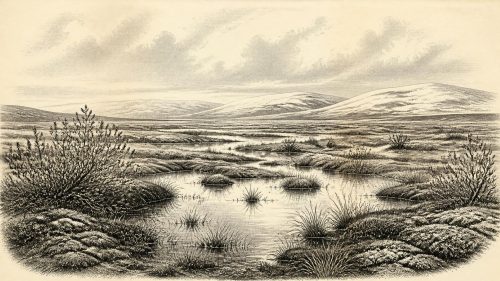
The modern label 31,492 BCE denotes no recoverable Irish event but falls near the younger end of Derryvree’s calibrated freshwater sequence in County Fermanagh. Organic silts between glacial tills, dated broadly to 36,900–31,700 calibrated years BP, record an ice-free interval of cold, open wetland containing grasses, sedges, herbs, juniper, dwarf willow, mosses, aquatic plants and insects. They demonstrate local environmental change, not uniform island conditions. Lower sea levels and fluctuating ice shaped a varied Irish Sea landscape. Cave fauna indicates wider mammoth-steppe connections. A possibly cutmarked Castlepook reindeer bone suggests, but cannot prove, early human activity; no settlement is attested.
Read Article
Archived: 17 September 2026
Abstract
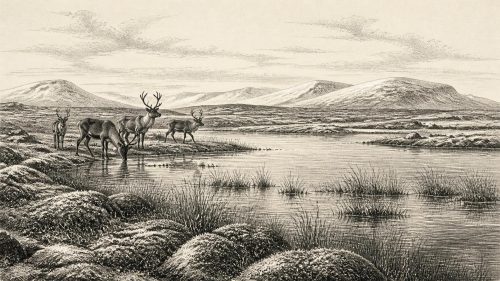
Around 31,503 BCE, Ireland’s history is reconstructed from environmental evidence rather than annual chronology. At Derryvree, County Fermanagh, the BIRM-166 organic silt bed, dated broadly to 36,900–31,700 calendar years BP, records an ice-free freshwater wetland between glacial advances. Its plants and animal traces indicate cold, largely treeless tundra with pools and saturated ground. Castlepook Cave, County Cork, preserves mixed remains of mammoth, reindeer, giant deer, bears, wolves and hyaenas, reflecting changing populations over millennia. A possibly cut-marked reindeer bone may indicate brief human visits, but no secure settlement evidence exists. Later ice both preserved and destroyed Ireland’s sparse Pleistocene record.
Read Article

Archived: 17 September 2026
Abstract
Although 31,508 BCE falls within a broad calibrated MIS 3 range, it is not a precisely dated Irish event. Geological and palaeoenvironmental evidence, rather than written or archaeological records, describes a cold, variable landscape reshaped by later glaciation. Derryvree, County Fermanagh, preserves freshwater wetland deposits indicating treeless tundra vegetation between ice advances. Southern caves, notably Castlepook, contain reindeer, mammoth, giant deer and predators, demonstrating recurring cold-adapted fauna. Human presence remains unproven: no secure occupation dates to this period, while a possibly cut-marked reindeer bone is inconclusive. Ireland was changing open landscape, certainly used by animals and potentially visited by people.
Read Article
Archived: 17 September 2026
Abstract
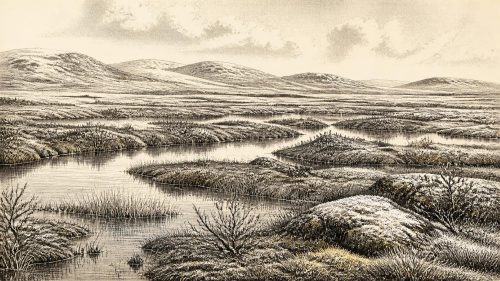
At the notional date of 31,519 BCE, Ireland’s history can be reconstructed only through environmental ranges, not annual events. Freshwater sediments at Derryvree, County Fermanagh, dated roughly 36,900–31,700 calibrated BP, show that this locality was temporarily ice-free, supporting tundra vegetation, shallow water and severe periglacial conditions. Greenagho and Crag Cave confirm regional climatic variability before the Last Glacial Maximum. Cave remains indicate a diverse cold-adapted fauna, but dating and depositional uncertainties prevent a precise contemporary census. No secure evidence establishes human residence, society or activity. Surviving evidence records shifting ice, wetlands, plants and animals rather than political or cultural history.
Read Article

Archived: 16 September 2026
Abstract
Around the interval containing 31,545 BCE, Ireland experienced unstable Late Pleistocene conditions during Marine Isotope Stage 3. At Derryvree near Maguiresbridge, inter-till freshwater sediments dated broadly to 36,900–31,700 calibrated years BP preserve evidence of treeless, tundra-like wetlands with sedges, mosses, herbs and shallow pools. Castlepook Cave in Cork records changing cold-adapted fauna, including reindeer, mammoth, lemmings and hyaenas. A possibly cut-marked reindeer femur suggests, but does not prove, human activity. No secure settlements, tools, hearths or social evidence survive. Glacial expansion, erosion and sea-level change obscured earlier landscapes, leaving fragments that demonstrate environmental possibilities rather than a recoverable annual history.
Read Article

Archived: 16 September 2026
Abstract
Around 31,552 BCE, Ireland has no recoverable yearly history; evidence instead describes a fluctuating Late Pleistocene environment. At Derryvree, County Fermanagh, freshwater sediments between glacial tills preserve a treeless tundra wetland of sedges, grasses, mosses, bogbean, juniper and sparse herbs, formed during an interval between ice advances. Castlepook Cave, County Cork, contains MIS 3 remains of mammoth, reindeer and other open-country, cold-adapted animals, although its deposits are mixed. A marked reindeer femur may indicate Upper Palaeolithic butchery, but cannot prove occupation. The evidence shows changing ice, wetlands and fauna, not settled communities, politics, farming or identifiable peoples for this date.
Read Article

Archived: 16 September 2026
Abstract
Around 31,557 BCE, Ireland lay within the unstable later Pleistocene climate of Marine Isotope Stage 3, not a documented historical era. At Derryvree, County Fermanagh, freshwater sediments between tills reveal a locally ice-free, treeless muskeg of mosses, sedges and cold-adapted plants during an interval between glacier advances. Castlepook Cave, County Cork, preserves evidence of diverse fauna, including mammoth, reindeer, giant deer, predators and scavengers, indicating open steppe-tundra habitats at different times. A possibly tool-marked reindeer femur may suggest brief human activity, but lacks associated archaeology. Environmental change, animal movements and uncertain human presence define this remote period in Irish prehistory.
Read Article

Archived: 16 September 2026
Abstract
About 31,571 BCE is a modern approximation, not a recorded Irish date, indicating a fluctuating MIS 3 glacial environment. Derryvree sediments in Fermanagh demonstrate an ice-free freshwater interval between glacial advances, supporting cold, open wetland vegetation. Crag Cave calcite records milder interstadials, when groundwater circulated, amid temperature swings exceeding 10°C. Castlepook Cave's mixed fauna, including reindeer, mammoth and hyaena, confirms intermittent animal occupation of exposed grazing landscapes. A possibly tool-marked reindeer bone may indicate brief human presence, but lacks secure context. Later ice destroyed evidence; no settlements, polity, economy, ritual or culture can be established with confidence from present evidence.
Read Article

Archived: 16 September 2026
Abstract
31,575 BCE is a label for a late-Pleistocene interval, not a datable Irish event. Derryvree, County Fermanagh, preserves wetland deposits dated broadly to 36,900–31,700 cal BP, indicating treeless, cold, plant-rich terrain between glacial advances. Castlepook Cave, County Cork, contains MIS 3 remains of mammoth, reindeer, giant deer, predators and Arctic fauna, accumulated over time rather than contemporaneously. A cut-marked reindeer femur may indicate human butchery, but cannot establish settlement, chronology or continuous occupation. Lower seas may have aided movement, yet routes remain unknown. Ice expansion reshaped Ireland and destroyed sites, leaving evidence of habitats, animal movement and possible human presence.
Read Article

Archived: 16 September 2026
Abstract
Thirty-one thousand five hundred and eighty-three BCE is a label within Marine Isotope Stage 3, not a recoverable Irish year. At Derryvree, Maguiresbridge, freshwater silts between glacial tills, radiocarbon dated to 36,900–31,700 calibrated BP, show that north-central Ireland intermittently supported cold tundra wetlands, vegetation and animals before ice advance. Comparable deposits demonstrate fluctuating climates. Castlepook Cave preserves remains of mammoth, reindeer, giant deer, predators and cold-adapted fauna, although its mixed deposits cannot represent one moment. A marked reindeer femur may indicate early human butchery, but lacks context. Evidence confirms a dynamic glacial-edge landscape, not permanent settlement or a land bridge.
Read Article
Archived: 16 September 2026
Abstract
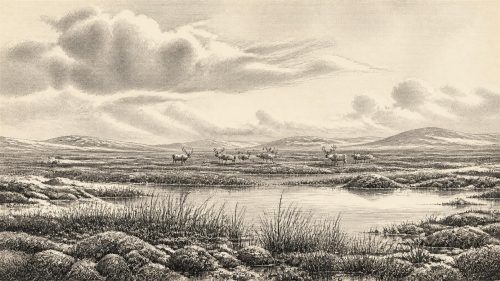
31,590 BCE is a modern filing date within late Marine Isotope Stage 3, not a recoverable Irish calendar year. Ireland contained varied cold environments, including tundra wetlands at Derryvree and changing regional ice cover. Castlepook Cave’s fauna, re-dated using improved methods, includes reindeer, mammoth, giant deer, hyaena and other cold-adapted animals, though its poorly recorded bones do not represent a single moment or community. A cut-marked reindeer femur may indicate Upper Palaeolithic carcass processing, but lacks associated tools, hearths or human remains. Evidence supports possible fleeting human visits, not settlement, polities or culture. Further excavation and secure dating remain essential.
Read Article
Archived: 16 September 2026
Abstract
31,591 BCE is best understood as a broad Late Pleistocene, Marine Isotope Stage 3 interval rather than a recoverable Irish calendar year. Ireland experienced volatile cold conditions, with developing ice, permafrost, exposed terrain, tundra wetlands and changing sea routes. Derryvree sediments in Fermanagh preserve evidence of treeless freshwater habitats between glacial advances. Castlepook Cave in Cork yielded cold-adapted fauna, including mammoth, reindeer, hyaena and horse, although cave deposits complicate interpretation. A reindeer femur bearing a possible butchery incision may indicate exceptionally early human contact, but lacks secure archaeological context. Evidence shows environmental change; human presence remains possible, contested and unproven.
Read Article

Archived: 15 September 2026
Abstract
Around 31,630 BCE, Ireland lay within an unstable Ice Age interstadial, before the Last Glacial Maximum but amid shifting ice margins, low seas and varied regional conditions. Cave remains at Castlepook, County Cork, document Late Pleistocene fauna including mammoth, reindeer, giant deer, bears, wolves and hyaenas, indicating episodic open, cold-steppe habitats, though not a single contemporaneous ecosystem. Buried sediments at Derryvree, County Fermanagh, reveal treeless periglacial wetlands with grasses, sedges, herbs and mosses. Human occupation remains unproven: a possibly cut-marked reindeer bone may suggest visitors, but lacks secure context. Later glaciation destroyed evidence, leaving changing environments rather than social history.
Read Article

Archived: 15 September 2026
Abstract
Circa 31,639 BCE, Ireland was not a historical society but a cold Late Pleistocene landscape subject to rapid climatic change. Derryvree, County Fermanagh, preserves freshwater silts between glacial tills, indicating locally ice-free tundra wetlands with sedges, mosses and cold-adapted insects roughly 36,900–31,700 years BP. Castlepook Cave, County Cork, accumulated bones over millennia, documenting mammoth, giant deer, reindeer, bears, hyenas and later cold fauna. These finds demonstrate changing habitats and connections with north-west Europe, but not settled human communities. A possibly cut-marked reindeer bone may indicate brief human activity, whereas secure evidence dates only to about 12,800 BP. Later ice advanced.
Read Article

Archived: 15 September 2026
Abstract
Around 31,649 BCE, Ireland has no annual history, but Derryvree, County Fermanagh, preserves freshwater silts beneath later tills, broadly dated 36,900–31,700 cal BP. Mosses, sedges, grasses and insects indicate a cold, treeless, periglacial wetland during Marine Isotope Stage 3, before maximum ice-sheet expansion. The record demonstrates local ice-free conditions, not Ireland-wide climate or forest. Cave remains from southern Ireland show intermittent fauna including reindeer, mammoth, giant deer, predators and small cold-adapted mammals, though contexts are uncertain. Possible early human evidence remains unconfirmed; secure human activity is much later. No communities, institutions or cultural practices can be assigned to this period.
Read Article
Archived: 15 September 2026
Abstract
About 31,657 BCE, Ireland lay within the climatically unstable later Marine Isotope Stage 3, not a recoverable historical year. Derryvree, County Fermanagh, preserves freshwater sediments between glacial tills, dated broadly to 34,950–29,750 BCE, indicating cold, open, wet tundra with pools, mosses, sedges and herbs. Castlepook Cave, County Cork, contains MIS 3 fauna including reindeer, mammoth, giant deer, hyaena and predators, though disturbed contexts limit interpretation. A possibly cut-marked reindeer bone may indicate an early human visit, but remains unconfirmed. No secure evidence supports permanent settlement, society or politics. These fragmentary archives document regional environmental change, animal use and advancing ice.
Read Article

Archived: 15 September 2026
Abstract
Around 31,677 BCE, Ireland formed part of a changing MIS 3 glacial environment, supporting cold-adapted fauna in open landscapes. Castlepook Cave, County Cork, preserves important but mixed Pleistocene animal remains, including mammoth, reindeer, giant deer, hyaena and Arctic fox. A dated reindeer femur bearing a possible stone-tool cut mark may indicate Upper Palaeolithic butchery and Ireland’s earliest claimed human activity. However, old excavation methods, uncertain bone movement and absence of tools, hearths or settlements prevent proof of permanent occupation. Lower sea levels enabled ecological connections with Britain and Europe, but routes remain unknown. Later glaciation destroyed or obscured much evidence.
Read Article
Archived: 15 September 2026
Abstract
Although labelled 31,706 BCE, this period cannot be dated to a specific Irish year and belongs broadly to later Marine Isotope Stage 3. Freshwater sediments between glacial tills at Derryvree, Fermanagh, reveal treeless, tundra-like wetlands during fluctuating cold conditions, while Hollymount and Greenagho confirm varied non-glacial episodes. Castlepook Cave, Cork, preserves MIS 3 remains of mammoth, giant deer, reindeer, bear, hyena and other fauna, showing ecological links with Britain and Europe. Possible human modification of a reindeer bone suggests seasonal visits, but no secure occupation is known. Ireland’s record documents environmental change and animal life, not settlements, politics or culture.
Read Article

Archived: 14 September 2026
Abstract
Around 31,722 BCE, Ireland lay within the cold, unstable Marine Isotope Stage 3, before maximum glaciation. Lower sea levels altered surrounding landscapes, though animal and possible human routes remained uncertain. Castlepook Cave, County Cork, preserves evidence of reindeer, mammoth, giant deer, hyaena and other cold-stage fauna, demonstrating intermittent habitability. A reindeer femur bearing a possible stone-tool cut mark may indicate fleeting human activity, but cannot prove settlement or permanent occupation. Complex cave deposits and revised radiocarbon dating require caution. Wetland and pollen records suggest varied open tundra, sedges and river corridors. Ireland’s deepest past is reconstructed from fragmentary environmental evidence.
Read Article
Archived: 14 September 2026
Abstract
Around 31,754 BCE, Ireland cannot be described through annual events, but Derryvree, County Fermanagh, preserves an environmental horizon from later Marine Isotope Stage 3. Freshwater silts, radiocarbon-dated broadly to 36,900–31,700 years BP, lay between glacial tills, indicating a cold, locally ice-free wetland between ice advances. Mosses, sedges, dwarf willow, mountain avens and bogbean, alongside northern insects, show treeless tundra-like conditions. Cave remains demonstrate intermittent Late Pleistocene mammals, including reindeer, mammoth and hyaena, without proving local coexistence. No secure evidence places humans in Ireland then. Shifting ice, coastlines and climate created varied landscapes, then sealed beneath glacial deposits in subsequent millennia.
Read Article
Archived: 14 September 2026
Abstract
Nominally 31,780 BCE, this period cannot be reconstructed as a historical year, but falls within the climatically variable Late Pleistocene MIS 3. Inter-till deposits at Derryvree and Greenagho, County Fermanagh, show episodes of ice-free, wet, treeless tundra before later glacial expansion. Cave records confirm environmental fluctuation, while lower sea levels altered coasts and buried or eroded potential sites. Castlepook Cave, County Cork, preserves MIS 3 fauna including mammoth, reindeer, giant deer and predators. A marked reindeer bone may indicate human butchery around 31,000 BC, yet lacks secure archaeological context. Ireland’s evidence therefore documents ecosystems and a possible, transient human presence.
Read Article

Archived: 14 September 2026
Abstract
Around 33,700 calibrated years before present, Ireland lay within the unstable Late Pleistocene, as ice advanced towards the Last Glacial Maximum. Open grasslands, shrubs and bare ground supported grazing animals, while lower sea levels altered coastlines without proving migration routes. Castlepook Cave, County Cork, preserves Ireland’s richest pre-maximum vertebrate archive, including mammoth, reindeer, giant deer, bear and hyaena, though its disturbed bones represent episodes. A 33,000-year-old reindeer femur bears a possible stone-tool cut mark, suggesting but not confirming an early human visit. No occupation evidence establishes settlement, hunting practices or continuity. It chiefly records environmental change and unresolved human presence.
Read Article

Archived: 10 September 2026
Abstract
Around 31,810 BCE, Ireland lay within a changing Late Pleistocene landscape as the British–Irish Ice Sheet began expanding. Evidence from Derryvree, County Fermanagh, indicates treeless tundra, freshwater habitats and cold-adapted plants during an earlier ice-free interval. Castlepook Cave in north Cork produced remains of mammoth, reindeer, giant deer, bears, wolves, foxes, lemmings and spotted hyaenas, demonstrating intermittent links with continental fauna. A marked reindeer femur may indicate human butchery around 31,000 BCE, but lacks securely associated tools or occupation evidence. Any human presence remains hypothetical. Lower sea levels altered routes, while advancing ice later reduced habitable land and destroyed evidence.
Read Article

Archived: 10 September 2026
Abstract
Modern dating places 31,817 BCE within a broad, uncertain Marine Isotope Stage 3 range, rather than a recoverable historical year. Deposits at Derryvree in Fermanagh show that parts of Ireland supported cold, treeless tundra, freshwater hollows and grazing fauna between glacial advances. Castlepook Cave, County Cork, preserves reindeer, mammoth, hyaena and other Ice Age remains, reflecting a wider north-west European ecology. A deep mark on a reindeer femur may be a stone-tool butchery cut, offering evidence of Upper Palaeolithic visitors. However, disturbance, dating limits and absent associated finds preclude claims for settlement, society or continuity. Later ice expansion erased evidence.
Read Article

Archived: 10 September 2026
Abstract
Circa 31,838 BCE, Ireland lay within the variable, cold conditions of Marine Isotope Stage 3, before the Last Glacial Maximum. Castlepook Cave in County Cork preserves remains of mammoth, reindeer, hyaena, bear, wolf, Arctic fox, hare and lemmings, indicating open habitats supporting predators and grazing animals. Cave deposits reflect complex carnivore and natural processes. A marked reindeer femur may indicate human butchery, but lacks secure context and remains unproven. Derryvree, County Fermanagh, records ice-free tundra wetlands between glacial advances. Lower seas altered coasts, though Ireland remained separated from Britain. The evidence reveals changing landscapes, not permanent human settlement or society.
Read Article

Archived: 10 September 2026
Abstract
Around 31,847 BCE, Ireland lay within the climatically unstable MIS 3 interval, not a precisely datable historical year. Cold, varied landscapes included periglacial tundra wetlands, documented at Derryvree, while later glaciation erased much evidence. Castlepook Cave, County Cork, preserves mixed remains of reindeer, mammoth, giant deer, hyaena, wolves, lemmings and other fauna, indicating periodically open, treeless habitats. A reindeer femur reportedly bears a stone-tool cut mark, suggesting possible human carcass processing around 31,000 BCE. However, no associated tools, hearths or settlement evidence confirm occupation. Changing sea levels, ice and lost coastal deposits obscure access routes. Perhaps transient human visits occurred.
Read Article

Archived: 9 September 2026
Abstract
Circa 31,876 BCE, Ireland was a cold, unstable Late Pleistocene landscape, not a historically documented country. Ice-free freshwater environments in Fermanagh, evidenced at Derryvree and Greenagho, show that later glaciation had not yet covered all regions. Castlepook Cave in Cork preserves remains of mammoth, giant deer, reindeer and other cold-adapted fauna, although deposits represent multiple episodes. A cut-marked reindeer femur may indicate brief human butchery or handling, but cannot prove settlement or continuity. Lower sea levels altered coasts without establishing certain migration routes. Expanding ice later transformed and obscured the landscape, leaving sediments and cave bones as the principal archive.
Read Article





