Archived: 24 October 2026
Abstract
In 1307, Edward II succeeded Edward I as Lord of Ireland, while existing Dublin administration continued under officials including newly appointed Exchequer treasurer Alexander de Bicknor. Richard de Havering received Dublin archbishopric temporalities but was never consecrated, and bishops died at Kilmacduagh and Elphin. At Ahascragh, Donnchad Muimhneach Ó Cellaigh of Uí Maine defeated forces associated with Roscommon, capturing the sheriff and other opponents. Prisoners were released under restitution for an earlier burning attributed to Edmund Butler, before Ó Cellaigh died. Killings among Ó Conchobair claimants underscored Connacht instability. Sources require caution because annalistic chronologies conflict over some recorded events.
Read Article

Archived: 24 October 2026
Abstract
In 1304, Dublin suffered an accidental fire that destroyed St Mary’s Abbey, the Dominican house and much of the city, disrupting religious, commercial and administrative life. Chancery rolls covering 1291–1300 were lost, deepening later gaps in Ireland’s records. Justiciar John Wogan struggled to secure Athlone while Irish resources supported Edward I’s Scottish war. Richard de Burgh served in Scotland, but his wife and heir Walter died, altering succession. In Bréifne, Matha Ó Raighilligh was killed with his gallóglaigh, exposing volatile regional lordship. These events reveal interconnected vulnerabilities across medieval Ireland, though evidence offers little detail about ordinary people’s lives directly.
Read Article

Archived: 24 October 2026
Abstract
In 1303, Ireland contributed significantly to Edward I's Scottish campaign under Richard de Burgh, earl of Ulster, who led an estimated 3,000 Gaelic and Anglo-Irish troops. Their service demonstrated cross-channel aristocratic connections and required continued Irish administration, including replacement of absent officials and financial management. In Tír Conaill, Áed Ó Domnaill killed his brother Toirrdelbach after prolonged conflict, becoming lord amid widespread devastation. Church leadership also changed: Archbishop Nicholas Mac Maoil Íosa of Armagh and Bishop Máel Sechlainn Mac Briain of Elphin died, prompting succession processes. Despite uncertain annalistic dating, records portray Ireland as politically divided yet engaged with Britain.
Read Article

Archived: 24 October 2026
Abstract
In 1300, construction began at Ballymote Castle in County Sligo, probably under Richard de Burgh, the Red Earl of Ulster and lord of Connacht. The fortress signalled and supported de Burgh influence in contested Corran, though Gaelic and settler powers remained varied and interconnected. Annalistic notices associate deaths in the earl’s household with this period, highlighting succession’s importance, but dating is uncertain. Meanwhile, justiciar John Wogan ordered provisions from Irish ports for Edward I’s Scottish war. Castle-building, royal requisitioning, trade, labour, religious institutions, and local violence reveal Ireland as a politically fragmented yet increasingly interconnected island within wider overseas affairs.
Read Article

Archived: 24 October 2026
Abstract
In 1299, Ireland saw dispersed developments rather than a single national event. Theobald Butler died childless at Turvey, passing his office and lands to Edmund. John Wogan’s government relied on Richard de Burgh as deputy justiciar during his Scottish absence, following settlement of magnate conflict. Edward I protected the Curragh’s pasture by banning swine. In Annaly, Sefraid Ó Fearghail killed Meath knight Seoán de la Mare during a livestock pursuit, illustrating frontier tensions. Irish annals also noted Scottish conflict and Bishop Muiris Ó hÓcáin’s death. Misdated annalistic entries concerning Armagh and Tír Chonaill properly belong to 1303, not 1299 itself.
Read Article

Archived: 24 October 2026
Abstract
In 1293, Ireland experienced interconnected political, administrative and religious upheavals. In Connacht, Magnus Ó Conchobair’s death triggered rapid changes of kingship, as Áed mac Eógain, Cathal Ruad and Anglo-Irish interests contested authority. Violence destabilised Moylurg and claimed several regional rulers. William de Vesci’s rivalry with John fitz Thomas FitzGerald prompted Edward I to restrain military mobilisation, reform sheriffs’ accountability and investigate the justiciar. At Saul, Nicholas Mac Máel Ísu enshrined reported relics of Patrick, Columba and Brigid, reinforcing ecclesiastical prestige. Episcopal deaths and contested elections linked Irish churches to royal administration, monasteries and Rome, revealing overlapping, insecure jurisdictions across Ireland.
Read Article
Archived: 24 October 2026
Abstract
In 1283, Áed Buidhe Ó Néill, king of Tír Eógain, was killed by rivals from Airgíalla and Breifne, destabilising northern politics and encouraging a contested succession. In Connacht, the wounding and death of Tadc Ó Conchobair illustrated dynastic rivalry and the political value of custody. Domnall Ruad Mac Carthaig of Desmond countered a plot with support from prominent Anglo-Irish lords, securing a negotiated settlement involving livestock. Dublin and Christ Church suffered a serious fire, exposing urban vulnerability. Together, these events reveal Ireland as a network of competing lordships, temporary alliances, ecclesiastical institutions, commerce, violence and negotiation across the whole island.
Read Article
Archived: 25 October 2026
Abstract
In 1276, Ireland remained politically fragmented, with English lordship dependent on local power, finance and force. In Connacht, rivalry between Tadc Ó Conchobair and Áed Muimnech produced alliances, burnings, cattle raids, recoveries and deaths, affecting wider lordly communities. In Wicklow, Geoffrey de Geneville’s expedition was defeated at Glenmalure by Art Mac Murchada, Gearóid Ó Broin and allies, demonstrating mountain resistance to Dublin’s authority. Edward I replaced Geneville with Robert de Ufford, whose government sought firmer control through administration, military spending and fortifications at Rindoon and Athlone. Possible Irish interest in English common law also exposed law as a negotiable privilege.
Read Article
Archived: 26 October 2026
Abstract
In 1228, Áed Ó Conchobair of Connacht was murdered in Leinster, intensifying dynastic conflict. Richard de Burgh, newly appointed justiciar, helped oversee a Connacht assembly that inaugurated Áed son of Ruaidrí at Carnfree, rejecting his elder brother Toirrdelbach. The settlement failed: warfare, cattle seizures and plunder devastated much of Connacht, causing hunger, displacement, and the flight of clergy and learned people. Elsewhere, lineage killings affected Breifne, royal administration promoted Magna Carta and land claims, and Dublin’s archiepiscopal succession became contested. Coleraine’s fortification was renewed, while Irish annalists noted Francis of Assisi’s canonisation, revealing Ireland’s wider ecclesiastical connections during the year.
Read Article
Archived: 26 October 2026
Abstract
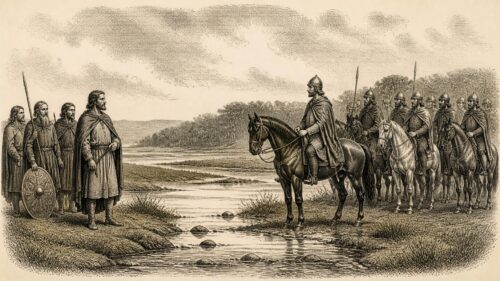
In 1227, Connacht faced intensified pressure from the English lordship, dynastic rivals and regional raiders. Summoned to Dublin, King Áed mac Cathail Chrobdeirg Ó Conchobair escaped an alleged plot through William Marshal’s intervention. He subsequently captured William de Marisco and companions at Lathach Caich, attacked Athlone, and exchanged prisoners for his children, Connacht hostages and a peace. Meanwhile Geoffrey de Marisco and Áed’s rivals took hostages, raided Connacht and constructed castles at Rindoon and Athleague, strengthening Shannon frontier control. Warfare brought cattle theft, captivity and local killings. Famine, cold and sickness compounded insecurity, while crusading observances linked Ireland to Christendom.
Read Article
Archived: 26 October 2026
Abstract
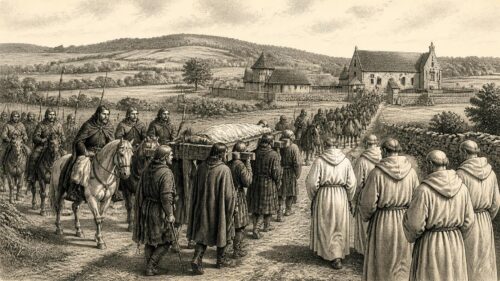
In 1224, Cathal Crobhderg Ua Conchobair’s death at Knockmoy ended a Connacht reign and enabled his son Áed’s swift, but contested, succession. Cathal had combined authority with diplomacy towards Henry III, seeking security for Connacht and recognition of Áed. Meanwhile William Marshal suppressed Hugh de Lacy’s rebellion, retaking Trim Castle through campaigning supported by Anglo-Norman and Gaelic allies. Áed joined these wider struggles, attacking castles and resisting rivals backed by Áed Ua Néill. Church life included Cathal’s Cistercian burial, learned clerics, and the arrival of Dominicans. War, weather and livestock disease disrupted agriculture, exposing dependence on cattle, supplies and alliances.
Read Article

Archived: 26 September 2026
Abstract
In 1221, Ireland remained divided among Gaelic rulers, Anglo-Norman lords, royal officers and church institutions. Geoffrey de Marisco was removed as justiciar amid concerns over revenues, and Archbishop Henry of London returned to office, strengthening crown oversight from Dublin. Marisco nevertheless led a destructive expedition into Desmond, ruining crops and building a castle at Mag Rátha. Papal legate James visited, addressing ecclesiastical affairs and prompting resentment over clerical payments. In Connacht, Diarmait Ua Conchobair’s seaborne bid for kingship ended in his death, exposing succession tensions. The death of scholar Diarmait Ua Cú Lecháin attests to religious learning and manuscript production.
Read Article

Archived: 26 September 2026
Abstract
In 1218, Ireland remained a patchwork of competing royal, Anglo-Norman, Gaelic and ecclesiastical powers. Under Henry III’s regency, William Marshal’s Leinster interests shaped lordship government, including regulation of shipping. His land dispute with Ailbe, bishop of Ferns, exposed conflict between royal procedure, papal intervention and Irish clerical rights. Annals recorded northern killings, a failed Meath raid into Connacht and burning at Athlone, demonstrating frontier insecurity. Deaths and successions confirmed resilient local kingships. The consecration of Boyle Abbey, church administrators’ careers, pilgrimage, and losses among poets and scholars also reveal religious patronage, learning and communal institutions amid persistent nationwide political contestation.
Read Article

Archived: 26 September 2026
Abstract
In 1217, Ireland was a fragile lordship governed for the child Henry III from Dublin, alongside powerful Anglo-Norman magnates and resilient Irish kingdoms. Royal orders promised liberties to loyal subjects, promoted markets, Waterford settlement, land claims, engineers, castle defence and exchequer control. Strategic tensions surrounded the Lacys, Carrickfergus and Carlingford. Government policy sought English dominance in senior church appointments, despite continuing local influence. Annals record Irish fishermen killed on Man, Anglo-Norman raiding near Armagh, retaliatory cattle seizures and a favourable harvest. Marriage, commerce, ecclesiastical links and maritime travel connected communities, but coercion, exclusion and contested authority exposed the Crown’s reach.
Read Article

Archived: 26 September 2026
Abstract
In 1216, Ireland remained divided between Gaelic lordships, the Anglo-Norman Lordship and wider Plantagenet rule. King John’s final orders concerning Walter de Lacy’s estates illustrated royal administration and cross-channel aristocratic ties. After John died, the child Henry III inherited the Lordship, governed through councillors, William Marshal and Dublin justiciar Geoffrey de Marisco. Castle-building and Robert Travers’s disputed appointment at Killaloe exposed coercive colonial expansion. Church affairs linked Ireland closely to Rome through vacancies, papal interventions and diocesan reform. Gaelic rulers maintained authority, including Cathal Crobhdearg’s Ballintubber foundation, while annals recorded killings and legal scholarship, revealing overlapping jurisdictions, allegiances and cultures.
Read Article

Archived: 26 September 2026
Abstract
In 1215, Ireland remained politically fragmented: King John controlled ports, towns, castles and lordships, while Irish kings and kindreds retained power. Magna Carta concerned England, but John’s crisis affected Ireland, prompting efforts to raise revenue and reconcile magnates, notably Walter de Lacy. Royal rule relied on fines, hostages, castles and negotiated claims, while frontier insecurity persisted. Geoffrey de Marisco became justiciar. Irish forces under Áed Ua Néill defeated Ulster’s settlers. New Ross gained limited shipping rights, Cratloe was granted, and Armagh’s archbishop attended Lateran IV. Warfare, commerce, church reform and regional rivalries showed Ireland connected to John’s dominions yet divided.
Read Article
Archived: 26 September 2026
Abstract
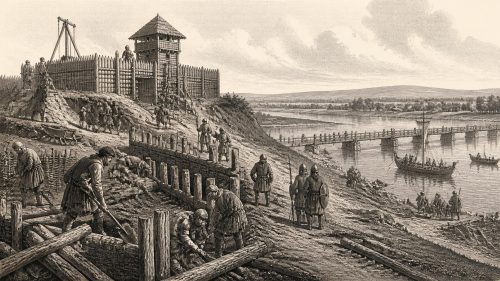
In 1213, King John’s submission of England and Ireland to Pope Innocent III altered the lordship’s international status, while Henry of London became archbishop of Dublin and justiciar. Royal and settler forces campaigned in Mide, defeating Cormac Ó Máel Sechlainn’s allies and building castles at Athlone, Birr, Durrow and Kinnitty to control crossings and routes. Cormac nevertheless recovered influence, illustrating frontier instability. Ulster saw Gaelic feuds, Anglo-Norman attacks, church plundering, Coleraine Castle’s construction and Áed Ó Néill’s raids. Clerical deaths highlighted enduring ecclesiastical centres. Ireland remained politically plural, as castles, warfare, alliances and royal administration reshaped contested regions across Ireland.
Read Article

Archived: 26 September 2026
Abstract
In 1209, Ireland remained politically divided between King John’s lordship, centred on Dublin and Anglo-Norman estates, and competing Gaelic dynasties. John de Grey, acting justiciar, strengthened royal administration, while Dublin’s developing castle symbolised expanding governance. The later tradition of Black Monday recalled settlers’ vulnerability beyond the city walls, though its details are uncertain. Warfare in Inishowen between Ó Néill and Ó Domnaill forces demonstrated contested northern borderlands. In Desmond, Finghin Mac Carthaigh’s killing during a booty dispute triggered succession change; Breifne likewise saw rival Ó Ruairc claimants. Ecclesiastical deaths and everyday economic obligations underscore communities affected by unstable, negotiated power.
Read Article

Archived: 26 September 2026
Abstract
In 1202 Cathal Crobhdearg Ua Conchobair regained Connacht after William de Burgh, supported by Munster Gaelic rulers, helped defeat and kill rival Cathal Carrach. Their mixed coalition soon collapsed when Crobhdearg and Connacht nobles routed de Burgh, whose troops had burdened districts and damaged Ath-da-larag monastery. Dynastic tensions persisted despite settlements with other claimants. Papal legate John of Salerno convened synods at Dublin and Athlone, linking Gaelic and settler clergy in reform, while protecting Killenny abbey’s rights. King John’s charter for St Thomas’s Priory revealed Dublin’s commercial, legal and riverine economy. Annals record clerical deaths and violence, underscoring medieval lordship.
Read Article

Archived: 26 September 2026
Abstract
In 1193, Ireland’s competing Gaelic and Anglo-Norman lordships were reshaped by conflict, patronage and local alliances. Annals record killings among northern, Munster and Leinster rulers, violence by John de Courcy’s followers, and uncertain reports of a castle at Brí Uis authorised against Domhnall Mac Carthaigh. Affrica, wife of de Courcy, founded the Cistercian Grey Abbey on Strangford Lough, linking Ulster to Cumbria and the Irish Sea world. Prince John endowed Crumlin church for St Patrick’s, while Derbfhorgaill died at Mellifont. Inchcleraun was plundered, though sources disagree over the raiders, illustrating fragmented authority and contested evidence across the island's varied regions.
Read Article

Archived: 26 September 2026
Abstract
In 1192, Ireland remained politically fragmented, with Irish rulers retaining broad authority despite expanding lordship from Dublin and Leinster. John’s Dublin charter, dated 15 May, confirmed civic jurisdiction, trading privileges, guilds and burgess rights, strengthening colonial urban government. Ecclesiastical claims around Glendalough reflected contests over church revenues and authority. Leinster forces raided Thomond, built mottes at Kilfeakle and Knockgraffon, but Domnall Mór Ua Briain resisted successfully. Further castles at Horseleap and Kilbixy, and Geoffrey fitz Robert’s planned Kells settlement, advanced territorial control. Annals also record local killings, resistance, religious construction and an uncertain Dublin fire, illustrating resilient nationwide regional societies.
Read Article
Archived: 26 September 2026
Abstract
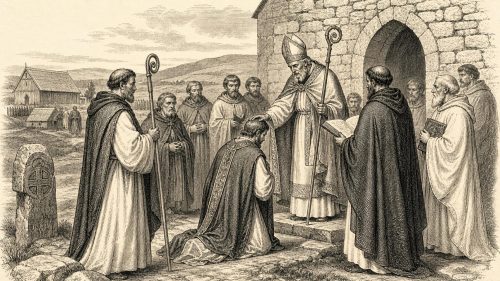
In 1180 Ireland remained politically fragmented, as Ruaidrí Ua Conchobair’s weakened high-kingship, Henry II’s overlordship and expanding Anglo-Norman lordships overlapped with resilient Gaelic dynasties. Hugh de Lacy’s marriage to Ruaidrí’s daughter demonstrated frontier diplomacy, despite royal suspicion. Connacht’s Battle of the Conors strengthened Ruaidrí’s family but devastated Uí Maine leadership, while local killings reflected persistent instability. Ecclesiastical politics shaped events at Derry and Armagh, where Tommaltach Ua Conchobair’s appointment required negotiation. Archbishop Lorcán Ua Tuathail died in Normandy during diplomacy with Henry. Castles at Carrickfergus and Meath advanced settlement, although Gaelic communities, pastoral economies and established ports retained substantial influence.
Read Article

Archived: 26 September 2026
Abstract
By 1178, English lordship in Ireland remained limited to Dublin, parts of Leinster and eastern Meath, while Gaelic kings retained most territories amid rivalries and shifting alliances. Hugh de Lacy raided Clonmacnoise and the midlands, but Connacht resistance constrained him. John de Courcy suffered heavy defeats during northern raids, showing Anglo-Norman arms were vulnerable to terrain, ambushes and supply problems. Warfare across Connacht and Munster damaged settlements, churches and livestock. Dynastic conflicts, ecclesiastical deaths, monastic foundations and learned culture continued alongside violence. Annals also recorded wind damage at Derry and the drying of the River Galway, as conquest remained undecided.
Read Article

Archived: 26 September 2026
Abstract
In 1177 Anglo-Norman expansion widened beyond footholds in Leinster, Meath and ports. John de Courcy secured Downpatrick, raiding eastern Ulaid but not conquering Ulster. Henry II’s Oxford council assigned Ireland to his son John and redistributed strategic lordships and speculative grants in Cork and Limerick, asserting authority. Anglo-Norman expeditions into Connacht and Munster encountered resistance, scorched supplies and limited success. Irish dynastic rivalries continued alongside invasion, while church institutions mediated violence and suffered attack. Synodal activity, disasters and deaths of learned figures illuminate religious and economic life. Ireland remained politically fragmented, yet conquest’s frontier and ambitions decisively expanded across Ireland.
Read Article

Archived: 26 September 2026
Abstract
In 1176, the Treaty of Windsor proved fragile as Anglo-Norman and Irish rulers pursued competing interests. Raymond le Gros relieved Limerick but later surrendered it to Domnall Mór Ua Briain, who destroyed the city after the invaders withdrew. Campaigns in Munster restored Diarmait Mac Carthaig in Desmond, while raids and castle-building provoked resistance in Meath and the north. Strongbow’s death in Dublin transferred his lordship into Henry II’s custody, increasing royal oversight. Maurice fitz Gerald also died. Warfare damaged churches, settlements and livelihoods, revealing unstable conquest amid dynastic conflict, shifting alliances, hostages, and cattle raiding across a politically plural island.
Read Article

Archived: 26 September 2026
Abstract
In 1175 Ireland remained divided between Gaelic kings, Anglo-Norman lords and Henry II’s overlordship. Ruaidrí Ua Conchobair, Strongbow and rulers pursued alliances amid warfare, notably the Anglo-Norman capture of Limerick, which weakened Domnall Mór Ua Briain temporarily. The Treaty of Windsor recognised Ruaidrí as Henry’s liegeman, permitting reduced authority beyond territories reserved for the crown and settlers, in return for tribute, hostages and obedience. Yet violence in Meath and dynastic conflicts elsewhere exposed its weakness. Churchmen brokered diplomacy and appointments, while monasteries retained influence. Warfare disrupted life, livestock and towns. Windsor’s constitutional compromise accompanied conquest, leaving sovereignty and peace unresolved.
Read Article
Archived: 26 September 2026
Abstract
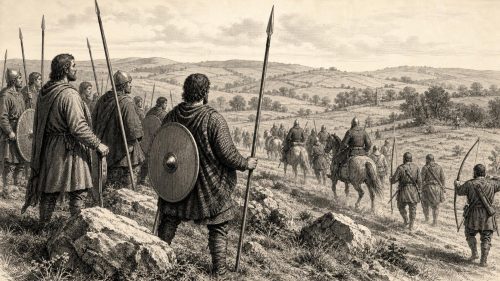
In 1174, Strongbow’s Anglo-Norman army suffered a decisive defeat near Thurles when Domnall Mór Ua Briain and Conchobar Máenmaige led Munster and Connacht forces against an expedition ravaging Munster. The reverse exposed the fragility of Henry II’s new lordship, already weakened by overseas commitments and uneven control beyond coastal towns. Heavy losses forced Strongbow to Waterford, where Hiberno-Norse inhabitants killed garrison members before Raymond le Gros brought reinforcements from Wales. Alliances remained temporary, while dynastic violence continued elsewhere. Church life endured: Gelasius, archbishop of Armagh, died, was succeeded by Cornelius, and a synod met at Birr. Warfare burdened rural communities
Read Article
Archived: 26 September 2026
Abstract
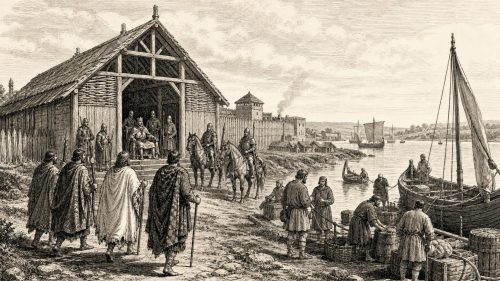
In 1172 Henry II held a winter court at Dublin, asserting royal control over Strongbow’s Anglo-Norman venture and receiving submissions from Irish rulers, though Ruaidrí Ua Conchobair remained independent. He secured Dublin, Waterford and Wexford, encouraged Bristol settlement, and linked conquest to commerce. The Council of Cashel promoted ecclesiastical order, building upon Irish reforms, while Gaelic church and political authority persisted elsewhere. Henry departed in April, granting Meath and Dublin’s custody to Hugh de Lacy. His forces devastated communities, and Tigernán Ua Ruairc was killed. Papal backing strengthened Henry’s claims, but Ireland remained divided between competing Gaelic and Angevin lordships.
Read Article
Archived: 26 September 2026
Abstract
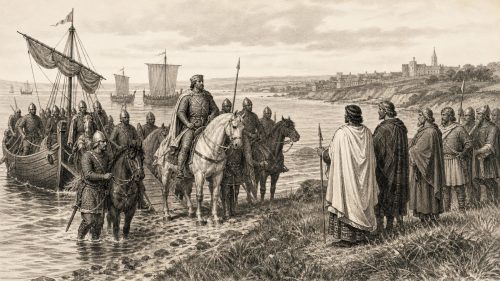
In 1171 Diarmait Mac Murchada’s death intensified conflict over Leinster, as Strongbow claimed succession through marriage while Irish dynasties supported Diarmait’s son. Dublin repelled Hiberno-Norse and Irish-led challenges, though Anglo-Norman settlements remained vulnerable. Henry II invaded in October to restrain Strongbow, received his submission, reserved major ports for royal control, and accepted submissions from several Irish rulers. At Dublin he held court, promoted Bristol settlement and displayed Angevin power. Church reform predated his arrival, but royal authority became linked to it. Henry neither conquered Ireland nor displaced Gaelic government, yet transformed a private expedition into enduring English intervention in Ireland.
Read Article

Archived: 26 September 2026
Abstract
In 1170 Diarmait Mac Murchada’s restoration in Leinster escalated through Anglo-Norman intervention. Raymond le Gros secured Baginbun, then Richard Strongbow captured Waterford, married Diarmait’s daughter Aífe, and seized Dublin, ending its independent Hiberno-Norse rule. The ports supplied strategic links to Britain, trade and military resources. Allied forces campaigned across Leinster and Mide, devastating ecclesiastical centres, while Ruaidrí Ua Conchobair retaliated by killing Leinster hostages, including Diarmait’s son. Wider conflicts persisted in Munster and the north. Rural communities, towns and religious houses suffered warfare, although commerce and reform continued. By year’s end, eastern conquests transformed power without establishing durable settled lordship.
Read Article





