Archived: 18 October 2026
Abstract
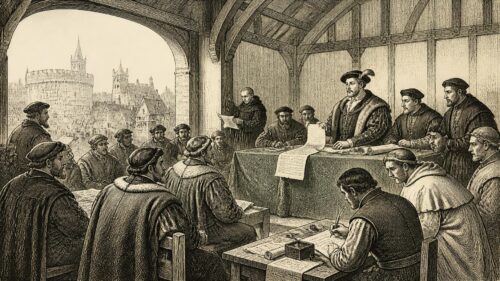
In 1521, Thomas Howard, earl of Surrey, sought to extend Henry VIII’s authority in Ireland, but inadequate money, troops and local support exposed the limits of Dublin government beyond the Pale. A June parliament regulated crop burning, wool exports and jury procedure, yet resisted the burdens of billeting and military finance. Surrey’s campaigns and negotiations in the midlands did not end shifting regional alliances. Annals recorded successions, killings, lordship disputes and ideals of hospitality across Ulster and Fermanagh. George Cromer received Armagh, while William Rokeby died. Surrey’s December recall confirmed that Tudor intervention remained costly, partial and showed dispersed power.
Read Article
Archived: 18 October 2026
Abstract
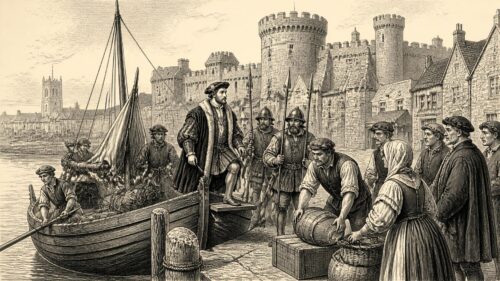
In 1520 Henry VIII appointed Thomas Howard, earl of Surrey, lieutenant of Ireland, replacing the influence of detained earl of Kildare. Landing at Wood Quay with English troops, Surrey repaired Dublin Castle, defended the Pale and pursued negotiated submissions from Gaelic and Anglo-Irish rulers. His campaigns, truces and oaths brought gains, but depended on allies, coercion and shifting interests. Disease disrupted government, while troop concentrations caused shortages and coign and livery burdened communities. Insufficient revenue, poor logistics and warfare restricted policy. Annalistic evidence reveals lordships, succession disputes and learned institutions. Surrey's expedition exposed the limits of crown authority beyond Dublin.
Read Article
Archived: 18 October 2026
Abstract
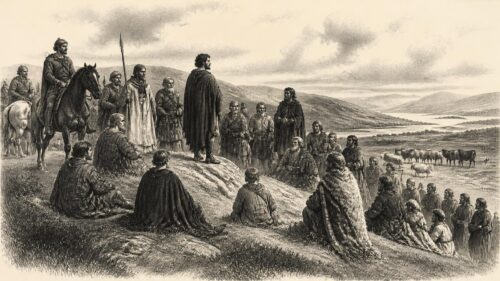
Ireland’s political landscape in 1519 changed through succession, departures, disease and agricultural hardship. In Ulster, Conn Bacach Ó Néill succeeded his half brother Art Óg as lord of Tír Eógain. Deaths among leading figures elsewhere altered regional balances, while Gerald FitzGerald’s departure for England exposed the uncertainty surrounding Dublin’s administration. Irish annals also record plague in Dublin and an wet summer and harvest associated with sickness and suffering. These accounts place elite political change beside the difficulties experienced by communities. The year reveals how dynastic authority, royal intervention, epidemic disease and weather together shaped an island of overlapping regional powers.
Read Article
Archived: 18 October 2026
Abstract
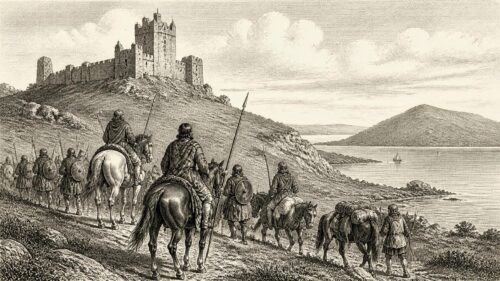
In 1517 Gerald FitzGerald, ninth earl of Kildare and lord deputy, demonstrated both the reach and limitations of Tudor authority in Ireland. After convening a Dublin parliament, he campaigned in Ulster, destroying Dundrum Castle, seizing Félim Magennis’s family and hostages, and burning Dungannon. Yet O’Donnell also raided Tír Eoghain and destroyed Dungannon amid O’Neill succession rivalries, showing regional politics remained autonomous. Elsewhere, inaugurations, killings, cattle raids and castle warfare reshaped local lordships. A severe frost disrupted travel, while a boat from Tory Island vanished at sea. The year reveals a connected but politically fragmented island, rather than unified crown rule.
Read Article
Archived: 18 October 2026
Abstract
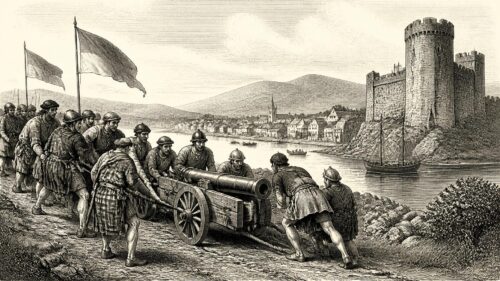
In 1516, Ireland was governed through overlapping royal, Gaelic and urban powers. As Henry VIII’s deputy, Kildare led a coalition that captured Leap Castle, secured hostages and imposed authority in the midlands. In the north-west, Manus O’Donnell obtained French-linked artillery after a pilgrim’s visit to Lough Derg, used it to take Sligo Castle, and later negotiated peace with O’Neill under Dublin’s mediation. Kildare’s Dublin parliament addressed markets, ports, taxation and defence. Religious life, travel and scholarship remained vital: friars drowned on Lough Erne, the Book of Fenagh was completed, and Desmond’s Gaelic lord died amid continuing regional warfare and connections.
Read Article

Archived: 19 October 2026
Abstract
In 1511, Cathair Ó Conchobair Fáilghe, lord of Offaly, was killed near Mainistir-Feorais by rival kinsmen, exposing the instability of Gaelic frontier lordship; his son Brian succeeded. Elsewhere, Manus Ó Domhnaill governed Tír Chonaill during his father’s pilgrimage, negotiated hostages, and resisted Ó Néill incursions marked by burning and plunder. Deaths of learned patrons and regional lords illustrated ties between authority, households and scholarship. Church affairs included Bishop Tomás Mac Brádaigh’s death, competing Bréifne episcopal claims, fire damage at Armagh, and Archbishop Walter FitzSimons’s death in Dublin. The year revealed Ireland as interconnected, contested lordships rather than a unified polity.
Read Article
Archived: 19 October 2026
Abstract
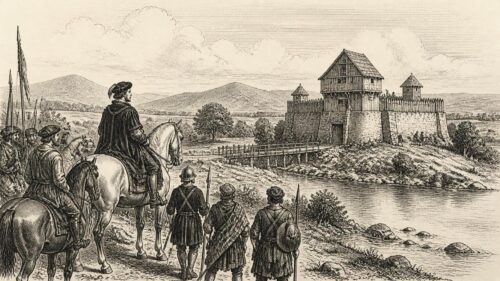
Henry VIII’s accession in 1509 prompted Ireland’s council to retain Gerald FitzGerald, eighth earl of Kildare, as temporary governor, preserving authority in the Pale. Kildare intervened in a disputed O’Neill conflict in Tyrone, campaigning with regional allies, capturing Omagh castle, taking prisoners and demolishing the fortress. Domhnall O’Neill died, and Art O’Neill was inaugurated, illustrating contested Gaelic succession. Uilleag Fionn Burke of Clanricard also died, without ending Burke power. Obituaries for church officers, an erenagh and a learned poet reveal enduring ecclesiastical, hospitable and literary institutions. The year demonstrated that royal change affected Ireland through local alliances, lordships and rivalries.
Read Article
Archived: 19 October 2026
Abstract
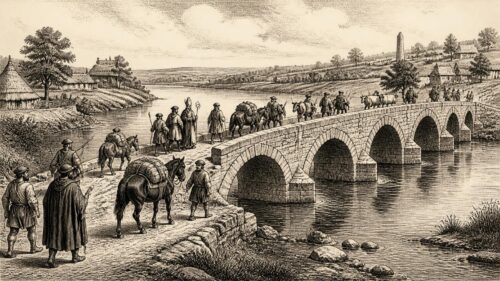
In 1506 Turlough O’Brien, his brother Donnell and the bishops of Killaloe and Kilfenora built a bridge at Port Croise across the Shannon, demonstrating Thomond’s resources, ecclesiastical partnerships and strategic influence near Limerick. Meanwhile, Gerald FitzGerald’s lord-deputyship remained powerful but limited, as Henry VII contemplated an unrealised expedition. Dublin civic authorities defended Dominican hay against Kilmainham’s prior. Northern Ireland saw cattle raids, succession struggles, killings and Scottish mercenary involvement, devastating communities. Annals also record church officials, merchants, nobles and scholar Páidín Ó Maol Chonaire alongside lightning damage at Trim. Together these events reveal medieval Ireland’s regional, interconnected and contested order.
Read Article

Archived: 19 October 2026
Abstract
In 1489, Ireland experienced a severe epidemic, recorded by the annals among ruling, learned, military and ecclesiastical households, though its precise nature and scale remain unknown. A November royal order demanded Dublin remove refuse, dung and swine, reflecting fears that polluted air caused pestilence and harmed commerce and government. Northern lordships remained violent: Conn Ó Néill raided Ó Catháin territory and seized hostages, while dynastic deaths altered regional politics. After harvest, Aodh Ruadh Ó Domhnaill campaigned eastwards, raided the Route, captured Belfast Castle and reportedly demolished it. Despite disaster and conflict, civic, religious, learned and lordly institutions continued functioning precariously.
Read Article
Archived: 19 October 2026
Abstract
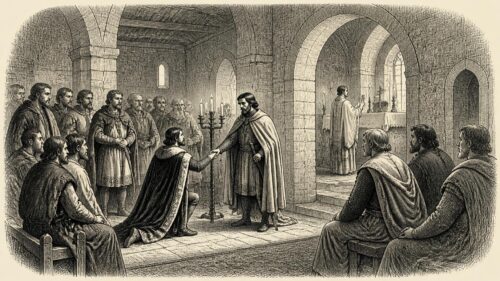
In 1488 Sir Richard Edgecombe secured renewed allegiance to Henry VII after Ireland’s leaders had supported Lambert Simnel. At Kinsale, Waterford, Dublin, Drogheda and Trim, towns and magnates received pardons and swore fealty. Gerald FitzGerald, earl of Kildare, negotiated rather than submitted unconditionally, taking a solemn oath at St Thomas’s while retaining his regional power; royal control was reinforced through Dublin Castle. Beyond the Pale, warfare, succession disputes, hostage-taking and alliances shaped Gaelic and Anglo-Irish lordships. Religious reform flourished at Donegal, while deaths from smallpox, losses among learned figures and destructive weather exposed insecurity. The settlement restored cooperation, not rule.
Read Article
Archived: 19 October 2026
Abstract
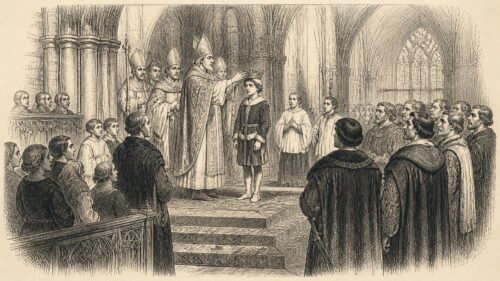
In 1487 Dublin became the base for a Yorkist challenge to Henry VII. Lambert Simnel, presented as Edward, earl of Warwick, was crowned Edward VI at Christ Church, backed by Kildare and elements of the Anglo-Irish clergy and administration. With Lincoln, German mercenaries and approximately 4,000 Irish kerns, the coalition invaded England, but was defeated at Stoke, where many Irishmen, including Thomas FitzGerald, died. Meanwhile, Gaelic lordships endured warfare, killings and contested successions. Severe storms and summer rain damaged buildings and crops. Churches suffered in raids, while poet, historian and legal scholar died. Desmond’s earl was murdered, highlighting FitzGerald instability.
Read Article
Archived: 19 October 2026
Abstract
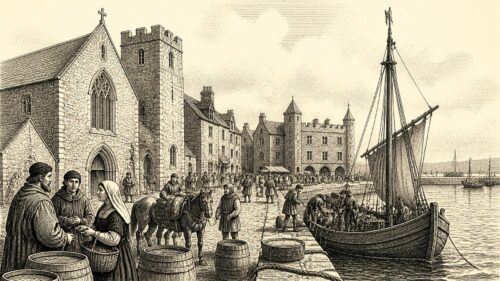
In 1484, Ireland comprised the English lordship, autonomous towns, Anglo-Irish magnates and Gaelic dynasties, each governed through distinct but connected powers. Under Richard III, Gerald FitzGerald, earl of Kildare, dominated Dublin administration, while parliament regulated coinage, revenues, religious property, fortification and urban affairs. Galway strengthened its position when St Nicholas’s became collegiate and Richard granted the town a mayoralty. Elsewhere, insecurity persisted: northern war between O’Neill and O’Donnell coincided with a violent Maguire succession dispute in Fermanagh, involving murder, raids, captives and church attacks. Annals also record deaths, imprisonment and pastoral wealth, revealing fragmented political and social life across Ireland.
Read Article
Archived: 19 October 2026
Abstract
In 1481, Ireland’s annals recorded conflict, patronage and administration across politically fragmented lordships. On 5 October, Toirdelbach Mag Uidhir was treacherously killed by kinsmen in his Fermanagh castle, alongside several companions; his learning, hospitality and bardic generosity were widely mourned. Tír Eógain endured warfare among O’Neill factions, producing raids, killings, captures and the mutilation of Patrick Savage. Other deaths commemorated aristocratic patrons, poets and clerics, demonstrating the importance of learning, pilgrimage and religious institutions. Killings in Wexford reflected local rivalries, while the English lordship’s 1481–82 business addressed lands, castles, church property, revenues and urban privileges, revealing uneven but governmental authority.
Read Article
Archived: 19 October 2026
Abstract
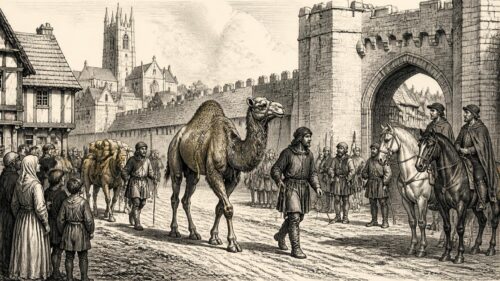
In 1472, Ireland comprised competing Gaelic and Anglo-Irish lordships, while Thomas FitzGerald, earl of Kildare, governed Edward IV’s limited lordship from Dublin. Parliament addressed defence, castles, town property, coinage, trade, religious houses and clerical study, revealing both administrative activity and insecurity in the Pale. Annals record killings, hostage-taking, raids, family struggles and shifting alliances in Ulster, Connacht and Munster, involving Gaelic rulers and Anglo-Irish families alike. Monasteries, pilgrimages and Oxford links connected local society to wider Christian networks. Most strikingly, a yellow camel, probably a royal gift from England, reached Ireland, symbolising international exchange amid fragmented politics across the island.
Read Article

Archived: 19 October 2026
Abstract
In 1468, Thomas FitzGerald, earl of Desmond and former deputy of Ireland, was beheaded at Drogheda after arrest by John Tiptoft’s administration, provoking widespread condemnation and retaliatory raids. His execution exposed the fragility of crown authority beyond Dublin and the Pale. Tiptoft’s forces also burned Cavan and its Franciscan monastery. Elsewhere, disputed successions, raids, cattle seizures and warfare convulsed Connacht and Ulster, damaging crops and communities. Annals recorded deaths of lords, churchmen and the historian-poet Torna Ó Maolconaire, emphasising hospitality, learning and religious observance. The year revealed Ireland’s deeply fragmented political order, sustained by often unstable alliances, lordship and coercion.
Read Article
Archived: 19 October 2026
Abstract
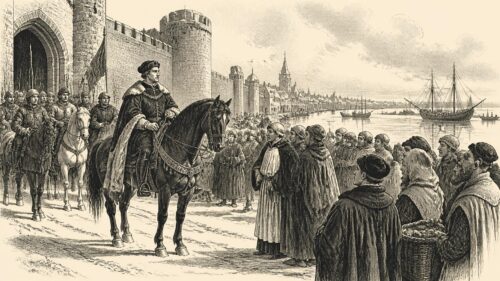
In 1467, John Tiptoft, earl of Worcester, returned as Edward IV’s deputy in Ireland and summoned a Dublin parliament, asserting royal authority within the limited reach of the English lordship. Its programme addressed coastal defence at Lambay, black rents, coinage, church affairs and Meath, while revealing dependence on local cooperation. Desmond’s later execution belonged to 1468, though Worcester’s arrival initiated the crisis. Beyond the Pale, dynastic successions, raids and warfare shaped politics, notably a bloody Connacht battle involving Clanricarde, Ó Ceallaigh and Burke factions. Annals also recorded plague, clerical deaths, learned men and hospitality, illustrating regional institutions and overlapping jurisdictions.
Read Article
Archived: 20 October 2026
Abstract
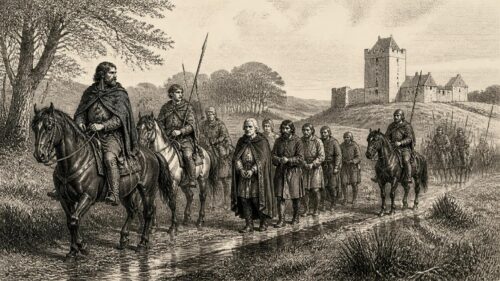
In 1466, Conn Ó Conchobhair Fáilghe defeated the lordship’s Meath and Leinster expedition in Uí Fhailí, capturing Deputy Earl Thomas FitzGerald of Desmond before Dublin men rescued him from Carbury. The defeat enabled raids and strengthened Tadhg Ó Briain of Thomond, who extracted concessions from Desmond and Limerick, but died later that year. Warfare also affected Oriel and Connacht, where rival lordships used alliances, hostages, cattle and tribute to maintain power. Plague struck Dublin, Meath and Leinster, while fire damaged Holy Trinity Abbey on Lough Key. Deaths of rulers, clergy and learned men illustrated Ireland’s precarious, locally negotiated political order.
Read Article

Archived: 20 October 2026
Abstract
In 1465, Ireland experienced severe frost, snow and delayed spring growth, causing acute scarcity, especially recorded in Connacht. Political instability compounded hardship as Ó Conchobair and Mac Diarmata successions provoked battles, killings, raids and disputed lordships. Elsewhere, family conflict and territorial seizures occurred in Breifne, while dynastic connections and rivalries remained active across Leinster and Ulster. In the English lordship, Earl Desmond governed despite opposition and a proposed replacement, while parliament legislated on security, cultural conformity, maritime regulation and Cork’s finances. Meanwhile, Cormac Láidir MacCárthaig founded Kilcrea Friary, combining Franciscan observance, dynastic commemoration and regional ambition during a troubled year.
Read Article
Archived: 20 October 2026
Abstract
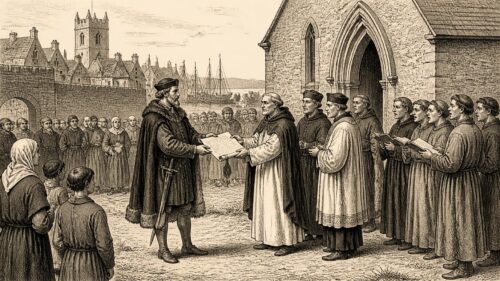
In 1464, Ireland was divided among Gaelic lordships, Anglo-Irish magnates, church jurisdictions and Dublin’s limited English administration. Thomas FitzGerald, earl of Desmond and royal lieutenant, negotiated a treaty in Dublin with Mac William Burke and Ó Domhnaill, while rival officials contested authority. Connacht experienced succession wars, burnings, cattle raids, hostage-taking and gallowglass warfare; similar dynastic violence affected Tír Chonaill, Breifne, Fermanagh and Sliabh Lugha. Illness caused numerous deaths, possibly affecting animals. Devotion remained important through miracles, burials and church offerings. On 27 December, Desmond founded Our Lady’s College at Youghal, a collegiate church supporting worship, music, learning and local administration.
Read Article
Archived: 20 October 2026
Abstract
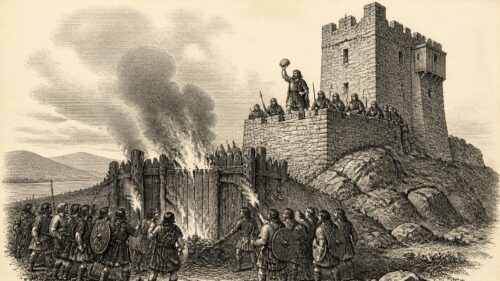
In 1454, Ireland’s fragmented political order was illustrated by conflict, succession and cultural exchange. At Inis Castle in Tír Chonaill, Domhnall O’Donnell killed rival Ruaidhrí O’Donnell with a stone during a siege, securing the lordship temporarily. Annals also record deaths and kin violence among the O’Reillys, Maguires and O’Molloys, alongside contested local successions and cattle raids. Sir Edward FitzEustace’s death led to Thomas fitz Maurice FitzGerald’s election as justiciar in Dublin. Notices commemorate elite women and a notable Fermanagh sermon. Meanwhile, Edmund MacRichard Butler’s manuscript, copied by Gaelic scribes during campaigning, vividly demonstrates interconnected Anglo-Irish patronage, learning, warfare and mobility.
Read Article

Archived: 20 October 2026
Abstract
In 1453, Irish annals record regional struggles rather than a national crisis. At Ardglass, a Dublin fleet pursuing Welsh raiders who had seized the archbishop defeated Henry Mac Néill Buidhe’s Clandeboye force, aided by the Savages; leading Ulster men died and Henry was captured. In Oriel, Hugh Roe MacMahon died and was succeeded by Felim MacMahon, while Donnchadh MacCarthy Reagh’s death brought Diarmaid an Dúna to power in Carbery. Killings, deaths and disputed lordships in Connacht, Bréifne and Tirerrill revealed political dependence on kin, followers, castles and church patronage. The record depicts maritime, localised and interconnected late-medieval society in Ireland.
Read Article

Archived: 20 October 2026
Abstract
In 1442, James Butler, earl of Ormond, resumed the Irish lieutenancy, governing through fragile alliances rather than centralised power. In the north-west, Énrí and Eóghan Ó Néill secured assistance from the English settlement and compelled Neachtain Ó Domhnaill to cede Castlefin, Cenél Moen and Inis Eógain’s tribute. Other struggles involved Enniskillen, Oriel, Ulster raiding and Wicklow warfare. After Muircheartach Caomhánach’s killing, his father won prisoners and compensation from Wexford. Obituaries recorded lords and clergy, while Ormond rental accounts reveal farming, rents and seigneurial justice. Together, the sources portray a connected, contested Ireland shaped by castles, kinship, tribute, negotiation and authority.
Read Article
Archived: 20 October 2026
Abstract
In 1438 Ireland remained divided among Gaelic lordships, Anglo-Irish communities and ecclesiastical jurisdictions, with power shaped by kinship, warfare and office. Archbishop Thomas Crawley died in England returning from the Council of Basel, linking Dublin to Church conflict, while Lionel, Lord Welles, became royal lieutenant. O’Conor Faly fought Meath’s English yet made peace with his brother. Captures, killings and depositions affected Maguires, O’Dowdas, O’Donnells and O’Briens. Deaths of bishops, clerics and heirs from disease disrupted institutions. Prominent jurists, historians and poets also died, demonstrating learned patronage’s continuing public importance. Annals record these crises unevenly rather than a unified national narrative.
Read Article

Archived: 20 October 2026
Abstract
In 1436, Ó Conchobhair Fáilghe launched raids against the English lordship, reportedly avenging the captivity of an Ó Domhnaill kinsman. English settlers of Meath, Ó Fearghail allies and the Prior of Kilmainham defeated him, though conflict continued. In Ulster, Niall Ó Néill was killed in a night attack, while Eóghan Ó Néill secured the crannóg of Loch Laoghaire before raiding Tírhugh. Annals also record local deaths and feuds. The deaths of jurist Gilla-Íosa Mac Aodhagáin and historian Geanann Mac Cruitín, alongside a 1436 Dindshenchas manuscript, attest to enduring learned culture amid fragmented, interconnected warfare and lordship across Ireland's political landscape.
Read Article
Archived: 20 October 2026
Abstract
In 1431, Ireland experienced raids, reprisals, dynastic conflict and institutional losses. Sir Thomas Stanley's delayed arrival as royal lieutenant left the English lordship constrained around Dublin, though chancery business continued. After John Maguire was killed in Tullyhaw, Tomás Óg Maguire ravaged the district and burned Ballymagauran. O'Neill, Maguire and O'Reilly devastated MacQuillan territory, while hostage negotiations and O'Donnell rivalries reshaped Ulster. Gaelic and English forces conducted reciprocal raids in Breifne and Leinster. Deaths of bishops, clerics, poets and nobles underscored the fragility of lordship. Warfare damaged crops and homes, yet religious, learned and administrative institutions endured amid mobile local power.
Read Article
Archived: 20 October 2026
Abstract
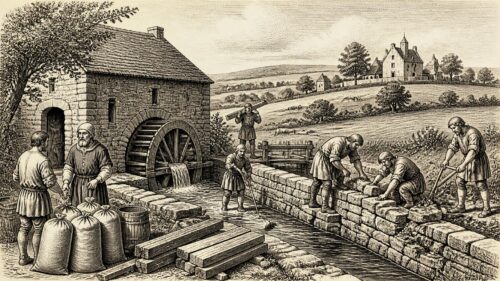
In 1426, Ireland comprised overlapping English, Gaelic and Gaelicised jurisdictions rather than a unified state. Naghtan O'Donnell was ransomed from English captivity by his brother Niall, who provided extensive property and hostages; Turlough O'Donnell subsequently escaped with four fellow hostages. Annals record successions, deaths and kin violence, including O'Brien inauguration, Mac Mahon’s killing, and O'Conor losses. Reconciliation between Owen O'Neill and O'Neill aimed to recover alienated lands. Learned historians, hospitality, penance and plague also feature. Dublin received royal compensation for earlier military service, while an Ormond deed leased Kilkenny mills, demonstrating administrative, economic and seigneurial institutions alongside regional personal power.
Read Article
Archived: 20 October 2026
Abstract
In 1423, Ireland was shaped by competing Gaelic lordships and a weakened English administration. Domnall and Eóghan Ó Néill, with Niall Garbh Ó Domhnaill, led an Ulster coalition through Louth into Meath, defeating forces associated with the king’s deputy and securing tribute and agreements. Niall Garbh also built Ath Seanaigh castle at Ballyshannon, reinforcing his new rule in Tír Chonaill after his father’s death. Dublin government was divided by disputes among Mortimer’s deputies and Richard Talbot. In Connacht, Uilleag de Burgh died, while Uí Maine underwent a violent succession. Clerical and scholarly obituaries reveal intertwined religious, hereditary and political authority.
Read Article
Archived: 20 October 2026
Abstract
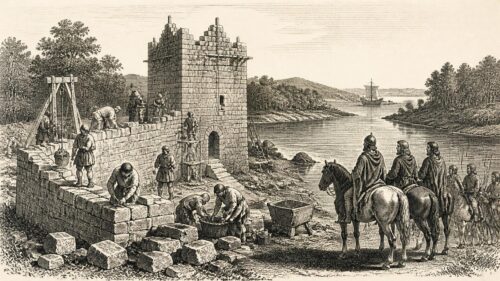
In 1420, Irish political life combined warfare, negotiation, trade and royal administration. Brian Ó Conchobair built Bundrowes Castle beside the Drowes, provoking Ulster opposition and fighting around Assaroe, where Domnall Ó Domhnaill was killed and Niall Garbh escaped aboard a trading ship. Kinship disputes in Connacht brought murders, raids, captivity and settlements secured through lordly protections. Granard Castle was briefly seized, then demolished by Ó Fearghail. Dublin officials collected customs and administered justice and finance. Death notices linked leading families to churches, while violence reached sacred spaces. Annals also recorded wolves killing many people, revealing environmental danger amid political instability.
Read Article
Archived: 21 October 2026
Abstract
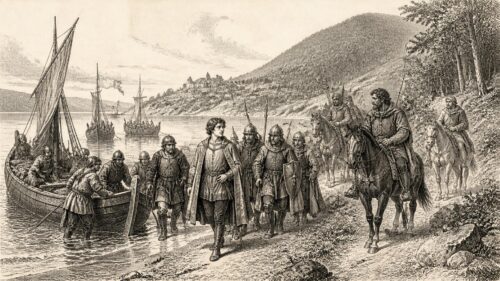
In 1408 Ireland’s political geography remained sharply divided. The English lordship was strongest in and around Dublin, yet its government depended on cooperation from magnates, towns and religious houses, and on money which was chronically scarce. Beyond and across its frontier, Gaelic and Gaelicised lordships pursued their own rivalries, raiding routes and alliances. The year is unusually well illuminated by several annalistic traditions, although they do not all record the same matters. Their entries show an island in which a royal prince could arrive with military purpose, while deaths, cattle-raids, local feuds and new castles continued to shape life far
Read Article
Archived: 21 October 2026
Abstract
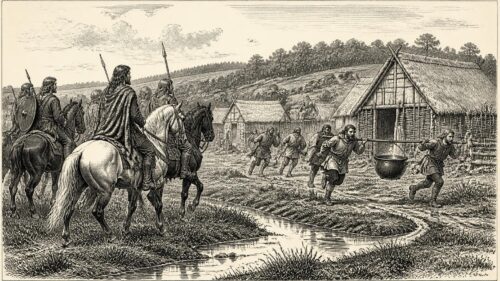
In 1406, Ireland’s fragmented political order was shaped by disease, warfare, ritual and succession. Plague killed several Leinster men eligible for lordship, potentially affecting dynastic calculations. In Offaly, Murchadh Ó Conchobhair Fáilghe defeated a mixed Meath, Connacht and mercenary force at Cluain Immorrais, inflicting heavy losses and capturing the prestigious Buacach Phádraig relic. In Connacht, Toirdhealbhach Óg Ó Conchobhair Donn, joint king for twenty-two years, was killed by rivals and Burke allies, prompting Cathal Ó Conchobhair Donn’s inauguration at Carnfree around year’s end. Dublin retained limited military and civic capacity, while elite deaths and monastic burials underscored lordship’s religious networks.
Read Article





