
Archived: 17 October 2026
Abstract
In 1573, crown policy in Ireland combined pardons, restoration and colonisation, but failed to produce lasting stability. James fitz Maurice Fitzgerald’s theatrical submission to Sir John Perrot at Kilmallock temporarily checked the Desmond revolt, while Gerald Desmond’s return and escape to Munster revived Geraldine authority. Warfare continued to burden civilian communities. In Ulster, denization for Sorley Boy MacDonnell contrasted with Walter Devereux, earl of Essex’s grant to colonise Clandeboye. Resistance by Brian MacPhelim O’Neill, the burning of Carrickfergus, logistical weakness and Thomas Smith’s death exposed the venture’s fragility. These events made landholding, allegiance, religion and security contested within Elizabethan rule.
Read Article

Archived: 17 October 2026
Abstract
In 1571, conflict and cultural change exposed the limits of Elizabethan government in Ireland. The sack of Kilmallock, whose dating requires careful comparison of sources, revealed Munster’s vulnerability during rebellion. A battered fortress and contested lordships reflected instability, including divisions across Connacht. Meanwhile, a Dublin publication in Irish type connected religious reform with language and print. Crown appointments, prospective colonial grants and reforming commissions expressed claims, but their implementation relied on alliances, supplies and local obedience. The year therefore resists a single national narrative, showing military coercion, regional rivalry and cultural initiatives unfolding within a fragmented and contested political landscape.
Read Article
Archived: 17 October 2026
Abstract
In 1569, Tudor government sought to extend Elizabeth I’s authority through parliament, military action, taxation reform and provincial administration. In Munster, James fitz Maurice Fitzgerald, Donal MacCarthy Mór and allies formed a Catholic confederacy, sought Spanish aid, and launched the first Desmond rebellion by attacking Kerrycurrihy. Religious aims overlapped with disputes over Desmond imprisonment, land, settlement and lordly power. Butler brothers raised south Leinster against government interference and Sir Peter Carew’s claims, but failed at Kilkenny. Sidney’s autumn campaign, supported by Ormond and Gilbert, broke the coalition’s momentum. Fitton’s Connacht presidency further expanded royal institutions amid widespread nationwide civilian disruption.
Read Article
Archived: 17 October 2026
Abstract
In 1564, Ireland experienced interconnected struggles over lordship, succession, tribute and fortified places rather than a unified war. Shane O’Neill, strengthened by Crown recognition but constrained by unresolved negotiations and Dublin’s weakness, raided Tír Chonaill, exploited O’Donnell divisions at Donegal, supported Hugh Boy O’Rourke in Breifne, and fought the MacDonnells near the Bann. His setback and ensuing truce demonstrated limits to his power; decisive MacDonnell defeats came later. In Thomond, rival O’Briens, mercenaries and raids devastated communities, cattle and church resources. Religious institutions remained politically important, while William Bathe’s birth reflected Dublin society. The year intensified conflicts without resolving them.
Read Article

Archived: 18 October 2026
Abstract
In 1560, Elizabeth I’s Irish government strengthened its Dublin machinery by appointing John Challoner secretary and signet keeper, while parliament enacted the Acts of Supremacy and Uniformity. These measures established ecclesiastical authority and prescribed reformed worship, although Latin remained permissible where English was unavailable. Their enforcement was limited by weak institutions, linguistic divisions and restricted Crown power beyond the Pale. Shane O’Neill’s Ulster progress frustrated plans to install Brian O’Neill, while Desmond and Ormond avoided battle in Munster. Raids, maritime disaster, grain controls, military hosting and base coinage revealed an island shaped by regional lordships, insecurity, negotiation and material constraints.
Read Article
Archived: 18 October 2026
Abstract
In 1559, Conn Bacach O’Neill’s death triggered a succession crisis between Shane, chosen The O’Neill under Gaelic custom, and his grandson Brian, heir under an English patent. Sir Henry Sidney negotiated a temporary peace, acknowledging Shane’s effective power while Elizabeth’s government postponed a decision. Crown administration expanded through appointments, monetary measures and urban defence, yet remained weak beyond the Pale. Religious change was initially confined largely to official circles before Irish legislation in 1560. In Thomond, rival noble alliances fought around Inchiquin, showing persistent regional instability. Trade, provisions and fortifications preoccupied towns. Ireland remained fragmented, neither rebellious nor securely governed.
Read Article

Archived: 18 October 2026
Abstract
In 1556, changes in government and regional conflicts revealed Tudor ambitions alongside continuing Irish political diversity. Thomas Radcliffe replaced Anthony St Leger as lord deputy, signalling a stronger emphasis on military intervention. Northern campaigning and the seizure and release of midland hostages demonstrated the importance of coercion and negotiation. A completed castle, an encounter in Thomond and a leading poet’s death illuminate developments beyond Dublin. Surviving evidence remains uneven, requiring caution about connections between events. The year nevertheless shows a government pursuing firmer control while Gaelic lords, Old English magnates, religious institutions and learned families retained authority in their communities.
Read Article

Archived: 18 October 2026
Abstract
In 1554 Queen Mary restored Gerald FitzGerald, surviving Kildare heir, as earl of Kildare and baron of Offaly, symbolising Geraldine rehabilitation while retaining tighter Tudor supervision. His return accompanied military cooperation with Lord Delvin against Clandeboye amid O’Neill dynastic conflict. Elsewhere, O’Brien campaigns, Burke alliances and a MacSweeney battle demonstrated persistent local warfare, raiding and divided kindreds. Marian religious restoration deprived Edward Staples of Meath, advanced William Walsh, and promoted Catholic discipline under George Dowdall. Dublin’s legal administration continued through new judicial appointments. Deaths of Gaelic lords and poet Tadhg Ó Cobhthaigh underscored Gaelic power, cultural memory and learned traditions.
Read Article

Archived: 18 October 2026
Abstract
In 1553, Donough O’Brien’s death provoked a violent Thomond succession dispute, as his brother Sir Donal displaced his teenage son Conor despite Tudor inheritance arrangements. Donal demonstrated regional power through campaigning and negotiations at Leix, amid wider conflicts in the midlands and Connacht. Mary Tudor’s accession redirected Irish government towards Catholic restoration, although change remained gradual and uneven. George Dowdall regained recognition as archbishop of Armagh, while Protestant bishop John Bale fled Ossory. Sir Anthony St Leger returned as lord deputy, charged with reconciling religious restoration, fiscal restraint, military reduction, plantation and expanded crown authority. Chronological uncertainties complicate annalistic claims.
Read Article

Archived: 18 October 2026
Abstract
In 1552 Tudor authority in Ireland expanded through military expeditions, administrative reforms, currency measures and ecclesiastical appointments, yet remained limited and contested. Soldiers from Athlone garrison plundered Clonmacnoise, stripping its churches of bells, books, images and valuables. In Ulster, Sir James Croft’s campaigns against O’Neill forces and Scottish allies reached Belfast, where a castle was fortified, but gained neither peace, hostages nor submission. Financial difficulties prompted currency reform and mining inquiries. Protestant nominees Hugh Goodacre and John Bale were selected for Armagh and Ossory, although religious change remained uneven. Croft’s departure brought joint rule by Thomas Cusack and Gerald Aylmer.
Read Article
Archived: 18 October 2026
Abstract
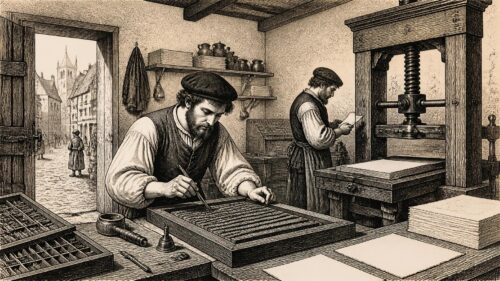
In 1551, Ireland’s overlapping jurisdictions exposed the limits of Edward VI’s government. Dublin and the Pale remained the strongest centres of royal authority, while Gaelic rulers and aristocratic lordships retained armed followers, local law and diplomatic connections. The printing of an English prayer book in Dublin gave religious reform a cultural landmark. A change of lord deputy altered government leadership, while intervention in Ulster contributed to an O’Neill succession conflict. Together, print, appointment and warfare revealed an administration seeking wider control without commanding a unified island. Religious policy and dynastic rivalry therefore developed within enduring regional divisions and negotiated authority.
Read Article
Archived: 18 October 2026
Abstract
In 1550, Sir Anthony St Leger restored negotiation to Tudor Irish policy, promoting surrender and regrant despite disputes favouring military coercion. French approaches in Ulster exposed fragmented lordships and competing dynastic interests rather than a united anti-English alliance. The crown ordered surveys and proposed leasing in Leix and Offaly, beginning systematic plans for territorial intervention without securing control. A proposed Irish mint reflected fiscal ambitions. Humphrey Powell received funding for a Dublin printing press, linking Edwardian religious reform with state communication, though printing and the English liturgy began later. Language, local power and limited resources constrained government ambitions across Ireland.
Read Article
Archived: 18 October 2026
Abstract
In 1549, Tudor authority in Ireland rested on negotiation, military pressure and limited resources. William Brabazon replaced Edward Bellingham as lord justice and held a major court at Limerick, where regional lords accepted a contingent peace secured by civic and aristocratic guarantees. Conflict continued across the midlands and west through castle seizures, raids, killings and disputed successions within Gaelic kindreds. Gunpowder caused Dermot O’Sullivan’s death, illustrating changing warfare. French envoys explored an Ulster alliance through Lough Foyle but found Gaelic divisions. Religious reform remained uneven, while local lordship, kinship and control of land shaped daily political realities beyond royal centres.
Read Article
Archived: 18 October 2026
Abstract
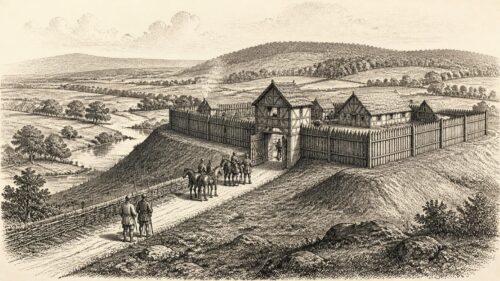
In 1548 Sir Edward Bellingham replaced Anthony St Leger as lord deputy, shifting Tudor policy from accommodation towards military occupation. Fort Protector, established in Leix on the future site of Portlaoise, provided a permanent garrison base against the O’Mores and O’Connors. Cahir Roe O’Connor was executed, while Brian O’Connor Faly and Giolla Pádraig O’More submitted, were taken to England, and the latter died there. Cess and the reopened Dublin mint supported government. Bellingham intervened in Wicklow, detained Desmond, while Ulster remained divided by conflict. Edwardian religious reforms advanced unevenly. Tudor power remained limited but relied on garrisons, coercion and confiscation.
Read Article
Archived: 18 October 2026
Abstract
In 1547, Edward VI’s accession left Sir Anthony St Leger governing Ireland through system of negotiated loyalties. Dynastic conflict in Laois and Offaly sparked the Midland Rebellion, drawing in Ó Mórdha and Ó Conchobhair Fáilghe forces and exposing limits of conciliation. Reinforcements under Sir Edward Bellingham supported campaigns, while criticism of St Leger intensified. William Brabazon repaired Athlone Castle, strengthening a Shannon crossing. Dublin’s St Patrick’s Cathedral was suppressed and its assets redistributed, though religious reform remained uneven. A storm and cattle raiding illustrated vulnerability. By year’s end, warfare, financial scrutiny and division pushed Tudor government towards garrisons and force.
Read Article
Archived: 18 October 2026
Abstract
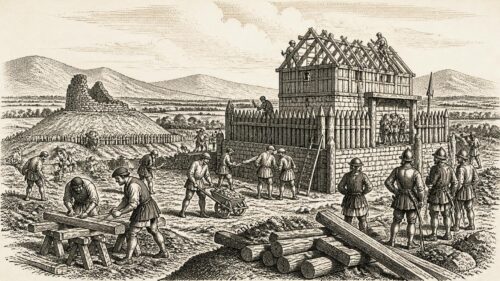
In 1546, Henry VIII's Irish government faced factional conflict and uneven authority. Sir Anthony St Leger defeated the Earl of Ormond in disputes over regional power, though Ormond's death soon exposed continued dependence on magnates. A fort at Daingean extended crown influence into the midlands, provoking annalistic accounts of destruction. In Ulster, Donnell O'Donnell's murder at Inis Saimer violated guarantees of protection and reflected enduring Gaelic politics. Debased copper coinage affected exchange, while episcopal appointments asserted royal control over the Church. The imprisonment of poet-teacher Teige O'Coffey highlighted pressures on bardic learning. These events reveal a kingdom undergoing contested transformation.
Read Article
Archived: 18 October 2026
Abstract
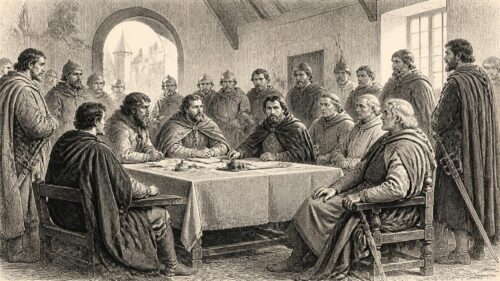
In 1544, Tudor authority in Ireland depended on negotiation rather than uniform control. During Sir Anthony St Leger’s absence, Lord Justice William Brabazon managed finance, military levies and invasion rumours, while Irish kern joined Henry VIII’s war against France and Scotland. Local conflicts persisted: English forces aided O’Donnell’s siege at Lifford, and warfare engulfed Ulster through raids, castles, hostages and Scottish mercenaries. At Limerick, a council addressed the Clanricarde succession after Ulick Burke’s death, recognising Richard Burke but empowering a rival custodian, leaving conflict unresolved. Former monastic property passed to crown servants, illustrating primarily economic, rather than immediate religious, transformation.
Read Article
Archived: 18 October 2026
Abstract
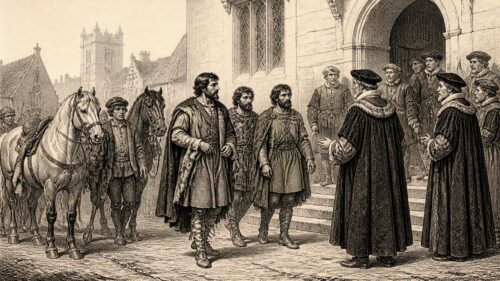
In 1543, Henry VIII’s government sought to reshape Irish lordship through negotiation, royal recognition and noble titles. Gaelic and Gaelicised magnates travelled to Greenwich, where political bargains connected local authority to the Tudor crown. Rival kinsmen negotiated settlements, while the vacancy at Armagh exposed disputes over religious jurisdiction. Anthony St Leger’s administration promoted incorporation by making rulers titled royal subjects. These arrangements did not establish uniform government, erase Gaelic institutions or remove dynastic competition. Instead, the year reveals a monarchy extending its claims through agreements that depended on local interests, personal allegiance and the uneven practical reach of Dublin’s administration.
Read Article
Archived: 18 October 2026
Abstract
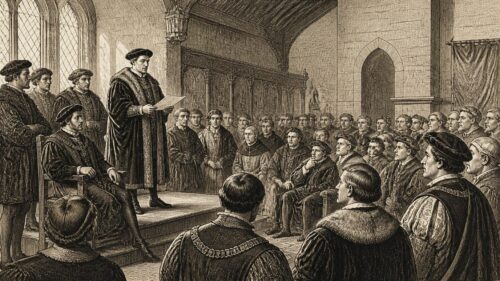
In 1541, Dublin parliament declared Henry VIII king, rejecting papal claims and linking Irish kingship to England’s crown. Sir Anthony St Leger pursued surrender and regrant, granting titles to Edmund Butler and Barnaby Fitzpatrick, securing pardons and agreements and seeking allegiance from Gaelic and Anglo-Irish rulers. Crown authority nevertheless remained concentrated around the Pale. An autumn Ulster campaign brought Conn Bacach O’Neill’s submission, while Manus O’Donnell sought recognition. Dissolution of religious houses transferred property, affecting communities and economies. Proclamations and safe conducts reveal governance. The act created a legal kingdom, but control still depended on negotiation, force and local power.
Read Article

Archived: 18 October 2026
Abstract
In 1540 Ireland remained divided between Tudor authority and powerful Gaelic lordships. Leonard Grey left office and was arrested, while Sir Anthony St Leger became Lord Deputy, pursuing cooperation rather than immediate universal warfare. Manus Ó Domhnaill sent Henry VIII an apologetic letter via Bristol, signalling negotiation without submission. Crown commissioners surveyed dissolved monasteries, redirecting wealth where English power reached, while Franciscan patronage survived in Thomond and violence accompanied suppression at Monaghan. Gaelic rulers built castles, conducted campaigns, took hostages and fought dynastic conflicts. Thus, administrative reform, religious change, Irish Sea diplomacy and regional warfare coexisted, leaving Tudor control incomplete.
Read Article
Archived: 18 October 2026
Abstract
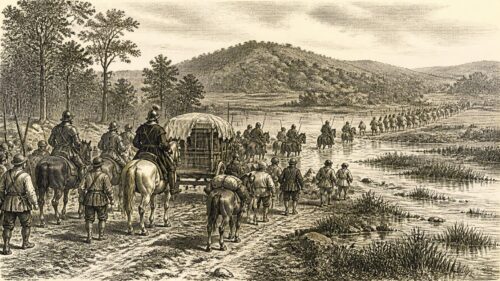
In 1539, Conn Bacach O’Neill and Manus O’Donnell allied, solemnising their pact at a Donegal friary, while Manus consolidated influence through tribute, hostages and agreements. Their raid through Meath reached Tara but ended in defeat when Lord Deputy Leonard Grey intercepted their returning force at Bellahoe. The battle demonstrated Dublin’s capacity to punish incursions, though northern lordships remained resilient. Meanwhile, Henrician commissioners advanced religious reform, suppressing houses, redistributing property and remodelling Holy Trinity, Christ Church, as a secular cathedral. Deaths, disputed successions and destructive June storms further exposed widespread persistent insecurity. Royal authority and reform remained uneven outside government-controlled districts.
Read Article
Archived: 18 October 2026
Abstract
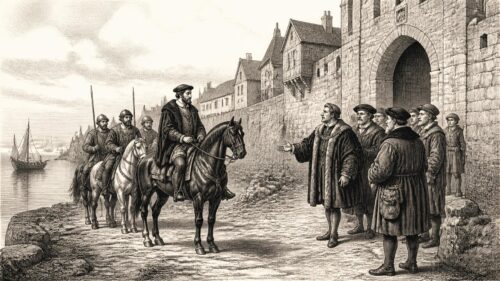
In 1538, Lord Leonard Grey extended Tudor influence through an armed western progress, securing submissions, attacking Claregalway Castle and visiting Galway, where civic hospitality reflected loyalty. Yet authority remained contingent: regional rulers used crown alliances for dynastic rivalries, while warfare continued in Connacht, Tyrone, Fermanagh and Wicklow. Grey’s support helped Ulick Burke dominate Clanricarde, and Thomond politics shifted around O’Brien competition. Religious reform advanced unevenly through Browne’s contested visitation and monastic suppressions, while Newry was remodelled rather than dissolved. Piers Butler regained Ormond’s earldom, and urban education and patronage persisted. Ireland remained politically fragmented, governed through force, negotiation and bargains.
Read Article
Archived: 18 October 2026
Abstract
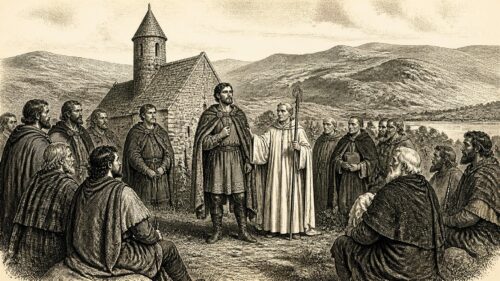
In 1537, Henry VIII’s government intensified its authority in Ireland, executing Silken Thomas FitzGerald and five uncles, investigating Lord Deputy Leonard Grey, and enacting Reformation statutes asserting royal supremacy, restricting Rome and enabling religious suppression. Their impact remained uneven beyond government-controlled districts. Grey’s expedition demolished Daingean castle in Offaly, yet O’Conor Faly recovered power. In Tír Chonaill, Aodh Dubh O’Donnell died and Manus O’Donnell was inaugurated at Kilmacrennan, though rivalry persisted; Manus subsequently campaigned in Lower Connacht. Conflict also disrupted Clandeboye and Fermanagh, where Cuconnacht Maguire was killed. Deaths, warfare and legislation reshaped lordships, but Gaelic structures proved resilient locally.
Read Article
Archived: 18 October 2026
Abstract
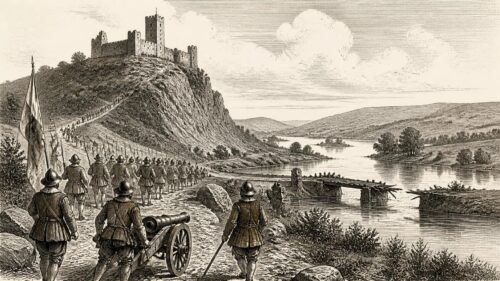
In 1536, Tudor authority in Ireland expanded after the Kildare revolt through Leonard Grey’s appointment as lord deputy, the Dublin parliament and military campaigning. Parliament asserted Henry VIII’s royal supremacy over the Irish church, attainted Kildare interests and initiated changes to religious property, though enforcement remained limited and monastic dissolution was incomplete. Grey captured Carrigogunnell Castle and destroyed its bridge, exploiting regional rivalries. Elsewhere, Connacht experienced succession disputes, raids, artillery warfare, sanctuary violations and the burning of Dromahair monastery. Plague, smallpox and illness compounded instability, while deaths of lords and poet Tomás Ó hUiginn marked cultural loss. Local lordship remained.
Read Article
Archived: 18 October 2026
Abstract
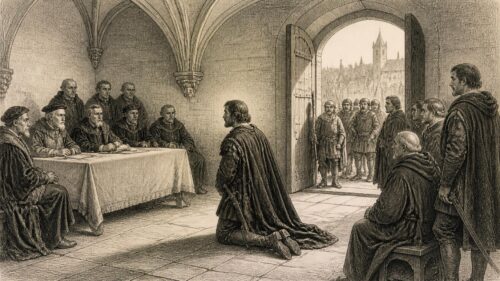
In 1534, Thomas FitzGerald, vice-deputy and heir to Kildare, renounced Henry VIII at Dublin’s St Mary’s Abbey after his father Gerald was recalled and imprisoned in London. Claiming papal loyalty, Thomas besieged Dublin Castle, mobilised Geraldine, Gaelic and Pale support, and sought foreign aid, but faced opposition from towns, Butlers and royal officials. War brought raiding and devastation across surrounding regions; Archbishop John Alen was murdered after capture near Clontarf. Gerald died in the Tower in September, making Thomas earl. Sir William Skeffington’s October arrival with a royal army shifted the balance, leaving Thomas entrenched at Maynooth under a truce.
Read Article
Archived: 18 October 2026
Abstract
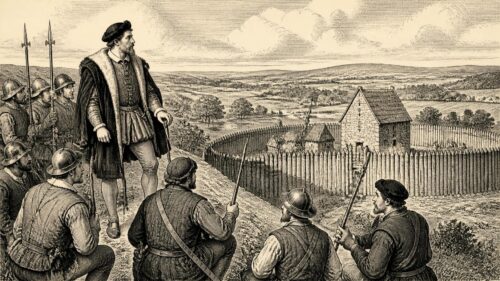
In 1533, Ireland was governed through competing crown, Gaelic and Anglo-Irish powers rather than uniform Dublin rule. Lord Deputy Gerald FitzGerald aided Ferganainm Ó Cearbhaill, capturing Shinrone Castle in Éile, yet a rival claimant soon emerged, exposing Geraldine dependence on alliances and rivalry with the Butlers. Annals record night seizures of Sligo and Ardnaree, punitive raids, executions and violent successions across Moylurg, Firceall and Clannaboy. These conflicts disrupted communities but lordship also rested on hospitality, learning, agriculture and church organisation. Kildare’s Dublin parliament regulated corn disputes within limited crown territory. Ireland remained Catholic, although Henry VIII’s changing position foreshadowed rupture.
Read Article
Archived: 18 October 2026
Abstract
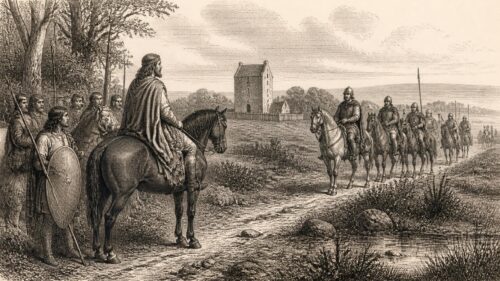
In 1528 Richard Nugent, Lord Delvin, vice-deputy during Kildare’s detention in England, was captured by Brian Ó Conchobhair Fáilghe after challenging the black rent paid by Meath communities. His imprisonment until February 1529 exposed Dublin government’s military weakness and dependence on magnates. Kildare’s continuing rivalry with Piers Butler, later earl of Ossory and deputy, deepened instability, while John Alen became chancellor after Hugh Inge’s death. Across Ireland, successions in Thomond, Bréifne and Moylurg, Uí Néill violence, Scottish-linked campaigning, learned and religious patronage, charitable hospitality, and a destructive pre-Christmas storm demonstrated resilient regional political, cultural and economic life beyond the Pale.
Read Article
Archived: 18 October 2026
Abstract
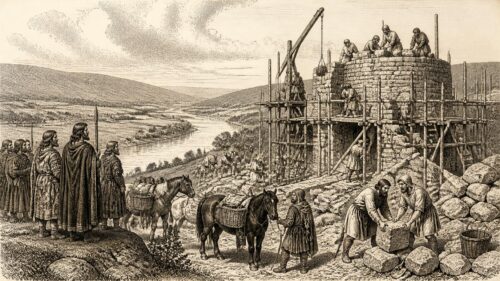
In 1526, Ireland’s fragmented political order was shaped by failed diplomacy, raiding, fortification and contested successions. Gerald FitzGerald, earl of Kildare, unsuccessfully mediated between Conn Bacach O’Neill and Manus O’Donnell, whose rivalry centred on the Tír Chonaill–Tír Eóghain frontier and O’Donnell’s castle at Port na dTri Namhad. O’Donnell forces raided Tír Eóghain and defeated opponents in Connacht, securing hostages and destroying castles while warfare devastated crops and communities. Succession disputes followed deaths among O’Reilly, O’Dochartaigh and O’Rourke kindreds; church office also provoked violence. Severe weather killed raiders. Kildare’s English summons weakened mediation, leaving conflicts unresolved across the island’s competing lordships.
Read Article
Archived: 18 October 2026
Abstract
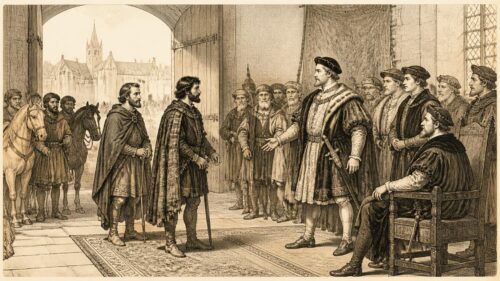
In 1525, Gerald FitzGerald, ninth earl of Kildare and lord deputy, convened a great Dublin council between Conn Bacach Ó Néill and Aodh Dubh Ó Domhnaill, but failed to resolve their Ulster rivalry over Inishowen. Ó Domhnaill subsequently raided Tír Eoghain, before autumn arbitration by Kildare and Manus Ó Domhnaill produced a temporary peace. Kildare also faced conflict with Piers Butler, while Waterford defended its privileges amid anticipated parliamentary action. The murder of Bishop Maurice Doran of Leighlin prompted brutal reprisals. Annals recorded deaths, hospitality, learning and religious observance, demonstrating that Dublin’s authority depended upon negotiation with powerful autonomous lordships.
Read Article
Archived: 18 October 2026
Abstract
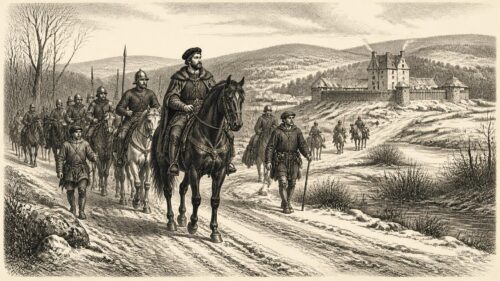
Ireland in 1523 was governed through competing authorities whose interests extended beyond Dublin. Henry VIII’s administration depended upon negotiation with magnates, towns and Gaelic rulers. Gerald FitzGerald, ninth earl of Kildare, returned from England, renewing his rivalry with the lord deputy, Piers Butler, earl of Ormond. James FitzGerald, earl of Desmond, pursued connections with France, while northern dynasties fought and bargained largely beyond government control. Kildare’s return was intended to strengthen the lordship’s exposed frontier, yet intensified political competition. The year illustrates how royal appointments, rivalries, foreign diplomacy and regional military power shaped the limits of English authority in Ireland.
Read Article





