Archived: 17 September 2026
Abstract
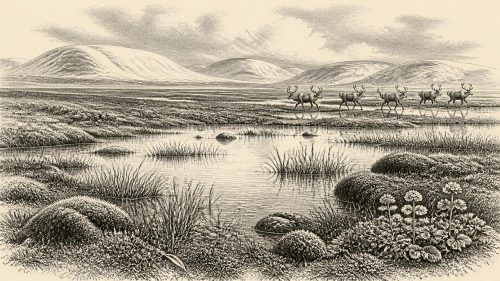
Around 31,388 BCE, Ireland lay within the climatically unstable Late Pleistocene MIS 3, not a precisely datable historical year. At Derryvree, County Fermanagh, freshwater organic deposits between glacial tills record an ice-free interval of open, periglacial tundra, wet hollows and seasonal cold. Castlepook Cave, County Cork, preserves remains of mammoth, reindeer, giant deer, bears, hyaenas and other fauna, demonstrating a living but distinctive insular ecosystem. A marked reindeer bone may indicate human butchery around 33,000 years ago, but remains contested and cannot prove settlement. No evidence supports Irish polities, agriculture or established communities; environmental archives provide the principal record today.
Read Article
Archived: 17 September 2026
Abstract
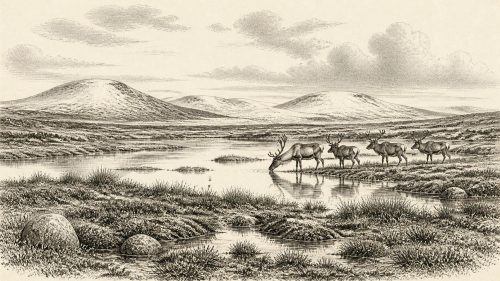
31,390 BCE is a modern label within MIS 3, not a precisely datable Irish year. Ireland’s evidence is environmental, chiefly Derryvree’s freshwater silts between glacial tills, broadly dated 36,900–31,700 cal BP. Their pollen, mosses, plants and insects indicate open, treeless, cold wetlands with pools, rather than permanent ice or woodland. Cave records from Kerry show episodic liquid-water conditions, while Cork fauna demonstrate that Ice Age mammals entered suitable landscapes. A possibly cut-marked Castlepook reindeer bone raises, but does not establish, human presence. Glacial erosion and uncertain dating preclude claims about communities, politics or conditions, revealing a Atlantic Ice Age landscape.
Read Article
Archived: 17 September 2026
Abstract
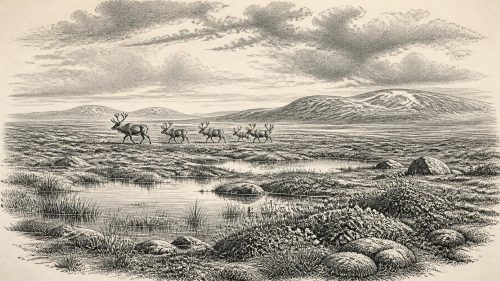
Modern labels such as 31,392 BCE cannot identify a single recorded Irish year; they denote a broad Late Pleistocene, MIS 3 interval. At Derryvree, County Fermanagh, freshwater silts between glacial tills, dated roughly 36.9–31.7 thousand cal BP, show locally ice-free muskeg and tundra wetlands with cold-adapted plants and aquatic life. Other deposits indicate shifting regional ice and open water. Castlepook Cave fauna, including mammoth, reindeer and predators, confirms ecological links with north-west Europe. A possibly cut-marked reindeer bone suggests limited Upper Palaeolithic human activity, but no settlement. Ireland remained environmentally unstable, repeatedly reshaped by ice, water and erosion over millennia.
Read Article

Archived: 17 September 2026
Abstract
The notional date 31,393 BCE approximates a Late Pleistocene MIS 3 interval, not a recoverable Irish year. Ireland experienced cold, unstable conditions before the Last Glacial Maximum, with changing ice, sea levels, exposed land and open vegetation. Derryvree sediments in Fermanagh preserve evidence of tundra-steppe wetlands, freshwater, mosses, sedges and cold-adapted plants. Castlepook Cave in Cork contains a mixed assemblage of Ice Age animals, including reindeer, mammoth and hyaena, accumulated across periods. A marked reindeer femur may indicate early human butchery, but cannot prove permanent occupation. Later glaciation and submergence obscured evidence, leaving a chiefly environmental history for Ireland today.
Read Article
Archived: 17 September 2026
Abstract
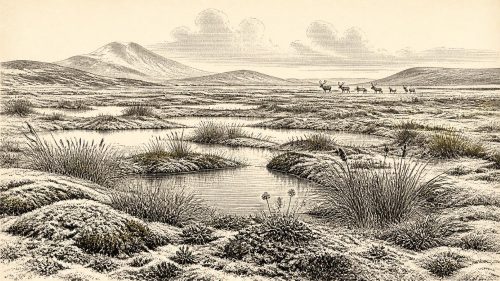
Around 31,394 BCE, Ireland was a fluctuating Late Pleistocene landscape, not a recorded historical society. Freshwater sediments at Derryvree, County Fermanagh, formed between glacial episodes, preserving evidence of treeless wetlands, sedges, grasses, mosses and aquatic plants. They indicate locally exposed, cold, wet ground before the later expansion of the British–Irish Ice Sheet. Cave remains show that mammoth, reindeer, horse, giant deer and predators reached Ireland during the broader Middle Midlandian period, though not necessarily simultaneously. Possible human activity at Castlepook remains unconfirmed as evidence of settlement. No communities, politics, monuments or traditions can be securely assigned to this remote interval.
Read Article
Archived: 17 September 2026
Abstract
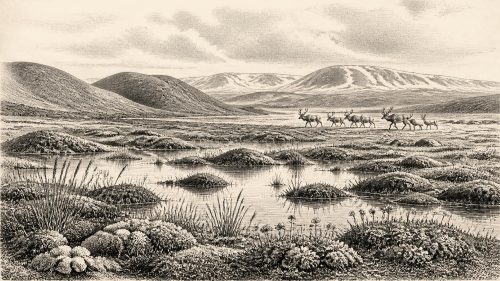
At roughly 33,500 calibrated years BP, Derryvree, County Fermanagh, preserves freshwater silts and organic deposits laid down between glacial advances. Pollen, plants and invertebrates indicate cold, open wetland with sedges, grasses, shrubs and mountain avens, rather than permanent settlement. Lower sea levels and unstable climate created changing landscapes as ice expanded, though conditions across Ireland remain uncertain. Castlepook Cave, County Cork, documents diverse Late Pleistocene fauna, including reindeer, mammoth, giant deer, predators and scavengers, across a lengthy period. A cut-marked reindeer bone may signal early human carcass processing, but proves neither occupation nor society. Evidence records environmental change, not institutions.
Read Article
Archived: 17 September 2026
Abstract
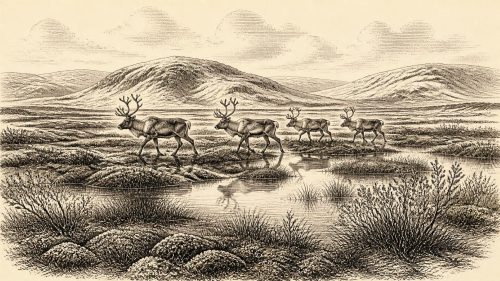
31,396 BCE is not a recoverable Irish historical year but falls within an unstable Late Pleistocene interval. Derryvree, County Fermanagh, preserves freshwater silts between glacial tills, indicating a locally ice-free, treeless wetland with tundra vegetation during part of MIS 3. Castlepook Cave, County Cork, contains a mixed, long-lived fauna including mammoth, reindeer, giant deer, hyaena and Arctic species, evidencing open cold landscapes. A cut-marked reindeer femur may represent Ireland’s earliest humanly processed animal, though it proves neither settlement nor identity. Later glaciation obscured much evidence there, leaving only cautious indications of changing climates, animal movements and possible brief human visits.
Read Article

Archived: 17 September 2026
Abstract
31,397 BCE is a label rather than a datable Irish year. During volatile MIS 3, Ireland comprised cold landscapes, including Fermanagh tundra wetlands documented at Derryvree and milder conditions indicated by Kerry speleothems. Castlepook Cave in Cork produced remains of reindeer, mammoth, giant deer, predators and cold-adapted fauna, accumulated across periods. A marked reindeer femur, perhaps cut by a stone tool, may signal an Upper Palaeolithic human visit, but cannot establish settlement or continuity. Later glaciation destroyed evidence. No polity, trade, farming or cultural system is demonstrable; surviving deposits instead reveal evidence of Ice Age environments and possible human visits.
Read Article
Archived: 17 September 2026
Abstract
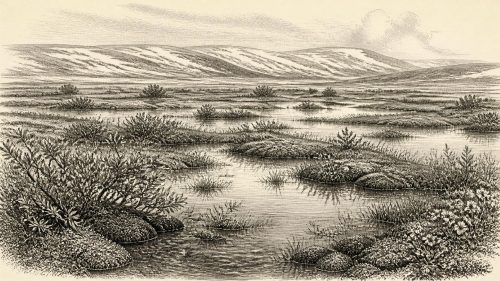
31,399 BCE is a modern label for later Marine Isotope Stage 3, not a recoverable Irish calendar year. Derryvree, County Fermanagh, preserves freshwater organic sediments between glacial tills, indicating a cold, treeless periglacial wetland during an ice-free local interval. Pollen, plants and insects document shallow pools and low-growing vegetation. Climate and ice varied, while lower sea levels did not necessarily create continental routes. Castlepook Cave records diverse cold-stage fauna, including mammoth, reindeer and predators. A marked reindeer femur may indicate brief human carcass processing, but cannot prove settlement, society, culture or permanent occupation. Evidence chiefly reveals a harsh, changing environment.
Read Article
Archived: 17 September 2026
Abstract
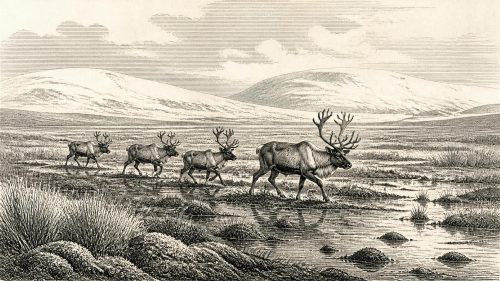
About 31,400 BCE, Ireland lay in the climatically unstable later Middle Midlandian, before the Last Glacial Maximum. Ice advances varied regionally, repeatedly reshaping exposed lowlands, coasts and deposits. At Derryvree, Fermanagh, freshwater sediments between tills record treeless tundra wetland, demonstrating an interval of cold, periglacial life. Castlepook Cave, Cork, preserves mixed remains of mammoth, reindeer, giant deer and other cold-adapted fauna, indicating ecological connections with north-west Europe but not a single contemporaneous community. A marked reindeer femur may indicate human butchery, possibly Ireland’s earliest evidence of people. Without associated artefacts or settlement remains, any human presence remains uncertain and brief.
Read Article

Archived: 17 September 2026
Abstract
Around 31,403 BCE, Ireland’s past is reconstructed from environmental evidence rather than records. Derryvree, County Fermanagh, preserves freshwater sediments between glacial tills, dated broadly to 36,900–31,700 calendar years BP. Their mosses, plants, insects and pollen indicate an ice-free, treeless, tundra-like wetland during an unstable Late Pleistocene phase. Ice sheets were expanding but had not reached their later maximum. Castlepook Cave’s faunal remains, including reindeer and other cold-adapted animals, show ecological links with north-west Europe. A possibly cut-marked reindeer bone suggests human visitation, but no secure occupation evidence exists. Later glaciation erased much evidence, leaving a fragmentary yet intermittently habitable landscape.
Read Article

Archived: 17 September 2026
Abstract
Around 31,409 BCE, Ireland lay within Marine Isotope Stage 3 of the Last Glacial Period, though evidence cannot identify events in a single year. Freshwater silts at Derryvree, County Fermanagh, accumulated between glacial episodes and indicate cold, treeless, tundra-like wetlands with shallow water and sparse vegetation. Their calibrated age range plausibly includes this date, but does not establish island-wide conditions. Castlepook Cave, County Cork, preserves mixed remains of mammoth, reindeer, giant deer and other fauna, showing wider ecological connections. A possibly butchered reindeer bone may indicate a brief human visit, but no evidence demonstrates permanent Palaeolithic occupation, settlements or institutions.
Read Article

Archived: 17 September 2026
Abstract
At the notional date of 31,412 BCE, Ireland’s history is reconstructed from environmental evidence rather than annual records. Derryvree, County Fermanagh, preserves a freshwater wetland deposited between glaciations, indicating open, treeless tundra with mosses, pools, sedges and sparse vegetation. Crag Cave’s intermittent calcite growth demonstrates millennial climatic shifts and periods above freezing. Castlepook Cave in County Cork contains Ice Age fauna, including reindeer, mammoth and hyaena, and a possibly stone-tool-marked reindeer femur suggesting fleeting human activity. However, no securely dated occupation evidence exists. Ireland remained a climatically unstable, increasingly glaciated landscape, not a settled or politically identifiable society at all.
Read Article

Archived: 17 September 2026
Abstract
Around 31,415 BCE, Ireland lay within the climatically unstable Marine Isotope Stage 3, approaching but preceding maximum last-glacial ice expansion. Evidence cannot date events to a single year. Derryvree sediments in Fermanagh indicate locally ice-free, treeless, cold wetlands with open vegetation. Castlepook Cave, Cork, yielded reindeer, mammoth, giant deer, predators and other cold-climate fauna; revised dating places key remains in this period. A reindeer femur bearing possible stone-tool cut marks suggests, but does not prove, human activity. Mixed cave deposits and absent associated artefacts preclude claims of settlement. Ireland’s record documents environments and animal movements; secure human evidence came later.
Read Article

Archived: 17 September 2026
Abstract
The label 31,417 BCE cannot identify a precise event, but falls within MIS 3, a climatically volatile Late Pleistocene interval. At Derryvree near Maguiresbridge, Fermanagh, organic freshwater sediments between tills, dated broadly to 33,500 calibrated years BP, preserve evidence of an ice-free, treeless periglacial wetland containing sedges, mosses, bogbean and alternate water-milfoil. Castlepook Cave, Cork, documents a cold-stage fauna, including mammoth, reindeer, giant deer, predators and lemmings. A marked reindeer bone may indicate human carcass processing, but remains uncertain. These fragments show a dynamic, biologically connected landscape, not uniformly ice-covered Ireland, while providing no evidence for settlement, society or polity.
Read Article
Archived: 17 September 2026
Abstract
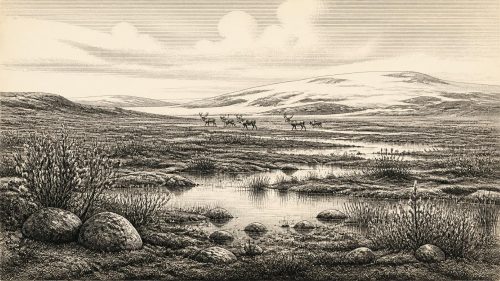
31,419 BCE is a label within a broad Pleistocene dating range, not a recoverable Irish year. At Derryvree, County Fermanagh, organic silts beneath later glacial till, including Birm-166, show a locally ice-free interval during Marine Isotope Stage 3. Mosses, sedges, grasses, plants and insects indicate cold, treeless, waterlogged tundra. Castlepook Cave, County Cork, preserves remains of mammoth, reindeer, giant deer and predators, although cave deposits are selective and mixed. A possibly cut-marked reindeer bone suggests brief human contact, not settlement. Later expansion of the British-Irish Ice Sheet buried deposits and reshaped landscapes, leaving sparse, local evidence of Ice Age habitats.
Read Article

Archived: 17 September 2026
Abstract
31,420 BCE is a modern label rather than a recoverable Irish year. Derryvree, County Fermanagh, preserves organic freshwater sediments, radiocarbon-dated broadly to this period, between glacial tills. Their pollen, plants and invertebrates reveal treeless tundra wetlands with bogbean, dwarf willow, mountain avens and shallow pools during a temporary non-glacial interval. Lower sea levels altered coasts, while advancing British-Irish ice later remodelled much of Ireland. Castlepook Cave, County Cork, contains mixed Pleistocene fauna, including mammoth, reindeer, giant deer, bear and hyena. A cut-marked reindeer bone may indicate transient Upper Palaeolithic human activity, but cannot demonstrate settlement, society or continuity with certainty.
Read Article

Archived: 17 September 2026
Abstract
Around 31,421 BCE, Ireland’s past is reconstructed from environmental rather than historical evidence. Derryvree, County Fermanagh, preserves a cold, ice-free tundra wetland between glacial advances, dated broadly to 36,900–31,700 years ago. Its plants, including bogbean, indicate pools and short productive seasons. Crag Cave records intermittent milder conditions. Castlepook Cave’s fauna, accumulated over long periods, includes mammoth, reindeer, giant deer and predators, demonstrating rich but fluctuating ecosystems. A possibly cut-marked reindeer femur may indicate Upper Palaeolithic human activity, although its context is insecure. No settlement or society is evidenced. Subsequent glaciation obscured remains, leaving a fragmentary record of landscapes and visitation.
Read Article

Archived: 17 September 2026
Abstract
31,422 BCE denotes a broad Late Pleistocene, Marine Isotope Stage 3 interval rather than a recoverable calendar year. At Derryvree near Maguiresbridge, Fermanagh, freshwater organic sediments between glacial tills reveal an ice-free local phase, dated broadly to 36,900–31,700 calibrated years BP. Pollen, plants, mosses and insects indicate open, cold, seasonally productive wet tundra with pools, sedges and exposed ground. Castlepook Cave's long-accumulated fauna records mammoth, reindeer, giant deer and predators, but not a single contemporary ecosystem. A possibly tool-marked reindeer bone suggests early human visits, yet remains disputed. No secure evidence supports permanent settlement, political organisation or cultural activity there.
Read Article
Archived: 17 September 2026
Abstract
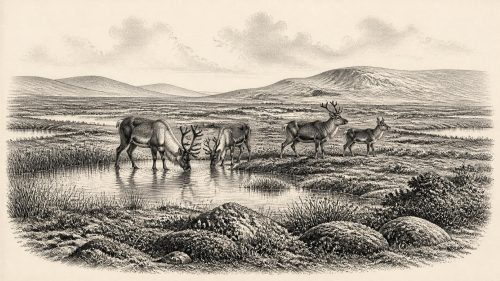
31,423 BCE is a modern chronological label within unstable MIS 3, not a recorded Irish year. At Derryvree, County Fermanagh, freshwater organic sediments between glacial tills indicate a temporary ice-free, treeless wetland landscape, dated broadly to 36,900–31,700 calibrated years BP. Plant and insect remains show pools, mosses and open periglacial ground. Comparable Ulster deposits demonstrate fluctuating ice cover. Castlepook Cave’s MIS 3 fauna, including reindeer, mammoth and hyaena, shows periodic ecological connections with Europe, while ancient-DNA findings remain provisional. Possible tool damage on a reindeer bone suggests, but does not establish, human visitation. Later glaciation buried or destroyed older evidence.
Read Article

Archived: 17 September 2026
Abstract
Around 31,426 BCE, Ireland’s history is environmental rather than political. Derryvree, County Fermanagh, preserves freshwater organic sediments between glacial tills, indicating a cold, treeless, periglacial wetland with dwarf willow, bogbean, sedges, mosses and shallow pools. Its broad radiocarbon range prevents precise annual reconstruction. Climatic conditions during Marine Isotope Stage 3 fluctuated sharply, while Crag Cave records intermittent milder phases. Castlepook Cave demonstrates that mammoth, reindeer, giant deer, bears and hyaenas occurred in Ireland during this wider period. A possibly butchered reindeer bone suggests fleeting human presence, but no settlement evidence exists. Growing ice sheets created changing, uncertain routes and refuges.
Read Article

Archived: 17 September 2026
Abstract
31,427 BCE is a modern label for a volatile Middle Midlandian phase of the last Ice Age, not a documented Irish year. Around this period, abrupt North Atlantic climatic shifts affected ice, drainage, vegetation and sea levels, while Ireland remained regionally varied rather than uniformly glaciated. Derryvree, County Fermanagh, preserves organic beds between tills, revealing cold, treeless freshwater wetlands with mosses, sedges and specialised plants. Castlepook Cave, County Cork, contains cold-adapted fauna, including mammoth and reindeer. A marked reindeer femur may indicate Palaeolithic butchery, but lacks corroborating archaeological context. Evidence supports intermittent habitats and possible human visits, not settled society.
Read Article

Archived: 17 September 2026
Abstract
Around 31,430 BCE, Ireland lay within the climatically unstable Late Pleistocene, not a historically recoverable single year. Derryvree, County Fermanagh, preserves freshwater organic sediments between glacial tills, demonstrating an intermittently ice-free, treeless tundra and waterlogged muskeg landscape before renewed glaciation. Castlepook Cave, County Cork, produced remains of mammoth, reindeer, giant deer, predators and other cold-adapted fauna, although these represent deposits accumulated over long periods. A possibly stone-tool-marked reindeer bone suggests a brief Upper Palaeolithic human encounter, but sustained occupation remains unproven. Ireland was an ecologically viable yet shifting Ice Age frontier, shaped by advancing ice, lower seas and uncertain connections.
Read Article

Archived: 17 September 2026
Abstract
Labelled 31,433 BCE, this remote horizon cannot represent a recorded Irish year. During Marine Isotope Stage 3, Derryvree, County Fermanagh, contained freshwater sediments between glacial tills, indicating a locally ice-free, treeless tundra-wetland with cold-adapted plants and insects. Crag Cave records intermittent milder phases within an unstable glacial climate. Castlepook Cave’s MIS 3 fauna included mammoth, reindeer, giant deer, hyaena and wolf, although dates and associations remain uncertain. A marked reindeer femur may show Upper Palaeolithic butchery, but does not prove settlement. No evidence supports polities, permanent communities or cultural institutions. The evidence instead documents dynamic, locally habitable Ice Age environments.
Read Article

Archived: 17 September 2026
Abstract
Around 31,434 BCE, Ireland lay within a fluctuating Marine Isotope Stage 3 cold environment, although no event can be dated precisely to that year. Derryvree, County Fermanagh, preserves an inter-till wetland sequence showing locally ice-free, open tundra terrain with sedges, mosses, pools and cold-tolerant plants, rather than woodland. Castlepook Cave, County Cork, records a time-averaged fauna including reindeer, mammoth, giant deer and predators, indicating cold open country. A possibly stone-cut reindeer femur suggests brief human contact, but lacks secure archaeological context. No settled population, culture or institutions can be demonstrated from Ireland; later glaciation and inundation probably erased much evidence.
Read Article
Archived: 17 September 2026
Abstract
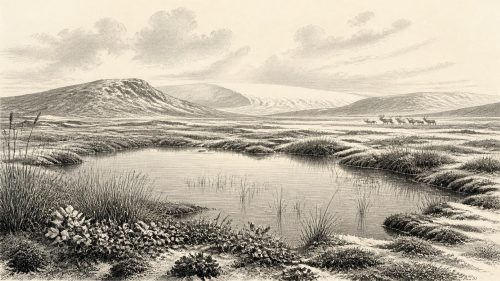
Around 31,435 BCE, Ireland lay within the variable Midlandian cold stage, not a precisely reconstructable single year. Derryvree, County Fermanagh, preserves freshwater organic sediments between glacial tills, radiocarbon-dated broadly to 36,900–31,700 cal BP. Its bogbean, sedges, mosses and aquatic plants indicate treeless wet tundra with seasonal liquid water, rather than permanent ice or temperate woodland. Comparable deposits show changing local climates and ice limits. Cave fauna demonstrate that reindeer, mammoth, giant deer and predators occurred during overlapping Late Pleistocene phases, but not necessarily together. No securely dated human activity exists. Later ice expansion buried Derryvree and erased many older landscapes.
Read Article
Archived: 17 September 2026
Abstract
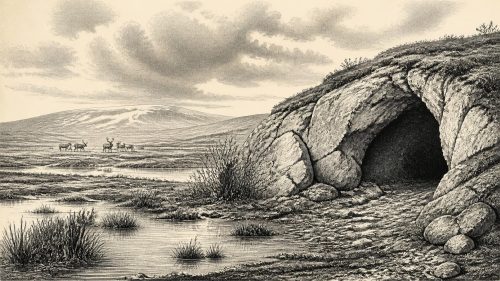
At c. 31,436 BCE, Ireland cannot be described through annual events or human history, but through uncertain Late Pleistocene environmental evidence. Derryvree, County Fermanagh, preserves freshwater sediments between glacial tills, indicating episodically ice-free, cold, treeless wetlands with tundra plants during Marine Isotope Stage 3. Castlepook Cave near Doneraile contains remains of mammoth, reindeer, horse, bear, hyaena and other cold-stage fauna, although collections span long periods. A marked reindeer bone may indicate early human butchery, but sustained occupation is unproven. Dynamic ice, changing coasts and later erosion shaped intermittently habitable landscapes, while preventing reconstruction of societies, politics, settlement, or exact chronology.
Read Article

Archived: 17 September 2026
Abstract
31,437 BCE is a modern label within a broad calibrated Late Pleistocene MIS 3 range, not a datable Irish year. At Derryvree, County Fermanagh, freshwater silts between glacial tills preserve mosses, sedges, aquatic plants and cold-adapted insects, indicating locally ice-free, open tundra-like wetland during fluctuating glaciation. Castlepook Cave, County Cork, contains MIS 3 fauna including reindeer, mammoth, giant deer, predators and other cold-stage species, demonstrating diverse open habitats. A marked reindeer femur may suggest human butchery, but lacks secure archaeological context and cannot prove occupation. No evidence supports contemporary Irish politics, settlements, beliefs or culture. The evidence records ice-age environments.
Read Article
Archived: 17 September 2026
Abstract
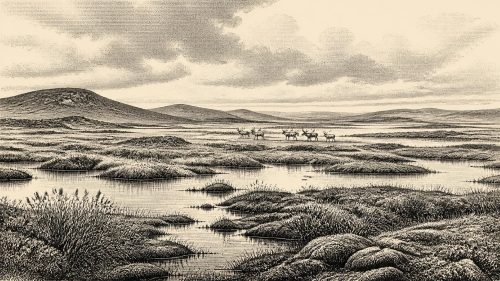
Around 31,438 BCE, Ireland had no historical calendar, communities or written record; evidence instead describes a changing Late Pleistocene environment. At Derryvree, County Fermanagh, organic sediments between glacial tills indicate a locally ice-free, open tundra wetland during a broad, uncertain interval, later buried by ice. Plant and insect remains reveal cold, damp, sparsely vegetated ground. Castlepook Cave, County Cork, preserves mixed remains of mammoths, reindeer, giant deer, predators and other cold-adapted animals, demonstrating intermittent access to suitable habitats. A marked reindeer bone may indicate human butchery, but cannot establish settlement. Subsequent glaciation destroyed or obscured evidence of Ireland’s earliest visitors.
Read Article
Archived: 17 September 2026
Abstract
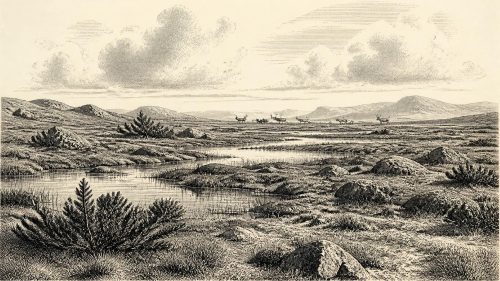
Around 31,441 BCE, Ireland lay within Marine Isotope Stage 3, a fluctuating prelude to the Last Glacial Maximum rather than a uniformly ice-covered landscape. Derryvree sediments in Fermanagh indicate cold, treeless wetlands of sedges, grasses, juniper, mosses and arctic-alpine plants, alongside regional variation. Castlepook Cave in Cork preserves MIS 3 fauna including mammoth, reindeer, giant deer, bears, wolves, Arctic foxes, lemmings and spotted hyaenas, which used the cave as a den. A marked reindeer femur may indicate human butchery about 33,000 years ago, but cannot prove permanent settlement. Later glaciation erased much evidence, leaving deposits and bones as Ireland’s witnesses.
Read Article




